Spider symbolism has fascinated humanity for thousands of years. Although many people fear spiders because of their appearance or venomous species, cultures across the world have often viewed them as powerful symbols rather than simply insects (they are actually arachnids).
Their remarkable ability to weave intricate webs has inspired stories about creation, destiny, patience, creativity, intelligence, and life’s interconnected nature.
From ancient mythology to modern branding, from indigenous folklore to contemporary psychology, spider symbolism continues to influence how people understand perseverance, artistic creation, strategic thinking, and spiritual growth.
While interpretations differ between cultures and belief systems, spiders consistently represent the ability to build, adapt, and create opportunities from seemingly fragile materials.
Understanding spider symbolism helps us appreciate not only historical traditions but also the deeper psychological and cultural meanings people assign to everyday creatures.
What Does Spider Symbolism Mean?
Spider symbolism generally represents creativity, patience, destiny, wisdom, resilience, feminine energy, and interconnectedness. Across different cultures, spiders symbolize the ability to create one’s future through careful planning and persistence.
Although interpretations vary, spiders often embody transformation, balance, strategic thinking, and the intricate connections that shape human life.
What Is Spider Symbolism?
Quick Answer
Spider symbolism refers to the meanings, values, and ideas that societies associate with spiders beyond their biological role. Rather than focusing solely on the animal itself, symbolic interpretations explore what spiders represent in mythology, psychology, religion, literature, art, dreams, and cultural traditions.
Because spiders build complex webs with extraordinary precision, they have become enduring symbols of:
- Creativity
- Patience
- Intelligence
- Destiny
- Balance
- Persistence
- Feminine creative power
- Strategic planning
- Protection
- Transformation
These meanings are symbolic rather than scientific facts and should be understood within their cultural and historical contexts.
Why Are Spiders Symbolically Important?
Direct Answer
Spiders are symbolically important because they create elaborate webs, demonstrate patience while waiting for opportunities, and adapt to changing environments. Their observable behaviors have inspired myths, spiritual teachings, artistic metaphors, and psychological interpretations across civilizations.
Unlike larger animals that symbolize strength through physical power, spiders represent quiet intelligence and the power of creation through skill.
The Historical Origins of Spider Symbolism
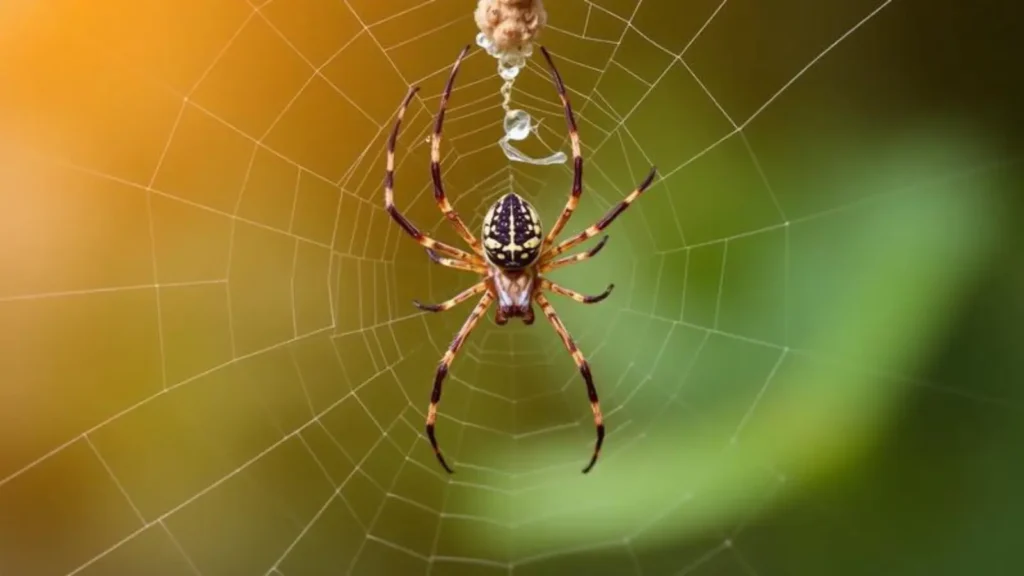
Humans have observed spiders for thousands of years. Long before modern science explained web construction, ancient communities viewed spider webs as mysterious works of natural engineering.
Several characteristics contributed to symbolic interpretations:
- Intricate geometric webs
- Silent hunting methods
- Extraordinary patience
- Continuous rebuilding after damage
- Ability to create complex structures from silk
Ancient storytellers often interpreted these behaviors as reflections of wisdom, destiny, craftsmanship, or divine creativity.
Over centuries, spider symbolism evolved through:
- Oral traditions
- Religious stories
- Folklore
- Mythology
- Medieval symbolism
- Renaissance art
- Modern psychology
- Contemporary literature
Spider Symbolism Across Different Cultures
| Culture | Common Symbolic Meaning | Context |
| Native American traditions | Creativity, storytelling, wisdom | Spider figures often appear as teachers or creators in some tribal traditions. |
| Ancient Greece | Skill, craftsmanship, pride | The myth of Arachne explores weaving, talent, and humility. |
| African folklore | Intelligence, cleverness | Trickster spider characters appear in many West African stories. |
| Japanese traditions | Mixed symbolism | Some stories portray spiders as supernatural beings, while others emphasize caution. |
| Celtic traditions | Fate and weaving | Webs may symbolize life’s interconnected patterns. |
| Hindu traditions | Cosmic creation | Some philosophical interpretations compare creation to a spider spinning a web. |
| Modern Western symbolism | Patience, resilience, creativity | Frequently used in self-development and artistic metaphors. |
Different communities interpret spider symbolism differently. No single meaning applies universally.
Spider Symbolism in Mythology
Ancient Greece
Perhaps the best-known spider story comes from the myth of Arachne, a gifted weaver whose challenge to a goddess ultimately transformed her into a spider.
The story symbolizes:
- Artistic excellence
- Pride
- Consequences of arrogance
- Eternal craftsmanship
Rather than simply punishing talent, modern readers often interpret the myth as exploring the relationship between creativity and humility.
African Mythology
In many West African traditions, spider characters appear as clever storytellers who solve problems using intelligence instead of force.
These stories often teach:
- Critical thinking
- Adaptability
- Wisdom
- Humor
- Community values
Indigenous Traditions
Several Indigenous North American traditions include Spider Woman or similar figures associated with:
- Creation
- Weaving
- Protection
- Teaching
- Cultural knowledge
Interpretations vary significantly among different nations and communities.
Psychological Meaning of Spider Symbolism
Direct Answer
Psychologically, spider symbolism often represents the human capacity to create, organize, adapt, and patiently pursue long-term goals.
Modern psychology does not assign universal symbolic meanings to spiders. Instead, symbolic interpretations often emerge through:
- Personal associations
- Cultural upbringing
- Individual experiences
- Dreams
- Therapeutic reflection
For some people, spiders symbolize creativity.
For others, they represent fear or uncertainty.
Because symbolism is deeply personal, interpretation depends on context rather than fixed rules.
Expert Tip
When interpreting spider symbolism in dreams, art, or literature, consider your own emotional response. A spider that evokes curiosity may symbolize creativity, while one that evokes fear may reflect anxiety or unresolved concerns. Personal context is often more meaningful than universal symbolism.
Spiritual Interpretations of Spider Symbolism
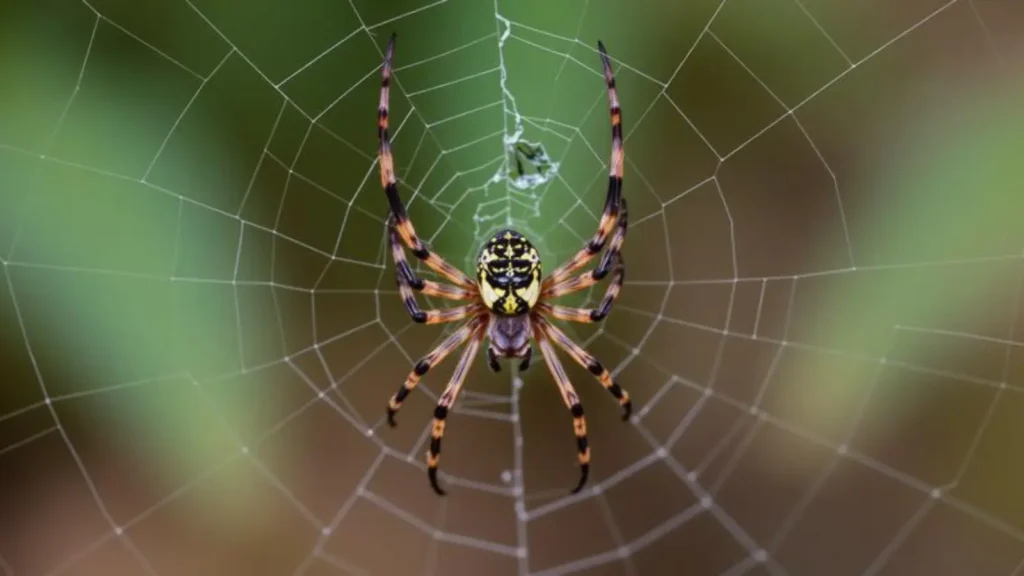
Many spiritual traditions associate spiders with:
- Divine creativity
- Life’s interconnectedness
- Destiny
- Manifestation
- Inner wisdom
- Sacred geometry
- Feminine energy
Some contemporary spiritual practices interpret spider webs as reminders that every action creates connections extending beyond immediate awareness.
These interpretations belong to spiritual traditions rather than scientific evidence.
Spider Symbolism in Religion
Religious interpretations vary widely.
Christianity
The Bible contains references to spiders and webs, often using them metaphorically to illustrate fragility or impermanence rather than assigning a single symbolic meaning.
Later Christian traditions have also developed stories in which a spider’s web provides protection, though these accounts are part of folklore rather than biblical text.
Hindu Philosophy
Some Hindu philosophical texts compare the universe to a spider spinning and withdrawing its web, illustrating the relationship between creation and the divine source.
This metaphor emphasizes:
- Creation
- Sustenance
- Unity
- Cosmic order
Buddhism
Certain Buddhist teachings use webs metaphorically to illustrate attachment or interconnected existence, although symbolism varies across schools and traditions.
Spider Symbolism in Dreams
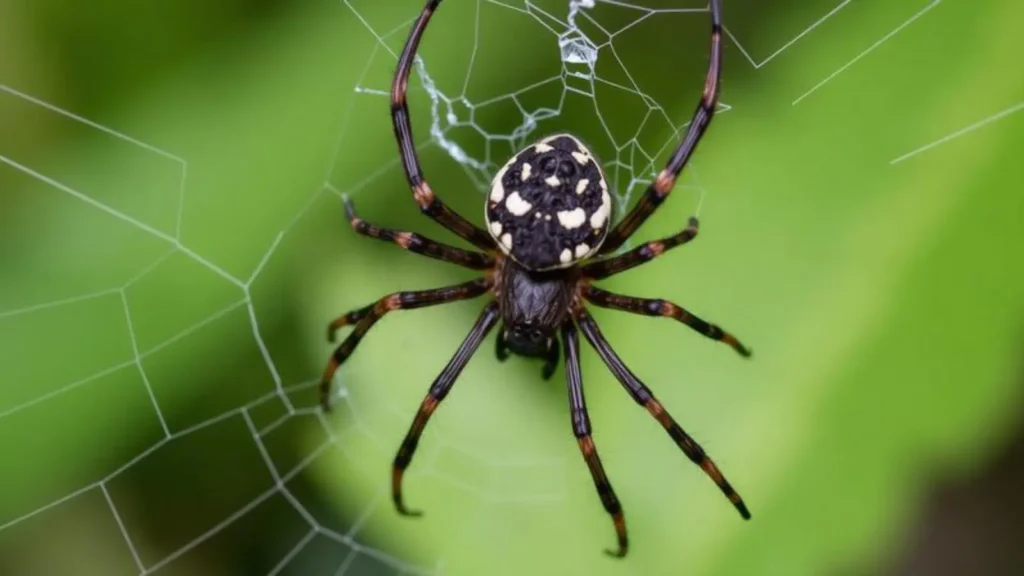
Dream interpretation is subjective.
Common symbolic themes include:
| Dream Scenario | Possible Interpretation |
| Building a web | Creating opportunities |
| Seeing many spiders | Feeling overwhelmed or recognizing complex relationships |
| Destroying a web | Major life changes |
| Watching a spider patiently | Waiting for the right opportunity |
| Colorful spider | Creativity or emotional complexity |
Dream meanings are not scientifically established and should not be treated as predictions.
Spider Symbolism in Art
Artists frequently use spiders to express:
- Fragility
- Creation
- Feminine identity
- Memory
- Protection
- Architecture
- Geometry
Spider webs often symbolize invisible relationships between people, ideas, or historical events.
Modern installations and sculptures also use spider imagery to explore motherhood, vulnerability, and resilience.
Spider Symbolism in Literature
Writers use spiders to represent many themes, including:
- Fate
- Manipulation
- Creativity
- Isolation
- Survival
- Intelligence
- Mystery
Depending on the story, spiders may appear as villains, protectors, creators, or wise observers.
Their symbolic flexibility makes them powerful literary devices.
Spider Symbolism in Design and Branding
Brands occasionally use spider-inspired imagery to communicate:
- Precision
- Engineering
- Innovation
- Network building
- Connection
- Strategic thinking
Designers also study spider webs for inspiration in:
- Architecture
- Structural engineering
- Material science
- Graphic design
- Network visualization
Practical Applications of Spider Symbolism
Spider symbolism can be applied thoughtfully in many areas:
- Personal growth and goal setting through patience and persistence.
- Branding that emphasizes creativity, craftsmanship, or strategic thinking.
- Storytelling and literature to represent interconnected events.
- Educational discussions about symbolism, mythology, and cultural diversity.
- Artistic projects exploring balance, resilience, and transformation.
- Design concepts inspired by web geometry and natural patterns.
Color Psychology and Spider Symbolism
Different colors may influence symbolic interpretation.
| Spider Color | Common Symbolic Association |
| Black | Mystery, protection, transformation |
| White | Clarity, spirituality, new beginnings |
| Red | Passion, caution, vitality |
| Brown | Stability, grounding, nature |
| Golden | Prosperity, wisdom, abundance |
These meanings come from symbolic traditions and color psychology rather than biological science.
Did You Know?
Spider silk is one of nature’s strongest natural fibers relative to its weight. This remarkable characteristic has inspired scientists researching advanced materials and has strengthened the symbolic association between spiders and extraordinary craftsmanship.
Myth vs. Fact
| Myth | Fact |
| Every spider symbolizes bad luck. | Symbolic meanings differ greatly across cultures. |
| Spider symbolism has one universal meaning. | Interpretations vary by history, religion, and personal belief. |
| Dreams about spiders predict future events. | Dream meanings are subjective and not scientifically predictive. |
| Spiders only symbolize fear. | Many traditions associate spiders with creativity, wisdom, and resilience. |
| Spider symbolism is purely modern. | It has existed for thousands of years in mythology and folklore. |
Common Mistakes When Interpreting Spider Symbolism
- Assuming every culture shares the same interpretation.
- Confusing mythology with historical fact.
- Treating symbolic beliefs as scientific evidence.
- Ignoring personal and cultural context.
- Overgeneralizing dream symbolism without considering individual experiences.
Spider Symbolism in Modern Society
Today, spider symbolism appears in:
- Tattoos
- Fashion
- Logos
- Movies
- Video games
- Graphic novels
- Social media art
- Educational materials
- Jewelry
- Home décor
Modern audiences often reinterpret traditional meanings to reflect individuality, creativity, resilience, or overcoming fear.
Digital culture has also embraced the web as a metaphor for interconnected communication, making spider symbolism newly relevant in the internet age.
Key Insights
- Spider symbolism has evolved over thousands of years.
- Creativity and patience remain its most widespread symbolic meanings.
- Cultural interpretations are diverse rather than universal.
- Psychological interpretations depend heavily on personal experience.
- Artistic and literary traditions continue to expand its symbolic significance.
- Modern branding and design often draw inspiration from the spider’s precision and interconnected web.
Why Spider Symbolism Still Matters Today
Understanding spider symbolism encourages deeper appreciation of how humans assign meaning to the natural world. Symbols influence communication, education, design, storytelling, and cultural identity. Whether viewed as a creator, teacher, trickster, or patient builder, the spider reminds us that even small actions can contribute to larger patterns.
In a world increasingly shaped by networks and relationships, the spider’s web remains a compelling metaphor for connection, resilience, and intentional creation.
Spider wes symbolize careful planning, interconnected relationships, and the gradual creation of something meaningful through consistent effort. Their intricate geometry has inspired artists, philosophers, and scientists alike.

Isabella Carter explores symbolism in nature, literature, art, and spirituality with engaging and informative research.
