
The pomegranate is far more than a delicious fruit with jewel-like seeds. Across thousands of years, civilizations have viewed it as a powerful symbol of life, fertility, prosperity, wisdom, rebirth, and sacred abundance.
From ancient mythology and religious traditions to modern branding and interior design, pomegranate symbolism continues to shape how people express hope, renewal, and interconnectedness.
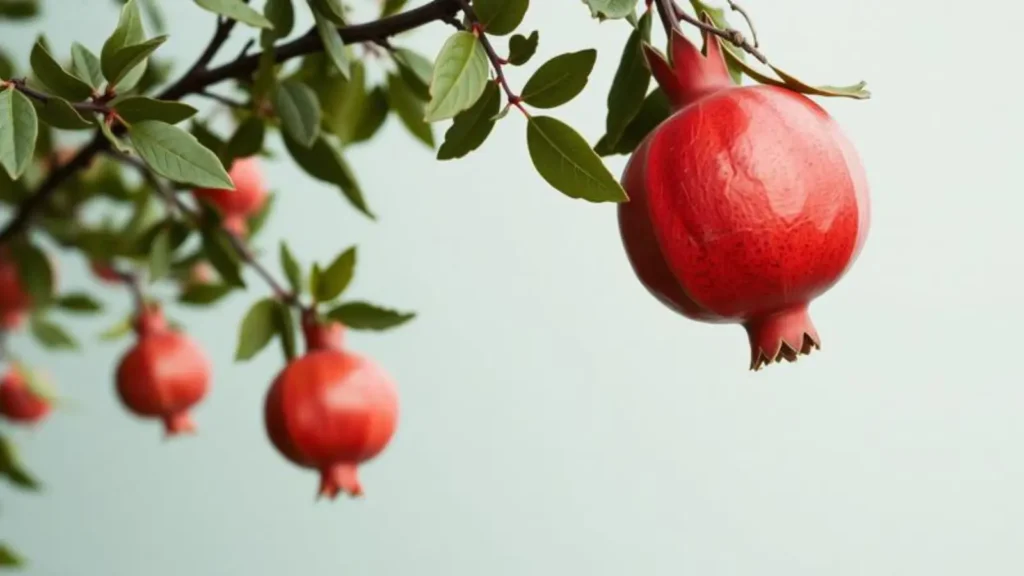
Its vibrant red color, unique crown-shaped calyx, and hundreds of closely packed seeds have inspired countless interpretations.
While symbolic meanings differ across cultures and belief systems, the pomegranate consistently represents life’s richness, the cycle of renewal, and the idea that great abundance often comes from a single source.
Whether admired in paintings, religious texts, architecture, literature, jewelry, or cultural ceremonies, the pomegranate remains one of humanity’s most enduring symbolic fruits.
What Does Pomegranate Symbolism Mean? (Featured Snippet)
Pomegranate symbolism represents abundance, fertility, prosperity, life, wisdom, renewal, and unity. Across many cultures, religions, and mythologies, the fruit symbolizes growth, sacred blessings, transformation, and the interconnectedness of life.
Although interpretations vary, the pomegranate is widely recognized as a positive symbol of richness, hope, and continuity.
Understanding Pomegranate Symbolism
Quick Answer
At its core, the pomegranate symbolizes abundance emerging from unity.
One fruit contains hundreds of seeds, making it an ideal metaphor for:
- Fertility
- Prosperity
- Family
- Community
- Eternal life
- Hope
- Renewal
- Divine blessing
- Hidden potential
- Spiritual wisdom
Unlike symbols with only one interpretation, the pomegranate carries multiple layers of meaning depending on historical, cultural, and spiritual context.
Why Is the Pomegranate So Symbolic?
Several physical characteristics naturally inspired symbolic interpretations.
| Feature | Symbolic Meaning |
| Hundreds of seeds | Fertility, abundance, prosperity |
| Deep red color | Life force, passion, vitality |
| Thick protective shell | Inner wisdom, hidden value |
| Crown-shaped top | Royalty, honor, divine authority |
| Seasonal growth cycle | Renewal and resurrection |
| Sweet-tart taste | Balance between joy and hardship |
Its appearance naturally lends itself to symbolic storytelling across civilizations.
Historical Origins of Pomegranate Symbolism
The pomegranate has been cultivated for over 5,000 years.
Originating around modern-day Iran and neighboring regions, it spread through:
- Mesopotamia
- Ancient Egypt
- Persia
- Greece
- Rome
- India
- China
- Mediterranean Europe
As trade expanded, so did its symbolic importance.
Ancient societies often associated rare fruits with divine blessings, and the pomegranate quickly became one of history’s most meaningful cultural symbols.
Pomegranate Symbolism in Ancient Mythology
Greek Mythology
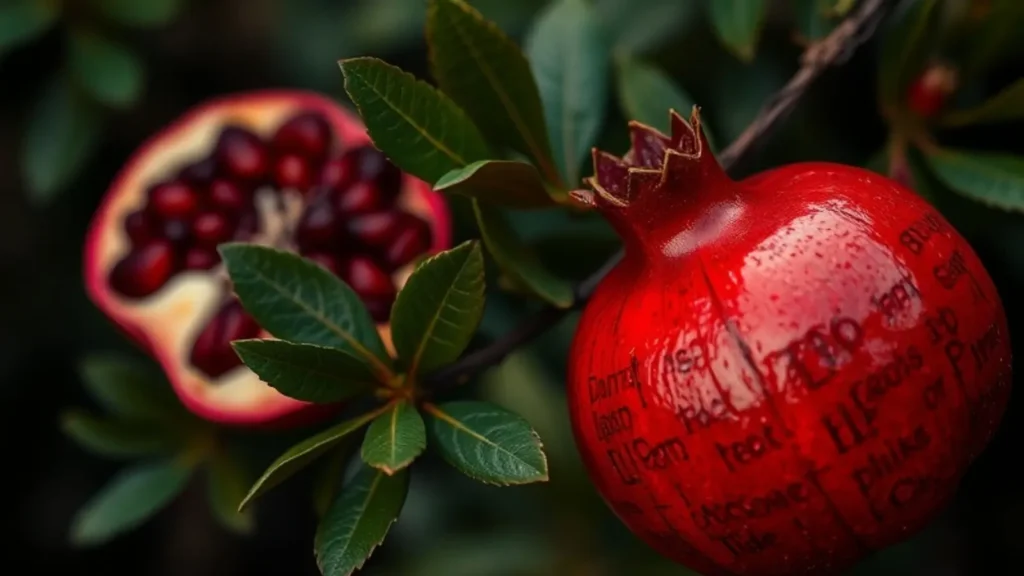
Perhaps the most famous symbolic story involves Persephone.
According to Greek mythology, Persephone ate pomegranate seeds while in the underworld.
This act connected her to both worlds:
- the world of the living
- the world of the dead
The myth transformed the pomegranate into a symbol of:
- seasonal cycles
- death
- rebirth
- transformation
- eternal return
Rather than representing death alone, it symbolizes life’s continuous cycle.
Persian Traditions
In Persian culture, pomegranates symbolize:
- joy
- prosperity
- family
- long life
They remain important during celebrations and festive meals.
Egyptian Civilization
Ancient Egyptians buried pomegranates in tombs.
The fruit represented:
- resurrection
- eternal life
- spiritual nourishment
- hope beyond death
Its many seeds suggested endless life rather than final endings.
Cultural Symbolism Around the World
Culture | Primary Meaning
| Culture | Symbolism |
| Greek | Rebirth and seasonal cycles |
| Persian | Prosperity and celebration |
| Jewish | Righteousness and divine commandments |
| Christian | Resurrection and eternal life |
| Chinese | Fertility and many descendants |
| Indian | Wealth and prosperity |
| Islamic | Blessing and paradise |
| Mediterranean | Hospitality and abundance |
Although meanings differ slightly, abundance remains the common theme.
Religious Symbolism of the Pomegranate
Judaism
The pomegranate is one of Judaism’s most important symbolic fruits.
Tradition associates it with:
- righteousness
- wisdom
- divine law
- spiritual completeness
Its many seeds became a metaphor for living a virtuous life.
Christianity
Christian art frequently depicts the Christ Child holding a pomegranate.
Its symbolism includes:
- resurrection
- eternal life
- sacrifice
- hope
- redemption
The bursting seeds symbolize life emerging from apparent loss.
Islam
The Quran mentions pomegranates among the fruits of Paradise.
Because of this, Islamic tradition often associates them with:
- divine generosity
- blessings
- gratitude
- beauty
- nourishment
Different Islamic scholars emphasize different symbolic aspects.
Hindu Traditions
In Hindu symbolism, the fruit often represents:
- prosperity
- fertility
- health
- sacred abundance
It appears in traditional medicine and ceremonial offerings.
Psychological Meaning of Pomegranate Symbolism
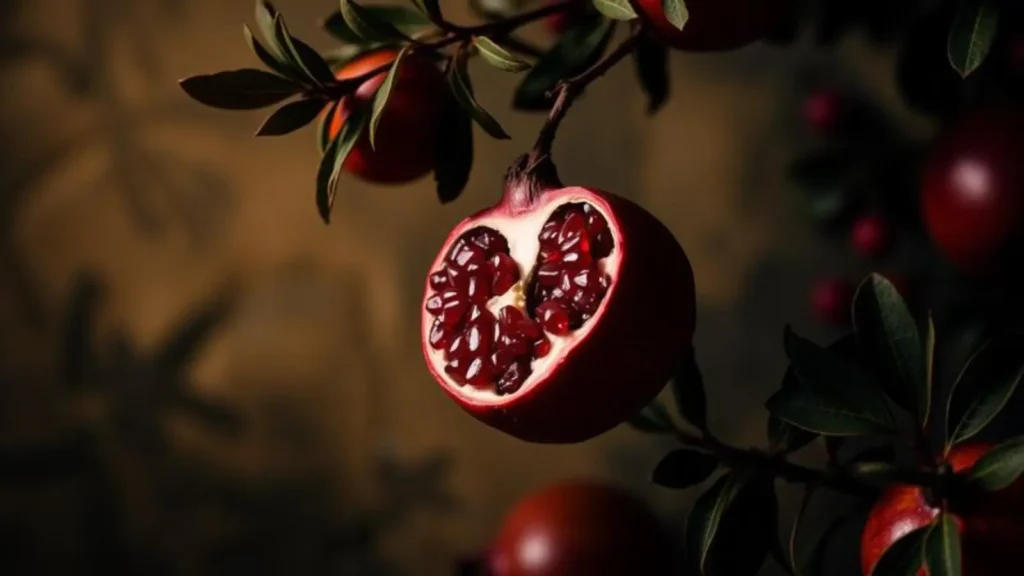
From a psychological perspective, symbols gain meaning because humans naturally connect visual patterns with emotional experiences.
The pomegranate often evokes ideas of:
- hidden potential
- personal growth
- resilience
- emotional richness
- transformation
- creativity
Its protective shell suggests that true value often lies beneath the surface.
Modern psychologists studying symbolism generally distinguish between universal symbolic tendencies and meanings shaped by culture and personal experience.
Spiritual Meaning of the Pomegranate
Spiritually, many traditions view the pomegranate as representing:
- awakening
- inner wisdom
- divine abundance
- sacred feminine energy
- interconnectedness
- renewal
- healing
These interpretations come primarily from religious traditions, mystical teachings, folklore, and symbolic practices rather than scientific evidence.
Pomegranate Symbolism in Art
Artists have used pomegranates for centuries.
Common artistic meanings include:
Renaissance Paintings
- resurrection
- immortality
- divine love
Persian Miniatures
- paradise
- celebration
- abundance
Contemporary Art
- identity
- cultural heritage
- migration
- memory
- resilience
The fruit’s striking appearance makes it visually powerful while carrying rich symbolic meaning.
Pomegranate Symbolism in Literature

Writers frequently use pomegranates as literary symbols.
Common themes include:
- forbidden knowledge
- transformation
- temptation
- maturity
- motherhood
- memory
- identity
Rather than stating emotions directly, authors often use the fruit to suggest complex emotional transitions.
Symbolism in Architecture and Decorative Arts
Pomegranate motifs appear in:
- temples
- churches
- mosques
- textiles
- pottery
- embroidery
- palace decoration
- furniture
- jewelry
Decorative pomegranates often communicate wishes for:
- prosperity
- protection
- harmony
- family happiness
Pomegranate Symbolism in Color Psychology
The fruit’s rich crimson color reinforces symbolic meanings.
Red commonly represents:
- vitality
- courage
- passion
- strength
- celebration
Combined with its abundant seeds, the overall symbolism becomes one of energetic growth and flourishing.
Color meanings vary across cultures, but red frequently carries associations with vitality and significance.
Pomegranate Symbolism in Branding and Design
Modern brands often use pomegranate imagery to communicate:
- natural wellness
- richness
- authenticity
- premium quality
- health
- longevity
Designers appreciate the fruit because it instantly conveys abundance without requiring words.
Common industries include:
- food
- cosmetics
- wellness
- hospitality
- luxury packaging
Semiotics: Why the Pomegranate Communicates So Effectively
Semiotics studies how symbols create meaning.
The pomegranate works well as a visual symbol because it combines:
- recognizable shape
- memorable color
- meaningful structure
- historical familiarity
- emotional associations
Its symbolism develops through centuries of repeated cultural storytelling rather than any single universal interpretation.
Did You Know?
🍎 The crown-shaped top inspired royal symbolism.
🌱 A single fruit may contain several hundred seeds, reinforcing associations with abundance.
🎨 The pomegranate has appeared in art for over 3,000 years.
📚 Many ancient civilizations independently developed symbolic meanings for the fruit.
🌍 It remains a cultural symbol across Europe, Asia, the Middle East, and North Africa.
Expert Tip
When interpreting pomegranate symbolism, always consider the cultural and historical context.
The same image may symbolize fertility in one tradition, resurrection in another, and prosperity in a modern branding campaign.
Context gives symbols their fullest meaning.
Common Mistakes
❌ Assuming every culture interprets the pomegranate identically.
❌ Treating symbolic beliefs as scientific facts.
❌ Ignoring historical context.
❌ Reducing the symbol to only fertility.
❌ Overlooking its importance in art, literature, architecture, and religion.
Myth vs. Fact
| Myth | Fact |
| The pomegranate always symbolizes fertility. | Fertility is only one of many meanings. |
| Every religion interprets it the same way. | Religious symbolism varies considerably. |
| Symbolic meanings are scientifically proven. | Symbolism reflects cultural, historical, and spiritual traditions rather than scientific evidence. |
| The symbolism originated in one civilization. | Multiple ancient cultures contributed to its development. |
Practical Applications of Pomegranate Symbolism
Today, symbolic meanings continue influencing many fields.
Education
Teachers use symbolic analysis to explore literature, mythology, and cultural history.
Branding
Companies use pomegranate imagery to suggest quality, abundance, and wellness.
Interior Design
Decorative motifs communicate warmth, hospitality, and prosperity.
Storytelling
Authors use pomegranates to represent transformation and emotional growth.
Cultural Celebrations
Many communities include pomegranates in festivals, weddings, and seasonal traditions to express wishes for prosperity and happiness.
Why Pomegranate Symbolism Still Matters Today
Despite rapid technological change, symbolic communication remains central to human culture.
The pomegranate helps people express ideas that are difficult to communicate directly:
- hope
- continuity
- family
- resilience
- generosity
- shared identity
Whether appearing in religious art, digital illustrations, museum exhibits, fashion, or logos, the symbol continues adapting to new generations while preserving ancient meanings.
Key Insights
- The pomegranate symbolizes abundance more consistently than almost any other fruit.
- Its meanings evolved independently across several civilizations.
- Religious traditions emphasize different symbolic interpretations.
- Psychology explains why humans naturally assign symbolic meaning to visually distinctive objects.
- Modern branding continues using ancient symbolic associations.
- Context always determines the most accurate interpretation.
Conclusion
Pomegranate symbolism has endured for thousands of years because it speaks to universal human experiences—growth, family, renewal, prosperity, and hope. Although interpretations differ among cultures, religions, and historical periods, the fruit consistently represents abundance emerging from unity and the promise of life continuing through cycles of change.
Understanding these symbolic meanings enriches our appreciation of history, literature, religion, art, architecture, branding, and everyday communication. Rather than being a relic of the past, the pomegranate remains a living symbol that continues to inspire creativity, cultural identity, and meaningful storytelling across the modern world.

Isabella Carter explores symbolism in nature, literature, art, and spirituality with engaging and informative research.
