Symbolism is one of the most powerful literary devices used by writers to communicate ideas beyond literal meanings. Instead of stating concepts directly, authors use symbols objects, characters, settings, colors, actions, or events to represent deeper themes, emotions, beliefs, or philosophical ideas.
From ancient myths to modern novels, symbolism enriches storytelling by encouraging readers to interpret hidden meanings and engage more deeply with a text.
Whether you’re a student, writer, teacher, or literature enthusiast, understanding symbolism helps unlock layers of meaning that make stories memorable and emotionally impactful.
Featured Snippet Answer
Yes, symbolism is a literary device. It is a writing technique in which an object, character, color, place, action, or event represents a deeper meaning beyond its literal sense.
Authors use symbolism to communicate themes, emotions, beliefs, cultural values, and abstract ideas, making literature richer, more meaningful, and open to thoughtful interpretation.
What Is Symbolism in Literature?

Quick Answer
Symbolism is a literary technique that gives ordinary elements a deeper, figurative meaning.
Rather than telling readers exactly what to think, symbolism invites them to discover hidden messages through repeated images, objects, settings, or actions.
For example:
- A dove often symbolizes peace.
- A storm may symbolize emotional conflict.
- A journey frequently symbolizes personal growth.
- A broken mirror may represent shattered identity.
- Light often symbolizes hope or knowledge.
These meanings are not fixed. Their interpretation depends on culture, historical context, genre, and the author’s intentions.
Why Is Symbolism Considered a Literary Device?
A literary device is any technique writers use to create meaning, enhance style, or influence readers.
Symbolism fits this definition because it helps writers:
- Express abstract ideas visually.
- Develop themes naturally.
- Build emotional depth.
- Create memorable imagery.
- Encourage multiple interpretations.
- Connect readers emotionally with characters.
- Add complexity without lengthy explanations.
Unlike straightforward description, symbolism communicates indirectly, making stories richer and more engaging.
How Symbolism Works

Direct Answer
Symbolism works by connecting a literal object with a deeper figurative meaning.
The symbol usually appears repeatedly or in important moments so readers recognize its significance.
For example:
| Literal Element | Symbolic Meaning |
| Rose | Love or beauty |
| Winter | Death, loneliness, endings |
| Spring | Renewal and hope |
| River | Life’s journey |
| Fire | Passion, destruction, purification |
| Mountain | Challenge or achievement |
| Keys | Opportunity or freedom |
| Bridge | Transition or connection |
The relationship between the symbol and its meaning develops through context rather than simple definition.
Types of Symbolism in Literature

Universal Symbolism
Universal symbols have meanings recognized across many cultures.
Examples include:
- Light → Hope
- Darkness → Fear
- Water → Life
- Tree → Growth
- Circle → Eternity
Although these meanings are widespread, they are not completely universal.
Cultural Symbolism
Some symbols depend on cultural traditions.
For example:
White clothing:
- Western cultures: weddings and purity
- Parts of East Asia: mourning and funerals
Owls:
- Ancient Greece: wisdom
- Some cultures: bad omens
- Others: protection
Understanding cultural symbolism prevents oversimplification.
Personal Symbolism
Authors sometimes create unique symbols that exist only within their own stories.
For example:
A childhood toy may symbolize lost innocence.
A cracked watch might symbolize broken time or regret.
Readers discover these meanings through the narrative itself.
Religious Symbolism

Many literary works borrow symbols from religious traditions.
Examples include:
- Cross → sacrifice
- Lotus → enlightenment
- Olive branch → peace
- Rainbow → promise
- Lamb → innocence
Authors may use these symbols traditionally or reinterpret them creatively.
Historical Origins of Symbolism
Symbolic thinking predates written literature.
Ancient civilizations used symbols in:
- Cave paintings
- Religious rituals
- Mythology
- Architecture
- Ceremonies
- Kingship
- Sacred art
Egyptians used hieroglyphs combining language and symbolism.
Greek myths relied heavily on symbolic characters and creatures.
Medieval literature employed religious symbolism to teach moral lessons.
The nineteenth-century Symbolist movement in Europe further emphasized imagery, metaphor, dreams, and emotional suggestion over literal description.
Today symbolism appears across novels, films, advertising, digital media, and visual design.
Symbolism Across Different Cultures
| Symbol | Western Meaning | Eastern Meaning | Other Interpretations |
| White | Purity | Mourning | Peace |
| Red | Love | Luck | Danger |
| Dragon | Evil | Wisdom | Power |
| Owl | Wisdom | Mystery | Death in some traditions |
| Lotus | Beauty | Enlightenment | Spiritual growth |
Context always matters more than assumptions.
Psychological Meaning of Symbolism
Psychologists recognize that humans naturally think symbolically.
Dreams often contain symbolic imagery.
Children learn through symbolic play.
Stories communicate complex emotions using symbolic objects.
Symbols simplify abstract concepts such as:
- Love
- Fear
- Identity
- Justice
- Freedom
- Hope
- Loss
Because symbols activate imagination, they often leave stronger impressions than direct explanations.
Symbolism and Human Perception
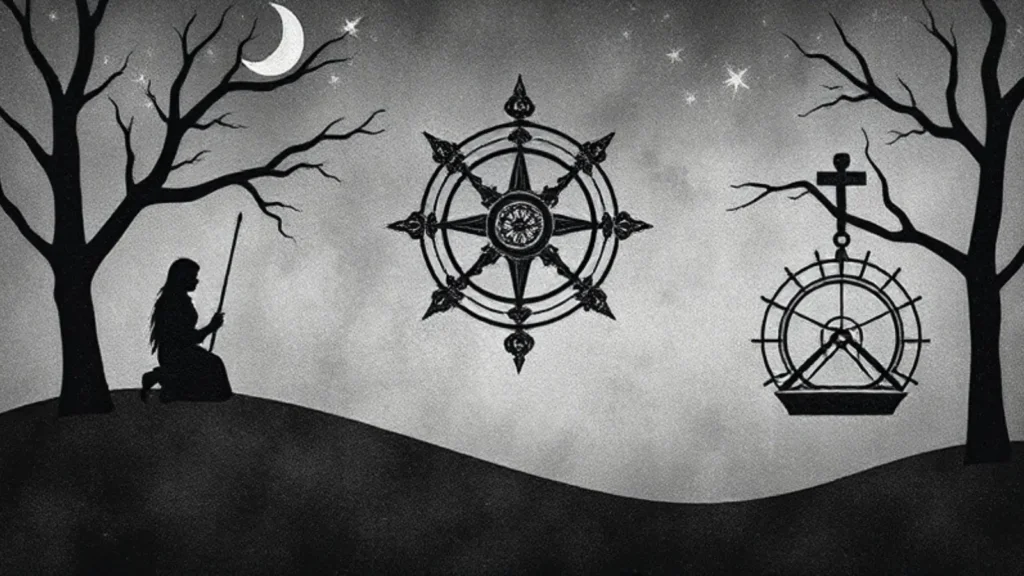
Humans instinctively assign meaning to patterns.
When readers encounter repeated images in literature, they naturally search for significance.
This process makes symbolism effective because readers become active participants in constructing meaning rather than passive receivers of information.
Symbolism in Famous Literature
Many classic works rely heavily on symbolism.
Examples include:
The Green Light
In The Great Gatsby, the green light symbolizes hope, longing, and the pursuit of an unattainable dream.
The Mockingbird
In To Kill a Mockingbird, the mockingbird symbolizes innocence and the harm caused by unjust cruelty.
The Conch Shell
In Lord of the Flies, the conch symbolizes order, democracy, and civilized society.
Animal Farm
Animals symbolize political ideologies, leadership, corruption, and social classes.
Each example demonstrates how symbolism deepens thematic meaning without explicit explanation.
Symbolism Beyond Literature

Symbolism is not limited to books.
It appears in:
- Films
- Television
- Photography
- Painting
- Architecture
- Fashion
- Branding
- Advertising
- Video games
- Social media
For example:
A company’s logo symbolizes its identity.
National flags symbolize history and values.
Wedding rings symbolize lifelong commitment.
Traffic lights symbolize rules and safety.
Symbolism in Branding and Marketing
Brands rely on symbolism to create emotional connections.
Examples include:
- Green suggests sustainability.
- Blue communicates trust.
- Gold implies luxury.
- Minimalist logos symbolize simplicity.
- Circular logos often represent unity.
Consumers often respond emotionally to symbolic branding before consciously analyzing it.
Symbolism in Education
Teachers use symbolism to develop:
- Critical thinking
- Reading comprehension
- Cultural awareness
- Analytical writing
- Interpretation skills
Students who understand symbolism often gain deeper appreciation of literature because they recognize multiple layers of meaning.
Symbolism in Visual Communication
Modern communication depends heavily on symbols.
Examples include:
- Emojis
- Road signs
- Medical symbols
- Weather icons
- Computer interfaces
- Maps
These visual symbols communicate information quickly across language barriers.
Symbolism and Storytelling
Storytelling becomes more memorable when symbols reinforce themes.
Instead of repeatedly telling readers that a character feels trapped, a writer might describe:
- Locked doors
- Caged birds
- Narrow hallways
- Broken windows
These symbolic images allow readers to experience emotion rather than simply read about it.
Symbolism Compared with Other Literary Devices
| Literary Device | Purpose | Example |
| Symbolism | Represents deeper meaning | Dove representing peace |
| Metaphor | Direct comparison | Time is a thief |
| Simile | Comparison using “like” or “as” | Brave as a lion |
| Allegory | Entire story has symbolic meaning | Animal Farm |
| Motif | Repeated element | Recurring rain imagery |
| Imagery | Creates sensory description | Golden sunlight on trees |
Although related, these devices perform different functions.
Common Misconceptions About Symbolism
| Myth | Reality |
| Every object is symbolic. | Many details are simply descriptive. |
| Symbols always have one meaning. | Meanings vary by context. |
| Symbolism must be intentional. | Readers sometimes identify meaningful patterns beyond author intent. |
| Universal symbols never change. | Cultural interpretation evolves over time. |
Did You Know?
Many everyday objects became symbols long before they acquired practical modern uses.
For example:
- The heart became associated with love centuries before modern anatomy understood the organ.
- Olive branches represented peace in ancient Mediterranean traditions.
- Scales became symbols of justice because balance suggested fairness.
Expert Tip
When analyzing symbolism, ask three questions:
- Does the symbol appear repeatedly?
- Does it connect with the story’s central themes?
- How do characters react to it?
These questions often reveal symbolic significance more accurately than relying on internet lists of “common symbols.”
Common Mistakes
Readers often misunderstand symbolism by:
- Ignoring historical context.
- Assuming every color has identical meanings worldwide.
- Treating symbolic interpretations as absolute facts.
- Overanalyzing insignificant details.
- Forgetting the author’s intended audience.
Balanced interpretation combines textual evidence with cultural understanding.
Myth vs. Fact
| Myth | Fact |
| Symbolism is only for poetry. | It appears in every literary genre. |
| Only experts understand symbolism. | Anyone can learn symbolic analysis. |
| Symbolism belongs only to literature. | It exists throughout daily life. |
| Every symbol has a fixed definition. | Meaning depends on context and culture. |
Practical Applications of Understanding Symbolism
Learning symbolism benefits many fields.
Writers
Create richer stories with layered meanings.
Students
Improve literary analysis and essay writing.
Teachers
Encourage critical thinking.
Designers
Communicate visually through meaningful imagery.
Marketers
Build stronger emotional brand identities.
Historians
Interpret artifacts and cultural traditions.
Psychologists
Study symbolic thinking and human imagination.
Why Symbolism Still Matters Today
Digital communication increasingly depends on symbols.
Emojis, icons, logos, hashtags, and interface elements communicate ideas instantly.
Artificial intelligence, search engines, and modern readers also recognize relationships between symbols and concepts, making symbolic literacy valuable beyond literature.
Understanding symbolism helps people interpret media more thoughtfully while communicating more effectively across cultures and platforms.
Key Insights
- Symbolism is a recognized literary device.
- Symbols represent meanings beyond their literal appearance.
- Context determines interpretation.
- Cultural traditions influence symbolic meanings.
- Symbolism strengthens themes, emotion, and storytelling.
- Modern communication relies heavily on symbolic thinking.
- Effective literary analysis considers historical, cultural, and textual evidence together.
Conclusion
So, is symbolism a literary device? Absolutely. It is one of the most influential techniques in literature because it transforms ordinary objects, actions, and images into carriers of deeper meaning.
From ancient myths and sacred texts to contemporary novels, films, and digital media, symbolism enables creators to communicate complex ideas without explicit explanation.
Its power lies in interpretation. A single symbol can evoke emotions, reinforce themes, reflect cultural identity, express philosophical beliefs, and encourage readers to think beyond the literal text.
Whether used in literature, branding, education, architecture, religion, or everyday communication, symbolism remains a timeless tool that connects ideas, experiences, and human imagination across cultures and generations.

Olivia Hartwell explores the hidden meanings behind symbols, animals, colors, dreams, and cultural traditions through insightful symbolism research.
