
Black cat symbolism has fascinated humanity for thousands of years. Depending on where you live, a black cat may represent good fortune, bad luck, mystery, protection, magic, independence, or spiritual awareness.
These contrasting meanings make the black cat one of the world’s most recognizable and complex cultural symbols.
Rather than having one universal meaning, black cat symbolism changes across cultures, religions, historical periods, and personal beliefs.
Understanding these different interpretations helps us appreciate how symbolism evolves with society while revealing why black cats continue to appear in folklore, literature, art, branding, psychology, and popular culture.
Featured Snippet: What Does Black Cat Symbolism Mean?
Black cat symbolism generally represents mystery, intuition, independence, transformation, protection, and the unknown. Depending on cultural traditions, black cats may symbolize either good luck or bad luck. Their symbolic meaning has evolved through mythology, folklore, religion, psychology, literature, and modern culture, making them one of history’s most enduring symbolic animals.
What Does Black Cat Symbolism Really Mean?
At its core, black cat symbolism reflects humanity’s relationship with uncertainty.
Because black cats move quietly, see well at night, and possess graceful, independent behavior, they naturally became associated with hidden knowledge, mystery, and intuition.
Common symbolic meanings include:
- Mystery
- Independence
- Intuition
- Protection
- Transformation
- Magic
- Wisdom
- Hidden knowledge
- Adaptability
- Good or bad fortune depending on culture
Importantly, these meanings are symbolic rather than scientific. They reflect cultural traditions and storytelling rather than objective facts.
The Historical Origins of Black Cat Symbolism
Ancient Egypt: Sacred Protectors
One of the earliest positive meanings of black cat symbolism comes from Ancient Egypt.
Cats were highly respected because they protected grain supplies from rodents and snakes. They eventually became associated with divine protection, fertility, motherhood, and prosperity.
The goddess Bastet, often portrayed with feline characteristics, symbolized:
- Home protection
- Fertility
- Joy
- Grace
- Family
- Healing
Although ancient artwork depicts cats in different colors, black cats also benefited from this general reverence.
Medieval Europe: From Reverence to Fear
During the Middle Ages, black cat symbolism changed dramatically.
As superstition increased across parts of Europe, black cats became connected with:
- Witchcraft
- Sorcery
- Night spirits
- Misfortune
- Evil omens
These beliefs emerged largely from folklore and social fears rather than evidence.
Many women accused of witchcraft were believed—incorrectly—to keep black cats as companions or “familiars.”
Historians widely recognize these associations as products of historical superstition rather than factual reality.
The Age of Exploration
Sailors often held very different beliefs.
Many believed black cats brought:
- Safe voyages
- Protection from storms
- Good luck at sea
- Prosperous fishing
In some coastal communities, fishermen’s families even kept black cats at home, believing they would safeguard loved ones traveling across dangerous waters.
Black Cat Symbolism Across Different Cultures
| Culture | Symbolic Meaning | General Interpretation |
| Ancient Egypt | Protection, prosperity | Positive |
| Scotland | Wealth arriving | Positive |
| Japan | Romantic luck and prosperity | Positive |
| England (some traditions) | Good fortune | Positive |
| Ireland | Mixed folklore | Mixed |
| Medieval Europe | Witchcraft and misfortune | Negative |
| Modern Western culture | Halloween, mystery | Mixed |
| Maritime traditions | Safe travel | Positive |
This diversity illustrates that symbolism depends heavily on cultural context rather than universal truth.
Spiritual Meaning of Black Cats
Many spiritual traditions interpret black cats as symbols of heightened awareness rather than supernatural beings.
Common spiritual associations include:
Intuition
Black cats remind people to trust their instincts when facing uncertainty.
Personal Transformation
Their association with darkness often symbolizes entering the unknown before personal growth.
Protection
Some traditions believe black cats spiritually guard homes against negative energy.
This belief belongs to spiritual traditions and should not be understood as scientifically verified.
Inner Wisdom
Because cats carefully observe before acting, they often symbolize patience, reflection, and quiet intelligence.
Psychological Meaning of Black Cat Symbolism
From a psychological perspective, symbols reflect human thought patterns.
Black cats often represent:
- The unknown
- Curiosity
- Fear of uncertainty
- Independence
- Confidence
- Self-reliance
- Adaptability
Color psychology also contributes.
Black commonly symbolizes:
- Sophistication
- Mystery
- Authority
- Elegance
- Depth
- Hidden possibilities
When combined with the naturally independent behavior of cats, the resulting symbolism becomes especially powerful.
Black Cats in Mythology and Folklore
Folklore across the world offers countless interpretations.
Some stories describe black cats as:
- Guardians
- Shape-shifters
- Spiritual messengers
- Magical companions
- Protectors of sacred places
Others portray them as omens or supernatural creatures.
These stories reveal more about cultural values and historical fears than about the animals themselves.
Religious Perspectives on Black Cats
Religious views differ considerably.
Ancient Beliefs
Some ancient civilizations honored cats as sacred protectors connected with divine order.
Medieval Christianity
Certain medieval European communities associated black cats with witchcraft.
Modern historians generally regard these ideas as products of fear, social conflict, and superstition rather than religious doctrine.
Modern Religious Views
Most contemporary religious traditions do not officially teach that black cats possess supernatural powers or determine human destiny.
Black Cat Symbolism in Literature
Authors frequently use black cats to create atmosphere.
Common literary themes include:
- Hidden secrets
- Moral conflict
- Isolation
- Curiosity
- Fate
- Psychological tension
- Transformation
Because symbolism is flexible, one black cat may represent danger in one story while symbolizing wisdom or protection in another.
Black Cats in Art and Visual Communication
Artists often use black cats because they instantly communicate:
- Mystery
- Contrast
- Elegance
- Curiosity
- Nighttime
- Fantasy
Graphic designers also appreciate the strong visual impact of black silhouettes.
Their recognizable outline makes them memorable in logos, posters, illustrations, and seasonal artwork.
Black Cat Symbolism in Modern Branding
Brands frequently use black cat imagery to express:
- Premium quality
- Mystery
- Confidence
- Sophistication
- Intelligence
- Uniqueness
Marketing professionals understand that symbols create emotional responses.
A black cat logo can instantly communicate personality without requiring lengthy explanations.
Black Cats in Popular Culture
Today’s media has transformed public perception.
Black cats appear in:
- Films
- Television
- Halloween decorations
- Children’s books
- Fantasy novels
- Comics
- Video games
- Internet memes
Modern portrayals increasingly emphasize charm, humor, intelligence, and individuality instead of superstition.
Symbolism of Black Cats in Dreams
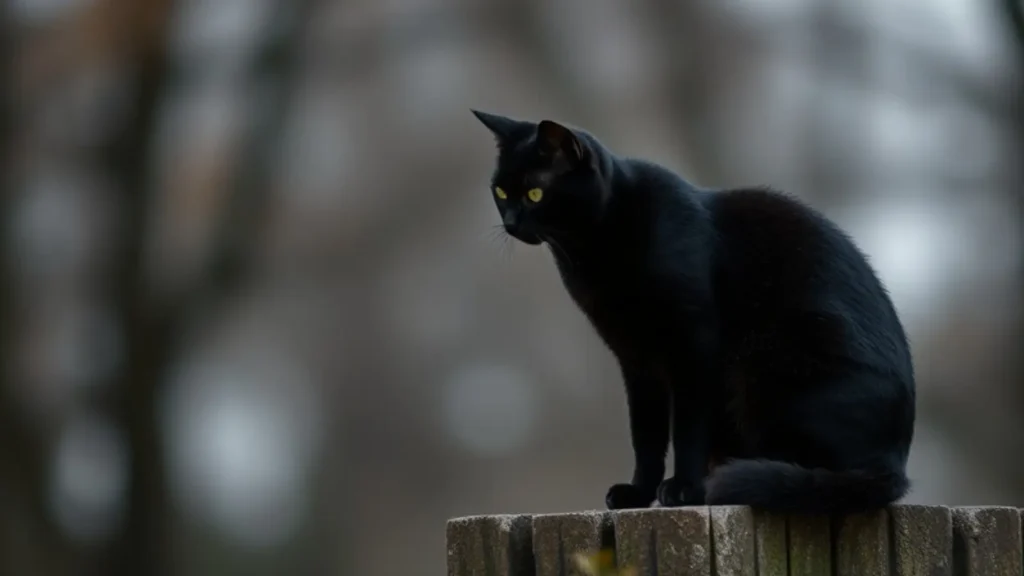
Dream interpretation varies among psychological schools and spiritual traditions.
Possible symbolic themes include:
| Dream Scenario | Possible Symbolic Interpretation |
| Friendly black cat | Trusting intuition |
| Watching black cat | Hidden opportunities |
| Black cat crossing path | Facing uncertainty |
| Playing with black cat | Personal confidence |
| Injured black cat | Ignored instincts |
Dream meanings are subjective and should not be interpreted as universal predictions.
Black Cat Symbolism and Color Psychology
The color black contributes significantly to symbolic interpretation.
Black often represents:
- Authority
- Mystery
- Protection
- Sophistication
- Power
- Reflection
Combined with feline traits like agility, observation, and independence, black cats become symbols of intelligent self-confidence.
Black Cat Symbolism in Storytelling
Storytellers use black cats because audiences immediately recognize their symbolic potential.
A black cat character may represent:
- A mysterious guide
- A hidden protector
- A misunderstood outsider
- An independent thinker
- A guardian of secrets
This flexibility explains why black cats continue appearing in modern fiction.
Black Cat Symbolism in Everyday Life
People encounter black cat symbolism through:
- Tattoos
- Jewelry
- Home décor
- Fashion
- Halloween decorations
- Greeting cards
- Social media
- Brand identities
- Educational materials
- Cultural festivals
In each setting, the intended meaning depends on context rather than fixed symbolism.
Did You Know?
- Black cats symbolize good luck in several countries.
- Sailors historically valued black cats aboard ships.
- Many modern animal welfare organizations work to dispel myths surrounding black cats.
- Their symbolism has changed repeatedly over thousands of years.
- Black cats remain among the most recognizable symbolic animals worldwide.
Expert Tip
When interpreting any symbol, always consider:
- Historical period
- Geographic region
- Cultural tradition
- Religious context
- Artistic purpose
- Personal experience
Symbols rarely have one universal meaning.
Common Mistakes About Black Cat Symbolism
Assuming all cultures view black cats negatively
Many cultures actually associate them with prosperity and protection.
Treating folklore as historical fact
Folklore reflects cultural storytelling rather than objective history.
Ignoring cultural context
The same symbol can communicate entirely different ideas in different societies.
Believing symbolism predicts events
Symbolic traditions express meaning rather than scientific cause-and-effect relationships.
Myth vs. Fact
| Myth | Fact |
| Black cats always bring bad luck. | Their symbolism varies widely across cultures. |
| Black cats are historically evil. | Negative associations mainly developed in specific historical contexts. |
| Every religion views black cats negatively. | Religious interpretations differ considerably. |
| Seeing a black cat predicts future events. | There is no scientific evidence supporting this belief. |
| Black cat symbolism has never changed. | Its meaning has evolved significantly throughout history. |
Practical Applications of Understanding Black Cat Symbolism
Understanding symbolic meanings benefits many fields.
Education
Teachers use symbolism to explain literature, history, and cultural studies.
Branding
Designers choose symbolic imagery to strengthen brand identity.
Literature
Writers develop richer characters using established symbolic traditions.
Psychology
Therapists and researchers explore how symbols influence perception and emotional responses.
Art
Artists communicate complex themes through recognizable imagery.
Cultural Studies
Anthropologists examine how symbols reflect changing social values.
Key Insights
- Black cat symbolism has no single universal meaning.
- Historical context shapes symbolic interpretation.
- Ancient cultures often viewed black cats positively.
- Medieval superstition influenced negative perceptions.
- Modern interpretations increasingly emphasize individuality and intuition.
- Psychology explains why humans naturally assign symbolic meanings to familiar animals.
- Understanding symbolism encourages greater cultural awareness and critical thinking.
Why Black Cat Symbolism Still Matters Today
In today’s interconnected world, symbols travel faster than ever.
A single black cat illustration may appear in:
- Social media campaigns
- Book covers
- Fashion collections
- Company logos
- Educational resources
- Digital art
- Advertising
- Gaming
Understanding its multiple meanings helps communicators avoid misunderstandings while creating richer, more inclusive messages.
Rather than representing only superstition, black cat symbolism has become a powerful example of how culture continuously reshapes shared meanings.
Conclusion
Black cat symbolism is far more complex than the familiar superstition of good or bad luck. Across history, black cats have symbolized protection, intuition, independence, transformation, wisdom, elegance, and mystery.
Their meanings have shifted with changing cultures, religious beliefs, folklore, and artistic traditions, demonstrating that symbols are living expressions of human experience rather than fixed truths.
Today, black cats continue to influence literature, branding, design, psychology, education, media, and popular culture.
By understanding their historical origins and diverse cultural interpretations, we gain a deeper appreciation for how symbols shape communication, identity, creativity, and everyday life.

Lucas Whitmore reveals the hidden messages behind symbols, signs, and traditions through detailed symbolism guides.
