Few natural objects have inspired humanity as consistently as the Moon. It appears above almost every society, changes shape in a predictable cycle, brightens the night without producing its own visible light, and has helped people measure time for thousands of years.
As a result, moon symbolism has accumulated layers of meaning involving transformation, mystery, femininity, time, emotional life, fertility, death and rebirth, protection, wisdom, beauty, longing, and spiritual reflection.
Yet there is no single universal meaning of the Moon. A lunar symbol can represent a goddess in one tradition, a male deity in another, family reunion in another, or simply beauty and solitude in modern literature.
The International Astronomical Union notes that the Moon has held cultural importance across civilizations and that virtually every known culture has developed language and traditions surrounding celestial objects.
Understanding moon symbolism therefore means looking beyond simple definitions. The Moon is simultaneously an astronomical body, a religious image, a mythological character, a poetic metaphor, a calendar marker, an artistic motif, and a powerful visual sign.
Featured Snippet: What does the Moon symbolize?
Moon symbolism commonly represents cycles, change, mystery, intuition, time, renewal, beauty, and the passage between darkness and light. Depending on the culture and context, the Moon may also symbolize femininity, fertility, wisdom, protection, emotional depth, immortality, spiritual reflection, longing, or transformation. Its meaning changes with its phase and cultural setting.
What Does Moon Symbolism Mean?
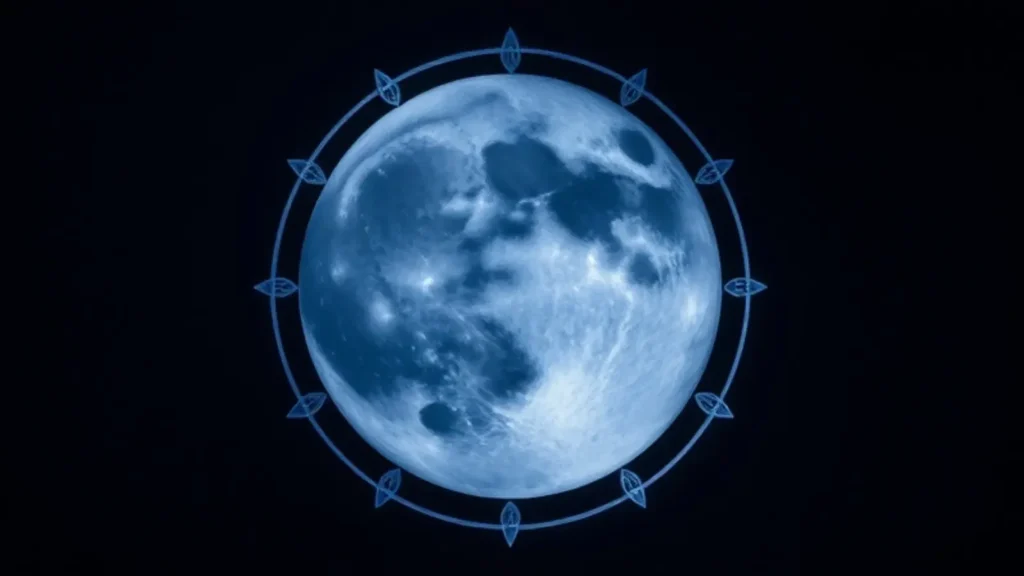
At its broadest level, moon symbolism comes from the Moon’s observable behavior.
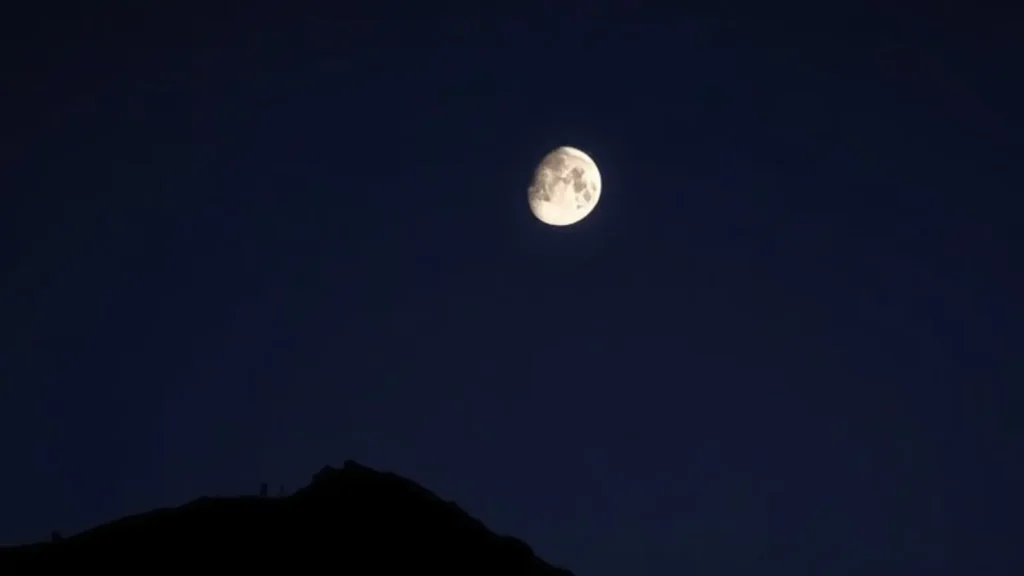
The Moon appears to disappear and return. It grows from a thin crescent into a full circle and then gradually wanes. That visible cycle naturally lends itself to ideas of growth, completion, decline, disappearance, and renewal.
The Moon also belongs to the night. Unlike the Sun, which dominates daylight, the Moon is associated with a quieter kind of illumination. This makes it particularly useful in symbolic language for things that are hidden, subconscious, mysterious, intimate, or not immediately understood.
Common symbolic associations include:
| Lunar characteristic | Common symbolic interpretation |
| Waxing Moon | Growth, development, possibility |
| Full Moon | Completion, abundance, visibility |
| Waning Moon | Release, decline, reflection |
| New Moon | Beginning, potential, inwardness |
| Crescent | Hope, emergence, transition |
| Nighttime presence | Mystery, intuition, dreams |
| Repeating cycle | Renewal, time, transformation |
| Reflected light | Indirect wisdom, perception |
These associations are interpretive rather than scientific laws. Symbolism develops through culture, storytelling, ritual, visual perception, and historical experience.
The Historical Origins of Moon Symbolism
Human fascination with the Moon predates written history. Its regular phases provided an obvious way to observe the passage of time, while its brightness made it one of the most conspicuous objects in the night sky.
Early societies did not separate astronomy, religion, agriculture, mythology, and calendar-making in the modern way. Watching the heavens could simultaneously mean watching for seasonal changes, organizing ceremonies, measuring time, or interpreting divine activity.
Archaeological evidence demonstrates that celestial objects were incorporated into religious and calendrical practices in ancient societies. Research on Minoan Crete, for example, has identified evidence suggesting that lunar cycles were important in calendrical and ritual contexts.
In ancient Mesopotamia, the Moon became especially prominent within religious cosmology. Nanna, also known as Sîn, was a major lunar deity, and the crescent was used as a recognizable lunar sign.
This historical development helps explain why the Moon became much more than an astronomical object. It became a way for humans to represent order within change.
The Moon changes constantly, yet its changes follow a recognizable pattern.
That paradox—change within repetition—is one of the deepest foundations of lunar symbolism.
Moon Symbolism Across Ancient Cultures
Mesopotamian Moon Symbolism
In Sumerian and Akkadian traditions, the Moon had an important divine identity. Nanna/Sîn was associated with lunar cycles and was particularly connected with the city of Ur.
Here the Moon could represent celestial authority, timekeeping, order, and divine observation.
Rather than seeing the Moon simply as a decorative symbol, Mesopotamian cultures incorporated lunar observation into a larger understanding of cosmic order.
Egyptian Moon Symbolism
Ancient Egyptian religious traditions associated lunar ideas with several deities and concepts. Thoth, for instance, was connected with the Moon as well as writing, knowledge, calculation, and wisdom.
The symbolic connection is particularly interesting: the Moon’s phases could function as a celestial measure of time, while Thoth’s broader associations involved intellectual order and record-keeping.
This creates a recurring symbolic pattern:
Moon → measurement → time → knowledge → cosmic order.
Greek and Roman Traditions
Greek mythology gives the Moon several different symbolic personalities.
Selene personified the Moon, while Artemis became strongly associated with lunar imagery in later traditions. Roman mythology similarly connected lunar ideas with Luna and Diana.
The important point is that Greek and Roman lunar symbolism was not completely uniform. Different goddesses and myths emphasized different qualities, including beauty, wilderness, chastity, hunting, night, fertility, and mystery.
The Moon therefore became a flexible mythological language rather than a symbol with only one definition.
Moon Symbolism in Asian Cultures
Moon symbolism is particularly rich throughout East and South Asia, although interpretations vary substantially from one tradition to another.
Chinese Moon Symbolism
In Chinese culture, the Moon has strong associations with family, reunion, beauty, seasonal cycles, and longing.
The Mid-Autumn Festival is especially important. Celebrated on the fifteenth day of the eighth lunar month, it traditionally centers on the full Moon, family gatherings, mooncakes, lanterns, and moon viewing.
The round full Moon can therefore become a visual metaphor for completeness and reunion.
This is an excellent example of why context matters. A full Moon may symbolize completion in one setting, romantic longing in another, and religious significance somewhere else.
Chinese mythology also contains the famous story of Chang’e, associated with the Moon and immortality.
Japanese Moon Symbolism
Japanese culture has developed an especially refined aesthetic relationship with the Moon.
Tsukimi, or moon viewing, celebrates contemplation of the autumn Moon. Traditional practices include displaying pampas grass and offering or eating rice dumplings known as tsukimi dango. Moon viewing is connected with appreciation of seasonal beauty and impermanence.
Japanese mythology also includes Tsukuyomi, a lunar deity recorded in early mythological literature.
Here moon symbolism often works through quiet observation rather than dramatic transformation. The Moon can invite stillness, beauty, melancholy, and awareness of passing time.
Moon Symbolism in Hindu and South Asian Traditions
The Moon has a significant place in Indian religious, philosophical, literary, and astrological traditions.
In Hindu traditions, Chandra or Soma is traditionally represented as a male lunar deity. This is an important reminder that the frequently repeated modern idea that “the Moon is universally feminine” is historically inaccurate.
Some modern spiritual interpretations emphasize lunar qualities such as receptivity, intuition, nurturing, rhythm, and emotionality. But these interpretations should not be projected backward onto every ancient culture.
The Moon also appears throughout Indian poetry and literature as an image of beauty, romance, separation, calmness, and emotional longing.
The familiar comparison of a beautiful face to the Moon demonstrates another important symbolic function: the Moon becomes a standard of aesthetic perfection.
Moon Symbolism in Islam and the Crescent Moon
The crescent deserves special attention because it has become strongly associated with Muslim identity in modern visual culture.
However, an important distinction is often overlooked:
The crescent moon is widely associated with Muslim societies, but it is not a universal theological symbol prescribed by the Qur’an.
Its strong visual association with Islam developed historically through Muslim states and especially Ottoman usage, rather than originating as a simple universal emblem of the religion itself. Historical references describe the crescent as a military and religious emblem associated with the Ottoman Turks.
Today, the crescent appears in flags, architecture, decorative art, jewelry, religious calendars, and popular visual representations of Muslim communities.
This illustrates how symbols can evolve:
astronomical form → political emblem → cultural identity marker → modern global icon.
The Spiritual Meaning of the Moon
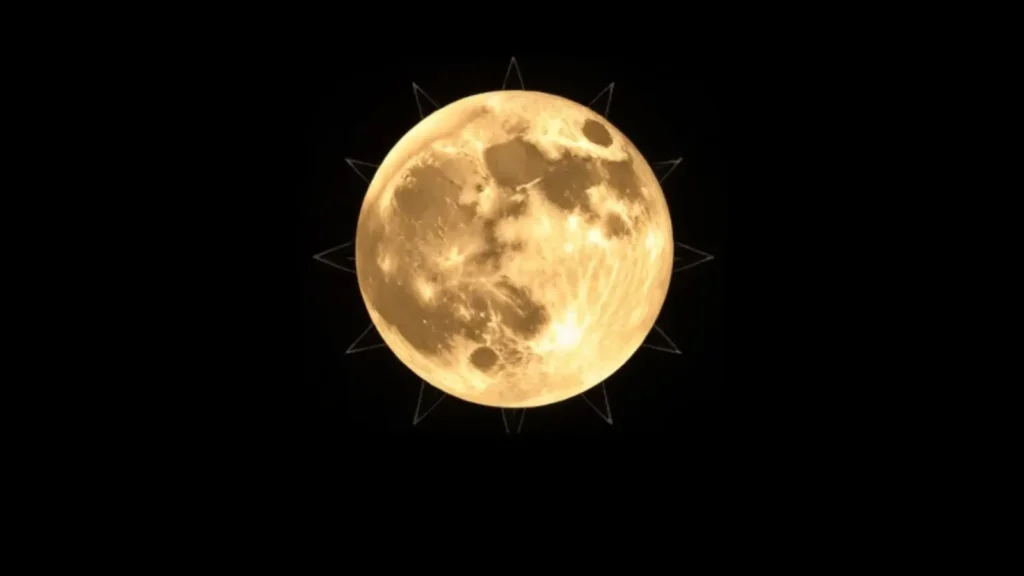
Spiritually, the Moon is often interpreted as a symbol of inner awareness.
Its light is softer than sunlight. It illuminates rather than overwhelms. Because it appears during darkness, it can represent finding guidance when circumstances are uncertain.
Common spiritual interpretations include:
- Inner reflection
- Intuition
- Transformation
- Emotional awareness
- Cycles of life
- Renewal
- Hidden knowledge
- Spiritual timing
- Feminine or receptive energy
- The relationship between darkness and light
These are symbolic and spiritual interpretations, not scientifically established properties of the Moon.
That distinction matters. Symbolism can be personally meaningful without being empirical evidence.
Moon Phases and Their Symbolic Meanings
The phases of the Moon provide one of the most useful frameworks for interpreting lunar imagery.
New Moon
The new Moon is traditionally associated with beginnings, invisibility, potential, rest, and inward reflection.
Because the visible Moon is minimal or absent, it can symbolize something that has not yet emerged.
Symbolic idea: The beginning before the beginning becomes visible.
Waxing Crescent
The crescent suggests emergence.
It can symbolize:
- Hope
- New opportunities
- Growth
- Early development
- Possibility
- Persistence
A crescent is visually incomplete, which can itself communicate that something is still developing.
Full Moon
The full Moon is perhaps the strongest symbol of completion.
It can represent:
- Fulfillment
- Abundance
- Visibility
- Achievement
- Beauty
- Celebration
- Wholeness
East Asian harvest traditions provide an especially strong cultural example of the full Moon’s connection with reunion and seasonal abundance.
Waning Moon
The waning Moon can symbolize release, decline, completion, retreat, or preparation for another beginning.
Its message is not necessarily negative.
Instead, it can express a fundamental principle:
Ending is part of renewal.
Moon Symbolism in Psychology
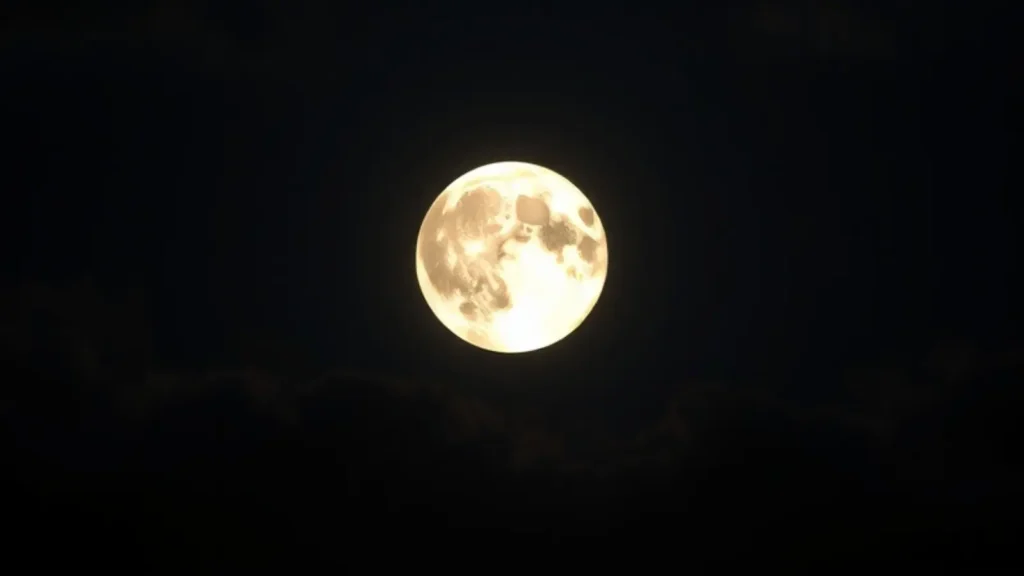
The Moon has become deeply connected with psychological language, especially because humans experience it primarily through perception, memory, storytelling, and cultural association.
A person might look at a full Moon and experience calmness, romance, loneliness, spirituality, nostalgia, or even unease. The object is the same, but the interpretation is influenced by personal experience.
This is an important principle in symbolic psychology:
A symbol does not carry meaning in isolation; meaning emerges through the relationship between the symbol, the observer, and the cultural context.
The Moon’s association with dreams and the unconscious is particularly strong in modern Western symbolic traditions. Its nighttime visibility makes it a natural metaphor for aspects of experience that are difficult to see directly.
However, popular claims that the full Moon universally causes dramatic changes in human behavior should not be treated as established fact simply because the association is culturally widespread.
Expert Tip
When analyzing a Moon symbol psychologically, ask three questions:
- What does the Moon physically look like?
- What cultural tradition gives it meaning?
- What does it mean to this particular person?
The third question is often overlooked.
Moon Symbolism in Art and Visual Communication
Artists have used the Moon to establish atmosphere long before modern advertising and graphic design existed.
A Moon in a painting can instantly change the emotional temperature of a scene.
A bright full Moon may create romance or serenity. A thin crescent may suggest mystery. A huge red or orange Moon can create tension or drama. A barely visible Moon behind clouds can communicate uncertainty.
This makes lunar imagery particularly valuable in visual communication.
The symbol works because viewers already understand several basic visual associations:
night + light + distance + repetition + mystery.
Artists can then manipulate those associations.
In visual storytelling
A Moon may indicate:
- Night has arrived.
- Time has passed.
- A character is alone.
- Something mysterious is happening.
- A journey is beginning.
- A memory is being recalled.
- Nature is watching silently.
The symbol can communicate information without dialogue.
Moon Symbolism in Literature and Poetry
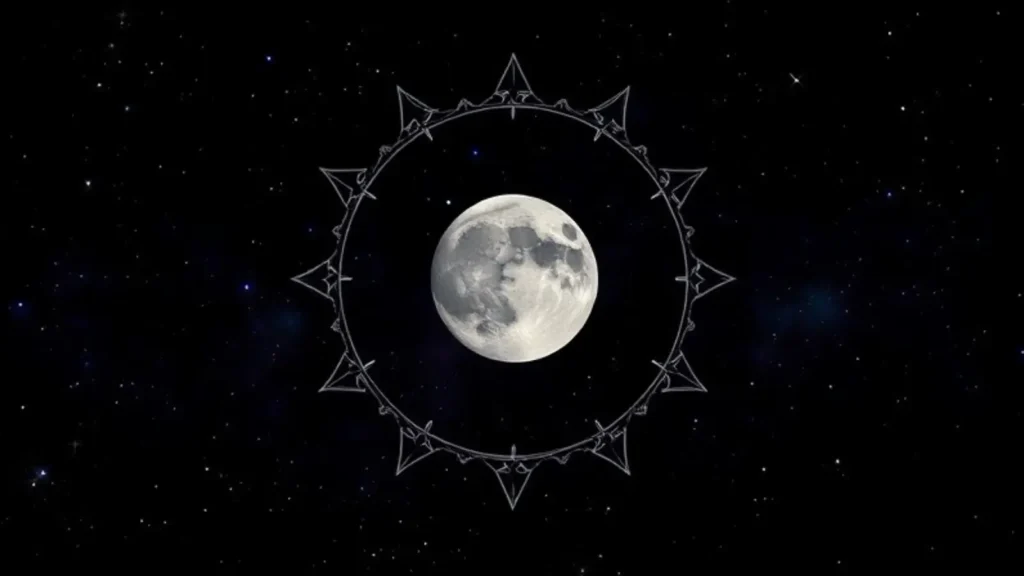
Few natural images are as useful to poets as the Moon.
Literary writers frequently use it as a metaphor for:
- Unrequited love
- Distance
- Loneliness
- Beauty
- Memory
- Change
- Emotional instability
- Hope
- Separation
- Mortality
The Moon’s physical distance makes it particularly effective for describing something deeply desired but unreachable.
Its changing appearance also makes it a natural metaphor for human identity.
Someone can be compared with the Moon because they are beautiful, distant, mysterious, changing, or visible only partially.
This flexibility explains why lunar imagery survives across languages and literary periods.
Moon Symbolism in Mythology and Folklore
Moon mythology appears worldwide, but the stories differ considerably.
Some traditions portray lunar beings as gods or goddesses. Others associate the Moon with animals, lovers, ancestors, fertility, weather, or supernatural events.
The recurring appearance of lunar themes does not mean every culture inherited exactly the same Moon myth. Mythological traditions develop through local environments, histories, migrations, religious systems, and storytelling.
Comparative research on mythology increasingly emphasizes both shared patterns and regional adaptation rather than assuming that every similar symbol has a single common origin.
Did You Know?
The “face” people see in the Moon is an example of pareidolia—the human tendency to perceive familiar forms in ambiguous visual patterns. Cultural stories can then reinforce those perceived shapes, turning visual impressions into folklore.
Moon Symbolism in Branding and Design
Moon imagery is particularly powerful in branding because it combines simplicity with emotional depth.
A crescent can communicate elegance, spirituality, night, luxury, calmness, or mystery depending on typography, color, composition, and surrounding symbols.
Common design applications
Beauty brands:
Moon imagery can suggest elegance, nighttime rituals, transformation, or femininity.
Wellness brands:
Lunar cycles can communicate mindfulness, rhythm, rest, and self-reflection.
Jewelry:
Crescent and full-Moon designs often communicate romance, mystery, personal identity, or spirituality.
Hospitality:
Moon imagery can create associations with nighttime luxury and tranquility.
Technology:
A crescent or dark lunar visual can communicate night mode, privacy, quietness, or futuristic design.
The meaning does not come from the Moon symbol alone. Color psychology, typography, cultural context, and composition modify the message.
Moon Symbolism in Modern Digital Culture
The Moon has become even more accessible as a symbolic language through emojis, usernames, tattoos, social media captions, wallpapers, logos, and digital art.
The crescent emoji can express nighttime, peace, mystery, romance, sleep, or aesthetic preference without requiring a sentence.
This is a form of visual shorthand.
Modern digital communication favors symbols that are immediately recognizable. The Moon works particularly well because people already understand its basic visual form.
A single 🌙 can therefore function as:
- An emotional cue
- A nighttime marker
- An aesthetic element
- A spiritual reference
- A romantic symbol
- A mood indicator
The interpretation depends heavily on surrounding text.
Myth vs. Fact: Understanding Moon Symbolism Correctly
| Myth or oversimplification | More accurate interpretation |
| The Moon always represents femininity | Some traditions portray lunar deities as male |
| The crescent is exclusively an Islamic symbol | It predates Islam and developed multiple cultural meanings |
| The full Moon universally causes madness | The association is historically and culturally powerful, but symbolism is not proof of causation |
| The Moon always means intuition | Intuition is one modern symbolic interpretation among many |
| Every culture sees the Moon the same way | Lunar symbolism varies considerably by culture |
| Moon symbolism is purely spiritual | It also functions in calendars, art, literature, politics, branding, and communication |
Common Mistakes When Interpreting Moon Symbolism
1. Treating one culture as universal
A meaning from Western astrology should not automatically be presented as an ancient global belief.
2. Assuming the Moon is always feminine
Historical traditions demonstrate considerable variation.
3. Confusing symbolism with science
A symbol can represent intuition without proving that the Moon biologically controls intuition.
4. Ignoring lunar phases
A crescent, full Moon, and waning Moon can communicate very different ideas.
5. Removing historical context
A modern crescent logo may have a different meaning from a crescent appearing on an ancient artifact.
6. Overlooking personal meaning
Someone may associate the Moon with a loved one, childhood memory, grief, travel, religion, or creativity.
Symbolic interpretation should leave room for that personal dimension.
Practical Applications of Moon Symbolism
Understanding lunar symbolism can be useful far beyond mythology.
For writers
Use the Moon to establish atmosphere, distance, longing, transition, or mystery.
For artists
Consider lunar phases when communicating emotional development.
For designers
Choose between crescent, half-Moon, and full-Moon imagery according to the message you want viewers to perceive.
For educators
Use the Moon to teach connections between astronomy, history, religion, anthropology, literature, and visual culture.
For marketers
Research the cultural meaning of lunar imagery before using it in international campaigns.
For individuals
A Moon tattoo, necklace, painting, or digital symbol can become a personal metaphor for change, resilience, memory, or renewal.
Expert Insight: Why the Moon Became Such a Powerful Symbol
The Moon combines several characteristics that are unusually effective for symbolic communication.
It is:
- Visible but distant
- Constant but changing
- Bright but associated with darkness
- Predictable but visually mysterious
- Natural but culturally constructed
- Shared by everyone but interpreted differently
That combination gives the Moon extraordinary symbolic flexibility.
A symbol that never changed would eventually become predictable.
A symbol that changed randomly would be difficult to interpret.
The Moon occupies the middle ground: it changes, but according to a recognizable cycle.
That is precisely why it so often represents transformation.
Key Insights About Moon Symbolism
The most important lessons can be summarized simply:
- Moon symbolism is culturally variable.
- Cycles are among its most persistent meanings.
- The lunar phases create different symbolic interpretations.
- The Moon can represent both darkness and illumination.
- Its symbolism crosses mythology, religion, art, literature, and design.
- The Moon is not universally feminine or masculine.
- The crescent has meanings that extend far beyond any single religion.
- Personal experience can transform a public symbol into an intimate one.
- Modern brands use lunar imagery because it communicates complex emotions economically.
- Understanding context is more important than memorizing a single definition.
Frequently Asked Questions About Moon Symbolism
What is the main symbolism of the Moon?
The Moon commonly symbolizes cycles, transformation, mystery, time, renewal, emotional reflection, beauty, and the relationship between darkness and light. Its exact meaning depends on the cultural, religious, artistic, or personal context in which it appears.
What does the full Moon symbolize?
The full Moon commonly represents completion, wholeness, abundance, visibility, celebration, and fulfillment. In some East Asian traditions, the full Moon is strongly associated with family reunion and seasonal harvest celebrations.
What does a crescent Moon symbolize?
A crescent Moon can symbolize growth, emergence, hope, transition, and new beginnings. Historically, however, the crescent has had many meanings across cultures and should not automatically be interpreted as belonging exclusively to one religion or tradition.
Why is the Moon associated with femininity?
Some cultures and modern spiritual traditions associate the Moon with femininity because of its cycles, nighttime presence, fertility symbolism, and relationships with lunar goddesses. However, this is not universal. Several important traditions, including Hindu traditions involving Chandra/Soma and Japanese mythology involving Tsukuyomi, demonstrate that lunar figures can also be male.
What does the Moon symbolize spiritually?
Spiritually, the Moon is often interpreted as a symbol of inner reflection, intuition, transformation, renewal, hidden knowledge, emotional awareness, and guidance through darkness. These meanings belong to spiritual and symbolic traditions rather than constituting scientific claims about the Moon.
Why does the Moon appear so often in literature and art?
The Moon is visually distinctive and metaphorically flexible. Its changing phases, nighttime visibility, distance, reflected light, and recurring presence allow artists and writers to explore themes such as love, loneliness, mystery, memory, beauty, mortality, change, and hope.
Final Takeaways
Moon symbolism is ultimately a language of cycles.
The Moon rises, changes, disappears, and returns. Human cultures have transformed those observable patterns into stories about birth and death, love and separation, growth and decline, mystery and knowledge, solitude and reunion.
Its meanings are not identical everywhere. Mesopotamian lunar religion, Chinese Moon Festival traditions, Japanese moon viewing, South Asian religious traditions, European mythology, Islamic visual culture, modern spirituality, literature, branding, and digital communication all demonstrate different relationships with the same celestial object.
That diversity is what makes the Moon such a powerful symbol.
Rather than asking, “What does the Moon always mean?” a better question is:
“What does the Moon mean here, to these people, in this historical and cultural context?”
That question turns a simple lunar image into a much richer study of human perception, culture, identity, storytelling, religion, art, and communication.

Amelia Rosewood writes about symbolic meanings, ancient traditions, and the emotional connections between humans and symbols.
