Fire is one of humanity’s oldest and most emotionally powerful symbols. Before it became an image in paintings, literature, religious ceremonies, logos, films, or digital media, fire was a practical force that changed human life.
It provided warmth, light, protection, cooking, and technological possibility but it could also destroy homes, forests, and entire landscapes. That extraordinary combination helps explain why fire symbolism contains so many apparently contradictory meanings.
Across cultures, fire can represent life and death, creation and destruction, love and anger, knowledge and danger, purification and punishment.
In religious traditions, it may signify divine presence or spiritual transformation. In psychology and storytelling, flames often communicate intensity, desire, courage, conflict, or rebirth. In branding and visual communication, fire can suggest energy, speed, innovation, urgency, or excitement.
Understanding fire symbolism therefore requires more than memorizing a list of meanings. Its interpretation depends on context, culture, color, scale, behavior, and the story surrounding it.
What Does Fire Symbolize?
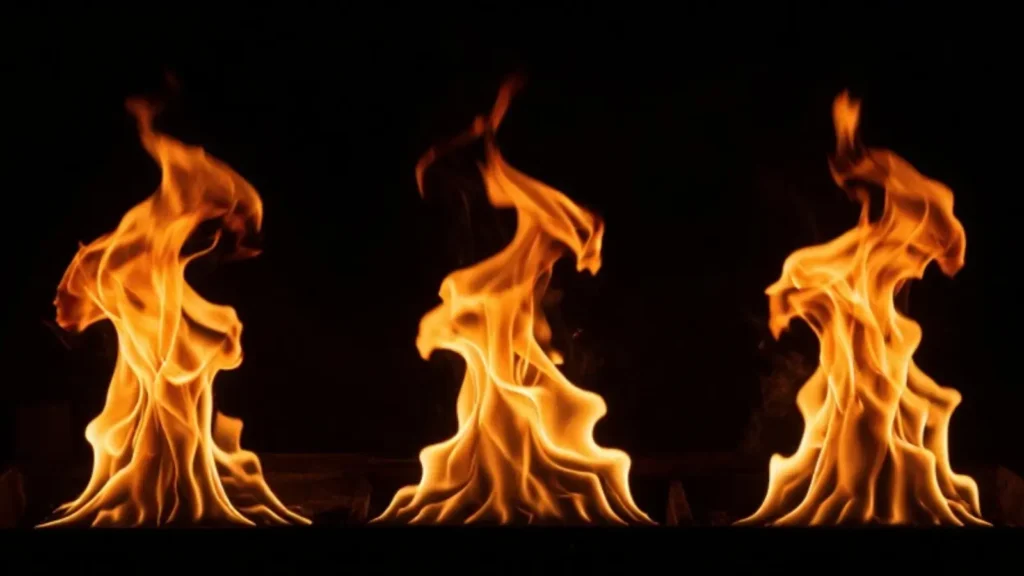
Fire commonly symbolizes transformation, energy, passion, purification, illumination, power, destruction, renewal, and spiritual presence.
Its meaning changes according to context: a warm hearth can suggest home and protection, while a wildfire can represent danger and uncontrollable destruction. Religious traditions may associate sacred fire with divine presence, ritual purity, truth, or spiritual awakening.
The important point is that fire has no single universal meaning. It is a polysemous symbol—one physical phenomenon capable of carrying many cultural and emotional meanings.
A candle flame, a fireplace, a forest fire, a ritual flame, and a burning city may all contain fire, yet their symbolic messages are radically different.
Why Is Fire Such a Powerful Symbol?
Fire has an unusual position in human perception because it is simultaneously useful, beautiful, unpredictable, and dangerous.
Humans can sit beside a controlled flame and experience comfort. The same humans can fear a fire that moves beyond control. This tension between control and chaos is central to fire symbolism.
Fire also transforms whatever it touches. Wood becomes ash. Metal can be melted and reshaped. Food changes through heat. Darkness becomes visible space when a flame appears.
Because of this transformative quality, fire naturally became associated with concepts such as:
- Transformation
- Renewal
- Purification
- Destruction
- Creation
- Knowledge
- Energy
- Passion
- Courage
- Danger
- Power
- Spiritual illumination
In symbolic language, fire often represents a process rather than a static condition.
Water may symbolize emotional depth or life; earth may symbolize stability; air may suggest freedom or thought. Fire, by contrast, frequently communicates movement, change, intensity, and transformation.
The Historical Origins of Fire Symbolism
The symbolic importance of fire developed alongside its practical importance.
Long before written religious texts existed, controlled fire affected human survival. It provided warmth during cold periods, helped protect settlements from animals, allowed food to be cooked, and eventually became essential to craft and metallurgy.
These practical experiences created the foundation for symbolic thinking.
A fire that keeps a family warm can become associated with home.
A flame that lights darkness can become associated with knowledge.
A fire that consumes unwanted material can become associated with purification.
A destructive blaze can become associated with anger, punishment, or catastrophe.
This process illustrates an important principle of anthropology and semiotics: symbols frequently emerge from repeated relationships between human experience and the natural world.
Fire as Transformation
One of the oldest symbolic ideas connected with fire is transformation.
Fire changes substances visibly and dramatically. This makes it an intuitive metaphor for personal change, spiritual development, social revolution, and emotional intensity.
The expression “forged in fire,” for example, works because heat and pressure are culturally understood as forces that test and transform materials.
Fire and Human Civilization
Fire is also closely connected with technological development. Pottery, metallurgy, glassmaking, cooking, heating, and numerous industrial processes depend on controlled heat.
Consequently, fire symbolism can represent not only destruction but also human ingenuity and civilization.
This duality is important: fire is dangerous precisely because it is powerful, yet that same power makes it useful.
Fire Symbolism Across Major Cultures and Traditions
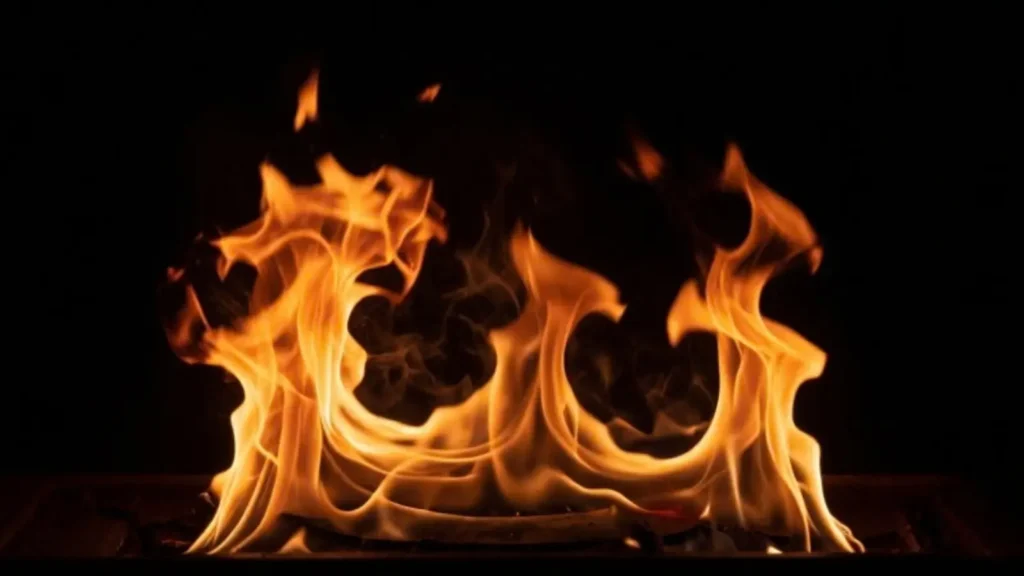
Fire appears in myths, rituals, religious practices, ceremonies, and visual traditions across the world. However, it is a mistake to assume that every culture assigns exactly the same meaning to it.
| Cultural or religious context | Common associations with fire |
| Ancient Iranian traditions | Sacredness, truth, ritual, divine order |
| Zoroastrianism | Sacred presence, purity, truth, spiritual focus |
| Vedic Hindu traditions | Sacrifice, ritual communication, transformation, divine intermediary |
| Ancient Greek traditions | Hearth, civilization, divine gifts, continuity |
| Jewish and Christian traditions | Divine presence, judgment, purification, illumination |
| Mythology generally | Creation, destruction, knowledge, power, transformation |
| Modern Western symbolism | Passion, energy, rebellion, danger, innovation |
| Contemporary branding | Speed, excitement, power, youthfulness, urgency |
These are broad patterns, not rigid rules. Historical periods and communities can interpret the same symbol differently.
Fire Symbolism in Zoroastrianism
Fire occupies an especially important position in Zoroastrian religious tradition.
Encyclopaedia Iranica describes fire as central to Zoroastrian ritual and explains its connections with truth, moral significance, and divine judgment. Zoroastrians are sometimes inaccurately described simply as “fire worshippers”; the tradition itself understands sacred fire as an aid or symbol through which attention can be directed toward God and truth.
Sacred fires have historically been carefully maintained, and fire temples developed as institutions associated with consecrated fire. Encyclopaedia Iranica notes that the temple cult of fire appears to have been established relatively late in Zoroastrian history, rather than simply existing unchanged from the earliest period.
This distinction matters because it demonstrates how symbolism evolves. The modern image of a Zoroastrian fire temple cannot simply be projected backward onto every period of ancient Iranian history.
In this context, fire can signify:
- Truth
- Purity
- Moral order
- Divine connection
- Vigilance
- Spiritual discipline
- Continuity
Fire also appears in Zoroastrian eschatological ideas, including imagery involving a final fiery ordeal.
Did You Know?
Some ancient Iranian sacred fires became associated with social and political institutions. Encyclopaedia Iranica records traditions surrounding major sacred fires and their relationships with royal and social identities.
Fire Symbolism in Hinduism and Vedic Tradition
Fire has a profound place in Vedic religious tradition, particularly through Agni, the deity associated with fire.
In ritual contexts, fire is not merely something to observe. It can function as a medium through which offerings are transformed and presented within a sacred framework.
This gives fire a distinctive symbolic role: it is both visible flame and ritual process.
Fire can therefore represent:
- Sacrifice
- Transformation
- Communication between human and divine realms
- Ritual purity
- Energy
- Life
- Spiritual power
The symbolic logic is especially compelling because offerings disappear into fire while smoke and flame rise upward. The physical movement of the ritual provides a powerful visual metaphor for transformation and transcendence.
Fire Symbolism in Judaism and Christianity
Biblical traditions contain numerous uses of fire symbolism.
Fire can represent divine presence, judgment, purification, holiness, power, and spiritual intensity. Biblical references include the burning bush associated with Moses, the pillar of fire, divine fire at sacred moments, and the imagery of refining and judgment.
The burning bush is especially significant because the fire is not simply destructive. The bush burns without being consumed, creating a symbolic image of divine presence that exceeds ordinary physical expectations.
In Christianity, Pentecost provides another important example. Acts describes the Holy Spirit appearing through “tongues of fire,” linking fire imagery with spiritual empowerment and divine activity.
Fire therefore carries both positive and negative meanings within biblical symbolism.
It can suggest:
Presence: God is near.
Purification: Something is being refined.
Judgment: Wrongdoing faces consequences.
Illumination: Darkness is overcome.
Spiritual energy: Divine power is active.
This complexity explains why fire cannot automatically be classified as either a “good” or “bad” religious symbol.
Fire in Ancient Greek Mythology
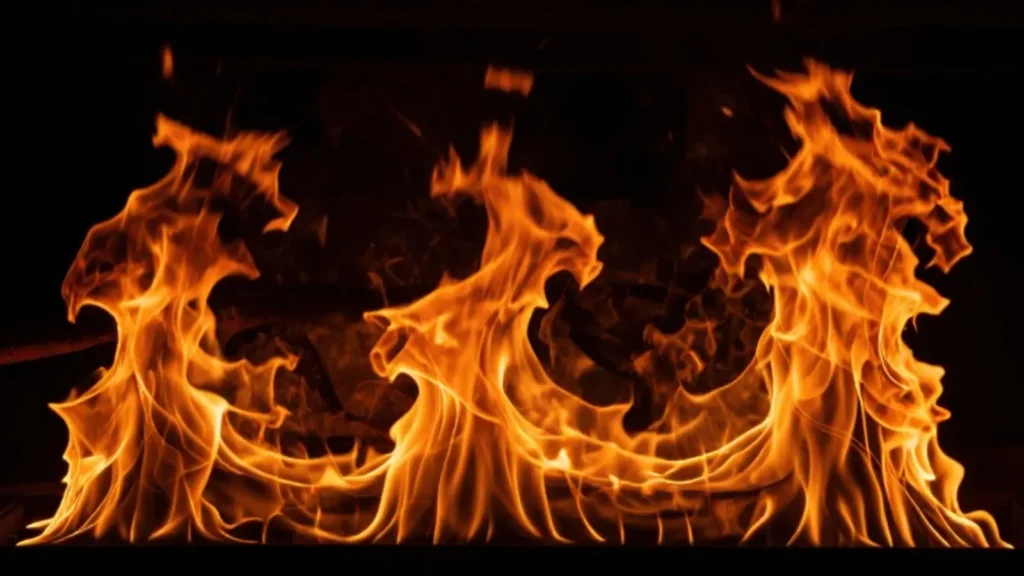
Greek mythology provides another famous example through Prometheus, who is traditionally associated with bringing fire to humanity.
The myth gives fire an additional symbolic dimension: knowledge, technology, civilization, and rebellion.
Fire becomes more than warmth. It becomes a resource that changes what humans are capable of doing.
The Prometheus story is therefore frequently interpreted through themes of:
- Human ingenuity
- Knowledge
- Defiance
- Sacrifice
- Progress
- Divine-human tension
Fire can also symbolize domestic continuity through the hearth. The hearth is fundamentally different from a battlefield blaze: it represents stability, household life, and social continuity.
This contrast illustrates one of the most important principles in interpreting fire symbolism:
The meaning of fire depends on what the fire is doing.
A controlled hearth and an uncontrolled wildfire are symbolically different even though both involve flames.
The Psychological Meaning of Fire
From a psychological perspective, fire imagery often evokes arousal, intensity, danger, movement, and transformation.
These associations do not mean that every person will interpret fire identically. Personal experience matters. Someone who associates fireplaces with family gatherings may experience warm fire imagery positively. Someone affected by a destructive fire may have a very different emotional response.
Fire and Passion
Fire is frequently used as a metaphor for romantic or emotional intensity.
We speak of:
- Burning desire
- Fiery passion
- A spark between two people
- Keeping the flame alive
- Falling in love
- A relationship losing its spark
These expressions rely on a shared conceptual metaphor: intense emotion behaves like fire.
Fire and Anger
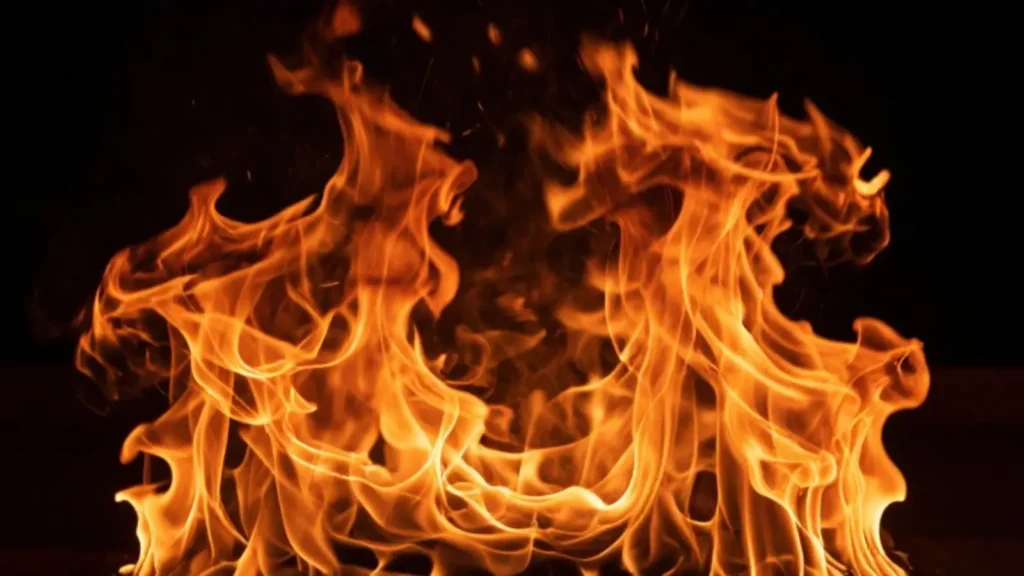
Anger is also frequently represented through fire.
A person may be described as:
- Burning with anger
- Fiery
- Hot-headed
- Exploding
- Fuming
The metaphor works because uncontrolled fire spreads rapidly and can cause damage, much like uncontrolled emotional escalation.
Fire and Motivation
Modern motivational language often uses fire positively:
“Find your fire.”
“Keep the fire alive.”
“Light a fire under yourself.”
Here, fire represents ambition, enthusiasm, determination, and momentum.
Spiritual Meaning of Fire
In spiritual symbolism, fire often represents an inner process of awakening or transformation.
Common spiritual interpretations include:
- Purification — removing what is considered harmful or unnecessary.
- Awakening — becoming conscious of something previously hidden.
- Transformation — entering a new stage of life.
- Illumination — discovering truth or understanding.
- Devotion — maintaining an inner commitment.
- Renewal — beginning again after loss.
- Divine presence — experiencing sacred reality.
- Life force — representing energy and vitality.
However, these interpretations belong to symbolic and spiritual frameworks rather than established scientific facts.
An important EEAT principle is therefore to distinguish religious belief from empirical evidence. A spiritual tradition may interpret fire as cleansing or sacred without that interpretation being a scientific claim about the physical properties of fire.
Fire Symbolism in Art and Visual Communication
Artists have used fire to communicate ideas that words alone may struggle to express.
A flame can visually suggest movement because it is never completely still. Its shape changes constantly, creating a sense of life, instability, and energy.
Artists can manipulate:
- Flame size
- Brightness
- Color
- Surrounding darkness
- Smoke
- Human interaction
- Location
- Scale
to alter the meaning of the image.
Fire and Light
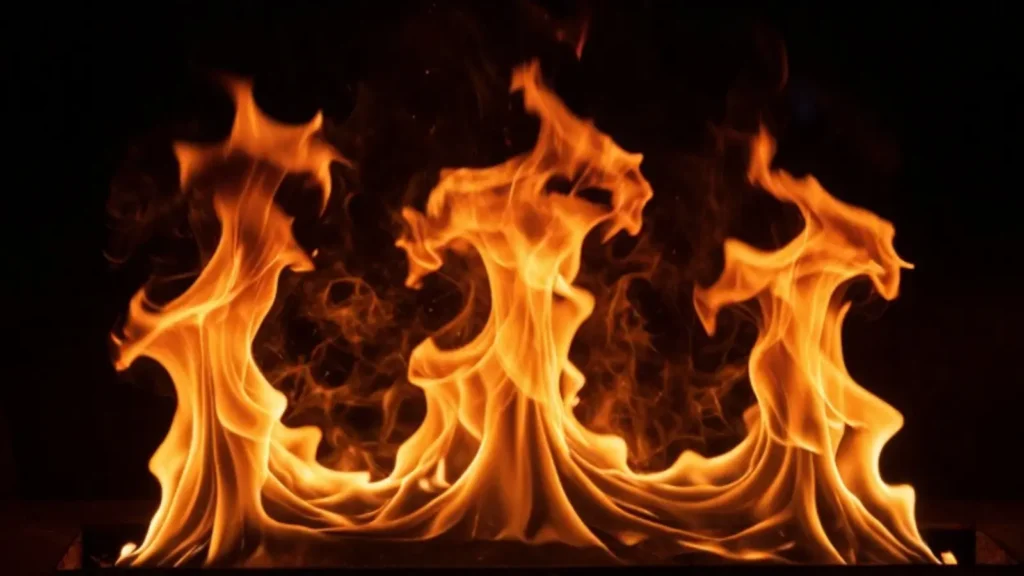
A small candle against darkness can communicate hope.
A huge inferno can communicate catastrophe.
A torch held by a figure can symbolize guidance.
A glowing ember can suggest memory or survival.
This is visual semiotics in practice: the meaning comes not simply from the object but from the relationships surrounding it.
Fire Symbolism in Literature and Storytelling
Writers frequently use fire as a metaphor because it naturally supports narrative transformation.
Fire can mark the moment when a character changes.
It can destroy an old world before a new one emerges.
It can represent forbidden desire.
It can expose hidden truth.
It can symbolize war, rebellion, or revolution.
It can also function as a recurring motif.
For example, a character who repeatedly returns to a dying fireplace may symbolize fading hope. A character who carries a flame may represent memory, knowledge, or responsibility.
Fire as a Storytelling Device
Fire works especially well in stories because it creates an immediate question:
Will it spread, survive, disappear, or be controlled?
That uncertainty creates narrative tension.
Fire Symbolism and Color Psychology
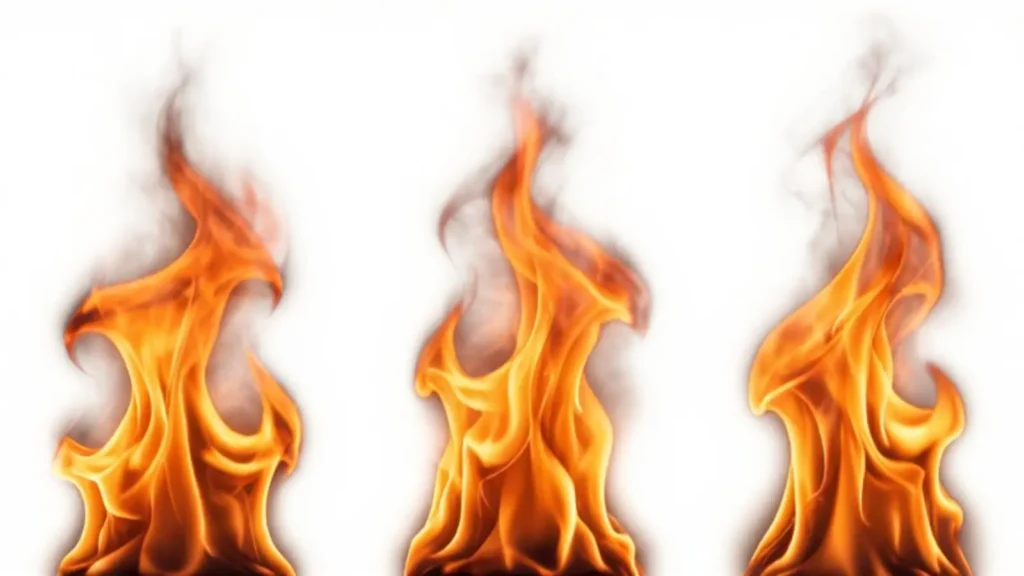
Color significantly changes how people interpret fire imagery.
| Fire color | Common symbolic associations |
| Red | Passion, danger, anger, power |
| Orange | Warmth, energy, enthusiasm, movement |
| Yellow | Light, optimism, attention, brightness |
| White | Purity, intensity, transcendence |
| Blue | Unusualness, control, mystery, cool intensity |
| Blackened smoke | Loss, danger, destruction, uncertainty |
These are cultural and perceptual associations rather than universal psychological laws.
In branding, for example, orange flames can feel energetic and approachable, while red flames may feel more urgent or aggressive.
Fire Symbolism in Branding and Marketing
Fire is a popular visual metaphor in branding because it communicates energy quickly.
Companies, sports teams, entertainment projects, fitness brands, restaurants, technology products, and social-media campaigns may use flame imagery to suggest:
- Speed
- Performance
- Excitement
- Competition
- Innovation
- Youth
- Energy
- Boldness
A flame icon can make a product appear energetic without requiring a long explanation.
Expert Tip
If you are using fire symbolism in branding, first decide which fire you want the audience to imagine.
A cozy fireplace communicates warmth.
A torch communicates guidance.
A candle communicates intimacy or remembrance.
A campfire communicates community.
A wildfire communicates danger and uncontrolled power.
A rocket-like flame communicates speed.
The same symbol can produce completely different brand impressions depending on visual context.
Fire Symbolism in Architecture and Public Spaces
Fire has also influenced architecture through the design of hearths, fireplaces, memorial flames, lanterns, ceremonial fires, and public monuments.
The hearth historically provided a physical center for domestic life. Modern architecture often recreates this symbolic function through fireplaces, fire pits, and communal gathering spaces.
A fire can encourage people to gather around a common point.
That makes it a useful symbol of:
Community + warmth + conversation + belonging
Memorial flames operate differently. A continuously burning flame can symbolize remembrance and continuity—the idea that a person’s memory or a community’s history continues after physical absence.
Fire Symbolism in Modern Digital Communication
Fire has become one of the most recognizable symbols in digital culture.
The 🔥 emoji can communicate:
- Excitement
- Approval
- Attractiveness
- Success
- Trendiness
- High performance
- Intensity
For example, calling a new song “🔥” does not normally mean the song is literally burning. Instead, the flame has become a compressed visual metaphor for exceptional energy or appeal.
This demonstrates how symbols evolve.
A natural phenomenon that once required physical experience can now be represented by a tiny digital character.
Myth vs. Fact: Fire Symbolism
| Myth | Fact |
| Fire always symbolizes destruction. | Fire can symbolize creation, warmth, purification, knowledge, or destruction. |
| Fire has one universal meaning. | Its meaning varies across cultures and contexts. |
| Zoroastrians simply “worship fire.” | Sacred fire functions within a broader theological framework and is associated with truth and divine focus. |
| Red fire always means anger. | Color changes interpretation, but context remains important. |
| Fire symbolism is purely spiritual. | Fire also has major roles in psychology, art, technology, branding, literature, and everyday communication. |
| Ancient fire symbolism has remained unchanged. | Meanings have developed and shifted across historical periods. |
Common Mistakes When Interpreting Fire Symbolism
1. Assuming One Universal Meaning
Fire does not always mean passion or destruction.
2. Ignoring Cultural Context
A symbol associated with spirituality in one tradition may represent danger or political rebellion in another.
3. Treating Symbolism as Science
Symbolic interpretations should not be presented as experimentally proven psychological laws.
4. Ignoring the Type of Fire
A candle, hearth, torch, wildfire, volcano, and ritual flame have different visual and cultural meanings.
5. Overlooking Personal Experience
Symbolism is partly shaped by memory and lived experience.
6. Confusing Modern Usage With Ancient Meaning
A modern flame emoji cannot automatically be treated as evidence of what fire symbolized thousands of years ago.
Practical Applications of Fire Symbolism
Understanding fire symbolism can be useful far beyond academic study.
In Branding
Use flames to communicate energy, performance, speed, or boldness.
In Graphic Design
Use controlled flame imagery for warmth and community, or dramatic flames for intensity and danger.
In Writing
Use fire as a metaphor for desire, ambition, conflict, transformation, or destruction.
In Education
Fire symbolism can help students compare mythology, religion, anthropology, literature, and visual culture.
In Storytelling
A flame can become a recurring motif that represents a character’s changing emotional state.
In Photography
Contrast between flame and darkness can create powerful visual storytelling.
In Personal Symbolism
People may choose candles, flames, or hearth imagery to represent remembrance, resilience, transformation, or hope.
Key Insights About Fire Symbolism
The deepest lesson of fire symbolism is its duality.
Fire gives and takes.
It warms and burns.
It illuminates and destroys.
It gathers people together and can drive them apart.
It can represent beginnings and endings.
This duality makes fire especially effective as a symbolic language.
Rather than asking, “What does fire symbolize?” a more useful question is:
“What kind of fire is this, what is it doing, and what cultural story surrounds it?”
That approach produces a much more accurate interpretation.
Frequently Asked Questions About Fire Symbolism
What is the main meaning of fire symbolism?
Fire symbolism commonly represents transformation, passion, energy, purification, illumination, power, destruction, renewal, and spiritual presence. The specific meaning depends on cultural tradition, historical period, visual context, and the type of fire being represented.
What does fire symbolize spiritually?
Spiritually, fire can symbolize purification, awakening, divine presence, devotion, transformation, truth, and inner energy. Different religions interpret sacred fire differently, so spiritual fire symbolism should always be understood within its particular theological tradition.
Why does fire symbolize transformation?
Fire visibly changes materials through heat. Wood becomes ash, metals can melt and be reshaped, and darkness can become illuminated. Because these physical changes are easy to observe, fire became a powerful metaphor for emotional, spiritual, social, and personal transformation.
What does fire symbolize in Christianity?
Christian traditions use fire in several symbolic ways, including divine presence, judgment, purification, and spiritual power. Pentecost is a particularly important example because Acts describes the Holy Spirit appearing through tongues resembling fire.
What does fire symbolize in Zoroastrianism?
Fire has a central ritual and symbolic role in Zoroastrianism and is associated with truth, purity, moral order, and spiritual attention. Sacred fire is not adequately described simply as an object of worship; Zoroastrian sources emphasize its role as a sacred focus connected with God and truth.
What does the fire emoji mean?
The 🔥 emoji commonly communicates excitement, attractiveness, enthusiasm, approval, excellence, or something considered highly successful or impressive. Its meaning depends heavily on the conversation and surrounding text.
Key Takeaways
- Fire symbolism is fundamentally about power and transformation.
- Fire can represent both creation and destruction.
- It commonly symbolizes passion, energy, purification, knowledge, renewal, and danger.
- Religious traditions give fire highly specific meanings that should be understood within their own historical contexts.
- Zoroastrianism gives sacred fire an especially important ritual and theological role.
- Biblical traditions use fire to represent divine presence, judgment, purification, and spiritual power.
- Fire symbolism appears in mythology, anthropology, psychology, art, literature, architecture, branding, and digital communication.
- The meaning of a flame changes according to its color, setting, scale, behavior, and cultural context.
- There is no single interpretation of fire that applies universally.
- Understanding fire symbolism means studying the relationship between physical experience, cultural memory, visual language, and human meaning-making.
Final thoth
Primary entity:
Fire symbolism
Core semantic entities:
Fire, flame, heat, smoke, light, hearth, candle, torch, wildfire, volcano, ash, ember, burning bush, Agni, Zoroastrianism, sacred fire, Pentecost, Prometheus, mythology, religion, ritual, spirituality.
Core symbolic concepts:
Transformation, purification, passion, destruction, creation, renewal, illumination, knowledge, energy, power, danger, courage, rebirth, divine presence, judgment, sacrifice, devotion, motivation.
Psychology-related concepts:
Emotion, arousal, passion, anger, motivation, intensity, memory, perception, metaphor, personal association, emotional symbolism.

Lucas Whitmore reveals the hidden messages behind symbols, signs, and traditions through detailed symbolism guides.
