The olive tree symbolism has survived for thousands of years because the tree represents far more than a useful agricultural crop.
Across Mediterranean civilizations and major religious traditions, the olive tree has been associated with peace, prosperity, endurance, wisdom, victory, fertility, blessing, light, reconciliation, and spiritual connection.
Its symbolism developed partly from the tree’s extraordinary practical importance: olives provided food, oil, fuel, medicine, trade, and ritual materials, while the tree itself could survive difficult conditions and live for generations.
Yet olive symbolism is not identical everywhere. In ancient Greece, it was closely associated with Athena, civic identity, victory, and abundance.
In Jewish and Christian traditions, olive branches and olive-covered landscapes appear within important biblical imagery. In Islam, the Qur’an describes a “blessed olive tree” in one of its most famous metaphors for divine light.
In modern international culture, the olive branch has become one of the clearest visual signs of peace.
Understanding this symbolism therefore requires more than memorizing a list of meanings. It requires looking at history, mythology, religion, anthropology, psychology, visual communication, literature, art, and cultural memory.
Featured-Snippet Answer: What Does the Olive Tree Symbolize?
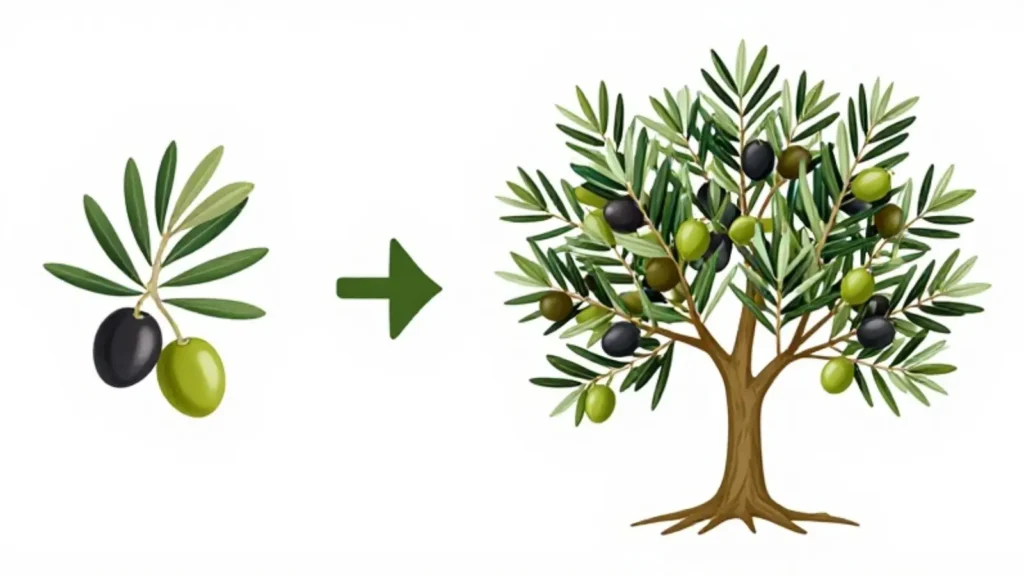
Olive tree symbolism commonly represents peace, wisdom, resilience, prosperity, fertility, victory, healing, hope, and spiritual blessing.
Its meanings developed from the tree’s importance in ancient Mediterranean life and religion. Depending on context, an olive tree can symbolize endurance and rootedness, while an olive branch specifically tends to communicate reconciliation and peace.
What Does Olive Tree Symbolism Mean?
At its broadest level, the olive tree symbolizes life that endures.
The tree grows slowly, withstands periods of drought, and can remain productive for generations. That physical reality makes it especially suitable for symbolic meanings involving patience, longevity, continuity, and resilience.
Its fruit adds another layer. Olives can be eaten, while their oil historically served culinary, medicinal, cosmetic, ritual, and lighting purposes. In the ancient Mediterranean world, olive oil was an extraordinarily versatile substance. Greeks and Romans used it for cooking, personal care, athletic practices, lamps, perfumes, rituals, and other practical purposes.
This combination of durability + usefulness + nourishment helps explain why the olive tree became such a powerful cultural symbol.
Common Olive Tree Symbolism at a Glance
| Symbolic meaning | Why it is associated with the olive |
| Peace | Olive branches became an enduring sign of reconciliation |
| Wisdom | Strong associations with Athena and thoughtful civic power |
| Resilience | The tree’s ability to endure difficult growing conditions |
| Longevity | Olive trees can remain productive across generations |
| Prosperity | Olives and oil historically supported households and economies |
| Victory | Olive wreaths were awarded to champions in ancient Greece |
| Fertility | Fruitfulness and agricultural abundance |
| Healing | Olive oil had practical and ritual uses |
| Spiritual blessing | Important imagery in biblical and Qur’anic traditions |
| Hope | The olive branch became associated with reconciliation after conflict |
| Rootedness | The tree evokes ancestry, homeland, continuity, and belonging |
| Light | Olive oil was historically used as lamp fuel and appears in sacred imagery |
The Historical Origins of Olive Tree Symbolism
Olive cultivation is deeply embedded in the history of the Mediterranean. Long before the olive became a modern decorative motif, it was part of everyday survival, commerce, religion, politics, and social identity.
The symbolism developed organically from this practical importance.
A tree that supplied food, fuel, oil, medicine, and trade naturally acquired meanings connected with abundance and sustenance. A tree that could remain productive over long periods became an obvious metaphor for continuity and endurance.
The olive also became connected with political and religious institutions.
In ancient Greece, the olive was particularly important to Athens. Classical Greek traditions connected the city’s patron goddess Athena with the gift of the olive tree. The famous myth describes a contest between Athena and Poseidon for patronage of Athens: Poseidon produced a source of water, while Athena produced an olive tree. The Athenians valued the tree’s usefulness and selected Athena. The myth therefore connects the olive with practical wisdom, civic prosperity, and the welfare of a community.
Important distinction: this is mythological tradition rather than a historical account of an actual contest between gods. Its symbolic value comes from what the story communicates about Athenian identity and the perceived value of the olive.
Olive Tree Symbolism in Ancient Greece
Ancient Greek culture provides one of the strongest foundations for understanding the symbolism of the olive.
The tree was associated with Athena, the goddess of wisdom and strategic intelligence, and became closely linked with Athens itself. Ancient Greek culture also connected the olive with athletic achievement.
Winners at the ancient Olympic Games received a wreath of wild olive called the kotinos rather than the modern medals used today.
This created an important symbolic combination:
Olive + achievement = victory with honor.
The symbolism was not simply about defeating another competitor. The olive wreath represented recognition within a larger cultural and religious tradition.
Athena and the Olive
The Athena connection also creates a fascinating symbolic contrast.
Poseidon represents overwhelming natural power through the sea, while Athena’s olive represents something cultivated, useful, sustainable, and socially valuable.
From a symbolic perspective, the story can therefore be interpreted as a celebration of intelligence over brute force and long-term usefulness over immediate spectacle.
The Metropolitan Museum of Art describes the olive in representations of Athena’s contest with Poseidon as symbolizing peace and victory.
Olive Branch Symbolism and the Meaning of Peace
The olive branch is probably the most recognizable form of olive symbolism today.
It commonly communicates:
- peace
- reconciliation
- truce
- forgiveness
- diplomacy
- nonviolence
- the end of hostility
- willingness to negotiate
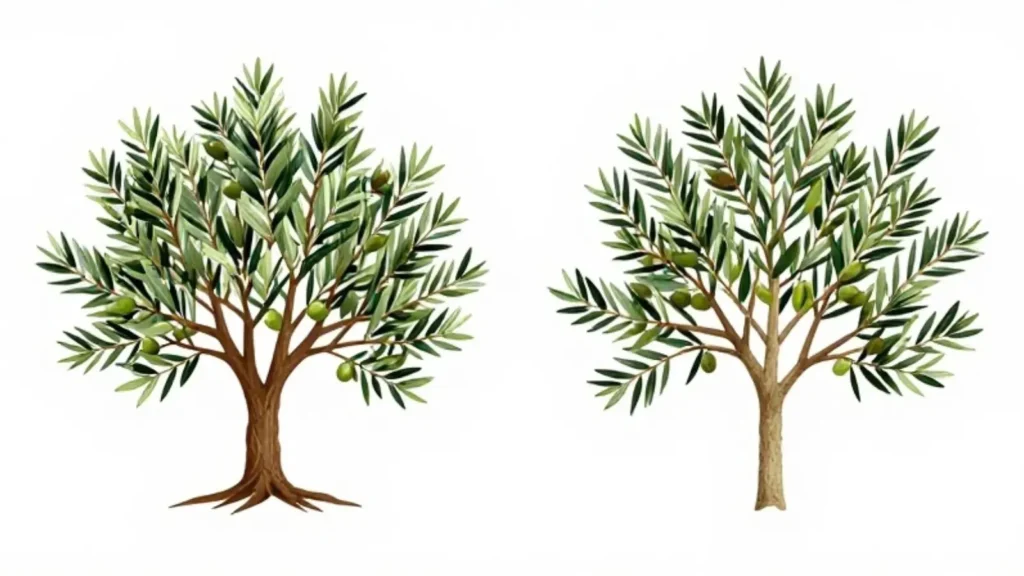
The distinction between the olive tree and the olive branch matters.
The tree has a broader symbolic vocabulary. It can represent life, endurance, prosperity, wisdom, rootedness, and sacredness.
The branch, particularly when offered or held out toward another person, has a much narrower communicative function: peaceful intention.
This is a good example of visual semiotics. Meaning changes depending on the visual form and context.
An entire olive grove can suggest heritage and abundance.
A single olive branch extended toward an opponent can suggest reconciliation.
Why the Olive Branch Became a Global Peace Symbol
The olive branch eventually moved beyond Mediterranean mythology into international political and visual culture.
The United Nations uses olive branches around a world map in its emblem. The organization explains that olive branches are ancient Greek symbols of peace and that the emblem represents hopes for world peace and unity.
Interestingly, the UN’s early design process originally involved laurel branches, traditionally associated with victory, before olive leaves were selected as a more fitting symbol of peace.
This illustrates an important shift in symbolism:
Victory over another person is replaced by peace among people.
The olive branch therefore became useful in international communication because its meaning can be understood quickly without relying on a particular spoken language.
That makes it exceptionally powerful as a visual symbol.
Olive Tree Symbolism in Judaism and the Hebrew Bible
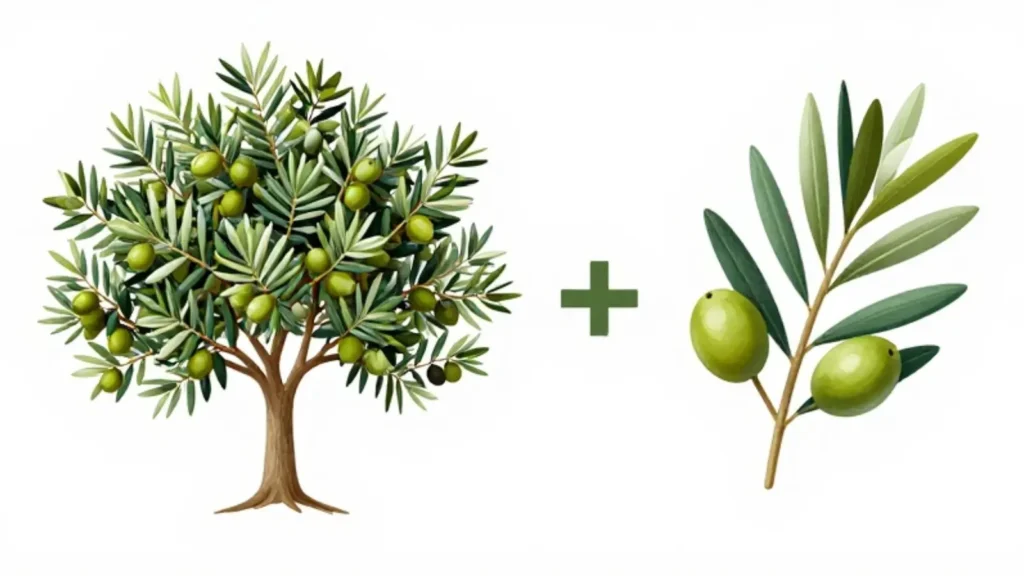
Olive imagery has deep roots in biblical literature and the landscapes of the ancient Near East.
The olive tree appears in biblical narratives, poetry, agricultural imagery, and descriptions of the land.
One of the most famous associations comes from the story of Noah, where a dove returns with an olive leaf after the flood. The image has subsequently become strongly associated with the return of peace and the end of catastrophe.
The symbolism is especially powerful because the olive leaf communicates evidence of renewed life.
The flood represents destruction.
The returning bird represents movement toward safety.
The olive leaf represents a world becoming habitable again.
Consequently, later visual culture often interprets the combination of dove + olive branch as peace, hope, and reconciliation.
Olive Tree Symbolism in Christianity
Christian symbolism inherited and expanded many biblical associations involving the olive.
The Mount of Olives is particularly important in Christian tradition because of its repeated appearance in the New Testament narrative. The ridge east of Jerusalem is associated with several major events in the life of Jesus.
Olive oil also became significant within Christian ritual traditions.
The symbolism can therefore operate on several levels:
Physical meaning
Oil nourishes, protects, illuminates, and serves practical purposes.
Ritual meaning
Oil can be associated with anointing, consecration, and sacred ceremony.
Spiritual meaning
The olive can evoke blessing, endurance, peace, and divine care.
This illustrates why religious symbolism should not be reduced to one universal definition. The same object can operate simultaneously as a physical substance, ritual element, literary metaphor, and cultural memory.
Olive Tree Symbolism in Islam
Olive symbolism also has a particularly significant place in Islamic thought.
The Qur’an refers to a “blessed olive tree” in Surah An-Nur 24:35 as part of the famous metaphor of divine light. The verse describes a lamp whose oil comes from a blessed olive tree, followed by the phrase “Light upon light.”
This is one of the most important religious examples of olive symbolism because the olive is not merely presented as an agricultural object.
It participates in a metaphor concerning light, guidance, blessing, and divine reality.
Interpretations of the verse vary among commentators, so it is better to distinguish the text itself from later interpretive traditions. The Qur’anic passage explicitly calls the olive tree blessed within the metaphor; specific theological interpretations of what every element represents are matters of exegesis rather than universally identical meanings.
For symbolic analysis, however, the association is unmistakable:
olive oil → luminosity → light → guidance
That symbolic chain has influenced Islamic art, literature, religious reflection, and cultural imagination.
Olive Tree Symbolism Across Mediterranean Culture
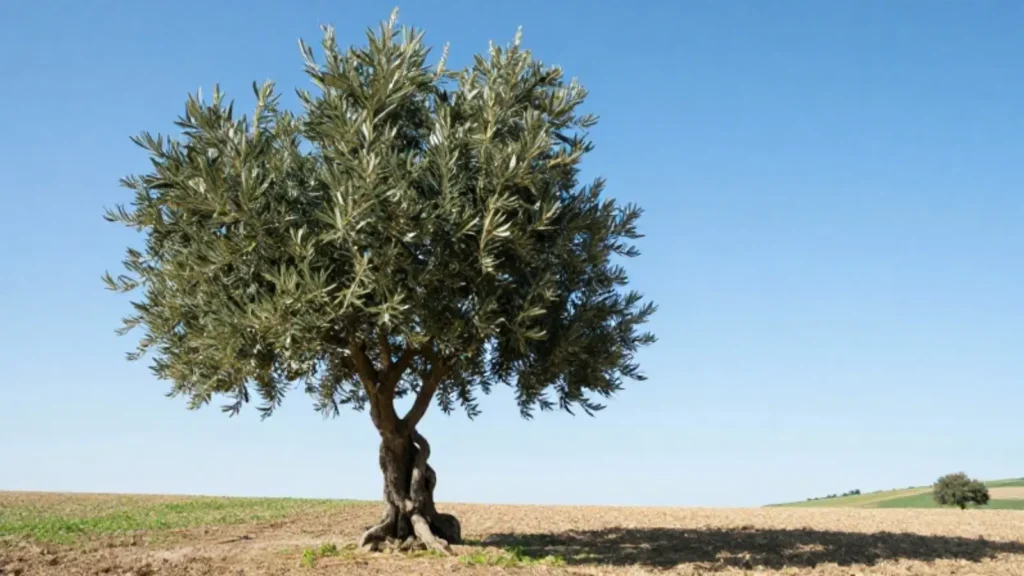
Across Mediterranean societies, the olive became intertwined with daily life.
Its symbolism is therefore partly agricultural and economic.
A successful olive harvest could mean:
- food for the household
- valuable oil
- commercial exchange
- household lighting
- personal care products
- ritual materials
- social status
- continuity of land ownership
This helps explain why olive imagery can symbolize home, ancestry, land, and identity.
In Mediterranean cultural contexts, an olive grove is not merely a landscape.
It can represent a relationship between:
people + land + memory + labor + inheritance.
That makes the olive particularly powerful in discussions of cultural identity.
Psychological Meaning of the Olive Tree
From a psychological and visual-communication perspective, olive imagery often feels calming because it combines several familiar natural associations.
Green foliage is commonly associated with nature and renewal, while the branching structure of a mature tree suggests stability and growth.
However, it is important not to claim that a particular color or plant has one scientifically fixed psychological meaning. Human responses to symbols are influenced by culture, personal experience, context, and learned associations.
The olive tree can nevertheless function as a visual archetype of rootedness.
Its roots suggest:
- belonging
- ancestry
- stability
- continuity
Its trunk suggests:
- strength
- persistence
- structure
Its branches suggest:
- connection
- expansion
- generosity
Its fruit suggests:
- abundance
- productivity
- nourishment
This makes the olive tree especially useful in storytelling and visual identity.
Olive Tree Symbolism in Art and Iconography
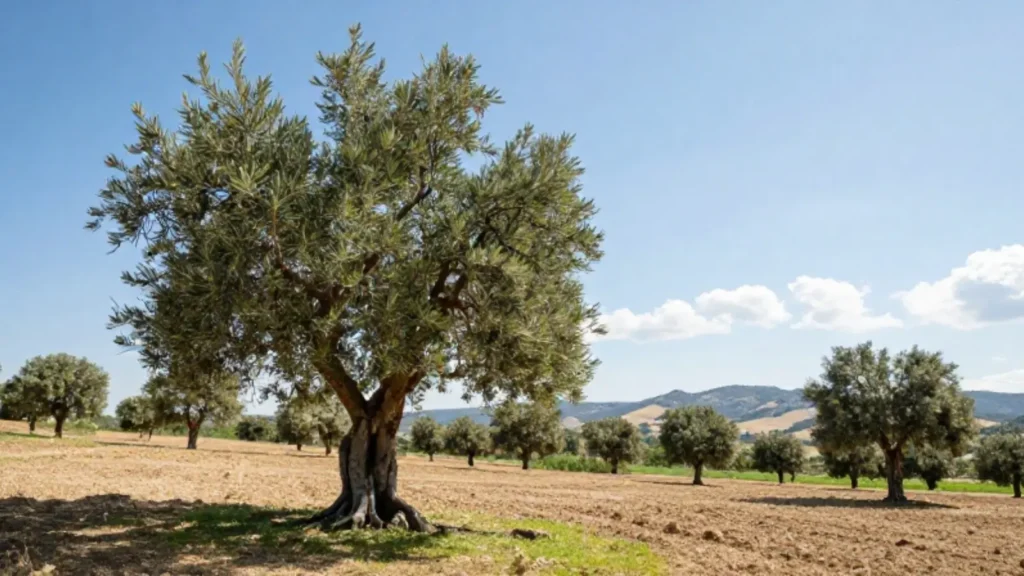
Artists have repeatedly used olive imagery because it allows abstract ideas to become visible.
A painter can show an olive branch instead of writing the word “peace.”
A sculptor can place an olive wreath on a victorious figure.
A religious artist can use olive trees to establish geographical and spiritual context.
A designer can incorporate olive leaves into a logo to communicate naturalness, heritage, calmness, or Mediterranean identity.
This is the basic power of iconography: an image carries associations that audiences have learned through culture.
The olive tree is particularly effective because its visual form is recognizable even when stylized.
Olive Tree Symbolism in Literature
In literature, the olive tree frequently functions as more than scenery.
It can represent a character’s relationship with home.
An olive grove may signify inherited land, family history, or a disappearing way of life.
A solitary olive tree can symbolize endurance.
An olive branch can represent an attempt at reconciliation.
A damaged or uprooted tree can symbolize displacement, war, cultural loss, or broken continuity.
This makes the olive especially effective in historical and contemporary writing about identity.
Literary symbolism often works through contrast
For example:
Rooted olive tree → belonging
Uprooted olive tree → displacement
Fruitful olive tree → abundance
Burned olive tree → destruction
New olive shoot → renewal
The meaning emerges from the narrative context rather than from the object alone.
Olive Tree Symbolism in Philosophy
Philosophically, the olive tree invites reflection on time.
Modern culture often rewards speed. The olive represents something different: slow growth with long-term value.
It can therefore symbolize the principle that meaningful things do not always develop quickly.
An olive grove also raises questions about stewardship.
Planting a tree is an action whose full benefits may extend beyond the individual who plants it. In that sense, the olive can represent intergenerational responsibility.
Its symbolism becomes:
What we cultivate today may nourish people we will never meet.
That interpretation connects ancient agricultural culture with modern discussions about sustainability, inheritance, environmental ethics, and community responsibility.
Olive Tree Symbolism in Branding and Design
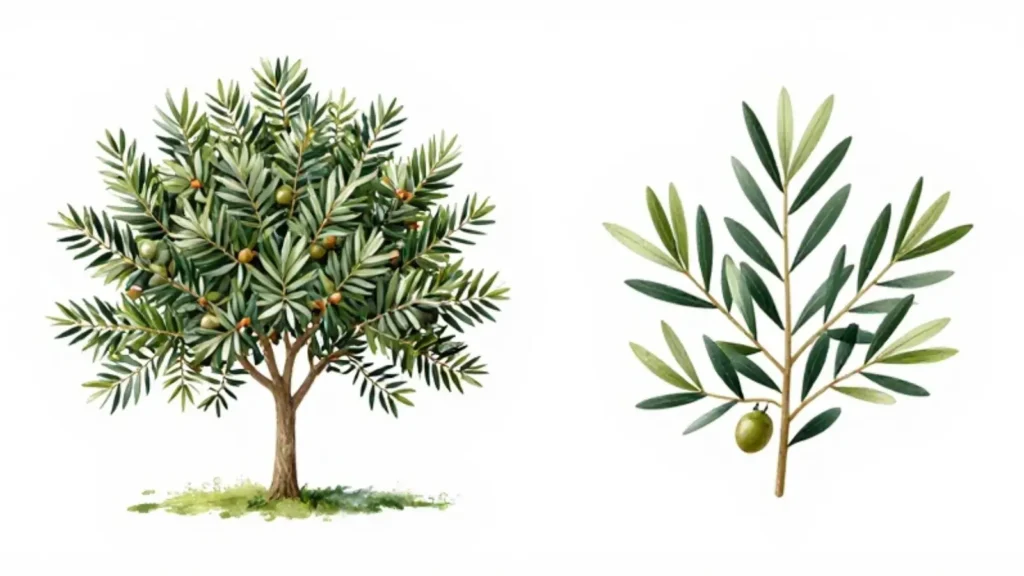
Olive imagery is highly effective in branding because it carries multiple associations simultaneously.
A company using an olive branch may want to communicate:
- trust
- peace
- natural ingredients
- tradition
- craftsmanship
- Mediterranean heritage
- purity
- wellness
- sophistication
- sustainability
But there is a branding risk.
Common Mistakes
Mistake 1: Assuming olive always means peace.
The tree has many meanings beyond peace.
Mistake 2: Using an olive branch without understanding cultural context.
In some settings, the imagery may suggest diplomacy, religion, heritage, or political reconciliation.
Mistake 3: Overloading the logo.
Adding olive branches, doves, crowns, leaves, columns, and other symbolic elements can make the visual identity generic.
Mistake 4: Treating “natural” as automatically credible.
An olive leaf can communicate naturalness visually, but branding claims still need factual support.
Practical Applications of Olive Tree Symbolism
Olive imagery can be used thoughtfully in many areas.
Branding
Useful for food, hospitality, wellness, agriculture, Mediterranean businesses, ethical organizations, and heritage-focused brands.
Education
Teachers can use the olive to explain mythology, ancient economies, religion, symbolism, agriculture, and visual communication.
Interior Design
Olive branches and tree motifs can create associations with nature, calm, heritage, and Mediterranean aesthetics.
Weddings
Olive leaves are often used decoratively to suggest peace, longevity, harmony, and enduring partnership.
Literature and Storytelling
An olive grove can establish place while simultaneously communicating ancestry, resilience, and belonging.
Diplomacy
The olive branch remains a widely understood metaphor for peaceful negotiation.
Digital Communication
An olive branch emoji or illustration can communicate reconciliation or peaceful intent quickly, especially when words alone might sound confrontational.
Did You Know?
The olive branch on the United Nations emblem surrounds a map of the world. The UN explains that the emblem symbolizes the organization’s hopes for peace and unity.
The ancient Olympic victor’s wreath was made from wild olive and was called the kotinos.
The Athens 2004 Olympic emblem deliberately incorporated an olive wreath to connect the modern Games with the ancient tradition and with Athens’ association with the sacred olive tree.
Myth vs. Fact: Olive Tree Symbolism
| Myth | Fact |
| The olive tree has exactly one universal meaning. | Meanings vary according to culture and context. |
| Olive symbolism has always meant peace. | Peace is especially associated with the olive branch; the tree has broader meanings. |
| The Athena story is literal history. | It is a Greek myth explaining cultural and civic identity. |
| Olive symbolism is purely religious. | It also developed through agriculture, economics, politics, sport, art, and everyday life. |
| Every olive-tree image means spirituality. | Its meaning depends heavily on visual and cultural context. |
| The UN invented the olive branch as a peace symbol. | The UN adopted an already-established association with peace. |
Expert Tip: Read the Context Before the Symbol
When interpreting an olive tree, ask five questions:
- Where is the image being used?
- Who created or displayed it?
- What cultural tradition does it belong to?
- Is it an olive tree, leaf, branch, wreath, or oil?
- What other symbols appear beside it?
This prevents simplistic interpretations.
For example, an olive wreath beside an athlete suggests victory.
An olive branch offered by a political figure suggests peace or reconciliation.
An olive tree in religious art may suggest sacredness or spiritual meaning.
An olive grove in a family story may symbolize heritage and belonging.
The object is the same; the symbolic system changes.
Key Insights About Olive Tree Symbolism
The deepest lesson of olive symbolism is that its meanings developed from relationships between humans and the natural world.
People did not randomly decide that an olive tree should symbolize resilience.
They observed a tree that endured.
They did not randomly associate olive oil with prosperity.
They experienced its economic and practical value.
They did not choose the olive branch as a peace image without cultural precedent.
Its associations accumulated through mythology, religion, literature, politics, and visual tradition.
That is how symbolism usually works.
A symbol becomes powerful when generations repeatedly attach meaning to a recognizable object.
Why Olive Tree Symbolism Still Matters Today
The olive tree remains relevant because its symbolic vocabulary fits many contemporary concerns.
In a world dealing with conflict, the olive branch continues to communicate peace.
In an age concerned with environmental sustainability, the tree evokes cultivation, land, and long-term thinking.
In branding, olive imagery can communicate naturalness and heritage.
In literature and art, the tree can represent memory and identity.
In religious contexts, olive imagery continues to carry centuries of theological and cultural associations.
And psychologically, the image of a deeply rooted tree remains a powerful metaphor for stability and endurance.
Modern culture has not replaced ancient symbolism.
It has layered new meanings over it.
FAQ About Olive Tree Symbolism
What does an olive tree symbolize spiritually?
Spiritually, an olive tree may symbolize peace, blessing, endurance, renewal, divine guidance, and connection with sacred traditions. Its interpretation depends on the religious context. In the Qur’an, for example, a blessed olive tree appears within the metaphor of divine light in Surah An-Nur 24:35.
What does an olive branch symbolize?
An olive branch most commonly symbolizes peace, reconciliation, truce, and a willingness to end conflict. Its modern international meaning is reinforced by the United Nations emblem, which uses olive branches around a representation of the world.
Why is the olive tree associated with Athena?
Greek mythology describes Athena and Poseidon competing to become the patron deity of Athens. Athena offered an olive tree, which the Athenians regarded as highly valuable because of its many practical benefits. The myth consequently connects the olive with Athena, Athens, wisdom, prosperity, and civic identity.
What does an olive tree symbolize in Christianity?
Olive imagery in Christianity can evoke peace, blessing, anointing, endurance, and sacred geography. The Mount of Olives is particularly important in New Testament narratives, while olive oil has long had practical and ritual significance in Christian traditions.
What does an olive tree symbolize in Islam?
In Islamic symbolism, the olive has an especially important association with blessing and light because the Qur’an describes a “blessed olive tree” in Surah 24:35 as part of the metaphor of divine light. Interpretations of the verse vary, so specific symbolic explanations should be understood within their theological context.
What does an olive tree symbolize in dreams or personal symbolism?
In personal symbolism, an olive tree may represent peace, stability, family roots, resilience, prosperity, healing, or long-term growth. However, dream symbolism does not have one scientifically established universal dictionary. Personal experiences, cultural background, and the circumstances surrounding the image can substantially change its meaning.
Final Key Takeaways
- Olive tree symbolism is broader than peace.
- The tree can represent resilience, longevity, prosperity, wisdom, fertility, heritage, blessing, and renewal.
- The olive branch has a particularly strong association with peace and reconciliation.
- Ancient Greek traditions connected the olive with Athena, Athens, victory, and civic prosperity.
- Biblical traditions helped establish olive imagery within narratives of renewal, peace, sacred geography, and blessing.
- The Qur’an describes a blessed olive tree in the metaphor of divine light.
- The United Nations transformed established olive-branch imagery into a powerful modern symbol of international peace and unity.
- Symbolic meaning always depends on culture, historical period, medium, audience, and context.
- In branding and visual communication, olive imagery can communicate heritage, naturalness, trust, peace, craftsmanship, and Mediterranean identity.
- At its deepest level, the olive tree represents the idea that endurance, cultivation, and continuity can create value across generations.

Nathaniel Brooks analyzes symbols, their origins, cultural importance, and psychological impact across history and modern society.
