Few mythical creatures have traveled so successfully from ancient stories into modern imagination as the unicorn. Today, unicorns appear on children’s books, jewelry, tattoos, fashion, digital graphics, fantasy fiction, logos, toys, and social media.
Yet unicorn symbolism is much older and more complicated than the colorful, sparkly image often associated with the creature today.
Across different periods, the unicorn has represented ideas including purity, rarity, innocence, strength, spiritual mystery, protection, individuality, untamed nature, and the pursuit of the extraordinary.
Medieval Christian writers gave the creature theological meanings, artists used it to explore virtue and desire, and modern culture transformed it into a symbol of imagination and uniqueness.
Understanding unicorn symbolism therefore requires more than asking, “What does a unicorn mean?” The better question is: What has the unicorn meant to different people at different times?
Featured-Snippet Answer
Unicorn symbolism generally represents purity, uniqueness, rarity, imagination, spiritual mystery, strength, and the extraordinary. Historically, the unicorn could symbolize wildness, virtue, protection, and Christian theological ideas, while modern culture often associates it with individuality, creativity, fantasy, hope, and embracing what makes someone different.
What Does a Unicorn Symbolize?
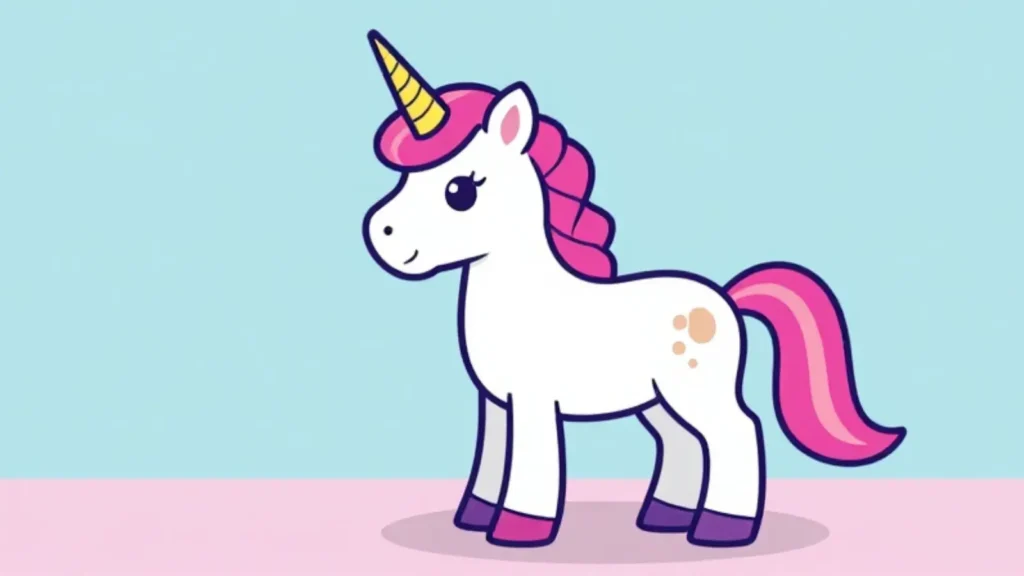
At its broadest level, a unicorn symbolizes something rare, extraordinary, difficult to possess, and resistant to ordinary expectations.
Its symbolic meanings commonly include:
- Purity — especially in medieval European traditions.
- Innocence — strengthened by later associations with children and fantasy.
- Uniqueness — because a single-horned mythical creature is inherently unusual.
- Strength — early accounts frequently portray the unicorn as powerful and difficult to capture.
- Freedom — its wild and elusive nature suggests independence.
- Mystery — the unicorn belongs to an imagined world between nature and fantasy.
- Spirituality — particularly in medieval Christian allegory.
- Transformation — the creature has repeatedly changed meaning across history.
- Creativity — modern culture often uses it to represent imaginative possibility.
- Individuality — contemporary symbolism frequently treats the unicorn as an emblem of being different without apology.
The important point is that these meanings are not universal laws. Symbols acquire meaning through cultural context, storytelling, visual conventions, religious traditions, and personal experience.
The Historical Origins of Unicorn Symbolism
The history of the unicorn is not a simple story of one mythical animal invented at one particular moment.
Descriptions of one-horned creatures appear in ancient writings and artistic traditions, and classical authors transmitted accounts of unusual animals from distant lands. The Greek word monokerōs, meaning essentially “one-horned,” contributed to the later European concept of the unicorn.
Ancient writers sometimes described creatures that modern readers have attempted to identify with real animals such as rhinoceroses or wild cattle. However, it is risky to claim that one specific real animal definitively “was” the original unicorn. The historical record contains multiple descriptions, translations, interpretations, and legendary additions.
Over time, these strands became increasingly connected with European medieval literature.
The medieval bestiary was especially important. Bestiaries were collections of descriptions of animals—both real and legendary—that often used creatures as moral or religious teaching devices. The unicorn became one of the best-known examples of this symbolic approach.
From Strange Animal to Symbolic Creature
The medieval unicorn was not necessarily the cute, pastel-colored horse familiar today.
Bestiary illustrations and descriptions could portray it as a fierce, elusive animal. According to a famous medieval tradition, it could not easily be captured by hunters but could be approached by a maiden, allowing hunters to seize it.
This narrative transformed the unicorn from a strange animal into a powerful allegorical symbol.
The story could simultaneously communicate ideas about:
- wildness and control,
- vulnerability and strength,
- innocence and danger,
- spiritual purity,
- desire,
- sacrifice,
- incarnation.
That complexity is one reason unicorn symbolism survived for centuries.
Unicorn Symbolism in Medieval Christianity
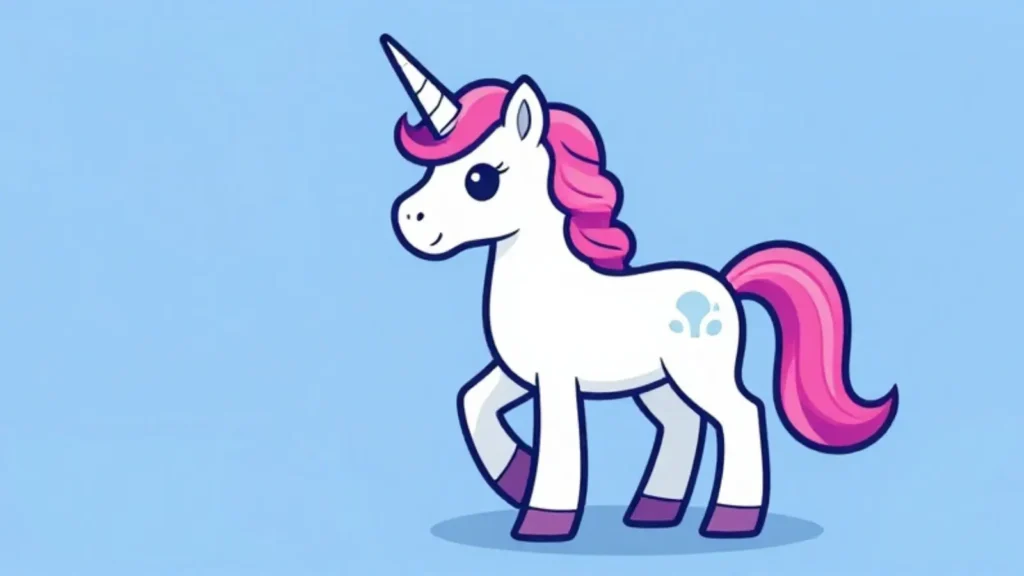
One of the most historically significant interpretations of the unicorn emerged through Christian allegory.
In medieval bestiary tradition, the unicorn could symbolize Christ. The creature’s capture by a virgin was interpreted as an allegory of the Incarnation: Christ becoming human through the Virgin Mary. The unicorn’s single horn could also receive theological interpretations connected with unity.
This interpretation should not be confused with a claim that Christianity originally invented the unicorn. Rather, Christian writers reinterpreted an existing legendary creature through their theological worldview.
Why the Virgin and Unicorn Became Symbolically Important
The virgin-and-unicorn story offered medieval artists and theologians a ready-made narrative structure:
wild creature → virgin → capture → vulnerability → spiritual interpretation
The paradox was powerful. A creature that could not be conquered through physical force became vulnerable through an encounter associated with purity.
This allowed artists to explore theological concepts through visual storytelling.
The symbolism demonstrates an important principle of semiotics: a symbol can accumulate new meanings without completely losing its older ones.
Unicorn Symbolism and Purity
Purity is probably the most famous traditional association of the unicorn.
But “purity” historically had several meanings.
It could refer to:
- moral innocence,
- chastity,
- spiritual cleanliness,
- incorruptibility,
- freedom from worldly contamination,
- idealized virtue.
The medieval virgin-unicorn narrative strongly reinforced this association. Later European art continued to connect unicorn imagery with noble or idealized femininity.
Modern culture, however, has broadened the idea.
Today, purity symbolism may be less about moral chastity and more about authenticity, innocence, sincerity, or emotional openness.
That distinction matters because symbolic language changes with society.
Unicorn Symbolism and Strength
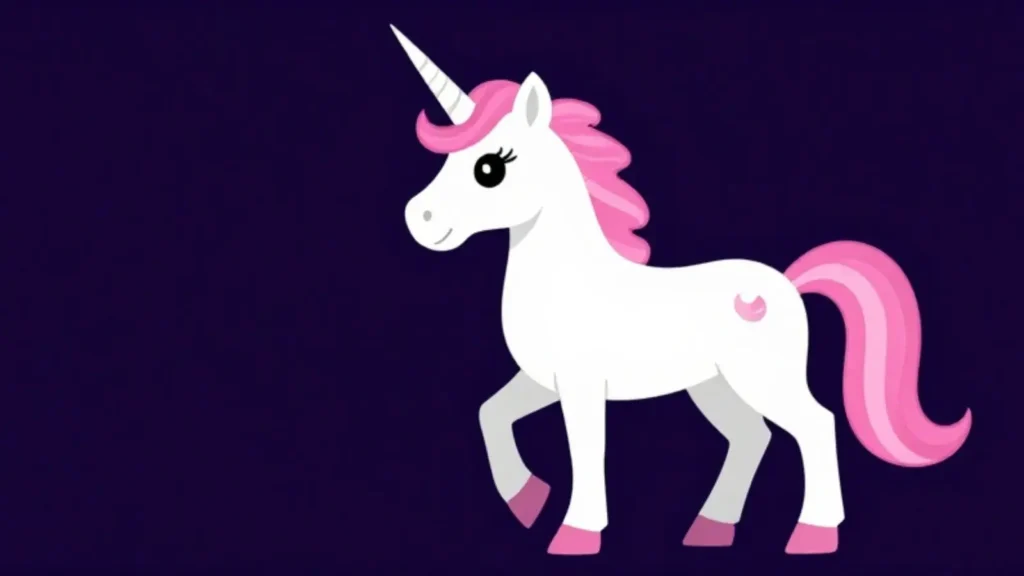
It may seem strange to associate a delicate-looking fantasy horse with strength, but historical unicorn traditions often did exactly that.
The unicorn could be portrayed as fierce, swift, powerful, and difficult to capture.
This creates an interesting symbolic contrast:
The unicorn can represent gentleness without weakness.
That combination is especially useful in contemporary visual communication.
A unicorn logo, illustration, or tattoo can communicate both:
softness + power
or
beauty + independence
or
innocence + resilience
This duality is one reason the symbol works across such different audiences.
Unicorn Symbolism in Different Cultures
Unicorn symbolism should not be treated as a single worldwide belief system.
Different cultures have traditions involving one-horned or fantastical creatures, but these should not automatically be treated as identical versions of the European unicorn.
European Traditions
European unicorn symbolism became particularly associated with:
- purity,
- virtue,
- nobility,
- Christological allegory,
- mystery,
- untamed nature,
- heraldry.
Medieval manuscripts, tapestries, religious imagery, and aristocratic art helped establish these associations.
Chinese Tradition and the Qilin
The qilin is sometimes loosely compared with the unicorn because both are legendary creatures associated with unusual virtue and auspiciousness.
However, equating the qilin with the Western unicorn is misleading.
The qilin belongs to a distinct Chinese mythological tradition and has its own iconography, history, and symbolic framework. It is commonly associated with auspiciousness, benevolence, righteousness, and extraordinary virtue.
The comparison is useful only when it highlights a broader anthropological pattern: cultures often use fantastic animals to embody qualities that humans admire.
South Asian and Other One-Horned Traditions
Ancient South Asian traditions also contain representations and descriptions of one-horned animals, including imagery associated with the Indus Valley Civilization.
However, scholars should be cautious about directly labeling every ancient one-horned image a “unicorn.” A visual depiction of an animal with one visible horn is not automatically evidence for the modern European unicorn myth.
Cultural Comparison
| Tradition or context | Common symbolic emphasis | Important distinction |
| Medieval Europe | Purity, virtue, Christianity, mystery | Strong bestiary tradition |
| Christian allegory | Christ, Incarnation, spiritual meaning | Theological reinterpretation |
| Chinese qilin tradition | Benevolence, auspiciousness, virtue | Distinct creature from Western unicorn |
| Modern Western culture | Imagination, uniqueness, fantasy | Highly commercialized symbolism |
| Contemporary branding | Rarity, innovation, exceptional success | Often metaphorical rather than mythological |
| Children’s culture | Wonder, innocence, creativity | Influenced by modern media |
The key lesson is simple: similar visual motifs do not necessarily mean identical cultural meanings.
The Unicorn in Medieval Art and Tapestry
Few artistic traditions demonstrate the complexity of unicorn symbolism better than medieval and early Renaissance tapestry.
Two famous examples are The Hunt of the Unicorn and The Lady and the Unicorn.
The latter consists of six celebrated tapestries created around 1500. Five are associated with the five senses—sight, hearing, touch, smell, and taste—while the meaning of the sixth, À Mon Seul Désir, remains debated.
This uncertainty is important.
Art historians do not always have one definitive explanation for every symbolic detail. A responsible interpretation therefore distinguishes between:
documented evidence → scholarly interpretation → personal reading.
That approach prevents symbolism from becoming an exercise in invented certainty.
The Unicorn as a Symbol of Desire
The unicorn’s relationship with the maiden also introduced another symbolic dimension: desire.
The creature is simultaneously:
- desired,
- elusive,
- beautiful,
- dangerous,
- difficult to possess.
This makes it a natural metaphor for something people deeply want but cannot easily obtain.
In literature and art, the unicorn can therefore represent:
the unattainable ideal.
This interpretation remains relevant today.
Someone might describe a rare opportunity, extraordinary relationship, perfect creative idea, or exceptional product as “a unicorn” because it is unusually difficult to find.
Psychological Meaning of Unicorn Symbolism
From a psychological perspective, the unicorn can function as a projective symbol: people may attach their own hopes, values, fears, and aspirations to an imaginary creature.
It can represent the part of the self that feels different from the surrounding world.
For one person, the unicorn might symbolize:
- individuality,
- self-expression,
- freedom,
- imagination.
For another, it might represent:
- childhood,
- innocence,
- escapism,
- hope.
There is no scientifically established universal psychological meaning of the unicorn.
Instead, its psychological significance comes from cultural learning, personal associations, narrative exposure, and symbolic interpretation.
This distinction is important for evidence-based writing.
Expert Tip
When interpreting a unicorn tattoo, artwork, dream, logo, or personal symbol, ask:
- What does the unicorn mean within the person’s culture?
- What colors and surrounding objects appear with it?
- Is the unicorn fierce, gentle, realistic, cartoon-like, or abstract?
- What story does the image communicate?
- What personal experience caused the person to choose it?
The surrounding context often matters as much as the unicorn itself.
Spiritual Meaning of the Unicorn
In modern spiritual culture, unicorn symbolism is often associated with:
- divine guidance,
- purity of intention,
- inner transformation,
- intuition,
- hope,
- spiritual awakening,
- connection with the unseen.
These interpretations belong largely to modern spiritual and New Age-style symbolism, rather than constituting one universally recognized religious doctrine.
Historically, Christian symbolism provides a different framework, particularly through the medieval identification of the unicorn with Christ and the Incarnation.
Therefore, a useful distinction is:
religious symbolism is historically contextual; spiritual symbolism is often personally interpreted.
Unicorn Symbolism in Literature and Storytelling
The unicorn is especially powerful in literature because it represents the boundary between the possible and impossible.
A unicorn can enter a story whenever an author wants to introduce:
- wonder,
- mystery,
- hidden worlds,
- innocence,
- danger,
- transformation,
- impossible dreams.
Its symbolic function changes depending on genre.
In Fantasy
The unicorn often represents magical purity, wisdom, or a connection with nature.
In Children’s Literature
It frequently becomes a vehicle for imagination, friendship, kindness, bravery, and emotional development.
In Literary Allegory
It can represent an ideal that is difficult to understand or possess.
In Modern Fiction
The creature can also be deliberately subverted. An author may portray a unicorn as dangerous, cynical, absurd, or morally ambiguous.
That reversal demonstrates the flexibility of mythological symbols.
Unicorn Symbolism in Heraldry and National Identity
The unicorn also entered European heraldic culture.
One of the most famous examples is Scottish heraldry, where the unicorn became an important royal symbol. This illustrates another transformation: a creature associated with fantasy and purity could also communicate strength, sovereignty, independence, and prestige.
Heraldry is fundamentally visual communication. Symbols had to be recognizable and memorable, particularly when displayed on shields, banners, architecture, clothing, and official objects.
The unicorn’s combination of an unusual body and prominent horn made it visually distinctive.
Color Symbolism and the Modern Unicorn
The traditional unicorn was not necessarily the rainbow-colored creature familiar today.
Modern unicorn imagery frequently uses:
- pastel pink,
- purple,
- blue,
- white,
- silver,
- rainbow gradients,
- glitter-like effects.
These color choices alter the emotional message.
| Color treatment | Common modern association |
| White | Purity, innocence, simplicity |
| Pink | Playfulness, affection, softness |
| Purple | Magic, imagination, mystery |
| Blue | Calmness, fantasy, trust |
| Gold | Luxury, rarity, achievement |
| Rainbow | Diversity, celebration, creativity |
| Silver | Futurism, elegance, fantasy |
These are design conventions rather than universal psychological laws.
Color meaning depends heavily on culture, context, saturation, surrounding colors, and the intended audience.
Unicorn Symbolism in Branding and Business
Modern business language has given the unicorn an entirely new meaning.
In startup culture, a “unicorn” commonly refers to a privately held startup valued at $1 billion or more.
The metaphor works because the original unicorn was imagined as extraordinarily rare.
This is an excellent example of semantic evolution:
mythical rarity → exceptional rarity → exceptional company
The creature has moved from mythology into economics without losing its central conceptual association with rarity and extraordinariness.
Practical Branding Applications
A unicorn can be useful in branding when a company wants to communicate:
- innovation,
- originality,
- imagination,
- premium positioning,
- rarity,
- disruption,
- unconventional thinking.
However, unicorn imagery can also create problems.
If every company presents itself as “magical” or “unique,” the symbol loses distinctiveness.
Expert Tip for Designers
Use the unicorn only when its meaning supports the brand story.
A minimalist horn icon may communicate sophistication and rarity.
A colorful cartoon unicorn may communicate childhood, play, or entertainment.
A dark, realistic unicorn may communicate mystery and power.
The visual treatment determines which symbolic layer becomes dominant.
Unicorn Symbolism in Tattoos
Unicorn tattoos are often chosen because the wearer wants to express individuality or a personal relationship with imagination.
Common interpretations include:
- staying connected to childhood wonder,
- celebrating uniqueness,
- embracing fantasy,
- overcoming adversity,
- spiritual individuality,
- freedom,
- creativity,
- believing in something extraordinary.
There is no single official meaning.
A tattoo’s symbolism belongs partly to the wearer, so personal context should always take precedence over generic tattoo dictionaries.
Unicorn Symbolism in Education and Children’s Culture
The unicorn has strong educational potential because children already understand it as a creature that belongs to imaginative storytelling.
Teachers, illustrators, and children’s media creators can use unicorn imagery to explore:
- creativity,
- storytelling,
- mythology,
- cultural comparison,
- visual literacy,
- symbolism,
- identity,
- environmental themes.
The most useful educational approach is not simply saying, “A unicorn means magic.”
Instead, students can ask:
Why did different cultures create extraordinary animals?
That question opens the door to anthropology, literature, history, religion, art history, and semiotics.
Did You Know? Unicorn Symbolism Has Changed Dramatically
Did you know that the medieval unicorn could be portrayed as fierce and dangerous rather than cute and friendly?
Modern popular culture has softened the creature considerably. Medieval bestiary traditions described an elusive, powerful animal and gave it complex allegorical meanings.
The transformation from dangerous mythical beast to pastel children’s icon is a striking example of how cultural symbols evolve.
Myth vs. Fact: Unicorn Symbolism
| Myth or assumption | More accurate interpretation |
| The unicorn has always symbolized innocence | Purity became especially prominent in medieval European symbolism |
| Every one-horned ancient animal was a unicorn | One-horned imagery has multiple possible meanings |
| Unicorn symbolism is universally the same | Symbolic meanings vary by culture and period |
| The unicorn was originally a children’s character | Children’s culture is a much later development |
| Medieval Christians simply believed unicorns were horses | Medieval sources gave the creature complex natural and theological meanings |
| The qilin is simply the Chinese unicorn | The qilin is a distinct mythological tradition |
| Unicorn symbolism always means magic | Modern fantasy emphasizes magic, but historical meanings were broader |
Common Mistakes When Interpreting Unicorn Symbolism
1. Treating modern meanings as ancient meanings
The rainbow unicorn of contemporary media should not be projected backward into medieval history.
2. Assuming every culture means the same thing
Similar mythical creatures can emerge from completely different cultural systems.
3. Confusing interpretation with historical evidence
Saying “the unicorn represents X” may be reasonable in modern symbolism, but historical claims require context.
4. Overlooking visual context
A unicorn surrounded by weapons communicates something different from one surrounded by flowers.
5. Treating symbolism as scientifically universal
Symbolic associations are culturally and psychologically complex. They should not be presented as proven biological rules.
Practical Applications of Unicorn Symbolism
Understanding unicorn symbolism can be useful far beyond mythology.
In Graphic Design
Use unicorn imagery to communicate fantasy, originality, wonder, or rarity.
In Branding
The unicorn can position a product as unusual, innovative, or exceptional.
In Literature
It can symbolize the unattainable ideal, hidden truth, innocence, or transformation.
In Education
It can introduce students to mythology, cultural comparison, iconography, and symbolism.
In Personal Art
A unicorn can represent individuality, imagination, hope, or a personal journey.
In Digital Communication
Emoji-like unicorn imagery can quickly signal playfulness, fantasy, excitement, or whimsical identity.
The Philosophical Meaning of the Unicorn
At a philosophical level, the unicorn raises an interesting question:
Can something that does not exist still have cultural power?
The answer is clearly yes.
A mythical creature can influence art, religion, literature, political symbolism, branding, commerce, fashion, and personal identity even when people do not believe the creature exists.
The unicorn therefore demonstrates the power of collective imagination.
It also challenges the boundary between reality and meaning.
A thing does not have to exist physically to exist culturally.
That may be the deepest reason unicorn symbolism remains so compelling.
Why Unicorn Symbolism Still Matters Today
The unicorn survives because it adapts.
Medieval Europeans could interpret it through Christian theology. Artists could use it as a symbol of virtue and desire. Heraldic traditions could transform it into a sign of power and identity. Modern children could embrace it as a creature of imagination. Businesses could use “unicorn” to describe exceptional rarity.
The image remains recognizable while the meaning changes.
This is exactly how durable symbols behave.
They possess a stable visual identity but flexible semantic meaning.
That flexibility allows the unicorn to move between centuries, cultures, media formats, and audiences.
Key Insights About Unicorn Symbolism
- The unicorn symbolizes more than magic.
- Purity became one of its strongest medieval associations.
- Christian writers interpreted the unicorn through theological allegory.
- Medieval unicorns could be fierce and dangerous rather than cute.
- Modern culture has expanded unicorn symbolism toward imagination and individuality.
- The unicorn represents rarity exceptionally well because rarity is central to its modern metaphorical use.
- Cultural context determines symbolic meaning.
- The Chinese qilin should not simply be treated as an equivalent of the Western unicorn.
- Color and visual style can significantly change the emotional message of unicorn imagery.
- In branding, the unicorn can communicate innovation and exceptional value—but overuse can weaken its impact.
- In literature, the unicorn often marks the boundary between ordinary reality and the extraordinary.
- The enduring power of the unicorn comes from its ability to accumulate new meanings over time.
Conclusion
Unicorn symbolism is a remarkable example of how humans turn imagined creatures into meaningful cultural symbols.
Across history, the unicorn has represented purity, virtue, strength, rarity, mystery, spiritual ideas, desire, individuality, imagination, and the extraordinary. Medieval bestiaries transformed it into a complex allegorical figure, while artists and writers gave it new layers of meaning.
Modern culture has not erased those older meanings so much as added new ones.
Today, a unicorn can be a children’s fantasy character, a tattoo representing individuality, a branding device for innovation, a literary metaphor, an artistic subject, or a symbol of hope and imagination.
Its greatest symbolic strength may therefore be its adaptability.
The unicorn reminds us that symbols are not frozen definitions. They evolve as people reinterpret them.
And perhaps that is why this impossible creature continues to feel so real in human culture: the unicorn is ultimately less about an animal and more about our enduring desire to imagine something rare, beautiful, powerful, and beyond the ordinary.

Isabella Carter explores symbolism in nature, literature, art, and spirituality with engaging and informative research.
