Few gemstones carry the visual and cultural weight of emerald. Its intense green color immediately evokes forests, spring leaves, fertile landscapes, renewal, and life.
Yet emerald symbolism goes far beyond its appearance. Across centuries, emeralds have been associated with love, prosperity, wisdom, protection, fertility, truth, royalty, spiritual insight, and rebirth.
Part of emerald’s symbolic power comes from the way humans respond to green itself. Green is strongly connected with vegetation and living landscapes, while the rarity, durability, and beauty of a fine emerald transformed that natural association into something luxurious and prestigious.
Historical traditions then added their own meanings, creating a layered symbol that differs across civilizations.
Understanding emerald symbolism therefore requires more than memorizing a list of meanings. The stone sits at the intersection of gemology, mythology, religion, anthropology, psychology, art, literature, fashion, branding, and cultural identity.
Featured-Snippet Answer: What Does Emerald Symbolize?
Emerald commonly symbolizes renewal, growth, love, prosperity, wisdom, protection, fertility, and harmony. Its green color connects it with nature and rebirth, while its rarity and historical association with rulers have given it meanings of wealth, status, and power.
Spiritual interpretations vary widely and should be understood as cultural or traditional beliefs rather than scientific facts.
What Does Emerald Symbolism Mean?
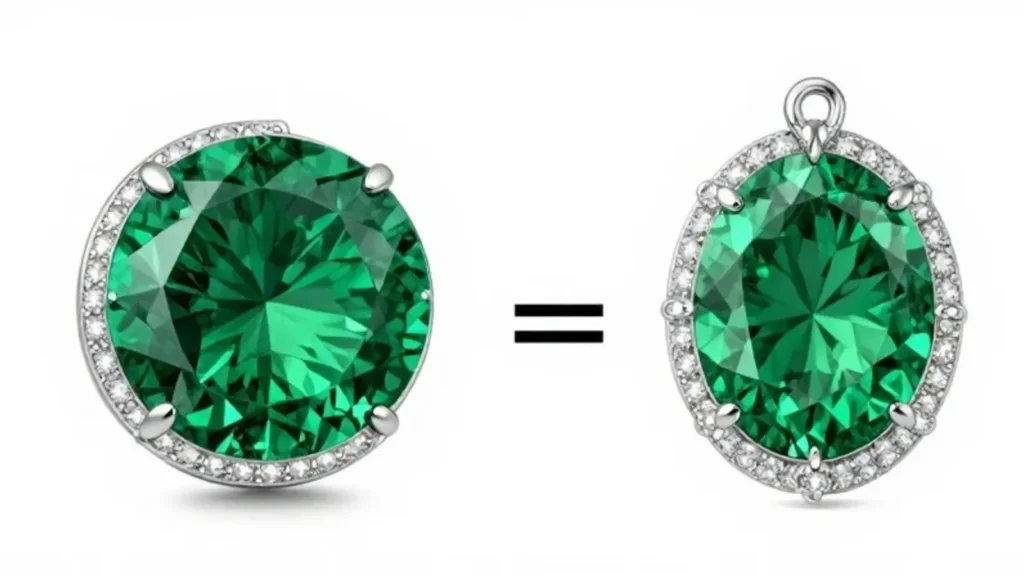
At its simplest, emerald symbolism represents life, renewal, emotional richness, and enduring value.
The most common symbolic associations include:
| Symbolic meaning | Why emerald is associated with it |
| 🌱 Renewal | Its green color resembles fresh vegetation and spring growth |
| 💚 Love | Historically associated with loyalty, affection, and romantic devotion |
| 🌿 Growth | Green naturally evokes living plants and development |
| 👑 Wealth | Fine emeralds have long been prized as luxury objects |
| 🧠 Wisdom | Traditional lore sometimes connects emerald with insight and truth |
| 🛡️ Protection | Folklore attributed protective powers to the stone |
| 🌾 Fertility | Green landscapes and plant growth encouraged fertility associations |
| ⚖️ Harmony | Green is visually associated with balance and natural environments |
| 🔮 Spiritual insight | Various traditions attributed mystical or prophetic qualities to emerald |
| 🕊️ Rebirth | Its springlike color encouraged associations with renewal and resurrection |
These meanings are not universal laws. Symbolism is culturally constructed. The same emerald can represent wealth in one context, spiritual devotion in another, and romantic commitment in a third.
The Historical Origins of Emerald Symbolism
Emerald’s symbolic history is unusually old.
The gemstone is a green variety of the mineral beryl. Its name ultimately traces through Greek and Latin forms associated with green, including the ancient Greek smaragdus. Ancient writers were fascinated by its color, and Pliny the Elder discussed emerald in his first-century Natural History.
The earliest known emerald mining on a significant historical scale is associated with ancient Egypt. GIA notes that Egyptian emerald mines were operating by at least approximately 330 BC and continued for centuries. Cleopatra was famously associated with emeralds and used them in royal adornment.
This early history helps explain why emerald became associated with royalty, beauty, prestige, and divine or supernatural power.
Ancient Egypt and the Green Stone
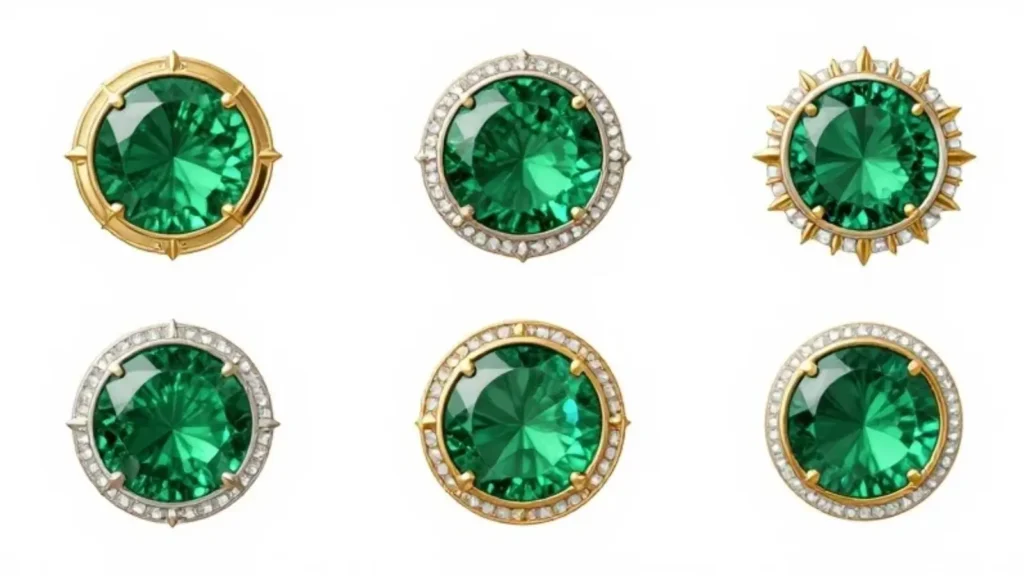
Ancient Egyptian culture placed enormous importance on color symbolism. Green was connected with vegetation, fertility, regeneration, and life.
Emerald’s naturally intense green made it especially suited to those associations.
Its connection with renewal was not simply aesthetic. In a landscape where agriculture and vegetation were closely tied to survival, green could represent the continuation of life itself.
Emerald therefore became more than decoration. It could function as a visual expression of status, beauty, and life-giving symbolism.
Did You Know?
Cleopatra’s famous association with emeralds is historically significant, but many modern stories about her emerald collection have been embellished over time. What is well documented is that emeralds were known in ancient Egypt and that Cleopatra was strongly associated with them.
Emerald Symbolism in Ancient Rome
Roman writers helped preserve some of the earliest Western descriptions of emerald.
Pliny the Elder was particularly enthusiastic about the stone’s green appearance. His writings demonstrate how strongly emerald was associated with visual freshness and the restorative qualities people traditionally attributed to green.
This is an important distinction:
Historical belief is not the same as modern scientific evidence.
Ancient writers could describe emerald as soothing to the eyes without establishing a medical effect by modern scientific standards. Today, the symbolic association between emerald and visual calm remains culturally powerful, but it should not be presented as proof that emeralds treat eye disorders.
Roman-era admiration also reinforced the relationship between emerald and luxury.
A rare green gemstone represented something difficult to obtain, making it suitable for people who wanted jewelry to communicate status, sophistication, and access to wealth.
Emerald Symbolism in Indigenous and Colombian Traditions
The history of emerald cannot be separated from Colombia.
Long before European colonization, Indigenous peoples in the region now known as Colombia mined and traded emeralds. GIA reports archaeological evidence suggesting that Colombian emerald mining and trade may extend back to around 1000 BC.
Emeralds were incorporated into jewelry and ceremonial contexts among Indigenous societies. Later, Spanish conquest dramatically changed the gemstone’s global circulation.
The Spanish gained control over Colombian emerald-producing areas and sent emeralds into European and international luxury markets.
This history adds another dimension to emerald symbolism: power can be embedded in an object not only through its beauty but also through the history of who controls its extraction and trade.
That makes emerald an important subject for anthropology and cultural history.
Emerald Symbolism in India and Mughal Culture
Emerald acquired another powerful cultural identity as Colombian stones entered global trade.
During the Mughal period, Colombian emeralds became highly valued in South Asian royal culture. GIA documents the movement of Colombian emeralds through Spanish and Portuguese trade networks into India, where exceptional stones entered royal treasuries.
In Mughal art, emeralds could be engraved and combined with gold, diamonds, rubies, and pearls.
This transformed the gemstone into a sophisticated form of visual language.
An emerald could communicate:
- Royal authority
- Wealth
- Refinement
- Religious devotion
- Cultural prestige
- Connection to an international trading world
Emeralds and Islamic Artistic Traditions
It is important not to reduce Islamic symbolism to one universal interpretation. Islamic cultures are diverse, and gemstone meanings vary by period and region.
Nevertheless, green has a particularly strong presence in many Islamic artistic contexts, and emerald jewelry became prominent among Muslim rulers and elites.
The Mughal use of emeralds demonstrates how gemstones could operate simultaneously as ornament, status symbol, artistic medium, and cultural object.
Emerald Symbolism in Spiritual and Religious Traditions

Emerald has accumulated a large body of spiritual lore.
Traditional beliefs have attributed qualities such as:
- Protection from evil
- Truthfulness
- Prophecy
- Wisdom
- Emotional balance
- Healing
- Fertility
- Spiritual insight
GIA records historical legends claiming that emerald could help reveal truth, protect against harmful spells, improve eloquence, and even enable visions of the future. These are examples of gemstone folklore rather than scientifically established properties.
Emerald and Christian Symbolism
Emerald sometimes appears in Christian art, medieval gemstone lore, and religious writing, where its green color could support associations with life, paradise, hope, or regeneration.
However, there is no single universally accepted Christian meaning of emerald.
Different periods and writers interpreted gemstones differently, and medieval lapidaries frequently assigned spiritual or moral meanings to precious stones.
Important Distinction
When an article says that “emerald means X in Christianity,” it can oversimplify a complicated historical tradition.
A more accurate statement is:
Certain Christian and medieval traditions associated green gemstones with particular virtues or spiritual concepts, but emerald symbolism varied according to the source, period, and interpretive tradition.
Emerald Symbolism in Mythology and Folklore
Gemstones often become powerful objects in folklore because they combine rarity with visual mystery.
Emerald is no exception.
Traditional stories have associated emerald with supernatural knowledge, protection, truth, and romantic fidelity. Some legends claimed that an emerald could expose falsehood or reveal the faithfulness of a lover. Others attributed prophetic abilities to the stone.
These stories are valuable culturally even when they are not factual.
Why?
Because folklore reveals what societies wanted the gemstone to represent.
A stone associated with truth reflects a cultural desire for certainty.
A stone associated with protection reflects a desire for safety.
A stone associated with fertility reflects humanity’s dependence on nature and reproduction.
A stone associated with wealth reflects the social power of rarity.
Symbolism therefore tells us as much about people as it does about the object.
The Psychological Meaning of Emerald Green
Emerald symbolism is closely connected with color psychology, although color psychology should not be reduced to simplistic claims such as “green always makes people feel calm.”
Human responses to color depend on context, culture, saturation, lighting, personal experience, and surrounding colors.
Still, emerald green has several visual qualities that make it particularly distinctive.
1. Connection With Nature
Green is strongly associated with vegetation.
Emerald green intensifies this relationship by presenting nature in a concentrated, jewel-like form.
2. Perceived Sophistication
Deep emerald tones often appear luxurious because they combine richness with visual depth.
This makes emerald popular in:
- Interior design
- Fashion
- Packaging
- Jewelry
- Hospitality branding
- Luxury marketing
3. Emotional Richness
Unlike pale green, saturated emerald can feel dramatic and sophisticated rather than merely fresh.
That makes it useful when designers want to communicate nature plus luxury.
Expert Tip
If you use emerald green in branding, do not assume the color alone communicates luxury. Typography, spacing, material quality, photography, lighting, and surrounding colors determine how the green is interpreted.
Emerald Symbolism and Love
Emerald has long been connected with romantic relationships.
Its symbolism of love is often linked with ideas such as:
- Loyalty
- Commitment
- Emotional depth
- Renewal
- Enduring affection
- Trust
The gemstone’s green color also gives romantic symbolism a different character from the traditional red symbolism of ruby.
Ruby often communicates passion and intensity; emerald can communicate enduring affection, renewal, and emotional richness.
That distinction makes emerald especially appealing in jewelry intended to express a sophisticated or less conventional form of romance.
Emerald Symbolism and Prosperity

Emerald’s association with wealth has both symbolic and material foundations.
A fine emerald is a valuable luxury object, so its connection with prosperity is not purely mystical.
Historically, rulers, aristocrats, wealthy merchants, and collectors used exceptional gemstones to demonstrate economic and political power.
Emerald therefore operates on two levels:
Material level: It can represent actual wealth because high-quality stones can be valuable.
Symbolic level: Its rarity communicates abundance, exclusivity, prestige, and social status.
This dual meaning explains why emerald appears so frequently in royal jewelry and luxury branding.
Emerald Symbolism and Growth
Perhaps the most intuitive meaning of emerald is growth.
Green leaves emerge after winter.
Plants spread.
Forests regenerate.
Agricultural landscapes produce food.
The color of emerald mirrors this visual language of life.
Consequently, emerald symbolism is frequently used to express:
- Personal development
- New beginnings
- Business growth
- Environmental awareness
- Fertility
- Recovery
- Renewal
- Transformation
This makes emerald particularly appropriate for brands or stories centered on sustainability, wellness, nature, or personal development.
Emerald Symbolism in Art and Visual Communication
Artists use gemstones and jewel tones because color can communicate before words do.
Emerald green can create visual associations with:
- Nature
- Opulence
- Mystery
- Royalty
- Enchantment
- Wealth
- Transformation
In visual storytelling, an emerald object can therefore function as a symbolic shortcut.
A green jewel in a film might suggest wealth.
An emerald-colored forest might imply enchantment.
An emerald dress might communicate confidence or luxury.
A green gemstone placed near a character could symbolize renewal or a turning point.
The meaning depends on narrative context.
This is a central principle of semiotics:
A symbol does not have meaning in isolation; meaning emerges through relationships, cultural codes, and context.
Emerald Symbolism in Literature
Writers have long used green and precious stones as metaphors.
Emerald can represent a character’s:
- Hidden value
- Desire
- Social ambition
- Beauty
- Jealousy
- Transformation
- Connection to nature
- Spiritual search
Because emerald combines natural imagery with luxury, it is especially useful for creating contrasts.
A character wearing an emerald may appear wealthy but emotionally vulnerable.
An emerald hidden underground may symbolize undiscovered potential.
An emerald passed between generations can represent inheritance and memory.
A broken emerald can symbolize damaged trust or lost prestige.
These interpretations are not fixed rules. Literature derives meaning from narrative context.
Emerald Symbolism Across Cultures

| Cultural context | Common emerald associations |
| Ancient Egypt | Life, beauty, fertility, prestige |
| Greco-Roman world | Beauty, luxury, visual freshness |
| Indigenous Colombia | Valuable natural resource, ceremonial and cultural significance |
| Spanish colonial world | Wealth, imperial trade, luxury |
| Mughal India | Royal power, wealth, artistic refinement |
| Medieval European lore | Spiritual virtues, protection, truth, mystical qualities |
| Modern Western culture | Love, luxury, renewal, prosperity |
| Contemporary branding | Nature, premium quality, sophistication, sustainability |
The table should not be interpreted as saying every individual within these cultures held identical beliefs.
Culture is never completely uniform.
Historical period, religion, social class, geography, and individual experience can dramatically change symbolic interpretation.
Emerald Symbolism in Branding and Marketing
Emerald green has become an influential branding color because it can bridge two seemingly different ideas:
nature and luxury.
A brand may use emerald to suggest:
- Premium quality
- Environmental responsibility
- Sophistication
- Growth
- Wellness
- Exclusivity
- Freshness
Luxury brands can use deep emerald tones to create a richer alternative to black, navy, or burgundy.
Environmental brands can use greener variations to communicate ecological themes.
Wellness businesses may use green to reinforce associations with natural living.
Common Mistake
Do not confuse emerald symbolism with universal consumer psychology.
Not every audience interprets emerald green as luxurious or calming. Color meaning changes across cultures and contexts.
Good branding begins with audience research rather than assumptions.
Emerald Symbolism in Fashion
Emerald green has a strong presence in fashion because it combines visibility with sophistication.
It can create different impressions depending on styling:
Emerald + gold: luxury and opulence
Emerald + black: drama and sophistication
Emerald + white: freshness and elegance
Emerald + neutral beige: understated refinement
Emerald + jewel tones: richness and theatricality
The gemstone itself adds another layer. Wearing an actual emerald can communicate not only color preference but also rarity, craftsmanship, inheritance, and social status.
Emerald Symbolism in Architecture and Interior Design
Emerald tones can dramatically change an interior.
Designers may use emerald in:
- Velvet furniture
- Accent walls
- Tiles
- Curtains
- Decorative glass
- Artwork
- Lighting environments
- Accessories
A small emerald accent can introduce visual richness without overwhelming an entire room.
In hospitality spaces, emerald can create an atmosphere that feels simultaneously natural and luxurious.
In residential interiors, it can become a focal color.
The symbolism works because the viewer recognizes the color’s connection to vegetation while the saturation communicates richness.
Emerald Symbolism in Modern Digital Communication
Digital culture has made color symbolism even more flexible.
Emerald green can appear in:
- Social media graphics
- Website interfaces
- Emojis and visual motifs
- Digital invitations
- Personal branding
- Online stores
- Cryptocurrency and finance-related branding
- Wellness content
In digital design, emerald is particularly effective when visual identity needs to balance energy with sophistication.
However, accessibility matters. A beautiful emerald color can become difficult to read if paired with insufficient contrast.
Symbolic meaning should never replace usability.
Myth vs. Fact: Emerald Symbolism

| Claim | Reality |
| Emerald guarantees good luck | This is folklore, not an established scientific fact |
| Emerald can predict the future | A historical legend, not scientifically demonstrated |
| Emerald has supernatural healing powers | Traditional belief rather than established medical evidence |
| Emerald always symbolizes love | Love is one interpretation, but meanings vary |
| Emerald is universally associated with wealth | Wealth is common in luxury contexts but not universal |
| Every culture interprets emerald identically | Cultural meanings differ substantially |
| Emerald must be perfectly clear to be valuable | Natural emeralds commonly contain inclusions; quality depends on multiple factors |
GIA notes that inclusions are common in emeralds and that the gemstone’s internal features are often referred to in the trade as its “jardin,” or garden.
This is an interesting symbolic coincidence: what gemologists may view as natural inclusions can visually resemble a miniature landscape, reinforcing emerald’s association with nature.
Did You Know? Emerald’s “Garden” Has a Scientific Basis
Emeralds frequently contain inclusions.
Gemologists may use these internal characteristics when evaluating and identifying stones. Colombian emeralds, for example, can contain distinctive three-phase inclusions involving solid, liquid, and gaseous components.
The visual complexity of these inclusions has contributed to the poetic language surrounding emerald.
The gemstone is therefore interesting on two levels:
Science sees mineral structure and inclusions.
Culture sees gardens, landscapes, mystery, and hidden worlds.
Both perspectives can coexist without confusing scientific observation with symbolism.
Emerald Symbolism and Colombian Identity
Modern emerald symbolism also has an important geographical dimension.
Colombia has been associated with some of the world’s most famous emerald deposits, particularly Muzo, Coscuez, and Chivor.
But the industry’s history has not always been glamorous.
Colombian emerald mining has been associated with colonial exploitation, violence, labor struggles, and the so-called Emerald Wars. GIA’s historical account documents the complex relationship among mining, political power, violence, and later efforts toward formalization and transparency.
This history provides an important lesson:
A luxury symbol can contain both beauty and difficult history.
Responsible discussions of emerald should therefore acknowledge mining communities, provenance, labor conditions, and traceability rather than presenting the gemstone exclusively as an object of romance and wealth.
Practical Applications of Emerald Symbolism
Understanding emerald symbolism can be useful far beyond gemstone jewelry.
For Branding
Use emerald when you want to explore a visual identity involving nature, sophistication, growth, or premium positioning.
For Writers
Use emerald imagery to symbolize renewal, hidden value, wealth, transformation, or emotional complexity.
For Artists
Use emerald green to create contrasts between natural beauty and artificial luxury.
For Educators
Emerald provides an excellent example of how objects acquire different meanings across historical periods.
For Designers
Consider emerald as a bridge between organic imagery and luxury aesthetics.
For Jewelry Buyers
Look beyond symbolism. Evaluate the gemstone’s actual characteristics, treatment, provenance, and quality.
For Cultural Researchers
Treat emerald as a case study in how natural materials become socially meaningful through religion, trade, art, politics, and storytelling.
How Emerald Symbolism Differs From Green Symbolism
Emerald symbolism and green symbolism overlap, but they are not identical.
Green is a color.
Emerald is a specific gemstone.
That distinction matters.
Green may represent nature in a broad sense.
Emerald adds rarity, material value, craftsmanship, geological history, and luxury.
Therefore:
Green = nature, life, freshness, balance
Emerald = nature + rarity + luxury + beauty + historical prestige
This combination is what gives emerald its distinctive symbolic strength.
The Philosophical Meaning of Emerald
From a philosophical perspective, emerald can be interpreted as a symbol of the relationship between nature and human value.
The stone begins as a geological material formed through natural processes.
Humans then extract it, cut it, polish it, mount it in jewelry, assign it monetary value, and surround it with stories.
At each stage, its meaning changes.
The unmined mineral is part of geology.
The rough crystal becomes a resource.
The cut stone becomes an object of beauty.
The jewel becomes a status symbol.
The inherited ring becomes a family memory.
The literary emerald becomes a metaphor.
The logo becomes a brand identity.
The same physical material can therefore carry radically different meanings depending on human context.
That is one of the most fascinating lessons of symbolism itself.
Common Mistakes When Interpreting Emerald Symbolism
1. Treating symbolism as fact
Saying “emerald scientifically gives wisdom” confuses folklore with evidence.
2. Assuming every culture agrees
Symbolism changes across time and geography.
3. Ignoring historical context
Emerald’s luxury history is also connected with colonialism and mining.
4. Reducing emerald to wealth
Its associations with nature, renewal, love, spirituality, and growth are equally important.
5. Confusing emerald with all green gemstones
Emerald has a specific mineralogical identity as a green variety of beryl.
6. Using color symbolism without considering context
An emerald-colored object does not automatically communicate the same message as an actual emerald.
Key Insights About Emerald Symbolism
The deepest understanding of emerald symbolism comes from seeing its meanings as layers rather than a single definition.
Layer 1 — Nature:
Its green color evokes vegetation and life.
Layer 2 — Renewal:
Spring growth makes emerald a natural symbol of rebirth.
Layer 3 — Rarity:
Its geological formation and scarcity contribute to perceptions of value.
Layer 4 — Power:
Royal and elite ownership turned emerald into a marker of status.
Layer 5 — Spirituality:
Folklore added meanings involving protection, truth, and prophecy.
Layer 6 — Emotion:
Modern culture connects emerald with love, loyalty, and emotional richness.
Layer 7 — Identity:
Mining regions and cultures have incorporated emerald into their histories and economies.
Layer 8 — Communication:
Modern designers use emerald green to communicate nature, sophistication, and premium quality.
Together, these layers explain why emerald remains culturally powerful.
Frequently Asked Questions About Emerald Symbolism
What is the main symbolism of emerald?
The main symbolism of emerald centers on renewal, growth, love, prosperity, wisdom, protection, and connection with nature. Its meanings developed through a combination of its green color, rarity, historical use by elites, religious traditions, folklore, and cultural storytelling.
What does an emerald symbolize spiritually?
Spiritually, emerald has traditionally been associated with protection, truth, wisdom, emotional harmony, renewal, and spiritual insight. These meanings belong to various cultural and religious traditions rather than established scientific evidence. Different spiritual systems may interpret the gemstone differently.
What does emerald symbolize in love?
Emerald can symbolize loyalty, enduring affection, emotional depth, commitment, and renewal in relationships. Its romantic symbolism differs from the passionate symbolism commonly associated with ruby, making emerald an appealing representation of mature or enduring love.
Why is emerald associated with wealth?
Emerald became associated with wealth because high-quality stones are rare luxury objects and have historically been collected and worn by rulers, aristocrats, and wealthy individuals. Its connection with royal jewelry and international trade strengthened its symbolic association with prestige and prosperity.
What does emerald green symbolize?
Emerald green commonly communicates nature, renewal, growth, luxury, sophistication, vitality, and richness. In branding and design, it can combine an organic visual impression with a premium aesthetic, although interpretations vary according to culture and context.
Is emerald symbolism the same in every culture?
No. Emerald symbolism is not universal. Ancient Egyptians, European writers, Indigenous Colombian communities, Mughal elites, modern designers, and contemporary consumers have all interacted with emerald in different historical and cultural contexts. Some themes overlap, but no single interpretation applies to everyone.
Key Takeaways
- Emerald symbolism is strongly associated with renewal, growth, love, prosperity, wisdom, and protection.
- Its green color naturally connects the gemstone with vegetation, spring, fertility, and life.
- Ancient Egypt played an important role in emerald’s early documented history.
- Cleopatra’s association with emerald helped reinforce its connection with royalty and beauty.
- Colombian emeralds became globally important through Indigenous mining traditions and later colonial trade.
- Mughal culture incorporated emeralds into sophisticated royal jewelry and artistic traditions.
- Spiritual and magical claims about emerald belong to cultural lore and should not be confused with scientific evidence.
- Emerald green has become influential in fashion, branding, interior design, digital communication, and visual storytelling.
- Emerald symbolism changes according to cultural context, historical period, personal experience, and intended use.
- The gemstone’s meaning comes not only from its physical properties but also from the stories humans have built around it.
Semantic Entities, NLP Concepts, LSI Keywords, and Topical Relationships
Major Semantic Entities
Emerald, beryl, Cleopatra, Ancient Egypt, Roman Empire, Pliny the Elder, Colombia, Muzo, Coscuez, Chivor, Indigenous Colombian peoples, Spanish Empire, Mughal Empire, India, gemology, jewelry, luxury, royalty, religion, mythology, folklore, color psychology, anthropology, semiotics, art, literature, branding, fashion, architecture, design, cultural identity.
LSI and Contextual Keywords
emerald meaning, emerald stone meaning, emerald spiritual meaning, emerald gemstone symbolism, emerald green meaning, emerald color symbolism, emerald symbolism in love, emerald symbolism in different cultures, emerald history, emerald mythology, emerald folklore, emerald birthstone meaning, emerald jewelry meaning, emerald and prosperity, emerald and renewal, emerald and growth, emerald symbolism in religion, emerald symbolism in Christianity, emerald symbolism in Islam, emerald symbolism in ancient Egypt, Colombian emeralds, Mughal emeralds, gemstone symbolism, green gemstone meaning, luxury symbolism, royal jewelry, gemstone psychology.
NLP Concepts Covered
- Symbolic meaning
- Cultural symbolism
- Color psychology
- Semiotics
- Iconography
- Mythology
- Folklore
- Religious symbolism
- Material culture
- Cultural identity
- Visual communication
- Consumer perception
- Luxury branding
- Narrative symbolism
- Historical context
- Anthropological interpretation
- Geological identity
- Gemological classification
- Emotional association
- Cross-cultural interpretation
Topical Relationships
Emerald → Green → Nature → Renewal → Growth → Fertility → Life
Emerald → Rarity → Luxury → Wealth → Royalty → Status
Emerald → Folklore → Protection → Truth → Prophecy → Spirituality
Emerald → Colombia → Indigenous mining → Spanish conquest → Global trade
Emerald → Mughal India → Royal jewelry → Art → Cultural prestige
Emerald green → Design → Branding → Fashion → Luxury → Consumer perception
Emerald → Literature → Metaphor → Transformation → Hidden value → Storytelling
Ultimately, emerald symbolism is powerful because it connects the physical world with the human imagination. A gemstone created through geological processes can become a symbol of love, renewal, wealth, spirituality, identity, and aspiration. Its meaning has never been completely fixed—and that flexibility is precisely what has allowed emerald to remain relevant across centuries.
The most useful way to understand emerald symbolism is therefore not to ask, “What does emerald always mean?” but rather, “What does emerald mean in this particular cultural, historical, artistic, or personal context?”
That question recognizes both the gemstone’s enduring symbolic power and the complexity of the people who give objects meaning.

Amelia Rosewood writes about symbolic meanings, ancient traditions, and the emotional connections between humans and symbols.
