Ravens have fascinated humanity for thousands of years. Their remarkable intelligence, mysterious appearance, haunting calls, and ability to thrive in diverse environments have made them powerful symbols across civilizations.
Whether appearing in ancient myths, religious traditions, folklore, literature, or modern storytelling, raven symbolism often represents transformation, wisdom, mystery, prophecy, adaptability, and the connection between the known and the unknown.
Although many people associate ravens with darkness or death, their symbolic meaning is far more nuanced.
Different cultures interpret the raven in unique ways some see it as a divine messenger, others as a creator, a protector, a trickster, or even a guide through life’s most significant transitions.
What Does Raven Symbolism Mean?
Raven symbolism generally represents intelligence, transformation, mystery, wisdom, prophecy, and change. Across cultures, ravens are viewed as spiritual messengers, guardians of hidden knowledge, creators, or guides between worlds.
Their symbolic meaning varies depending on cultural traditions, mythology, religious beliefs, and historical context rather than having a single universal interpretation.
Understanding Raven Symbolism
Quick Answer
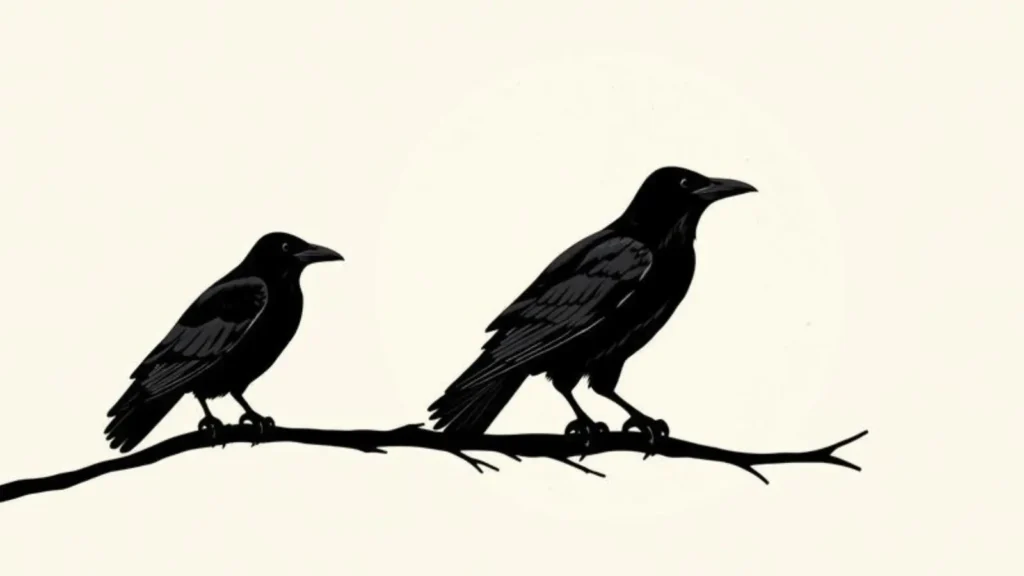
At its core, raven symbolism reflects humanity’s fascination with intelligence and mystery. Ravens are highly adaptable birds capable of solving complex problems, remembering faces, using tools, and communicating in sophisticated ways. These real-world behaviors have inspired symbolic meanings that extend far beyond folklore.
Some of the most common symbolic associations include:
- Intelligence
- Wisdom
- Transformation
- Change
- Mystery
- Spiritual awareness
- Prophecy
- Communication
- Adaptability
- Protection
- Creation
- Curiosity
- Insight
Rather than representing one fixed idea, ravens symbolize the ability to navigate uncertainty while discovering deeper truths.
Why Ravens Became Powerful Symbols
Direct Answer
Ravens became enduring symbols because their unusual behavior captured human imagination long before written history.
Several natural characteristics contributed to their symbolic status:
- Exceptional intelligence
- Excellent memory
- Problem-solving abilities
- Black plumage
- Loud vocalizations
- Social behavior
- Ability to imitate sounds
- Survival in harsh environments
- Scavenging habits
- Presence around battlefields and wilderness
Early societies often interpreted these qualities as signs of supernatural awareness or divine intelligence.
Historical Origins of Raven Symbolism
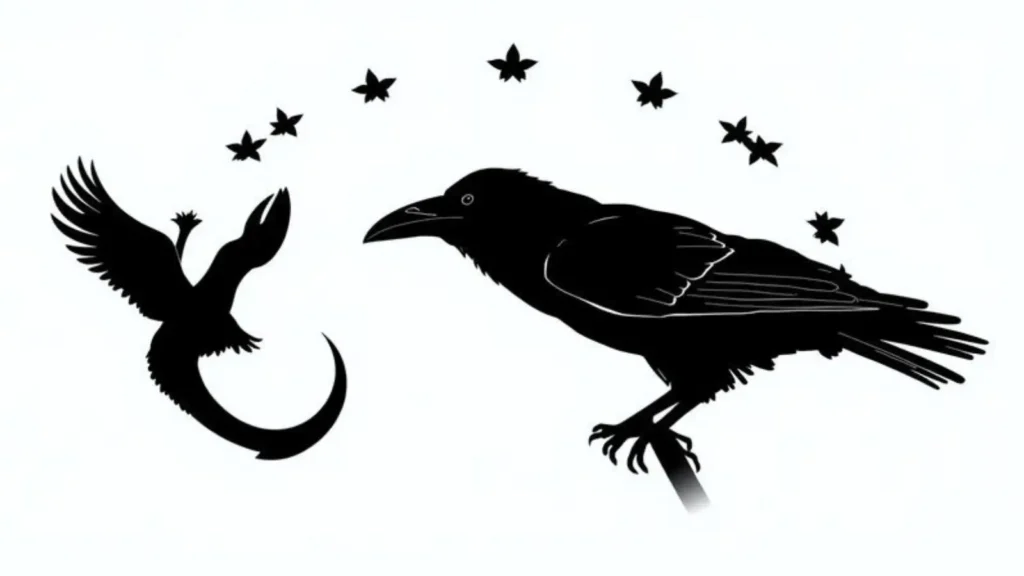
Throughout history, ravens have appeared in civilizations spanning Europe, Asia, North America, and the Middle East.
Ancient communities carefully observed wildlife to understand nature, seasons, survival, and spirituality. Because ravens frequently appeared in dramatic settings—storms, forests, mountains, battlefields, and sacred sites—they naturally became part of mythology and ritual.
Historical interpretations evolved alongside cultural beliefs rather than remaining fixed.
Major influences included:
- Oral traditions
- Religious storytelling
- Folklore
- Seasonal observations
- Hunting practices
- Agricultural life
- Warfare
- Funeral customs
- Nature worship
Raven Symbolism in Mythology
Norse Mythology
Perhaps the most famous ravens appear beside Odin.
His two ravens—
- Huginn (“Thought”)
- Muninn (“Memory”)
travel the world gathering information before returning to share their observations.
Here the raven symbolizes:
- Wisdom
- Knowledge
- Memory
- Observation
- Strategic thinking
- Divine communication
Indigenous Traditions of the Pacific Northwest
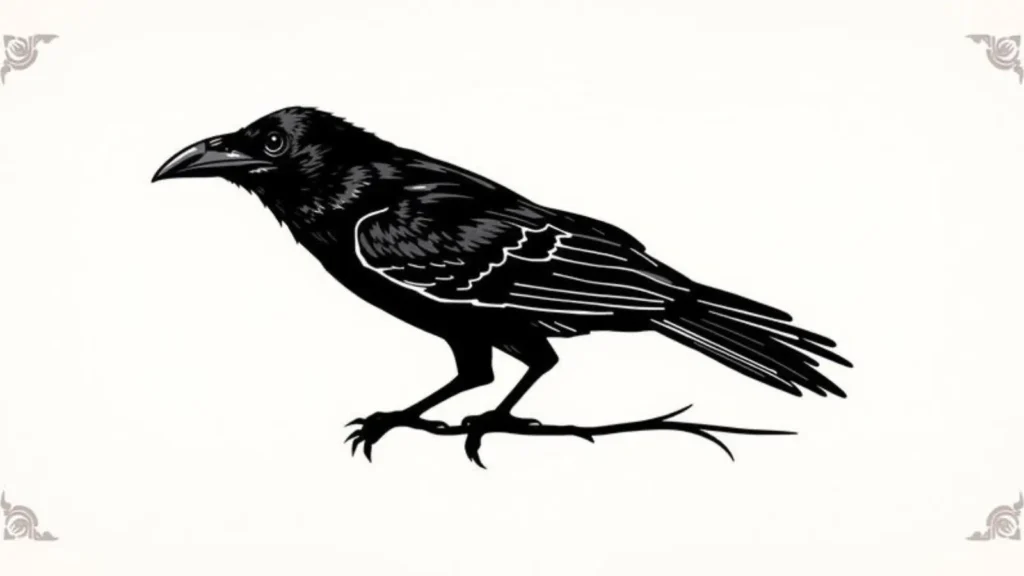
Many Indigenous peoples of the Pacific Northwest tell stories in which Raven serves as a creator or transformer.
Depending on the tradition, Raven may:
- Bring light to humanity
- Shape the world
- Teach important lessons
- Create order from chaos
- Challenge human assumptions
Rather than being purely good or evil, Raven often embodies creativity, intelligence, and transformation.
Celtic Traditions
In Celtic traditions, ravens frequently appear alongside warfare, prophecy, and sovereignty.
The bird may symbolize:
- Protection
- Fate
- Strength
- Insight
- Strategic wisdom
Greek and Roman Traditions
Ancient Greek mythology connected ravens with prophecy and divine communication.
Some legends portray the raven as a messenger associated with divine knowledge, reinforcing its role as a symbol of awareness rather than simple superstition.
Raven Symbolism Across Different Cultures
| Culture | Common Symbolic Meaning | Primary Themes |
| Norse | Wisdom and divine knowledge | Thought, memory, observation |
| Celtic | Prophecy and protection | Fate, leadership |
| Pacific Northwest Indigenous traditions | Creation and transformation | Creativity, balance |
| Japanese | Guidance | Family, loyalty |
| Chinese | Solar symbolism in some traditions | Power, renewal |
| Tibetan traditions | Protection | Spiritual guidance |
| Medieval Europe | Mystery and omens | Life transitions |
| Modern culture | Intelligence and resilience | Adaptability, self-discovery |
The meanings differ significantly depending on historical and cultural context.
Psychological Meaning of Raven Symbolism
Direct Answer
From a psychological perspective, ravens often symbolize curiosity, self-awareness, resilience, and confronting the unknown.
Modern psychology generally interprets symbolic animals as reflections of human thought, emotion, and personal meaning rather than objective supernatural signs.
People may associate ravens with:
- Personal transformation
- Inner wisdom
- Shadow work
- Emotional resilience
- Adaptability
- Learning from experience
These interpretations are symbolic frameworks rather than scientifically verified meanings.
Spiritual Interpretations of Ravens
Many spiritual traditions view ravens as symbolic messengers.
Common spiritual interpretations include:
Transformation
Major life changes
Reflection
Encouraging deeper thinking
Awareness
Looking beyond appearances
Guidance
Trusting intuition during uncertainty
Wisdom
Learning through experience
It is important to distinguish spiritual beliefs from empirical evidence. Spiritual symbolism reflects faith and tradition rather than scientific proof.
Raven Symbolism in Religion
Religious interpretations vary widely.
In Biblical Tradition
Ravens appear in several passages.
They may symbolize:
- Divine provision
- Survival
- God’s care for creation
One well-known narrative describes a raven being sent from Noah’s Ark before the dove.
Other Religious Perspectives
Different faiths assign different meanings.
Some emphasize:
- Survival
- Creation
- Divine communication
- Protection
Others place little symbolic emphasis on ravens.
Raven Symbolism in Literature
Authors frequently use ravens to create emotional depth.
Common literary themes include:
- Mystery
- Memory
- Loss
- Transformation
- Knowledge
- Fate
- Isolation
- Wisdom
The bird’s striking appearance makes it especially effective as a literary symbol.
Raven Symbolism in Art
Visual artists have used ravens for centuries.
In art, ravens may communicate:
- Contrast
- Intelligence
- Solitude
- Transition
- Nature
- Mortality
- Observation
Their dark feathers often create dramatic visual compositions without implying exclusively negative meanings.
Raven Symbolism in Storytelling
Modern storytelling continues to embrace raven symbolism.
Common narrative roles include:
- Wise guide
- Mysterious observer
- Guardian
- Messenger
- Shape-shifter
- Trickster
- Survivor
These archetypes appear across novels, films, games, television, and graphic novels.
Raven Symbolism in Branding and Design
Designers sometimes incorporate ravens to communicate:
- Intelligence
- Innovation
- Independence
- Mystery
- Strategy
- Premium identity
- Creativity
A raven logo often conveys sophistication and depth rather than aggression.
Color Psychology and the Raven
The raven’s black feathers influence many symbolic interpretations.
Black often represents:
- Elegance
- Authority
- Mystery
- Sophistication
- Reflection
- Power
However, color symbolism differs across cultures. In some societies, black signifies mourning, while in others it represents strength, dignity, or wisdom.
Semiotics and Raven Symbolism
Semiotics studies how symbols communicate meaning.
A raven functions as a cultural sign whose interpretation depends on context.
For example:
- In mythology, it may represent prophecy.
- In literature, memory.
- In branding, intelligence.
- In psychology, transformation.
- In folklore, mystery.
Meaning is created through shared cultural understanding rather than the bird alone.
Raven Symbolism in Popular Culture
Modern media frequently portrays ravens as symbols of:
- Intelligence
- Secrets
- Magic
- Ancient knowledge
- Independence
- Survival
- Mystery
Fantasy novels, films, and television series often use ravens to signal hidden information or wise characters.
Did You Know?
Ravens are among the world’s most intelligent birds. Scientific research has shown they can solve complex puzzles, plan for future needs, recognize individual human faces, and use tools. These observable abilities likely contributed to their long-standing association with wisdom and insight.
Expert Tip
When interpreting raven symbolism, always consider the cultural and historical setting. A raven in Norse mythology may symbolize wisdom, while in another tradition it could represent creation, guidance, or transformation. Context is essential for accurate interpretation.
Common Mistakes
Avoid these misconceptions:
- Assuming ravens always symbolize death.
- Treating symbolism as universal across cultures.
- Confusing ravens with crows.
- Interpreting folklore as historical fact.
- Assuming symbolic meanings have scientific proof.
Balanced interpretation requires recognizing differences between mythology, belief, literature, and evidence-based research.
Myth vs. Fact
| Myth | Fact |
| Ravens only symbolize death. | They symbolize many ideas, including wisdom, transformation, creativity, and resilience. |
| Every culture interprets ravens the same way. | Symbolic meanings differ across traditions. |
| Raven symbolism is scientifically proven. | Symbolism reflects cultural interpretation rather than scientific evidence. |
| Ravens are bad omens everywhere. | Many cultures view them positively as guides or creators. |
| Ravens and crows have identical symbolism. | Although related, their symbolic roles often differ in folklore and literature. |
Practical Applications of Raven Symbolism
Understanding raven symbolism can be valuable in many fields.
Education
Teachers use symbolic analysis to explore mythology, literature, and cultural history.
Branding
Businesses may use raven imagery to communicate intelligence or innovation.
Storytelling
Writers create memorable characters through symbolic animal motifs.
Art
Artists employ ravens to evoke curiosity and emotional depth.
Cultural Studies
Anthropologists examine raven symbolism to understand societal values and traditions.
Personal Reflection
Many people use symbolic frameworks as tools for self-exploration and creative thinking, while recognizing these interpretations are subjective.
Key Insights
- Ravens symbolize intelligence more consistently than superstition.
- Meanings change across cultures.
- Mythology greatly shaped modern interpretations.
- Psychology often views ravens as symbols of transformation.
- Literature uses ravens to represent mystery and memory.
- Modern branding associates ravens with innovation and strategic thinking.
- Context determines symbolic meaning more than appearance alone.
Why Raven Symbolism Still Matters Today
Even in today’s digital world, symbols remain powerful forms of communication.
Raven symbolism continues influencing:
- Graphic design
- Corporate branding
- Film
- Literature
- Video games
- Tattoo art
- Educational materials
- Cultural heritage projects
- Religious studies
- Anthropology
- Visual storytelling
Its enduring appeal lies in its flexibility. Rather than representing a single idea, the raven adapts to the message each culture wishes to convey.
Conclusion
Raven symbolism has evolved over thousands of years, reflecting humanity’s enduring fascination with one of nature’s most intelligent birds.
Across mythology, religion, psychology, literature, art, and modern media, the raven represents a rich tapestry of meanings that include wisdom, transformation, mystery, resilience, creativity, and insight.
While some traditions associate ravens with omens or mortality, many others celebrate them as creators, guides, protectors, and messengers of knowledge.
Understanding raven symbolism requires attention to historical context, cultural diversity, and the distinction between symbolic belief and evidence-based observation.
By appreciating these perspectives, readers gain a deeper understanding of how symbols shape communication, identity, storytelling, branding, education, religion, and everyday life.

Amelia Rosewood writes about symbolic meanings, ancient traditions, and the emotional connections between humans and symbols.
