Daisies are among the world’s most recognizable flowers, admired for their bright white petals and cheerful yellow centers. Yet their appeal extends far beyond beauty.
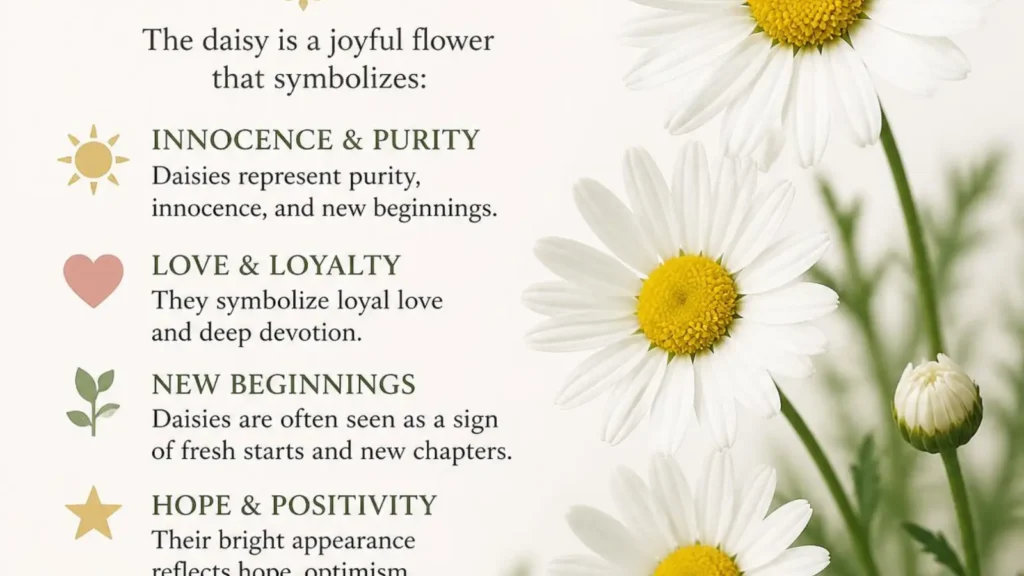
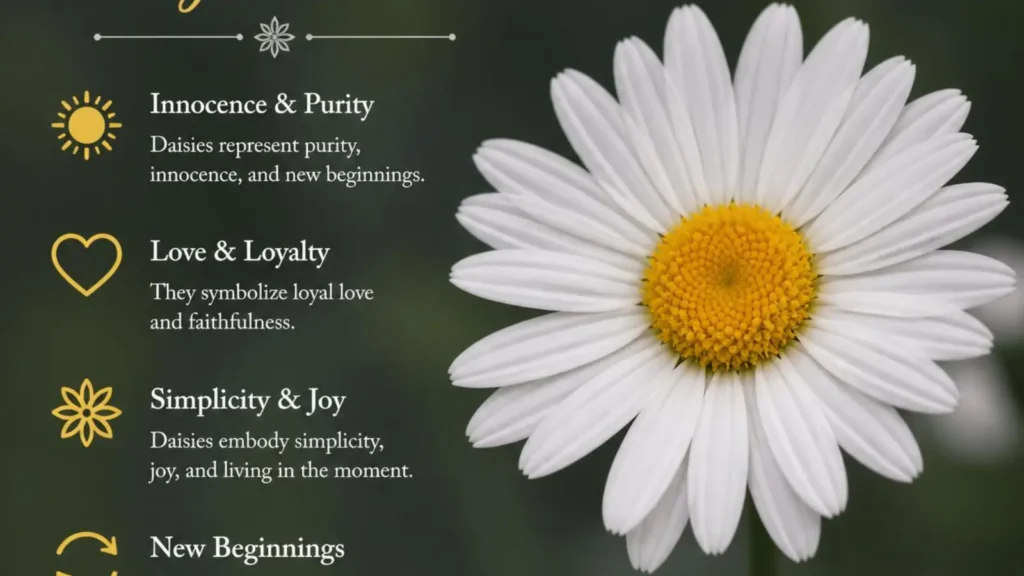
Daisy symbolism has represented innocence, purity, hope, renewal, loyal love, and fresh beginnings across civilizations for centuries.
From ancient myths and medieval art to modern weddings and digital design, the daisy continues to communicate emotions that words sometimes cannot.
Whether given as a heartfelt gift, featured in artwork, or used as a personal emblem, the daisy remains one of nature’s most meaningful symbols.
Understanding its symbolism helps us appreciate how flowers shape communication, culture, storytelling, spirituality, and human emotion.
Featured Snippet: What Does Daisy Symbolism Mean?
Daisy symbolism primarily represents innocence, purity, new beginnings, hope, loyalty, and joyful simplicity. Across many cultures, daisies symbolize fresh starts, honest love, youthful optimism, and emotional renewal. While interpretations differ by tradition, the flower consistently reflects positivity, resilience, and the beauty of life’s simplest moments.
What Is Daisy Symbolism?
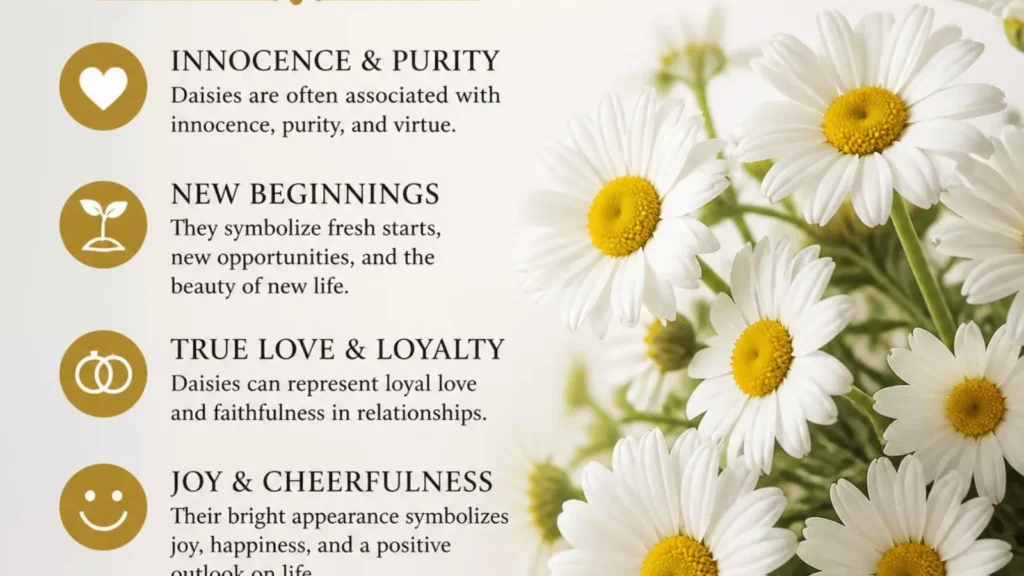
At its core, daisy symbolism centers on qualities people admire most:
- Innocence
- Purity
- New beginnings
- Optimism
- Happiness
- Faithfulness
- Inner peace
- Simplicity
- Emotional healing
- Natural beauty
Unlike flowers associated with luxury or passion, daisies communicate authenticity. Their uncomplicated appearance makes them powerful symbols of sincerity rather than extravagance.
This explains why daisies appear in celebrations of birth, childhood, weddings, spring festivals, and personal milestones.
The Historical Origins of Daisy Symbolism
The symbolic journey of the daisy stretches back thousands of years.
Ancient Europe
Many European traditions viewed daisies as flowers of spring, representing the return of life after winter. Blooming fields became visual reminders of nature’s resilience and seasonal renewal.
Communities often associated daisies with fertility, abundance, and hope because they appeared shortly after harsh winters ended.
Norse Traditions
In Norse mythology, the daisy was associated with Freyja, the goddess connected with love, motherhood, fertility, and beauty.
Although symbolic interpretations vary among historians, daisies gradually became linked with maternal affection, nurturing, and gentle feminine strength.
Medieval Europe
During the Middle Ages, artists frequently used daisies to symbolize:
- Virginity
- Humility
- Faithfulness
- Spiritual purity
Paintings and illuminated manuscripts often included daisies alongside religious figures to reinforce themes of innocence and divine grace.
Victorian Flower Language
The Victorian era transformed flowers into an elaborate communication system known as floriography.
In this symbolic language, daisies commonly conveyed:
- Loyal affection
- Pure intentions
- Innocent admiration
- Secret love
- Cheerfulness
People exchanged bouquets to express emotions considered inappropriate to speak openly.
Why the Daisy Represents Innocence
One of the strongest symbolic meanings of the daisy is innocence.
Several characteristics contribute to this interpretation:
- Bright white petals suggest cleanliness.
- Simple structure reflects honesty.
- Spring blooming connects with youth.
- Open appearance symbolizes transparency.
- Fresh blossoms evoke childhood.
Because of these qualities, daisies frequently appear in children’s literature, christenings, and celebrations of family life.
Daisy Symbolism Across Different Cultures
Symbolic meanings evolve through history and geography.
| Culture | Common Symbolic Meaning |
| Ancient Europe | Spring, renewal, hope |
| Norse traditions | Motherhood, fertility |
| Victorian England | Innocent love, loyalty |
| Christianity | Purity, humility |
| Modern Western cultures | Happiness, friendship |
| Contemporary floral design | Simplicity and positivity |
Although interpretations differ, optimism remains a common thread.
Spiritual Meaning of Daisies
Many spiritual traditions interpret daisies as symbols of emotional and spiritual renewal.
They may represent:
- Inner peace
- Faith
- Personal transformation
- Gratitude
- Divine simplicity
- Joyful living
- Spiritual awakening
- Harmony with nature
Unlike mystical symbols focused on mystery, daisies encourage openness, authenticity, and appreciation of everyday blessings.
Many mindfulness practices use flowers like daisies as reminders to stay present and embrace life’s natural rhythms.
Daisy Symbolism in Christianity
Within Christian symbolism, white flowers frequently represent purity.
The daisy has therefore been connected with:
- Innocence
- Childlike faith
- Humility
- Moral goodness
- Divine creation
While the daisy is not a formal religious symbol in Christianity, artists have often incorporated it into religious paintings to reinforce these themes.
Psychological Meaning of Daisy Symbolism
From a psychological perspective, flowers influence emotional perception through color, familiarity, and cultural learning.
The daisy often evokes:
- Calmness
- Comfort
- Positivity
- Optimism
- Emotional safety
- Simplicity
- Trust
- Warmth
White petals naturally encourage associations with cleanliness and honesty, while the yellow center reflects warmth, energy, and happiness.
Together, these colors create one of the most psychologically uplifting floral combinations.
Daisy Symbolism in Literature
Authors frequently use daisies to communicate emotional themes without lengthy descriptions.
Common literary symbolism includes:
Youth
Characters gathering daisies often represent innocence.
Hope
Blooming daisies can symbolize fresh opportunities after hardship.
Honest Love
Unlike roses, daisies frequently portray uncomplicated affection.
Simplicity
A field of daisies often emphasizes natural beauty over wealth.
Renewal
Writers use spring daisies to mark emotional healing and new chapters.
Daisy Symbolism in Art
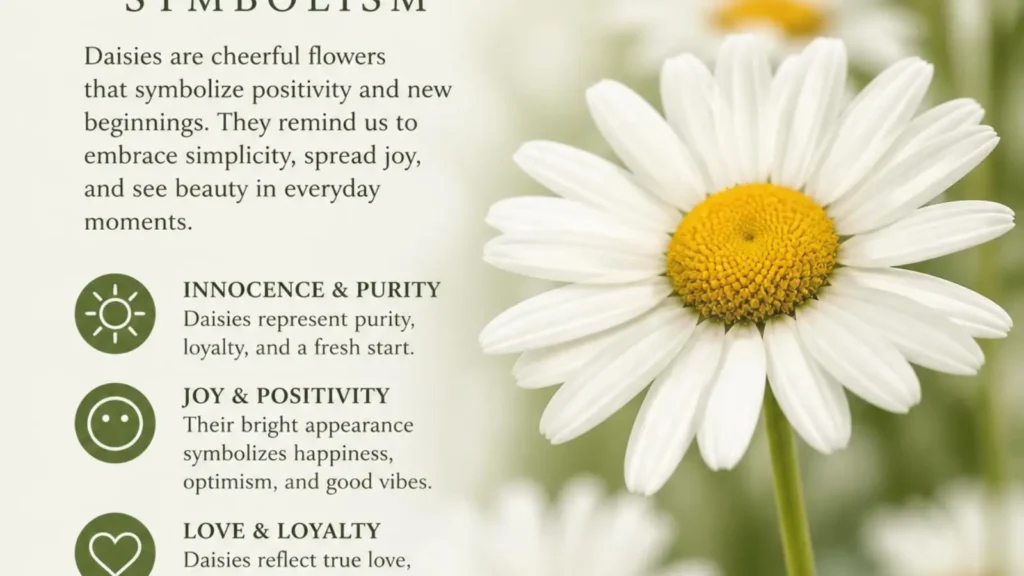
Artists appreciate daisies because they balance visual simplicity with symbolic richness.
They often represent:
- Freshness
- Nature
- Feminine beauty
- Peace
- Childhood
- Optimism
- Purity
From Renaissance paintings to modern illustrations, daisies remain popular visual symbols because viewers instantly recognize their positive associations.
Daisy Symbolism in Modern Branding
Brands often select floral imagery to influence consumer perception.
Daisy symbolism aligns with values such as:
- Authenticity
- Sustainability
- Wellness
- Freshness
- Natural products
- Family-friendly identity
- Trustworthiness
- Happiness
Beauty, skincare, wellness, gardening, and eco-conscious brands frequently incorporate daisy-inspired visuals to communicate these qualities.
Daisy Symbolism in Relationships
Daisies are commonly exchanged between:
- Friends
- Romantic partners
- Parents
- Children
- Teachers
- Graduates
Their symbolic message usually includes:
- Genuine affection
- Loyalty
- Encouragement
- Appreciation
- Hope
- Emotional support
Unlike flowers associated primarily with romance, daisies communicate warmth across many different relationships.
Daisy Symbolism in Dreams
Dream interpretation varies widely between psychological frameworks and cultural traditions, so meanings should not be viewed as universal facts.
Many symbolic interpretations suggest daisies may represent:
- Personal growth
- Healing
- Optimism
- Emotional clarity
- New opportunities
- Inner balance
Dream meanings are highly personal and influenced by individual experiences.
Color Variations and Their Symbolic Meanings
Although white daisies are most common, different colors can carry additional symbolic associations.
| Daisy Color | Symbolic Meaning |
| White | Purity, innocence |
| Yellow | Joy, friendship |
| Pink | Admiration, kindness |
| Red | Passion, courage |
| Blue | Calmness, imagination |
| Purple | Wisdom, creativity |
| Orange | Energy, enthusiasm |
These meanings often reflect broader cultural color symbolism rather than universally accepted floral traditions.
Daisy Symbolism in Folklore
Folklore has long celebrated daisies as flowers of hope.
Stories from various regions associate them with:
- Returning spring
- Fairies
- Good fortune
- Fertility
- Childhood happiness
- Nature spirits
These traditions differ significantly across communities, highlighting how symbolism evolves through storytelling rather than scientific evidence.
Daisy Symbolism in Weddings
Daisies remain popular wedding flowers because they symbolize:
- Faithful love
- Honest commitment
- New beginnings
- Joyful partnership
- Simplicity
- Lasting friendship
Many couples choose daisies instead of more elaborate flowers to reflect authenticity and lifelong companionship.
Daisy Symbolism in Everyday Life
Beyond ceremonies, daisies appear throughout daily life.
Examples include:
- Greeting cards
- Home décor
- Educational materials
- Clothing patterns
- Jewelry
- Logos
- Garden landscapes
- Children’s illustrations
- Social media graphics
Their positive symbolism makes them universally approachable across different audiences.
Did You Know?
The English word daisy originated from the Old English phrase “day’s eye.” The flower earned this name because its petals typically open with daylight and close again at night, making it a natural symbol of awakening and renewal.
Expert Tip
When using floral symbolism in branding, education, or design, always consider cultural context. While daisies generally represent positivity, audiences may interpret flowers differently based on regional traditions, religious backgrounds, and personal experiences.
Common Mistakes About Daisy Symbolism
Assuming all flowers share identical meanings
Each flower carries unique cultural associations.
Treating symbolism as universal
Meanings vary across cultures and historical periods.
Confusing symbolism with scientific facts
Symbolic interpretations reflect cultural beliefs rather than biological properties.
Ignoring color differences
Different daisy colors may communicate different emotional messages.
Myth vs. Fact
| Myth | Fact |
| Daisies only symbolize innocence. | They also symbolize hope, renewal, friendship, and loyalty. |
| Every culture interprets daisies identically. | Symbolic meanings vary across traditions. |
| Daisy symbolism is scientifically proven. | Symbolism develops through history, culture, religion, and art. |
| Only white daisies have symbolic value. | Colored varieties often carry additional cultural meanings. |
Practical Applications of Daisy Symbolism
Understanding daisy symbolism can improve communication in many areas.
Education
Teachers use floral symbolism to introduce cultural studies and literature.
Branding
Designers select daisies to communicate freshness and authenticity.
Interior Design
Floral artwork creates uplifting environments.
Therapy and Wellness
Nature imagery may encourage relaxation and emotional reflection.
Creative Writing
Authors use daisies as visual metaphors for innocence and renewal.
Gift Giving
Choosing daisies allows people to express encouragement, appreciation, or sincere affection.
Key Insights
- Daisies symbolize innocence and hope across many traditions.
- Their historical roots extend back centuries.
- Spiritual interpretations often emphasize renewal and gratitude.
- Artists and writers use daisies to represent honesty and emotional healing.
- Modern branding values their associations with authenticity and simplicity.
- Symbolic meanings depend on historical, cultural, and personal context.
Conclusion
Daisy symbolism has endured because it reflects qualities people continue to value—purity, hope, honesty, resilience, and fresh beginnings.
Although interpretations differ across cultures, religions, artistic traditions, and historical periods, the daisy consistently communicates optimism through its simple yet meaningful appearance.
Today, daisies continue to influence visual communication, branding, literature, education, design, spirituality, and everyday relationships.
By understanding their symbolic significance, we gain deeper insight into how flowers shape human expression, cultural identity, storytelling, and emotional connection across generations.

Olivia Hartwell explores the hidden meanings behind symbols, animals, colors, dreams, and cultural traditions through insightful symbolism research.
