
Cherry blossom symbolism has fascinated humanity for centuries. These delicate pink and white flowers represent far more than seasonal beautynthey embody life’s fleeting nature, renewal, hope, transformation, and the appreciation of the present moment.
Across cultures, especially in Japan, cherry blossoms have become powerful reminders that beauty is temporary, making every moment precious.
Whether admired during spring festivals, featured in literature, incorporated into art, or used in modern branding, cherry blossoms continue to inspire emotional connections that transcend cultural boundaries.
Featured Snippet: What Does Cherry Blossom Symbolism Mean?
Cherry blossom symbolism represents the beauty and impermanence of life, renewal, hope, and new beginnings.
Because cherry blossoms bloom brilliantly for only a short time, they remind people to appreciate the present, embrace change, and recognize that life’s most beautiful moments are often temporary.
Why Cherry Blossom Symbolism Matters Today
In today’s fast-paced world, cherry blossoms offer an important lesson.
Rather than promising permanence, they celebrate temporary beauty.
Their symbolism encourages people to:
- Appreciate the present.
- Accept life’s natural changes.
- Find beauty in imperfection.
- Welcome new beginnings.
- Practice mindfulness.
- Celebrate growth after difficult seasons.
This timeless message explains why cherry blossoms appear everywhere—from international festivals and gardens to fashion, tattoos, architecture, digital design, and social media.
The Origins of Cherry Blossom Symbolism
Ancient Japanese Beginnings
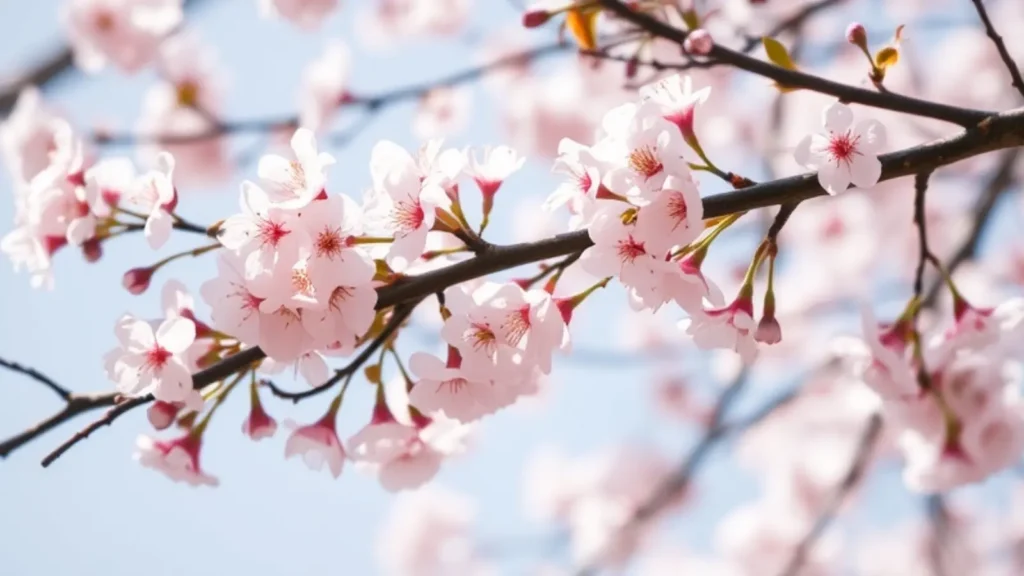
Cherry blossoms (known as Sakura in Japan) have been admired for over one thousand years.
Originally, people associated blooming trees with:
- Spring planting
- Agricultural prosperity
- Divine blessings
- Seasonal transitions
Farmers believed the flowering trees were connected to mountain spirits that influenced successful harvests.
Over time, these practical beliefs evolved into deeper philosophical symbolism.
Influence of the Heian Period
During Japan’s Heian Period (794–1185), cherry blossoms became closely associated with:
- Poetry
- Court culture
- Elegance
- Emotional sensitivity
- Appreciation of beauty
Noble families held flower-viewing gatherings known as Hanami, a tradition still celebrated today.
What Cherry Blossoms Symbolize
1. Impermanence of Life
The most recognized symbolic meaning is life’s temporary nature.
Cherry blossoms bloom spectacularly but last only a short period before falling.
This natural cycle reminds people that:
- Nothing lasts forever.
- Every stage of life deserves appreciation.
- Beauty becomes more meaningful because it is temporary.
This idea aligns closely with the Japanese concept of Mono no Aware, the gentle awareness that all things are transient.
2. Renewal and Rebirth
Cherry blossoms appear after winter.
Because of this timing, they symbolize:
- New opportunities
- Personal transformation
- Fresh starts
- Emotional healing
- New chapters
Many schools and businesses in Japan begin their academic or fiscal year during cherry blossom season, strengthening this association.
3. Hope
After cold, dark winters, blossoms represent optimism.
Their arrival reminds people that:
- Difficult times eventually pass.
- Growth follows hardship.
- Every ending creates room for another beginning.
4. Beauty
Cherry blossoms symbolize delicate beauty that does not require permanence.
Unlike symbols of eternal perfection, cherry blossoms teach that temporary beauty can be equally meaningful.
5. Peace
Their soft colors and graceful appearance often evoke feelings of:
- Calm
- Balance
- Inner harmony
- Emotional healing
Many meditation gardens intentionally include flowering cherry trees.
Historical Evolution of Cherry Blossom Symbolism
| Historical Era | Symbolic Meaning | Cultural Importance |
| Ancient Japan | Agricultural blessings | Seasonal farming |
| Heian Period | Elegance and poetry | Court life |
| Samurai Era | Honor and mortality | Warrior philosophy |
| Edo Period | Public celebration | Hanami festivals |
| Modern World | Renewal and mindfulness | Global cultural symbol |
Cherry Blossom Symbolism in Japanese Culture
No country associates more meaning with cherry blossoms than Japan.
They represent:
- National identity
- Cultural heritage
- Seasonal celebration
- Reflection
- Gratitude
- Community
Every spring, millions gather beneath blooming trees during Hanami.
Rather than simply observing flowers, participants celebrate companionship, gratitude, and the fleeting nature of existence.
Cherry Blossoms and Samurai Philosophy
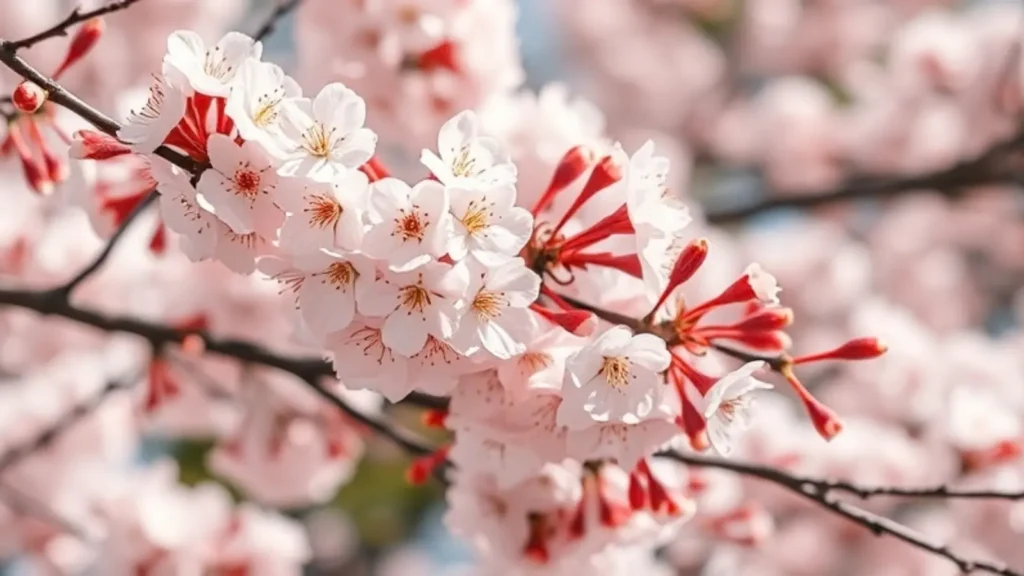
One fascinating historical interpretation links cherry blossoms with samurai values.
The blossoms represented:
- Courage
- Honor
- Readiness to face mortality
- Living with purpose
Just as blossoms fall gracefully at their peak, samurai ideals emphasized living honorably regardless of life’s uncertainty.
Modern historians note that while this symbolism became influential, its interpretation evolved over different historical periods and was sometimes adapted for political purposes.
Cherry Blossom Symbolism Around the World
Japan
Primary meanings:
- Impermanence
- Beauty
- Mindfulness
- Renewal
China
Chinese symbolism often emphasizes:
- Feminine beauty
- Romance
- Prosperity
- Strength
- Independence
Unlike Japan’s emphasis on transience, Chinese traditions more frequently associate blossoms with love and feminine grace.
Korea
Cherry blossoms commonly symbolize:
- Spring
- New beginnings
- Family gatherings
- Seasonal celebration
They are widely enjoyed during annual flower festivals.
United States
After Japan gifted thousands of cherry trees to Washington, D.C. in 1912, the blossoms came to symbolize:
- International friendship
- Peace
- Diplomacy
- Cultural exchange
The annual bloom remains a celebrated event.
Cultural Comparison
| Culture | Primary Symbolism |
| Japan | Impermanence and mindfulness |
| China | Love, beauty, prosperity |
| Korea | Spring and celebration |
| Western countries | Hope, friendship, renewal |
Spiritual Meaning of Cherry Blossoms
Although cherry blossoms are not tied to one universal religion, they carry spiritual significance across many traditions.
Common interpretations include:
- Spiritual awakening
- Personal growth
- Acceptance
- Gratitude
- Presence
- Inner peace
Meditation practitioners often use blooming trees as reminders to remain present instead of worrying about the future.
Cherry Blossoms in Buddhism
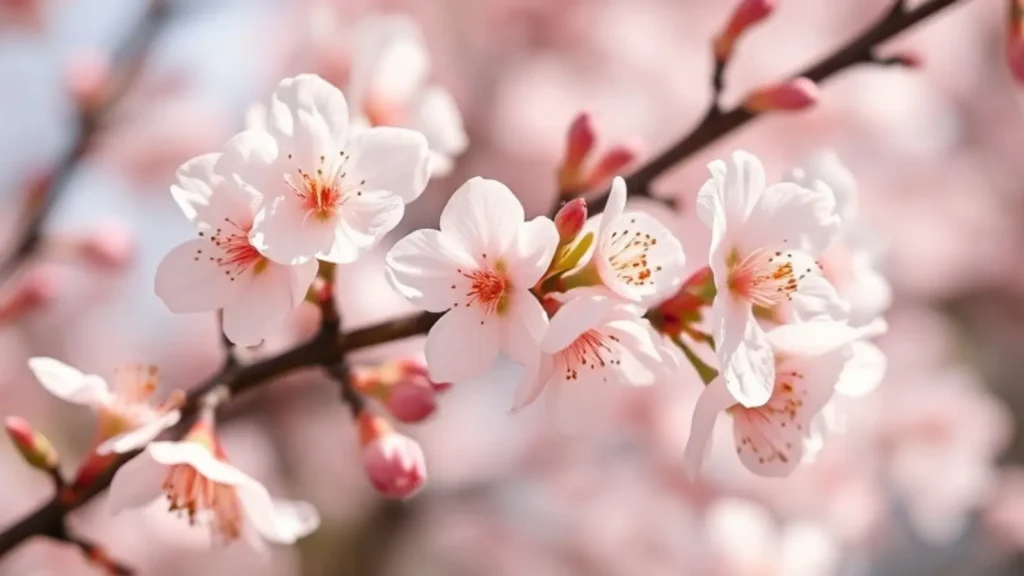
In Buddhist philosophy, cherry blossoms naturally illustrate important teachings.
Their short bloom reflects the principle that:
- Everything changes.
- Attachment creates suffering.
- Acceptance brings peace.
Rather than causing sadness, impermanence encourages gratitude for the present moment.
Cherry Blossoms in Shinto Beliefs
Within Shinto traditions, nature possesses spiritual importance.
Flowering trees have historically been viewed as expressions of harmony between humanity and the natural world.
Seasonal festivals celebrate this relationship through appreciation rather than ownership.
Psychological Meaning of Cherry Blossom Symbolism
Psychologically, cherry blossoms influence emotional perception through both symbolism and color.
People commonly associate them with:
- Calmness
- Optimism
- Emotional renewal
- Reflection
- Gratitude
Research in environmental psychology suggests that exposure to natural landscapes and flowering plants can positively influence mood and reduce stress for many people, although experiences vary by individual and setting.
Color Psychology of Cherry Blossoms
Pink Blossoms
Often symbolize:
- Compassion
- Kindness
- Affection
- Emotional warmth
White Blossoms
Frequently represent:
- Purity
- Peace
- Simplicity
- New beginnings
Cherry Blossom Symbolism in Literature
Writers have long used cherry blossoms to represent:
- Lost love
- Passing time
- Nostalgia
- Youth
- Memory
- Transformation
Because readers instinctively recognize their temporary beauty, cherry blossoms communicate emotional depth without lengthy explanation.
Cherry Blossoms in Art
Artists across centuries have painted cherry blossoms to express:
- Seasonal beauty
- Harmony
- Emotional reflection
- Nature’s rhythms
Traditional Japanese woodblock prints, watercolor paintings, photography, and contemporary digital illustrations continue this artistic tradition.
Cherry Blossoms in Mythology and Folklore
Various folk traditions describe cherry blossoms as symbols of:
- Blessings from nature
- Renewal after hardship
- Sacred seasonal transitions
While individual legends differ across regions, many share the idea that spring blossoms connect humanity with the rhythms of nature.
Cherry Blossoms in Branding and Design
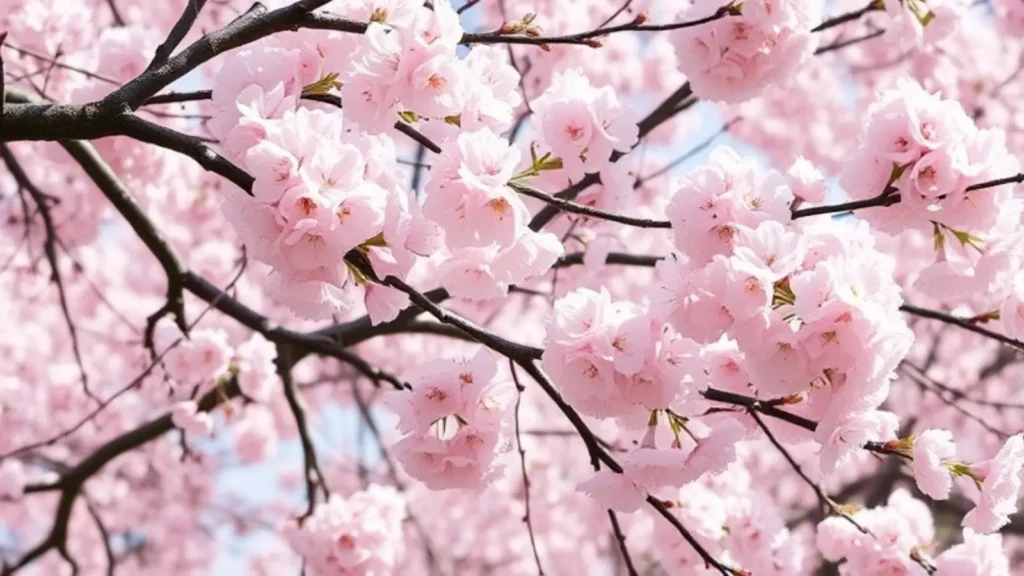
Modern designers frequently use cherry blossom imagery because it communicates positive emotional values.
Common branding associations include:
- Elegance
- Freshness
- Wellness
- Luxury
- Natural beauty
- Authenticity
Businesses in beauty, skincare, hospitality, wellness, and tourism often incorporate cherry blossom motifs to evoke these qualities.
Cherry Blossoms in Fashion
Designers use cherry blossom patterns to suggest:
- Grace
- Femininity
- Sophistication
- Seasonal freshness
The motif appears on clothing, accessories, jewelry, and textiles worldwide.
Cherry Blossom Symbolism in Tattoos
Many people choose cherry blossom tattoos to commemorate:
- Personal growth
- Recovery
- Loved ones
- New beginnings
- Acceptance of change
The meaning often depends on the wearer’s personal experiences.
Cherry Blossoms in Modern Digital Culture
Today, cherry blossom symbolism extends into:
- Social media aesthetics
- Digital art
- Mobile wallpapers
- Gaming environments
- Animation
- Brand storytelling
Its universal emotional appeal makes it an effective visual language across cultures.
Practical Applications of Cherry Blossom Symbolism
Cherry blossom symbolism can be applied in many real-world contexts:
| Field | Practical Application |
| Education | Teaching cultural awareness and literature |
| Branding | Conveying elegance, renewal, and authenticity |
| Mental wellness | Encouraging mindfulness and gratitude |
| Interior design | Creating calming, nature-inspired spaces |
| Storytelling | Representing transformation and emotional growth |
| Tourism | Promoting seasonal festivals and cultural heritage |
Did You Know?
- Cherry blossom season usually lasts only a few weeks, while individual blossoms often remain at their peak for just several days.
- Japan tracks the annual “cherry blossom front,” forecasting when trees will bloom across different regions.
- Hanami traditions have been practiced for centuries.
- Cherry blossoms are celebrated in many countries beyond Japan.
Expert Tip
When interpreting cherry blossom symbolism, always consider the cultural context. A blossom in Japanese poetry may emphasize impermanence, while the same flower in another tradition may symbolize romance, prosperity, or hope. Context gives symbols their richest meaning.
Common Mistakes
Mistake 1: Assuming all cultures interpret cherry blossoms identically.
Different societies attach different meanings.
Mistake 2: Believing they symbolize only beauty.
They also represent renewal, mortality, gratitude, and personal growth.
Mistake 3: Ignoring historical context.
Symbolic meanings have evolved across centuries and historical periods.
Myth vs. Fact
| Myth | Fact |
| Cherry blossoms only symbolize love. | Love is one interpretation among many, alongside impermanence, renewal, and hope. |
| Cherry blossom symbolism is exclusively Japanese. | Japan shaped its global recognition, but blossoms carry meanings in many cultures. |
| Every cherry blossom tree has identical symbolism. | Meanings vary according to culture, history, and personal interpretation. |
| Symbolism is fixed. | Symbols evolve as societies and traditions change. |
Key Insights
- Cherry blossoms symbolize both beauty and impermanence.
- Their meanings differ across cultures.
- They encourage mindfulness and appreciation of the present.
- Artists, writers, designers, and educators continue to use their symbolism.
- Historical traditions remain relevant in modern communication and branding.
- Personal experiences often shape individual interpretations.
Why Cherry Blossom Symbolism Continues to Matter
Cherry blossoms remain meaningful because they express universal human experiences.
Everyone encounters:
- Change
- Growth
- Loss
- Hope
- Renewal
The blossoms remind us that life’s temporary moments often become our most treasured memories.
Their enduring symbolism bridges history, philosophy, psychology, art, spirituality, and modern communication, making them one of the world’s most recognizable cultural symbols.

Nathaniel Brooks analyzes symbols, their origins, cultural importance, and psychological impact across history and modern society.
