Poetry has always communicated more than what appears on the surface. A single rose may represent love, a raven may suggest mystery or death, and a journey may symbolize life’s challenges.
This powerful use of deeper meaning is known as symbolism in poetry. Rather than stating ideas directly, poets use symbols to evoke emotions, provoke thought, and allow readers to discover personal interpretations.
Whether you are a student, literature enthusiast, educator, or aspiring poet, understanding symbolism in poetry opens the door to richer literary appreciation and stronger analytical skills.
Symbols bridge imagination, culture, psychology, and storytelling, making poetry timeless across generations.
Featured Snippet: What Is Symbolism in Poetry?
Symbolism in poetry is the literary technique of using objects, people, colors, places, actions, or images to represent deeper meanings beyond their literal sense. Symbols help poets express emotions, themes, philosophical ideas, and cultural beliefs while encouraging readers to interpret multiple layers of meaning.
What Is Symbolism in Poetry?
Quick Answer
Symbolism allows poets to communicate abstract ideas through concrete images.
Instead of saying:
“Life is uncertain.”
A poet might write:
“The autumn leaves danced in the fading wind.”
The falling leaves become a symbol of change, aging, and life’s temporary nature.
This indirect approach creates emotional depth while inviting readers to interpret the poem through their own experiences.
Why Symbolism Matters in Poetry
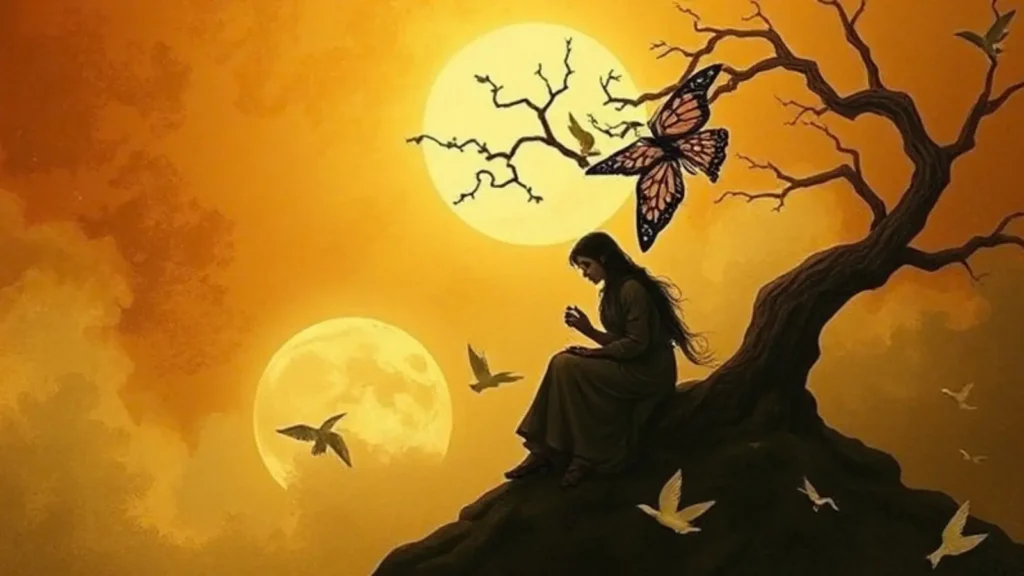
Poetry is designed to be experienced rather than simply read. Symbolism transforms ordinary language into meaningful artistic expression.
It helps poets:
- Express complex emotions
- Create memorable imagery
- Build universal themes
- Encourage multiple interpretations
- Connect readers emotionally
- Add mystery and imagination
- Increase artistic beauty
- Strengthen storytelling
Without symbolism, many famous poems would lose much of their emotional power.
The Historical Evolution of Symbolism in Poetry
Ancient Civilizations
Symbols appeared long before written literature.
Ancient cultures used:
- The sun for life
- Water for purification
- Fire for transformation
- Trees for wisdom
- Birds for freedom
These symbolic traditions naturally entered early poetry.
Greek and Roman Literature
Classical poets frequently connected nature with mythology.
For example:
- Laurel represented victory.
- Olive branches symbolized peace.
- Owls represented wisdom.
- Seas symbolized uncertainty.
These literary traditions influenced Western poetry for centuries.
Medieval Poetry

Religious symbolism became dominant.
Common symbols included:
- Light for divine truth
- Lambs for innocence
- Gardens for paradise
- Crosses for sacrifice
Much medieval poetry layered spiritual meanings beneath everyday images.
Romantic Poetry
Romantic poets expanded symbolism dramatically.
Nature became a reflection of:
- Human emotion
- Spiritual awakening
- Individual freedom
- Beauty
- Imagination
Poets such as William Wordsworth and Samuel Taylor Coleridge transformed ordinary landscapes into emotional experiences.
Modern Poetry
Modern poets introduced more personal and abstract symbolism.
Instead of fixed meanings, symbols became open to interpretation.
A city might symbolize:
- Isolation
- Opportunity
- Industrialization
- Loneliness
- Human ambition
Modern symbolism encourages readers to participate actively in creating meaning.
How Symbolism Works in Poetry

A symbol always has two levels.
| Literal Meaning | Symbolic Meaning |
| Rose | Love, beauty, passion |
| River | Life’s journey |
| Storm | Conflict or emotional struggle |
| Mountain | Challenge or achievement |
| Bird | Freedom or hope |
| Mirror | Identity or self-reflection |
| Candle | Hope or spiritual guidance |
| Shadow | Fear or hidden truth |
The literal image remains important, but it also points toward a larger idea.
Types of Symbolism in Poetry
Universal Symbols
These are recognized across many cultures.
Examples include:
- Sun = life
- Moon = mystery
- Water = cleansing
- Fire = transformation
- Tree = growth
Cultural Symbols
Some symbols depend on cultural traditions.
For example:
- Dragons symbolize wisdom in many East Asian traditions.
- Dragons often symbolize danger in many Western stories.
Meaning changes according to cultural context.
Personal Symbols
Many poets create their own unique symbolic systems.
A childhood home might symbolize:
- Memory
- Security
- Regret
- Identity
Its meaning develops throughout the poem rather than relying on traditional associations.
Religious Symbols
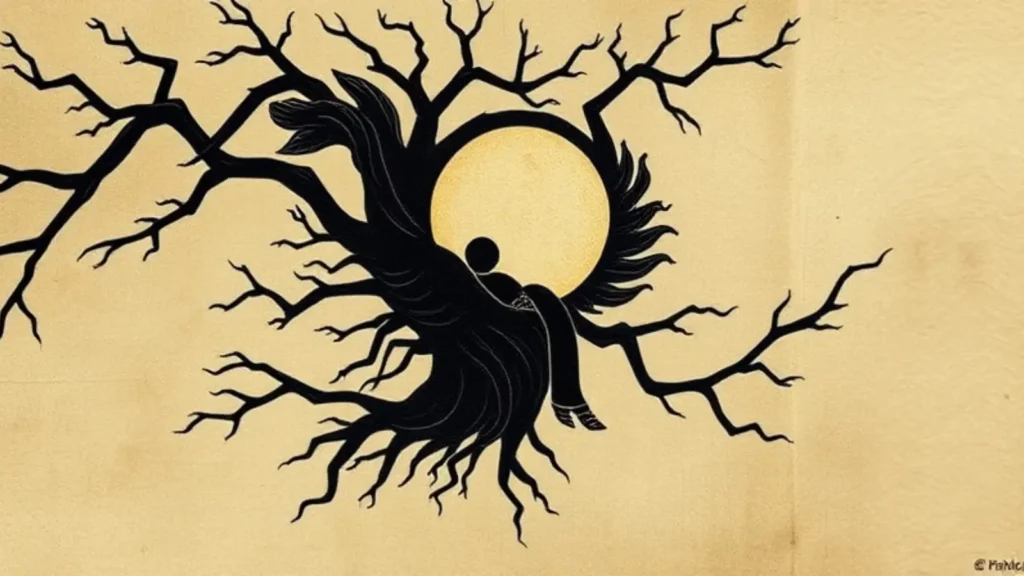
Religious traditions contribute many recurring poetic symbols.
Examples include:
- Light
- Dove
- Lotus
- Cross
- Temple
- River
These often represent spiritual transformation, hope, faith, or renewal.
Famous Examples of Symbolism in Poetry
The Raven
Edgar Allan Poe’s raven symbolizes:
- Grief
- Death
- Memory
- Psychological suffering
The bird becomes much more than an animal.
The Road
In Robert Frost’s poetry, roads symbolize:
- Life choices
- Decision-making
- Personal growth
The physical path reflects life’s direction.
The Red Rose
Across countless poems, roses commonly symbolize:
- Love
- Romance
- Beauty
- Fragility
Their thorns often represent pain accompanying love.
The Sea
Poets frequently use oceans to symbolize:
- Infinity
- Human emotions
- Mystery
- Freedom
- The unconscious mind
Psychological Meaning of Symbolism in Poetry
Human brains naturally think through symbols.
Psychologists studying perception and cognition have shown that people understand abstract ideas more easily when they are connected to vivid mental images.
Symbols help readers:
- Remember ideas longer
- Feel stronger emotions
- Build personal interpretations
- Connect experiences with imagination
Because emotions often resist direct description, symbolism provides an effective bridge between feeling and language.
Cultural Significance of Symbolism
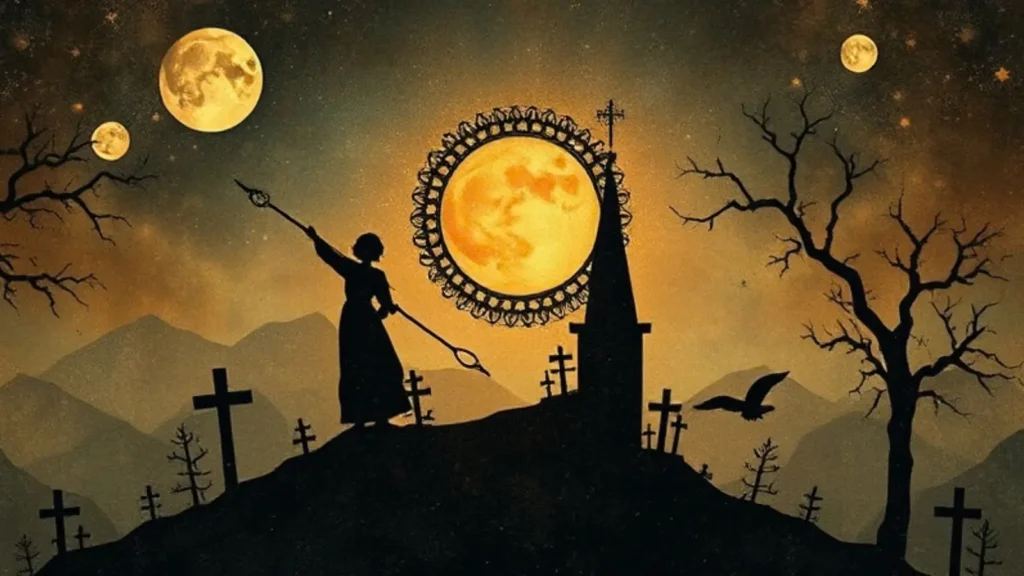
Every culture develops symbolic traditions.
These traditions appear in:
- Folklore
- Religion
- Festivals
- Songs
- Architecture
- Literature
- Clothing
- Visual art
Poetry reflects these shared cultural meanings while also reshaping them for new audiences.
Symbolism and Color in Poetry
Colors frequently carry symbolic meanings.
| Color | Common Symbolism |
| Red | Passion, love, sacrifice |
| White | Purity, peace, innocence |
| Black | Mystery, grief, death |
| Blue | Calm, wisdom, spirituality |
| Green | Growth, renewal, nature |
| Gold | Success, divinity, wealth |
| Purple | Royalty, creativity |
| Gray | Uncertainty, aging |
Color symbolism varies across cultures, so interpretation should always consider historical and cultural context.
Symbolism Across Different Cultures
| Symbol | Western Interpretation | Eastern Interpretation | Indigenous Perspectives |
| Dragon | Power or danger | Wisdom and prosperity | Often tied to local traditions rather than a universal meaning |
| Owl | Wisdom | Sometimes viewed as an omen, depending on the culture | Meanings vary widely among Indigenous peoples |
| Lotus | Beauty | Spiritual enlightenment | Less common as a traditional symbol outside regions where it is culturally significant |
| Snake | Temptation or rebirth | Renewal, healing, or protection in some traditions | Can symbolize transformation, ancestry, or sacred power depending on the community |
Symbols never have one permanent meaning.
Context always matters.
Literary Devices Connected with Symbolism
Symbolism often works alongside:
Metaphor
Direct comparison between ideas.
Imagery
Creates vivid sensory experiences.
Allegory
An extended symbolic narrative.
Motif
A recurring symbolic element.
Personification
Giving human qualities to symbolic objects.
Together, these devices create richer poetic meaning.
Symbolism in Modern Poetry
Today’s poets use symbolism to explore:
- Identity
- Climate change
- Technology
- Migration
- Mental health
- Gender
- Memory
- Social justice
Modern symbols often emerge from everyday life, including smartphones, traffic lights, empty buildings, or digital spaces, reflecting contemporary experiences.
Symbolism Beyond Literature
Symbolism influences many areas beyond poetry.
Branding
Companies use symbols to communicate trust, innovation, sustainability, or luxury through logos, colors, and visual identity.
Education
Teachers use symbolism to improve literary analysis and critical thinking.
Media
Films and television rely heavily on recurring symbols to reinforce themes.
Architecture
Buildings often include symbolic shapes, materials, and layouts representing cultural values.
Religion
Sacred symbols continue to communicate beliefs across generations.
Visual Communication
Icons and emojis function as modern symbolic language.
Practical Applications of Understanding Symbolism
Learning symbolism helps people:
- Analyze literature more effectively
- Improve creative writing
- Appreciate cultural diversity
- Strengthen communication skills
- Interpret visual media
- Enhance critical thinking
- Understand advertising messages
- Recognize persuasive storytelling
These skills are valuable in education, marketing, journalism, design, and everyday communication.
Did You Know?
Many symbols become so familiar that people stop noticing them consciously. For example, a sunrise often represents hope in literature and visual media, even when the creator never explains its symbolic role.
Expert Tip
When interpreting symbolism in poetry, avoid assuming every object is symbolic. First understand the poem’s literal meaning, then look for repeated images, patterns, emotional emphasis, and cultural context before assigning symbolic significance.
Common Mistakes
- Assuming every reader must reach the same interpretation.
- Ignoring historical and cultural background.
- Treating symbols as fixed and universal.
- Confusing metaphor with symbolism.
- Overlooking the poem’s literal narrative.
Good literary analysis balances textual evidence with thoughtful interpretation.
Myth vs. Fact
| Myth | Fact |
| Every symbol has only one meaning. | Many symbols have multiple valid interpretations depending on context. |
| Symbolism belongs only in old poetry. | Contemporary poets frequently use symbolism in innovative ways. |
| Symbolism makes poetry confusing. | Effective symbolism deepens meaning while rewarding careful reading. |
| Nature symbols always mean the same thing. | Their meanings shift across cultures, genres, and historical periods. |
Key Insights
- Symbolism transforms ordinary images into meaningful ideas.
- Cultural traditions shape symbolic interpretation.
- Readers actively participate in discovering symbolic meaning.
- Poetry combines symbolism with imagery, metaphor, and theme.
- Modern symbolism continues evolving alongside society.
How to Identify Symbolism in Poetry
- Read the poem literally first.
- Notice recurring images or objects.
- Identify emotionally emphasized details.
- Consider historical and cultural context.
- Connect symbols to the poem’s central theme.
- Support interpretations with textual evidence rather than assumptions.
This method leads to more balanced and persuasive literary analysis.
Why Symbolism in Poetry Remains Important Today
Despite rapid technological change, symbolism remains central to human communication. People still understand the world through stories, images, rituals, and shared cultural references. Poetry uses symbols to express experiences that cannot always be explained through literal language alone.
Understanding symbolism improves not only literary appreciation but also visual literacy, cultural awareness, communication, branding, education, media analysis, and creative thinking. In an increasingly interconnected world, recognizing how symbols carry different meanings across cultures helps readers approach literature with greater empathy and insight.
Frequently Asked Questions
What is symbolism in poetry in simple words?
Symbolism in poetry is the use of objects, images, colors, people, or actions to represent deeper meanings beyond their literal sense. It helps poets express ideas and emotions indirectly.
Why do poets use symbolism?
Poets use symbolism to communicate complex emotions, develop themes, create memorable imagery, and encourage readers to discover multiple layers of meaning through interpretation.
Is symbolism the same as metaphor?
No. A metaphor directly compares two things, while symbolism uses a person, object, or image that consistently represents a broader idea throughout part or all of a poem.
Can one symbol have different meanings?
Yes. The same symbol may carry different meanings depending on the poem, historical period, culture, religion, or the poet’s personal intention. Context is essential for accurate interpretation.
How can students identify symbolism in poetry?
Students should examine repeated images, emotional emphasis, cultural references, themes, and the relationship between literal descriptions and abstract ideas. Strong interpretations are supported by evidence from the poem.
Why is symbolism still relevant in modern poetry?
Modern poets continue using symbolism to explore identity, technology, environment, memory, relationships, social issues, and personal experiences, proving that symbolic language remains a powerful literary tool.
Conclusion
Symbolism in poetry is far more than decorative language it is a foundational technique that gives poems emotional depth, intellectual richness, and lasting resonance.
By transforming everyday objects, colors, landscapes, and actions into carriers of deeper meaning, symbolism enables poets to communicate themes that transcend time, culture, and language.
Its significance extends beyond literature into education, psychology, branding, religion, visual communication, media, architecture, and cultural identity.
While symbolic meanings evolve across societies and historical periods, their ability to connect human experience through imagination remains constant.
Developing an understanding of symbolism in poetry empowers readers to interpret texts with greater confidence, appreciate diverse perspectives, and recognize the enduring role of symbols in shaping how people think, feel, and communicate.

Olivia Hartwell explores the hidden meanings behind symbols, animals, colors, dreams, and cultural traditions through insightful symbolism research.
