Few creatures inspire as much fascination and caution as the scorpion. Feared for its venom yet admired for its resilience, the scorpion has become one of humanity’s most enduring symbols.
Across civilizations, it has represented protection, transformation, survival, mystery, death, rebirth, courage, and hidden strength. Despite its intimidating appearance, scorpion symbolism extends far beyond danger, revealing profound lessons about adaptation, self-defense, emotional resilience, and personal growth.
From ancient Egyptian mythology and Mesopotamian legends to astrology, indigenous folklore, literature, tattoos, branding, and modern storytelling, the scorpion continues to communicate powerful messages.
Its symbolism changes depending on cultural traditions, historical context, and personal beliefs, making it one of the richest symbolic animals in human history.
This guide explores the historical roots, psychological meaning, spiritual interpretations, artistic influence, and contemporary relevance of scorpion symbolism while presenting balanced, evidence-informed explanations.
Featured Snippet: What Does Scorpion Symbolism Mean?
Scorpion symbolism primarily represents protection, transformation, resilience, self-defense, hidden power, and survival. Across different cultures, the scorpion may symbolize danger, justice, healing, death, rebirth, spiritual awakening, or emotional strength. Its meaning depends on cultural traditions, mythology, religious beliefs, and personal interpretation.
What Is Scorpion Symbolism?

Quick Answer
Scorpion symbolism reflects humanity’s relationship with both danger and protection. Because the animal uses its venom primarily for defense rather than aggression, many traditions interpret it as a reminder to establish healthy boundaries, act wisely, and transform hardship into strength.
Unlike predators that rely solely on size or speed, the scorpion survives through patience, awareness, precision, and resilience. These qualities have inspired symbolic meanings that continue to appear in mythology, psychology, literature, and modern design.
Historical Origins of Scorpion Symbolism
The symbolic importance of scorpions dates back thousands of years.
Ancient societies living in deserts and dry climates frequently encountered scorpions, making them both feared and respected. Their ability to survive harsh environments naturally associated them with endurance and adaptation.
Some of the earliest symbolic appearances include:
- Ancient Egyptian religious traditions
- Mesopotamian mythology
- Greek legends
- Persian folklore
- Indigenous desert cultures
- Early astronomical observations connected with Scorpio
Throughout history, the scorpion gradually evolved from a dangerous creature into a symbol of hidden wisdom and protective power.
Core Symbolic Meanings of the Scorpion
1. Protection
Scorpions rarely attack without reason.
Their defensive nature makes them powerful symbols of:
- Personal boundaries
- Self-preservation
- Protective instincts
- Inner security
- Emotional defense
Many people view the scorpion as a reminder that strength does not always require aggression.
2. Transformation
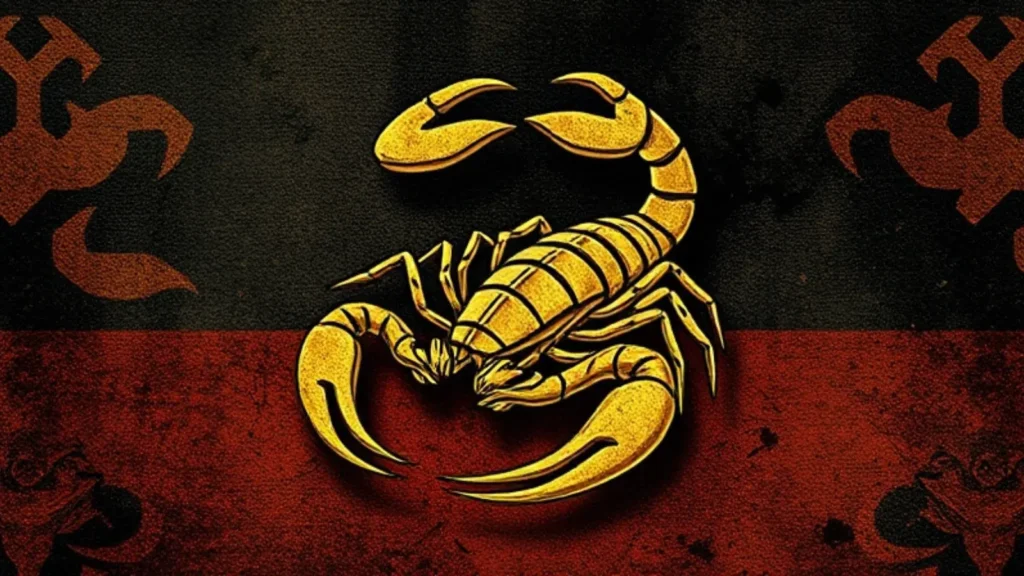
Like many symbolic creatures, the scorpion represents change.
Because scorpions shed their exoskeleton multiple times throughout life, they naturally became symbols of:
- Personal evolution
- Emotional growth
- Reinvention
- Healing after hardship
- Spiritual renewal
Transformation remains one of the strongest modern interpretations of scorpion symbolism.
3. Resilience
Scorpions survive extreme heat, drought, and harsh environments.
Their resilience symbolizes:
- Perseverance
- Endurance
- Mental toughness
- Survival
- Adaptability
This symbolism often resonates with individuals overcoming personal challenges.
4. Hidden Power
Unlike large predators, scorpions appear small but possess remarkable defensive capabilities.
Their symbolism reminds us that:
- Quiet people may possess great strength.
- Confidence does not require loudness.
- Intelligence often outweighs physical power.
- Inner strength matters more than appearances.
5. Justice and Consequences
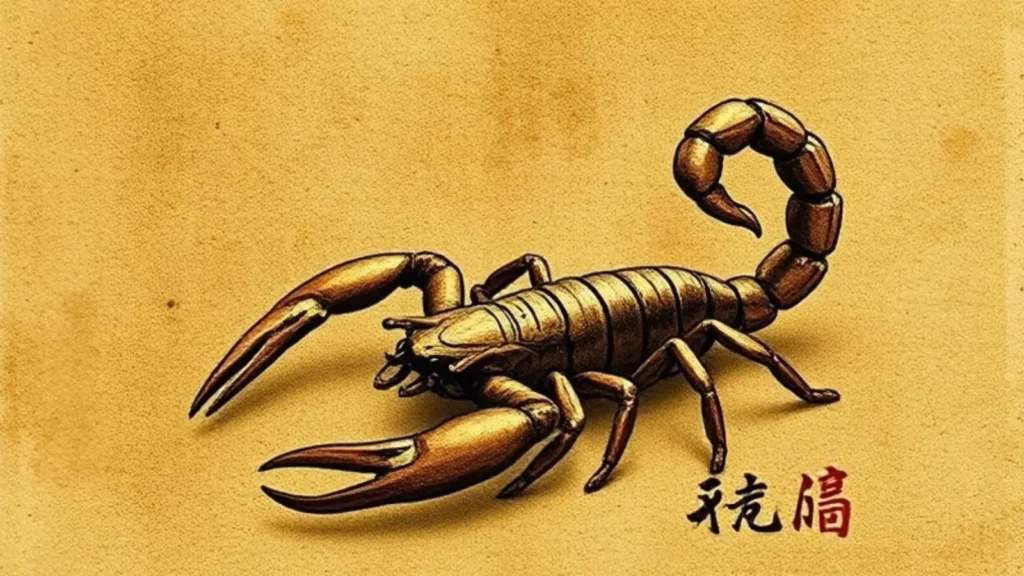
Many cultural traditions associate the scorpion with cause and effect.
Because its sting carries consequences, it symbolizes:
- Accountability
- Justice
- Respect
- Personal responsibility
- Wise decision-making
Scorpion Symbolism Across Different Cultures
| Culture | Symbolic Meaning | Primary Themes |
| Ancient Egypt | Divine protection | Guardianship, healing |
| Ancient Greece | Punishment and fate | Justice, destiny |
| Mesopotamia | Sacred guardians | Strength, defense |
| Persian traditions | Courage | Survival, resilience |
| Indigenous desert cultures | Respect for nature | Balance, caution |
| Modern Western symbolism | Transformation | Personal growth, empowerment |
Although interpretations vary, themes of protection and resilience appear consistently.
Scorpion Symbolism in Ancient Egypt
One of the best-known symbolic associations comes from ancient Egypt.
The goddess Serqet was closely connected with scorpions.
Rather than representing only danger, she symbolized:
- Healing
- Protection
- Safe childbirth
- Guardianship
- Divine care
Ancient Egyptians respected the scorpion’s power and believed it could both harm and protect depending on how its power was understood.
Greek Mythology and the Scorpion
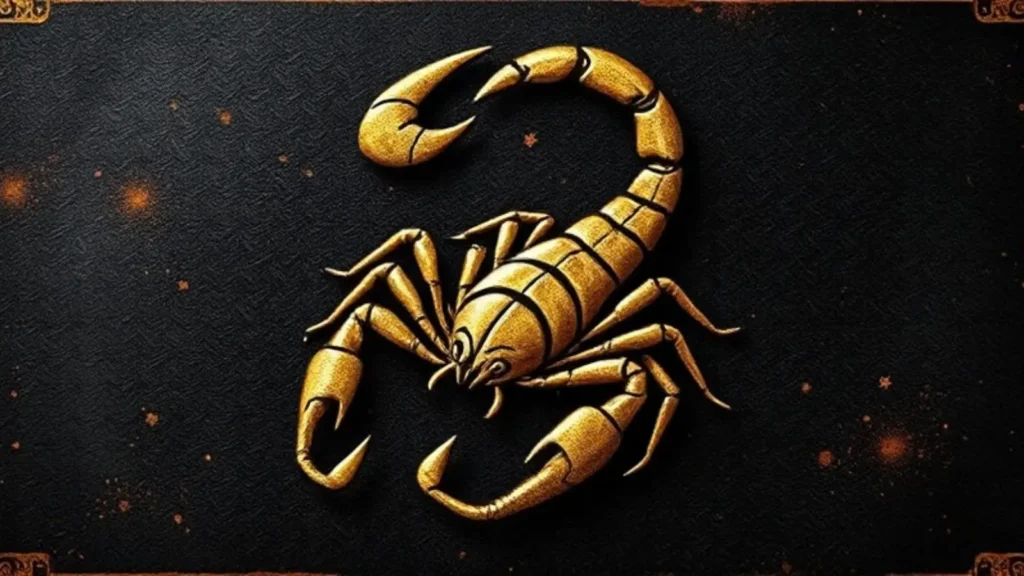
Greek mythology tells the famous story of Orion.
According to the myth, a scorpion was sent to stop Orion’s pride.
As a result:
- Orion became the Orion constellation.
- The scorpion became the Scorpio constellation.
The story symbolizes:
- Humility
- Balance
- Divine justice
- Respect for nature
Spiritual Meaning of Scorpion Symbolism
Many spiritual traditions interpret the scorpion as a guide through personal transformation.
Common spiritual meanings include:
Emotional healing
The scorpion encourages confronting painful emotions instead of avoiding them.
Shadow work
It symbolizes exploring hidden aspects of personality to achieve greater self-awareness.
Personal boundaries
Healthy boundaries protect emotional well-being.
Spiritual awakening
Transformation often begins after periods of discomfort or struggle.
It is important to distinguish these symbolic interpretations from established scientific claims; they reflect spiritual traditions rather than empirical evidence.
Psychological Meaning of the Scorpion
From a psychological perspective, the scorpion often represents the human capacity to:
- Protect oneself
- Manage fear
- Develop resilience
- Adapt to adversity
- Balance vulnerability with strength
Modern psychology recognizes resilience and adaptive coping as valuable human traits, though symbolic associations are cultural rather than scientific findings.
Scorpion Symbolism in Astrology

The zodiac sign Scorpio has contributed significantly to modern interpretations.
Common symbolic qualities include:
- Emotional intensity
- Passion
- Transformation
- Determination
- Loyalty
- Mystery
Although astrology remains a belief system rather than a scientific discipline, these symbolic characteristics continue to influence popular culture.
Religious Interpretations
Different religious traditions interpret scorpions differently.
Some traditions view them as symbols of:
- Danger
- Temptation
- Spiritual testing
Others emphasize:
- Protection
- Wisdom
- Divine justice
Interpretations depend heavily on religious texts, historical context, and theological traditions.
Scorpion Symbolism in Literature
Authors frequently use scorpions to represent:
- Hidden motives
- Betrayal
- Revenge
- Inner conflict
- Emotional transformation
- Survival
Unlike purely evil creatures, literary scorpions often symbolize complex moral struggles rather than simple villainy.
Scorpion Symbolism in Art
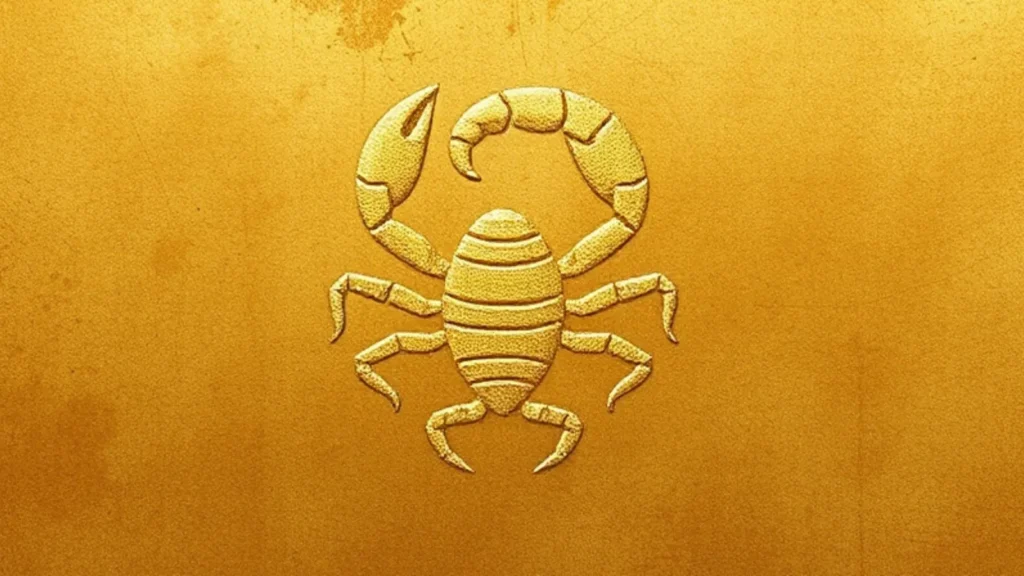
Artists employ scorpion imagery to communicate:
- Mystery
- Power
- Fear
- Courage
- Mortality
- Transformation
Modern tattoo art especially embraces scorpion symbolism as an emblem of resilience and self-protection.
Scorpion Symbolism in Branding and Design
Designers occasionally use scorpions to convey:
- Strength
- Precision
- Confidence
- Fearlessness
- Protection
- Competitive spirit
Brands targeting adventure, security, gaming, motorsports, or tactical equipment may choose scorpion imagery because it communicates resilience and determination.
Did You Know?
- Scorpions have existed for hundreds of millions of years, making them among Earth’s oldest surviving terrestrial arthropods.
- Most scorpion species are not dangerous to humans.
- They glow under ultraviolet light because of compounds in their outer shell, a trait that has fascinated scientists for decades.
- Their remarkable adaptability contributes to their enduring symbolic association with survival.
Expert Tip
When interpreting scorpion symbolism, always consider:
- Cultural background
- Historical period
- Artistic context
- Religious traditions
- Personal experiences
Symbolic meanings are rarely universal; context shapes interpretation.
Common Mistakes About Scorpion Symbolism
| Misconception | Reality |
| Scorpions only symbolize danger | They also symbolize resilience, protection, and transformation. |
| Every culture interprets them identically | Symbolism differs across regions and traditions. |
| Symbolism is scientific evidence | Symbolic meanings reflect cultural beliefs, not scientific facts. |
| Scorpions represent evil everywhere | Many traditions view them as guardians or protectors. |
Myth vs. Fact
| Myth | Fact |
| Scorpions always represent death. | Many cultures associate them with renewal and protection. |
| Their symbolism is entirely negative. | Positive meanings such as courage, resilience, and wisdom are common. |
| Spiritual meanings are universally accepted. | Interpretations vary among spiritual traditions and individuals. |
| Symbolic meanings never change. | Symbols evolve with cultural and historical shifts. |
Practical Applications of Scorpion Symbolism
Understanding scorpion symbolism can enrich many areas of life.
Personal development
The scorpion encourages resilience during difficult transitions.
Education
Teachers can use symbolic animals to explore mythology, anthropology, and cultural diversity.
Storytelling
Writers often employ the scorpion to symbolize hidden strength or internal conflict.
Branding
Businesses may use scorpion imagery to communicate precision, confidence, and durability.
Visual communication
Designers leverage symbolic associations to create memorable logos, illustrations, and marketing campaigns.
Scorpion Symbolism in Modern Media
Today’s entertainment continues to use scorpion imagery extensively.
It frequently appears in:
- Films
- Video games
- Graphic novels
- Television series
- Fashion
- Sports logos
- Digital illustrations
Modern audiences often associate the scorpion with determination, mystery, and strategic thinking.
Philosophical Perspectives
From a philosophical viewpoint, the scorpion reminds us that:
- Power carries responsibility.
- Survival often requires patience rather than force.
- Growth sometimes follows discomfort.
- True strength includes self-control.
- Protection and compassion can coexist.
Its symbolism encourages reflection on how individuals respond to challenges and adversity.
Key Insights
- Scorpion symbolism extends beyond danger.
- Protection remains one of its oldest meanings.
- Transformation connects ancient traditions with modern psychology.
- Cultural context determines interpretation.
- Literature and art continue expanding symbolic meanings.
- The scorpion represents resilience, adaptability, and quiet confidence.
Conclusion
Scorpion symbolism has endured for thousands of years because it reflects universal human experiences: facing fear, protecting what matters, adapting to adversity, and transforming through life’s challenges.
While some traditions emphasize danger or judgment, others celebrate the scorpion as a guardian, healer, and symbol of remarkable resilience.
Understanding this symbolism offers practical value beyond mythology. It helps us interpret art, literature, branding, religious imagery, cultural traditions, and personal narratives with greater depth.
Whether viewed through history, psychology, spirituality, anthropology, or design, the scorpion remains a powerful reminder that true strength often lies in patience, wisdom, and the ability to transform adversity into growth.

Isabella Carter explores symbolism in nature, literature, art, and spirituality with engaging and informative research.
