
Few natural objects have carried as many layers of meaning as the pearl. Created inside a living mollusk and valued across civilizations for thousands of years, the pearl has become much more than a beautiful gemstone.
Pearl symbolism connects nature with culture, luxury with spirituality, and physical beauty with ideas such as purity, wisdom, transformation, protection, love, status, and inner strength.
Part of the pearl’s symbolic power comes from its unusual origin. Unlike gemstones that are generally extracted from rock, a pearl develops within a living organism through the deposition of nacre.
Its gradual formation makes it an especially compelling metaphor for patience, transformation, and beauty emerging from difficulty.
GIA describes pearls as organic gems and notes their long association with wealth, status, mystery, water, the moon, protection, modesty, chastity, and purity.
Yet there is no single universal meaning of a pearl. Its symbolism changes according to culture, historical period, religion, color, social setting, and personal experience.
Featured-Snippet Answer: What Does a Pearl Symbolize?
Pearl symbolism commonly represents purity, wisdom, beauty, wealth, spiritual value, transformation, femininity, love, and protection. Because pearls develop gradually inside living mollusks, they can also symbolize patience and resilience. Across cultures, pearls have represented everything from royal authority and social status to sacred wisdom, emotional depth, mourning, and precious inner qualities.
What Does Pearl Symbolism Mean?
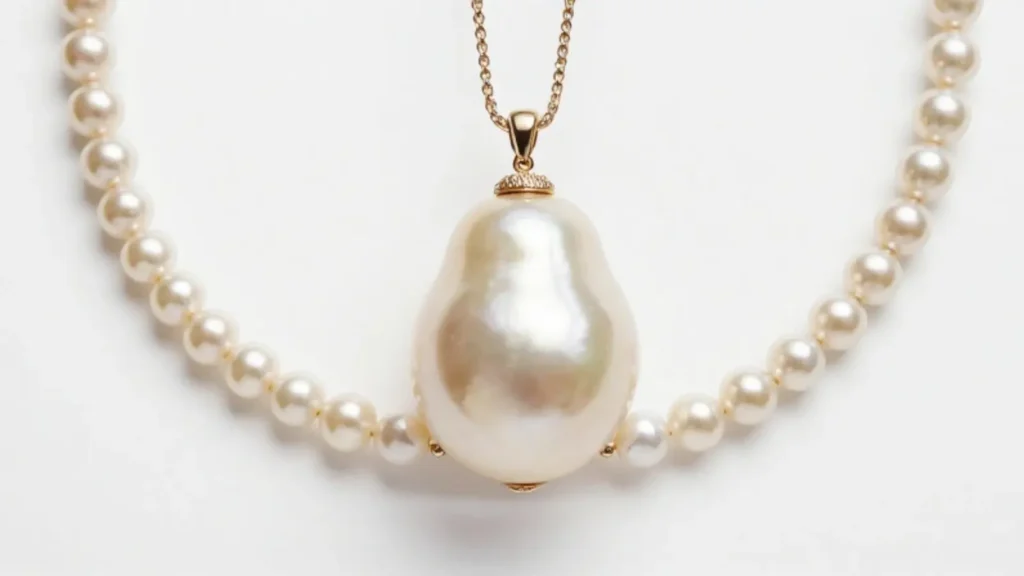
At its broadest level, pearl symbolism is about preciousness emerging from an unusual or difficult process.
The pearl begins in darkness, inside a shell, and develops layer by layer. That physical reality has made it easy for human cultures to interpret the pearl metaphorically. A pearl can therefore suggest:
- Purity — because of its luminous appearance and association with white.
- Wisdom — because something valuable is discovered beneath the surface.
- Transformation — because an ordinary biological process produces something treasured.
- Patience — because formation takes time.
- Resilience — because the pearl develops in response to disturbance within the mollusk.
- Wealth and status — because natural pearls were historically rare and difficult to obtain.
- Femininity and elegance — particularly in European fashion and portraiture.
- Spiritual value — because religious traditions have used pearls as images of something exceptionally precious.
- Protection — in some traditional cultures and folklore.
- Love and beauty — through associations with the sea, fertility, goddesses, marriage, and adornment.
The important distinction is that these are symbolic and cultural interpretations, not scientific properties of pearls. A pearl does not objectively create wisdom, purity, protection, or luck. Those meanings arise through human storytelling and cultural association.
The Historical Evolution of Pearl Symbolism
Pearls have been treasured for millennia. GIA notes that a Chinese historical record contains a written reference to pearls dating to approximately 2206 BCE, while natural pearls were prized in regions including the Persian Gulf, Sri Lanka, China, Europe, and later the Americas.
Their rarity was fundamental to their symbolism.
Before commercial pearl cultivation, finding a naturally occurring pearl was unpredictable. A perfect spherical pearl represented not merely beauty but extraordinary rarity. Consequently, pearls became associated with rulers, wealthy families, religious institutions, and elite ceremonies.
Ancient China
Chinese traditions developed particularly rich associations around pearls. GIA records traditional beliefs connecting pearls with the moon and protection from fire and dragons.
The pearl could therefore represent a fascinating combination of celestial power, protection, water, and preciousness.
The famous image of a dragon associated with a luminous pearl is especially important in Chinese visual culture. Here, the pearl can signify something worth pursuing: wisdom, authority, spiritual power, or an elevated treasure.
Ancient Greece and Rome
Pearls also became connected with the sea and love in the classical Mediterranean imagination.
The Metropolitan Museum of Art notes a tradition associating pearls with Aphrodite, the Greek goddess of love, who was associated with the sea. In later Roman culture, pearls became conspicuous markers of wealth and political status.
Roman elites valued pearls so highly that they became associated with social hierarchy. The Met records that Julius Caesar restricted pearl wearing among certain classes, demonstrating how jewelry could operate as a visual language of rank and privilege.
Medieval and Renaissance Europe
European pearl symbolism increasingly incorporated religious and moral meanings.
Pearls could represent purity, chastity, modesty, and spiritual preciousness. At the same time, their rarity made them ideal symbols of aristocratic power.
Portraiture provides an important example. A person wearing pearls was not merely displaying jewelry; the pearls could communicate wealth, lineage, virtue, femininity, authority, or social position.
This is a classic example of visual semiotics: an object becomes a social sign.
Pearl Symbolism Across Cultures
Pearl meanings differ significantly across societies. Treating one interpretation as universal can erase the historical context that makes symbolism meaningful.
| Culture or tradition | Common pearl associations | Symbolic context |
| Ancient China | Protection, moon, power, precious wisdom | Folklore, mythology, imperial imagery |
| Ancient Greece/Rome | Love, beauty, wealth, status | Sea mythology, elite adornment |
| European Christian tradition | Spiritual value, purity, heavenly imagery | Scripture, religious art, moral symbolism |
| South Asian traditions | Purity, beauty, prosperity, celestial associations | Jewelry, mythology, religious and cultural traditions |
| Byzantine world | Imperial authority, divine magnificence | Court dress and political symbolism |
| Modern Western culture | Elegance, femininity, sophistication, mourning | Fashion, jewelry, portraiture |
| Contemporary branding | Luxury, refinement, timelessness | Packaging, fashion, hospitality, beauty |
These categories should be understood as broad patterns rather than rules. Within every culture, meanings can vary according to period, class, religion, gender, region, and individual experience.
Pearl Symbolism in Religion and Spirituality
Pearls occupy an important place in religious imagery, although their meanings are not identical across faiths.
Christianity and the “Pearl of Great Price”
One of the best-known Christian references appears in Matthew 13:45–46, where the kingdom of heaven is compared with a merchant searching for fine pearls. When he finds one of exceptional value, he gives up everything to possess it.
The symbolic emphasis is therefore not simply beauty. It is ultimate value.
The pearl becomes an image of something so precious that ordinary possessions become secondary.
Pearls also appear in Revelation. Revelation 21:21 describes the gates of the New Jerusalem as twelve pearls, reinforcing an association between pearls, magnificence, sacred space, and transcendent beauty.
Important distinction
These biblical references should not be interpreted as saying that every Christian tradition assigns one fixed meaning to pearls. Rather, they demonstrate how pearls function as literary and theological symbols of exceptional value and heavenly splendor.
Spiritual interpretations
Outside formal religious doctrine, pearls are often interpreted spiritually as symbols of:
- Inner wisdom
- Emotional growth
- Transformation
- Purity of intention
- Patience
- Hidden knowledge
- Spiritual maturity
- Beauty emerging from adversity
These interpretations belong primarily to symbolic, devotional, or personal frameworks rather than scientific evidence.
The Psychology of Pearl Symbolism
Why does the pearl feel psychologically meaningful?
Part of the answer lies in perception.
Pearls often have a soft luster rather than the intense sparkle associated with cut diamonds. Their surface can appear luminous, smooth, calm, and almost moonlike. These visual qualities can encourage associations with quiet elegance, softness, calmness, refinement, and introspection.
Color psychology also plays a role.
White pearls can visually communicate cleanliness and simplicity. Cream pearls may appear warmer and more traditional. Black or dark pearls can suggest mystery, sophistication, individuality, and dramatic luxury.
However, color symbolism is culturally influenced. There is no universal psychological rule that says every person will experience a particular pearl color in exactly the same way.
Expert Tip
When using pearls symbolically, consider context before color. A white pearl necklace worn at a wedding communicates something different from the same necklace used in a mourning portrait, luxury advertisement, or historical costume.
Pearls as Symbols of Transformation and Resilience
One of the most compelling modern interpretations of pearl symbolism is beauty created through transformation.
A pearl is formed through a biological process involving nacre. Natural pearls arise within mollusks, while cultured pearls result from deliberate human intervention followed by the mollusk’s natural deposition of nacre.
This has encouraged a powerful metaphor:
Something valuable can emerge through a process that begins with disruption.
It is important not to turn that metaphor into a literal scientific claim about emotional resilience. Mollusks do not “teach” resilience in a human psychological sense.
Nevertheless, as a storytelling device, the metaphor is powerful.
A pearl can represent:
difficulty → adaptation → gradual development → transformation → beauty
That sequence explains why pearl imagery frequently appears in motivational writing, personal-growth narratives, jewelry design, tattoos, artwork, and inspirational branding.
Pearl Symbolism in Love, Marriage, and Femininity
Pearls have long been associated with femininity and formal elegance, particularly in Western fashion.
Their smooth surfaces, rounded shapes, soft luster, and use in necklaces and earrings contributed to their association with refined femininity. The Metropolitan Museum of Art notes that pearl necklaces have historically represented respectability and social status while also taking on sensual and erotic meanings in other contexts.
This duality is important.
Pearls can simultaneously communicate:
- Innocence
- Sophistication
- Romantic beauty
- Social respectability
- Sensuality
- Maturity
- Wealth
That flexibility is one reason pearls remain powerful in fashion.
In weddings
Pearls are frequently associated with bridal elegance and tradition. GIA also identifies the pearl as a traditional gemstone for the 30th wedding anniversary.
Still, the idea that pearls universally bring either good or bad luck to brides is a matter of folklore rather than established fact. Different traditions tell different stories.
Pearls, Wealth, Power, and Social Status
For much of history, the pearl was a luxury object because obtaining a natural pearl was difficult.
Before cultured pearls became commercially successful, natural pearls were sufficiently scarce that they were strongly associated with royalty and wealthy elites.
This made the pearl a form of visual capital.
Someone wearing a large pearl necklace could communicate:
I possess something rare.
The object therefore became a sign of economic power even when the wearer said nothing.
This principle remains relevant to branding today. Luxury brands often rely on visual objects that communicate rarity, heritage, craftsmanship, and exclusivity without requiring lengthy explanations.
Pearl Symbolism in Art and Literature
Pearls have been especially useful to artists because they combine physical beauty with metaphor.
In European painting, pearl jewelry often appears in portraits to communicate wealth, femininity, marital status, virtue, or social position. The Met’s collections demonstrate how pearls have repeatedly appeared in artworks across centuries.
The pearl also works exceptionally well as a literary metaphor.
Writers may use it to represent:
- A hidden truth
- A rare person
- A valuable memory
- Wisdom gained through experience
- A precious discovery
- Something concealed beneath an ordinary exterior
The phrase “pearl of wisdom” illustrates this perfectly. Wisdom is imagined as something rare, polished, valuable, and worth preserving.
Pearl Symbolism in Fashion and Branding
Modern fashion has transformed pearl symbolism rather than eliminating it.
Pearls once communicated aristocratic exclusivity. Today, they can represent both heritage and rebellion.
Fashion designers have repeatedly experimented with pearl necklaces, earrings, unusual pearl shapes, mixed metals, and unconventional styling. The result is that pearls can now communicate traditional elegance while also signaling individuality.
Coco Chanel played a particularly important role in popularizing pearls as a versatile fashion accessory, including the mixing of real and imitation jewelry.
In branding
Pearl imagery works especially well for brands that want to suggest:
- Luxury
- Purity
- Timelessness
- Craftsmanship
- Feminine elegance
- Premium quality
- Sophistication
- Natural beauty
A beauty company, hotel, jewelry label, wedding business, or premium skincare brand may use pearl imagery because the visual metaphor is immediately understandable.
Branding caution
A pearl logo does not automatically communicate luxury. Typography, spacing, color, photography, material quality, and brand positioning all influence interpretation.
Symbolism works through systems of signs, not isolated objects.
Pearl Symbolism in Modern Digital Communication
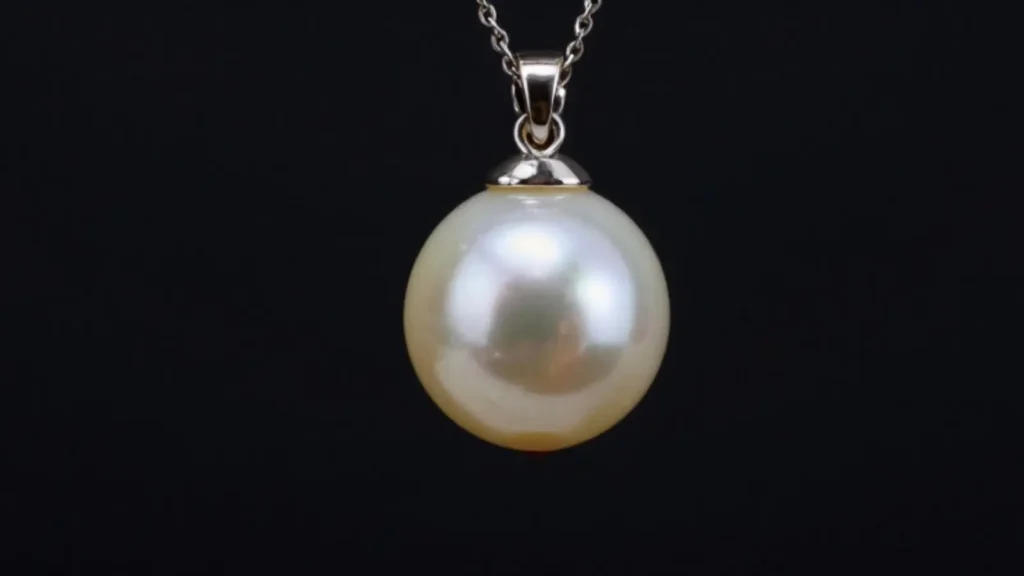
In digital culture, pearls can be used as visual shorthand.
A pearl emoji or pearl-inspired graphic may suggest:
- Elegance
- Beauty
- Luxury
- Softness
- Femininity
- Self-worth
- Jewelry
- Ocean imagery
On social media, pearl imagery can also become part of a personal aesthetic.
For example, a creator using pearls, cream tones, silk textures, and classical typography may be constructing a visual identity around quiet luxury or timeless sophistication.
This demonstrates an important principle of visual communication:
The meaning of a symbol depends partly on the symbols surrounding it.
A pearl beside gold produces a different impression from a pearl beside seashells, dark velvet, neon colors, or minimalist typography.
Black, White, Pink, and Other Pearl Colors: Symbolic Differences
Pearl color can modify the meaning of the symbol.
| Pearl color | Common symbolic associations |
| White | Purity, simplicity, elegance, innocence |
| Cream | Warmth, tradition, softness |
| Pink | Romance, affection, femininity |
| Black | Mystery, independence, sophistication |
| Golden | Prestige, prosperity, luxury |
| Blue | Calmness, depth, rarity |
| Lavender | Delicacy, individuality, imagination |
These meanings are contextual associations, not universal psychological laws.
Natural and cultured pearls can occur in a variety of colors, and GIA emphasizes that color is one of several factors considered when evaluating pearls.
Pearl Symbolism and Mourning
Pearls have an unusual relationship with grief.
Their restrained appearance can make them suitable for solemn occasions, and European royal traditions helped reinforce their connection with mourning. Their association with tears has also contributed to this interpretation.
Yet mourning symbolism should not be treated as universal.
In one culture, pearls may represent celebration; in another historical context, they may communicate grief, respect, or remembrance.
This is an excellent example of why cultural context matters more than a fixed symbolism dictionary.
Did You Know?
- Pearls are organic gemstones because they form within living mollusks.
- GIA records a Chinese written reference to pearls dating to approximately 2206 BCE.
- Natural pearls were historically associated with royalty and extreme wealth because of their rarity.
- Pearls are the birthstone for June and are traditionally associated with the third and thirtieth wedding anniversaries.
- Cultured pearls became commercially important during the twentieth century, making pearls more accessible than naturally occurring pearls had been historically.
- Pearl symbolism has appeared in religious texts, royal portraiture, mythology, fashion, literature, and contemporary branding.
Myth vs. Fact About Pearl Symbolism
| Myth or assumption | More accurate interpretation |
| Pearls have one universal meaning | Meanings vary across cultures and periods |
| Pearls scientifically bring good luck | Luck is a cultural or personal belief, not an established scientific property |
| Every white pearl symbolizes innocence | White often suggests purity, but context changes interpretation |
| Pearls have always been affordable | Natural pearls were historically rare and extremely valuable |
| Cultured pearls are fake pearls | Cultured pearls are genuine pearls formed with human assistance |
| Pearl symbolism is purely feminine | Pearls have also represented power, wealth, spirituality, authority, and status |
Common Mistakes When Interpreting Pearl Symbolism
1. Treating folklore as scientific fact
Symbolic traditions can be meaningful without being scientifically proven.
2. Assuming every culture shares the same interpretation
A symbol can change dramatically across regions and historical periods.
3. Ignoring historical context
A pearl worn by an ancient ruler does not necessarily communicate the same thing as a pearl worn by a contemporary fashion influencer.
4. Reducing pearls to “purity”
Purity is only one part of the pearl’s symbolic history. Wealth, authority, sensuality, spirituality, wisdom, transformation, and mourning are also important.
5. Confusing aesthetic meaning with religious doctrine
A modern spiritual interpretation should not automatically be presented as an official teaching of a religion.
Practical Applications of Pearl Symbolism
Understanding pearl symbolism can be useful far beyond jewelry.
In graphic design
Pearls can visually communicate refinement, softness, luxury, or timelessness.
In branding
Pearl imagery can support premium positioning when combined with appropriate typography, materials, photography, and messaging.
In literature
Writers can use pearls as metaphors for hidden value, wisdom, transformation, or emotional depth.
In education
Pearls provide an accessible way to teach symbolism, mythology, cultural comparison, visual communication, and semiotics.
In fashion
Pearls can reinforce traditional elegance or deliberately challenge it through unconventional styling.
In personal gifts
A pearl may communicate appreciation, maturity, love, remembrance, celebration, or enduring value depending on the recipient and occasion.
In storytelling
The pearl’s journey from hidden formation to visible beauty makes it an effective narrative symbol for personal development.
A Philosophical Reading of the Pearl
Philosophically, the pearl invites a question:
Does value come from appearance, origin, rarity, or meaning?
A pearl is physically created through a biological process, yet human beings transform it into a cultural object by assigning meaning to it.
This reveals something important about symbolism itself.
Objects do not need to possess human meanings inherently. Communities create associations through stories, rituals, repeated use, visual representation, language, and collective memory.
The pearl therefore demonstrates how nature becomes culture.
A small object from the sea can become a sign of royalty, a metaphor for wisdom, a religious image, a wedding accessory, a family heirloom, or a luxury-brand identity.
Key Insights About Pearl Symbolism
The most important lessons can be summarized simply:
- Pearls symbolize more than purity.
- Rarity explains much of their historical connection with wealth and power.
- Their formation makes transformation and patience powerful modern metaphors.
- Religious symbolism often uses pearls to communicate exceptional value or splendor.
- Pearl meanings vary substantially across cultures and historical periods.
- Color, setting, clothing, and surrounding imagery influence interpretation.
- Pearls function as visual signs in fashion, branding, art, and media.
- Symbolic meanings should be distinguished from scientific claims.
- A pearl’s cultural meaning is created through human interpretation and tradition.
- The enduring appeal of pearls comes partly from their ability to combine natural mystery with cultural meaning.
Frequently Asked Questions About Pearl Symbolism
What is the main symbolism of a pearl?
The main symbolism of a pearl commonly includes purity, beauty, wisdom, wealth, transformation, patience, and preciousness. Historically, pearls have also represented social status, spiritual value, protection, femininity, and power. The exact meaning depends on the culture, historical period, color, and context in which the pearl appears.
What does a pearl symbolize spiritually?
Spiritually, pearls are often interpreted as symbols of inner wisdom, transformation, purity, patience, spiritual growth, and hidden value. These interpretations vary among traditions and should be distinguished from formal religious teachings. In Christian scripture, for example, the pearl is used as an image of exceptional or ultimate value in the “pearl of great price” parable.
Why are pearls associated with purity?
Pearls are often associated with purity because of their luminous appearance, smooth surface, pale colors, and historical use in religious and formal contexts. European traditions particularly connected pearls with modesty, chastity, and purity. However, purity is only one interpretation among many.
What does a pearl symbolize in love?
In romantic contexts, pearls can symbolize love, beauty, devotion, elegance, and enduring relationships. Their association with Aphrodite in classical mythology helped connect them with love and beauty, while their use in weddings and anniversary jewelry strengthened their connection with lasting relationships.
What does a pearl symbolize in Chinese culture?
Pearl symbolism in Chinese traditions can include protection, celestial or lunar associations, power, and preciousness. Traditional imagery also connects pearls with dragons and protective forces. These meanings developed through Chinese mythology, folklore, art, and historical traditions and should not be reduced to a single universal definition.
Why are pearls considered symbols of wisdom?
Pearls are frequently used as metaphors for wisdom because something valuable is imagined as hidden beneath the surface and gradually developed or discovered. The expression “pearl of wisdom” captures this idea. Symbolically, the pearl can represent knowledge that is rare, refined, precious, and worth preserving.
Final Takeaways
Pearl symbolism is ultimately a story about value.
The pearl’s extraordinary journey from a living mollusk to a treasured cultural object has allowed people to associate it with purity, wisdom, transformation, wealth, femininity, spirituality, protection, love, power, and emotional depth.
Its history shows why symbols should never be interpreted in isolation. A pearl in ancient China, a pearl in a Roman portrait, a pearl in Christian scripture, a pearl in European mourning culture, and a pearl in a contemporary luxury advertisement may look similar, yet communicate very different ideas.
That flexibility is precisely what makes the pearl such a powerful symbol.
From mythology and religion to art, literature, fashion, branding, education, and digital communication, pearls continue to function as visual and cultural shorthand for something precious.
Their meaning is not fixed inside the object itself; it develops through human perception, cultural memory, storytelling, and context.
The pearl remains compelling because it combines two seemingly opposite ideas: fragility and strength, simplicity and luxury, nature and culture, hiddenness and visibility.
That tension is at the heart of its enduring symbolism.

Isabella Carter explores symbolism in nature, literature, art, and spirituality with engaging and informative research.
