Goat symbolism is unusually complex because the goat has represented fertility, abundance, independence, vitality, sacrifice, stubbornness, ambition, wilderness, sexuality, spiritual power, and even evil in different cultures and historical periods.
Few animals carry such apparently contradictory meanings.
A goat can symbolize the ability to survive in difficult terrain, climb toward difficult goals, and remain independent from the herd.
At the same time, religious traditions have used goats in sacrificial rituals, while mythology has associated goat-like beings with nature, sexuality, music, wilderness, and supernatural forces.
Understanding goat symbolism therefore requires more than assigning one fixed meaning to the animal. Symbolism develops through religion, ecology, mythology, language, art, social experience, and historical memory.
A goat depicted beside a mountain may communicate determination; a goat used in a ritual may represent sacrifice or purification; a goat in a modern logo might communicate ruggedness, independence, or authenticity.
Featured Snippet: What does a goat symbolize?
Goat symbolism commonly represents independence, resilience, fertility, abundance, vitality, sacrifice, determination, and connection with nature. Depending on the culture and context, goats can also symbolize stubbornness, sexuality, spiritual transformation, wilderness, or evil. Their meaning is not universal: religious traditions, mythology, folklore, art, and personal experience strongly influence interpretation.
What Is the Core Meaning of Goat Symbolism?
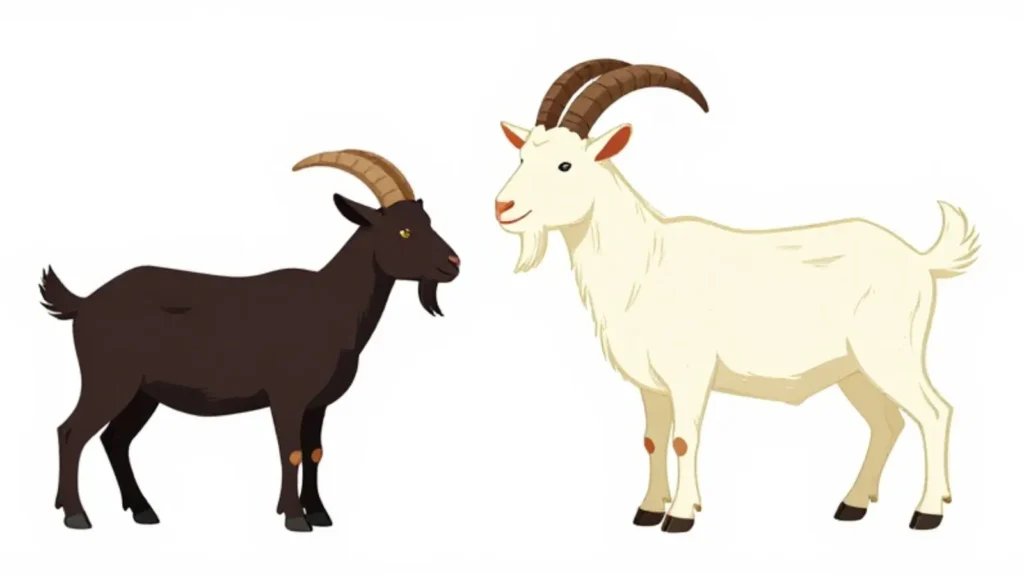
At its broadest level, the goat symbolizes survival and vitality in challenging circumstances.
Goats are domesticated animals with a long relationship with human communities. They can live in rugged landscapes, feed on a wide variety of vegetation, and provide milk, meat, fiber, and other resources. These practical characteristics helped make the animal culturally significant.
Symbolically, several qualities naturally emerge:
- Resilience: the ability to survive difficult conditions.
- Independence: movement and behavior that can appear self-directed.
- Determination: climbing and navigating steep terrain.
- Fertility: association with reproduction and abundance.
- Vitality: physical energy and life force.
- Sacrifice: use in religious offerings and purification rituals.
- Wildness: association with mountains, forests, and uncultivated landscapes.
- Ambivalence: the same animal can represent sacred abundance or dangerous excess.
This last point is essential. Symbolism is not a dictionary definition. It is a cultural system of associations.
Goat Symbolism Throughout History
The symbolic importance of goats developed alongside pastoral societies and religious traditions.
Goats were economically valuable long before they became prominent in mythology. Their usefulness made them familiar to humans, while their horns, climbing ability, reproductive behavior, and distinctive appearance gave them powerful visual qualities that could be incorporated into symbolic systems.
Ancient Mediterranean traditions
In ancient Greece, the goat was closely associated with Pan, a pastoral deity connected with shepherds, wilderness, music, sexuality, and the untamed natural world. Artistic representations of Pan evolved from strongly animal-like forms toward a human upper body combined with goat legs and horns.
This contributed to an enduring symbolic connection between goats and:
- nature
- sexuality
- music
- fertility
- instinct
- wilderness
- freedom from social restraint
The Greek tradition demonstrates why animal symbolism should not be reduced to a simple “good” or “bad” category. The goat-like Pan was not merely a villainous creature. He embodied aspects of nature that civilized society could find both attractive and frightening.
Ancient Egypt
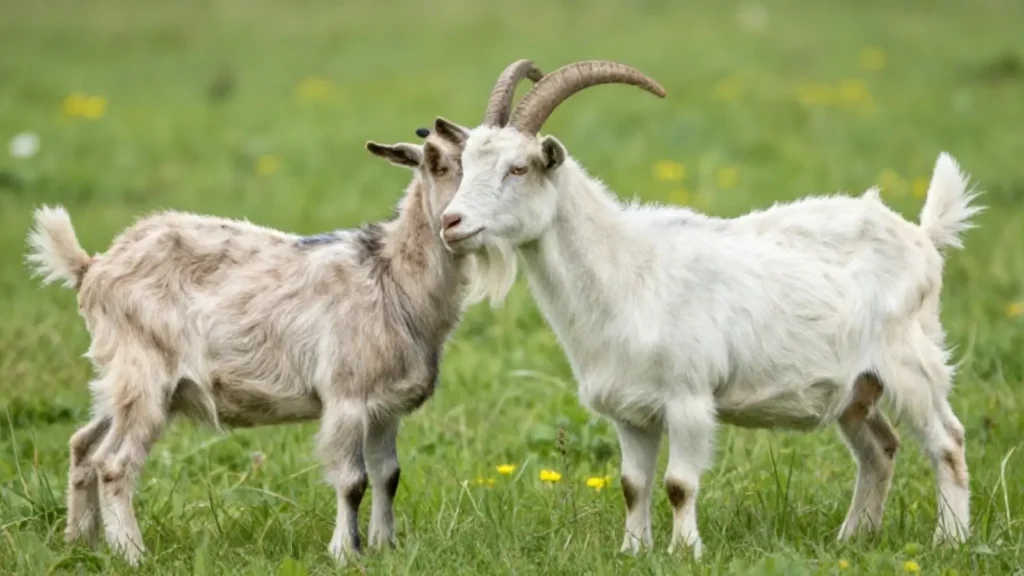
Goat and ram imagery also appears within ancient Egyptian religious traditions, although it is important not to collapse goats and rams into one symbolic category.
The deity Banebdjedet, associated with Mendes, is particularly relevant. Ancient Egyptian representations and later classical descriptions created complicated associations between the deity, ram imagery, and goat imagery. Banebdjedet was represented as a ram-headed deity and was connected with the religious traditions of Mendes.
This history matters because later Western occult traditions sometimes connected Egyptian horned imagery with completely different concepts. Those later interpretations should not be projected backward as though ancient Egyptians themselves understood the symbolism in exactly the same way.
Goat Symbolism in Judaism and the Concept of the Scapegoat
One of the most influential goat-related symbols in Western culture comes from the biblical ritual described in Leviticus 16, associated with the Day of Atonement, or Yom Kippur.
Two goats were involved in the ritual. One was designated for the Lord, while the other was associated with Azazel and sent into the wilderness after the community’s sins were symbolically placed upon it. The precise interpretation of Azazel has been debated for centuries.
This ritual is particularly important for understanding the later word scapegoat.
What does the scapegoat symbolize?
The scapegoat symbolizes the transfer and removal of collective wrongdoing, blame, impurity, or unwanted consequences from a community or group.
The idea eventually expanded beyond religion. Today, calling someone a “scapegoat” means that person is unfairly blamed for a problem that may have broader causes.
This is an excellent example of semantic evolution: a ritual image became a metaphor in ordinary language.
Expert Tip
When analyzing goat symbolism in religious contexts, always distinguish between:
- the original ritual,
- later theological interpretations,
- medieval or early-modern folklore,
- modern popular culture.
Treating all four as one tradition creates historical inaccuracies.
Goat Symbolism in Christianity and the Western Imagination
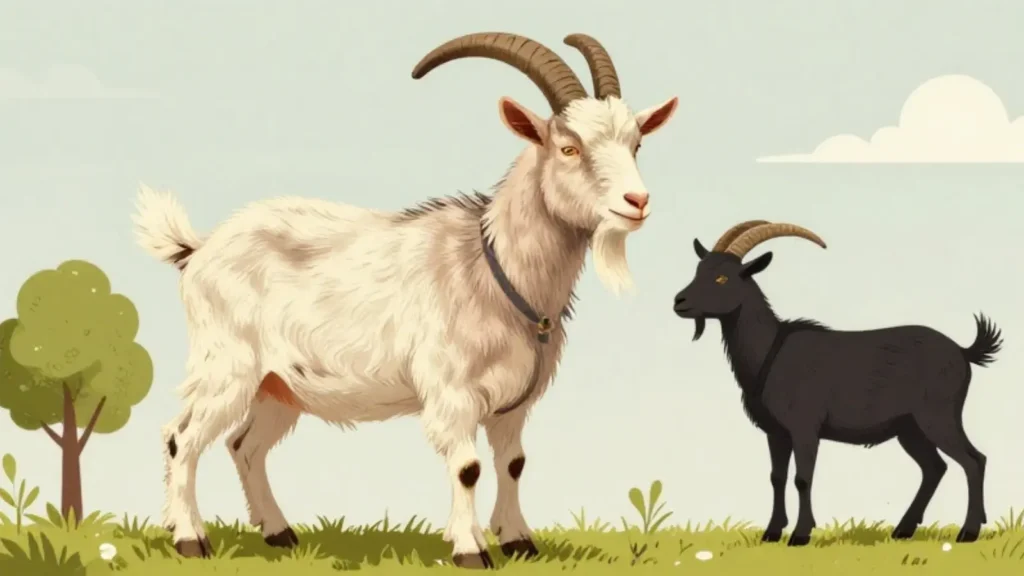
Goat imagery acquired another layer of meaning through Christian history and European visual culture.
The Bible contains several goat-related passages, and Christian interpretation developed symbolic contrasts involving sheep and goats. Over time, goat-like imagery also became connected in European imagination with demonic or anti-Christian figures.
This association should not be interpreted as proof that the goat itself universally represented evil.
Instead, multiple symbolic streams gradually overlapped:
goat → wilderness → untamed nature → pagan imagery → horned supernatural figures → medieval demonology → modern “devil” imagery
The historical process was considerably more complicated than simply declaring that Christianity “made the goat evil.”
Myth vs. Fact
Myth: Goats have always symbolized Satan.
Fact: Goat symbolism predates Christian demonology by many centuries. In earlier traditions, goats and goat-like beings could represent fertility, wilderness, vitality, divine power, pastoral life, and nature.
The later association between goats and the Devil is therefore one chapter in a much longer symbolic history.
Goat Symbolism and Fertility
One of the oldest recurring symbolic themes surrounding goats is fertility and abundance.
The association is understandable from an anthropological perspective. In pastoral communities, reproductive animals directly affected food supply, household wealth, and economic survival.
Goats could therefore become visual shorthand for:
- reproductive vitality
- prosperity
- nourishment
- livestock wealth
- family continuity
- agricultural abundance
- sexual energy
In mythology, fertility symbolism sometimes extended into sexuality. This is particularly visible in Greek traditions involving Pan and other goat-like figures.
However, fertility should not automatically be interpreted as sexual symbolism. In many contexts, abundance simply means productive life, nourishment, prosperity, or continuity.
Goat Symbolism and Independence
The goat is frequently interpreted as a symbol of independence and self-reliance.
This interpretation is especially powerful in modern storytelling and branding. A goat climbing a rocky mountain can visually communicate determination without requiring words.
The metaphor works because viewers recognize several qualities simultaneously:
- difficult terrain
- upward movement
- physical confidence
- balance
- persistence
- independence
This makes the goat particularly effective in visual communication.
Practical Example
Imagine two logos:
A goat standing calmly on flat ground may communicate stability and confidence.
A goat climbing a mountain may communicate ambition, endurance, achievement, and leadership.
The animal is the same. The visual context changes the symbolic message.
Goat Symbolism and Stubbornness
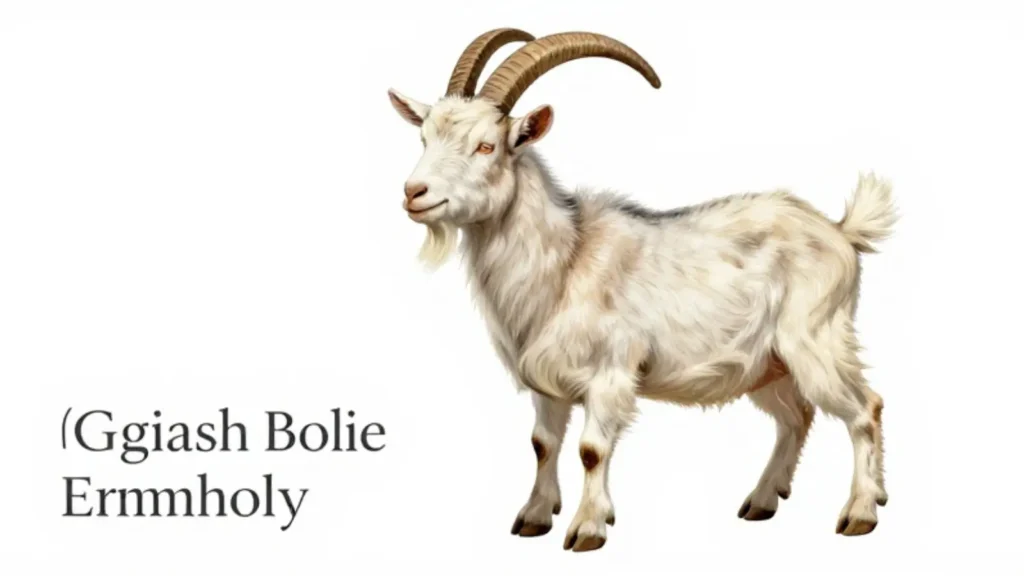
The goat is also commonly associated with stubbornness.
This is primarily a cultural interpretation rather than a universal scientific statement about goat psychology.
In everyday language, describing someone as “goat-headed” or comparing them to a stubborn goat can imply resistance to authority or unwillingness to change.
Interestingly, this negative association can overlap with the positive symbolism of independence.
| Positive interpretation | Negative interpretation |
| Independent | Stubborn |
| Determined | Inflexible |
| Confident | Defiant |
| Resilient | Difficult |
| Self-reliant | Uncooperative |
| Persistent | Obstinate |
This demonstrates an important principle of semiotics: the same characteristic can become positive or negative depending on the observer’s values.
Goat Symbolism in Spirituality
In modern spiritual symbolism, goats may represent:
- grounding
- personal power
- determination
- fertility
- transformation
- independence
- connection with nature
- overcoming obstacles
- disciplined ambition
Some contemporary spiritual interpretations also connect the goat with mountain climbing as a metaphor for spiritual ascent.
These interpretations should be described as modern symbolic or spiritual beliefs, not as scientifically established facts.
Spiritual Question: What does seeing a goat symbolize?
There is no universal spiritual rule that determines what seeing a goat means. In symbolic traditions, however, a goat encounter may be interpreted as a reminder of independence, persistence, grounding, fertility, or the need to confront an obstacle.
Personal context matters enormously.
For a shepherd, a goat may simply be livestock.
For someone studying mythology, it might evoke Pan.
For a person interested in astrology, it might suggest Capricorn.
For someone familiar with Christian imagery, it might evoke biblical symbolism.
Meaning emerges from context.
Goat Symbolism in Astrology: Capricorn and the Sea-Goa
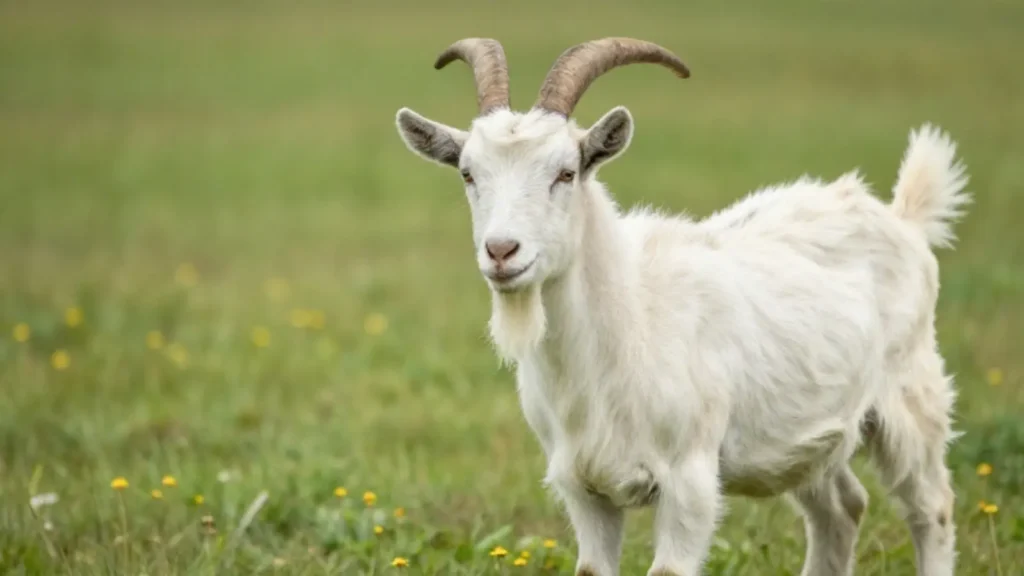
Goat imagery has an important place in Western astrology through Capricorn, whose traditional symbol is not simply an ordinary mountain goat but the Sea-Goat, a hybrid creature combining goat and fish characteristics.
This hybrid form demonstrates how animal symbolism can operate metaphorically.
The goat portion can suggest:
- ambition
- climbing
- endurance
- discipline
- achievement
- earthly practicality
The fish portion introduces a contrasting aquatic dimension.
The result is an imaginative symbol combining seemingly different environments and qualities.
Astrological interpretations are belief-based rather than scientific descriptions of personality, but the symbolism remains culturally influential in horoscopes, fashion, jewelry, tattoos, graphic design, and popular culture.
Goat Symbolism Across Cultures
Goat symbolism varies substantially across societies.
| Cultural context | Common goat-related associations |
| Ancient Greek traditions | Pan, wilderness, fertility, music, sexuality |
| Ancient Egyptian traditions | Sacred animal imagery, divine power, Mendes traditions |
| Ancient Israelite tradition | Sacrifice, purification, ritual responsibility, scapegoat |
| Christian Europe | Biblical contrast, wilderness, later demonic imagery |
| Astrology | Capricorn, ambition, endurance, the Sea-Goat |
| Folklore | Cleverness, stubbornness, supernatural creatures |
| Modern branding | Strength, authenticity, independence, toughness |
| Contemporary spirituality | Grounding, resilience, transformation |
These categories are broad. No culture speaks with a single symbolic voice, and meanings can vary by period, region, religious community, and individual experience.
Goat Symbolism in Mythology and Folklore
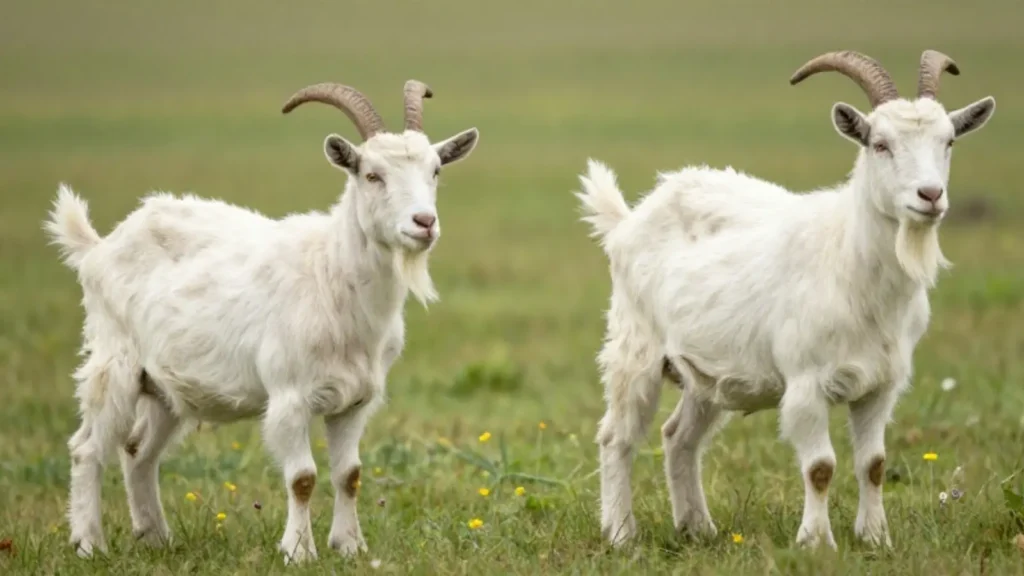
Goat-like creatures appear throughout mythology and folklore because the animal occupies an interesting boundary between the domestic and the wild.
A goat is:
- domesticated but energetic,
- useful but independent,
- familiar but visually striking,
- associated with human agriculture yet comfortable in rugged landscapes.
That ambiguity makes the goat ideal for stories.
Goat-like supernatural figures
European folklore contains numerous horned, hairy, or goat-like beings. Some became connected with forests and wilderness, while others became associated with demons or supernatural danger.
The modern imagination often blends these traditions together, even though their historical origins differ.
This is why contemporary images of a horned creature may simultaneously suggest:
nature + sexuality + rebellion + occultism + danger + independence
The image is culturally dense.
Goat Symbolism in Art and Iconography
Artists use goats because their physical characteristics are visually memorable.
The horns immediately create a strong silhouette. A beard can suggest age or wisdom. Hooves communicate an animal identity. A mountain setting emphasizes endurance and elevation.
Common visual meanings
Horns: power, vitality, defense, authority, or supernatural identity.
Mountain goat: ambition, endurance, achievement, resilience.
Young goat or kid: innocence, vulnerability, renewal.
Black goat: mystery, night, rebellion, occult associations, or simply visual contrast.
White goat: purity, sacrifice, innocence, or pastoral simplicity.
Horned figure: supernatural power, fertility, wilderness, or demonic imagery depending on context.
Color symbolism is particularly context-dependent. A black goat does not inherently mean evil, just as a white goat does not universally mean purity.
Goat Symbolism in Literature
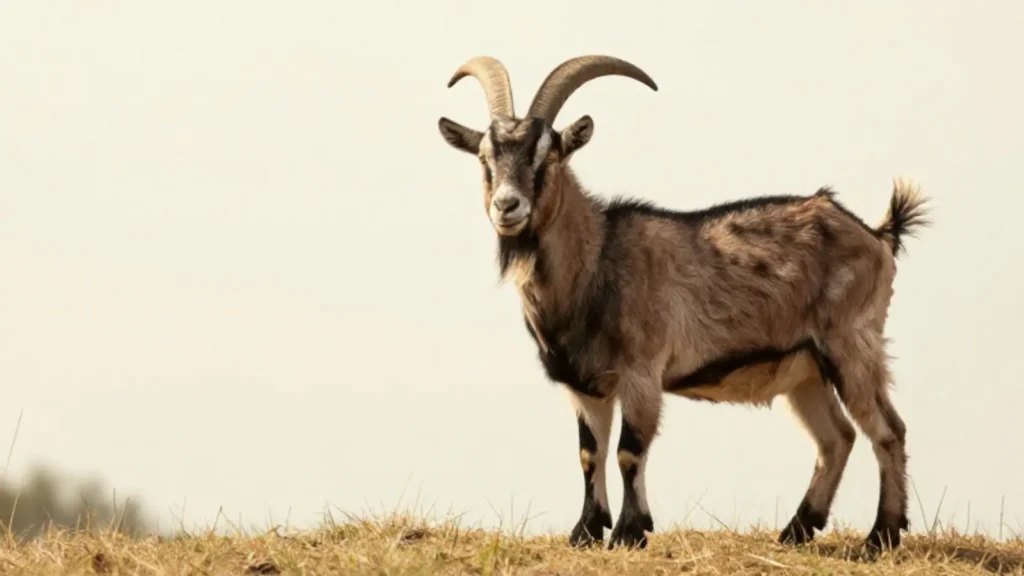
Writers often use goats as shorthand for traits that are difficult to express directly.
A goat character may symbolize:
- rebelliousness
- comic stubbornness
- independence
- rural life
- poverty or simplicity
- fertility
- instinct
- otherness
- survival
Because readers already possess cultural associations with goats, authors can activate those meanings efficiently.
A goat appearing at the edge of a village, for example, might symbolize the boundary between civilization and wilderness.
A goat climbing upward may symbolize a character’s ambition.
A sacrificed goat may symbolize collective guilt, loss, or transformation.
Goat Symbolism in Psychology and Human Perception
There is no single scientifically established psychological meaning of the goat.
However, symbolic perception can be understood through association, cultural learning, visual salience, and narrative context.
Humans routinely attach meaning to animals based on:
- physical appearance,
- observed behavior,
- cultural stories,
- religious education,
- language,
- personal experience,
- media exposure.
This is why the same goat image can produce very different emotional responses.
Someone raised around goats may see intelligence, familiarity, and livelihood.
Someone exposed primarily to horror imagery may see danger or occult symbolism.
Someone interested in agriculture may associate goats with food security and rural resilience.
Symbolic interpretation is therefore partly a process of cultural cognition.
Goat Symbolism in Branding and Marketing
Goat imagery can be highly effective in branding because it communicates several desirable traits quickly.
What can a goat logo communicate?
A goat logo can suggest:
- toughness
- independence
- authenticity
- agility
- endurance
- confidence
- unconventional thinking
- mountain or outdoor identity
This is particularly useful for businesses connected to:
- outdoor recreation
- farming
- natural products
- sports
- adventure
- clothing
- craft production
- sustainability
- rural tourism
However, designers must consider cultural context.
A goat image that looks rugged and adventurous to one audience may appear religious, occult, rustic, or humorous to another.
Expert Tip for Designers
Never select an animal symbol solely because it “looks cool.”
Ask:
What associations does this animal already carry for the target audience?
Then test the symbol in its actual cultural and visual environment.
Goat Symbolism in Modern Digital Culture
Digital culture has added another layer to goat symbolism.
The acronym GOAT, meaning “Greatest of All Time,” is now widely used in sports, entertainment, and online conversation.
This meaning is linguistically distinct from traditional goat symbolism, but the visual coincidence has created a fascinating modern association.
A goat emoji can therefore be interpreted literally, symbolically, humorously, agriculturally, spiritually, or as shorthand for excellence.
This is a powerful example of semantic polysemy: one form can carry multiple meanings depending on context.
Example
“That player is the GOAT.”
Here, the intended meaning is Greatest of All Time, not an animal.
A picture of an actual goat beside the same sentence could deliberately create a pun.
Digital communication thrives on this kind of layered meaning.
Did You Know? Goat Symbolism Can Reverse Its Meaning
A fascinating feature of goat symbolism is its ability to move between opposites.
The goat can represent:
fertility ↔ danger
sacredness ↔ profanity
independence ↔ stubbornness
nature ↔ civilization’s fear of nature
sacrifice ↔ abundance
strength ↔ disorder
This is not necessarily a contradiction. Symbols often become powerful precisely because they hold competing ideas.
Common Mistakes When Interpreting Goat Symbolism
1. Assuming every goat represents evil
This ignores the much older associations between goats, pastoral life, fertility, nature, and divine traditions.
2. Treating mythology as historical fact
Myths are culturally important narratives, but their supernatural claims should not automatically be presented as historical events.
3. Confusing goats and rams
Ancient traditions sometimes overlap goat and ram imagery, but the animals have distinct zoological identities and can carry different cultural meanings.
4. Assuming one culture has one meaning
Religious and cultural traditions change over time. Regional differences matter.
5. Ignoring context
A goat in a farm photograph is not necessarily symbolic.
A goat carved into a temple wall is more likely to carry deliberate iconographic meaning.
6. Treating modern occult imagery as ancient tradition
Some modern horned imagery developed through much later European and occult history and should not simply be projected onto ancient civilizations.
Myth vs. Fact: Goat Symbolism
| Claim | Assessment |
| Goats have always represented evil | Myth |
| Goats have appeared in religious rituals | Fact |
| Goats can symbolize fertility | Historically attested in some traditions |
| The goat has one universal spiritual meaning | Myth |
| Pan has goat-like characteristics | Fact within Greek mythology and iconography |
| The scapegoat concept comes from a biblical ritual | Fact |
| Every horned animal symbolizes the Devil | Myth |
| Capricorn traditionally uses a Sea-Goat | Fact |
| Modern “GOAT” means Greatest of All Time | Fact |
Practical Applications of Goat Symbolism
Understanding goat symbolism can be useful beyond mythology.
In graphic design
Use goat imagery when you want to explore concepts such as endurance, independence, ruggedness, or unconventional strength.
In storytelling
A goat can function as a character symbolizing stubbornness, survival, rebellion, innocence, or the tension between civilization and nature.
In education
Goat symbolism provides an excellent case study for teaching:
- anthropology
- mythology
- semiotics
- religious studies
- history
- linguistics
- visual communication
In branding
A carefully designed goat emblem can communicate strength and authenticity without relying on literal text.
In cultural analysis
Goat imagery demonstrates how the meaning of an animal can change across historical periods.
In personal symbolism
Someone may use goat imagery to express independence, resilience, ambition, rural identity, spirituality, or simply admiration for the animal.
Philosophical Perspective: Why Does the Goat Mean So Many Things?
The deeper philosophical lesson of goat symbolism is that meaning is relational.
A symbol does not exist in isolation.
A goat becomes “sacred” because a community places it within a sacred system.
A goat becomes “evil” because a culture connects its appearance with particular theological or folkloric narratives.
A goat becomes “strong” because people interpret its physical characteristics metaphorically.
A goat becomes “GOAT” because language users create a new acronym.
In semiotic terms, meaning emerges through relationships between sign, object, interpreter, and cultural context.
The animal remains the same.
The meaning changes.
Key Insights About Goat Symbolism
- Goat symbolism is culturally variable.
- Fertility and abundance are recurring themes.
- Independence and resilience are especially powerful modern interpretations.
- The scapegoat represents ritualized transfer of blame or impurity.
- Greek mythology connects goat imagery with Pan and the wilderness.
- Ancient Egyptian traditions contain important ram/goat-related religious imagery.
- Christian and European traditions contributed to later demonic associations.
- Capricorn gives goat imagery an enduring astrological identity.
- Modern branding often emphasizes toughness and authenticity.
- The modern acronym GOAT adds an entirely different linguistic meaning.
- Color and surrounding imagery can dramatically change interpretation.
- No single definition explains every appearance of a goat symbol.
Frequently Asked Questions About Goat Symbolism
What is the spiritual meaning of a goat?
The spiritual meaning of a goat varies by tradition. Common modern interpretations include resilience, independence, fertility, grounding, determination, vitality, and connection with nature. In religious traditions, goats can also represent sacrifice, purification, or the transfer of wrongdoing.
What does a goat symbolize in the Bible?
Biblical goat symbolism is varied. One of the most famous examples occurs in Leviticus 16, where two goats participate in the Day of Atonement ritual. One is associated with the Lord, while another is associated with Azazel and sent into the wilderness. The ritual became foundational to the later concept of the “scapegoat.”
Why are goats associated with the Devil?
The association developed through a combination of religious interpretation, classical goat-like figures, medieval European imagery, folklore, and later occult representation. It is historically inaccurate to assume that goats universally represented evil. Earlier traditions associated goats with fertility, pastoral life, wilderness, vitality, and divine or supernatural figures.
What does a goat symbolize in Greek mythology?
Goat symbolism in Greek mythology is strongly connected with Pan, a pastoral deity represented with goat-like characteristics. Pan was associated with wilderness, shepherds, music, sexuality, and the untamed side of nature. Greek artistic representations of Pan evolved over time.
What does a goat symbolize in dreams?
Dream symbolism has no universal scientific dictionary. In popular symbolic interpretation, a goat may represent independence, stubbornness, ambition, fertility, resilience, or confronting an obstacle. The dreamer’s personal experiences and the specific circumstances of the dream are more important than assigning one fixed meaning.
What does a goat symbolize in modern culture?
Modern culture gives goats several meanings. The animal can represent toughness, independence, rural authenticity, adventure, or unconventional confidence. Separately, the acronym GOAT means “Greatest of All Time,” especially in sports and entertainment. This creates a modern linguistic association between the animal and exceptional achievement.
Final Takeaways
Goat symbolism is powerful precisely because it refuses to fit into one category.
Across different historical and cultural contexts, the goat has represented fertility, abundance, sacrifice, resilience, independence, sexuality, wilderness, determination, spirituality, stubbornness, and supernatural danger.
The biblical scapegoat demonstrates how an animal image can become a lasting linguistic metaphor. Greek mythology shows how goat imagery can express the untamed side of nature. Ancient Egyptian traditions reveal the complexity of horned sacred imagery, while Capricorn demonstrates the goat’s continued influence in astrology. Modern branding and digital language give the symbol still more meanings.
The most important lesson is simple: never interpret goat symbolism without context.
The image, surrounding objects, culture, historical period, religious tradition, color, artistic style, and intended audience all influence what the goat communicates.
A goat climbing a mountain can mean ambition.
A goat in a ritual can mean sacrifice.
A goat in mythology can represent wilderness.
A goat in a modern logo can communicate resilience.
And “GOAT” in a sports conversation can mean the greatest performer of all time.
The symbol remains compelling because it sits at the intersection of nature and culture, domesticity and wildness, strength and stubbornness, sacredness and fear.

Lucas Whitmore reveals the hidden messages behind symbols, signs, and traditions through detailed symbolism guides.
