Few birds have inspired as much fascination, mystery, and debate as the crow. Intelligent, adaptable, and highly social, crows appear in myths, religions, literature, folklore, and modern media around the world.
Depending on the culture and historical context, they may represent wisdom, transformation, prophecy, protection, intelligence, death, or renewal.
Understanding crows symbolism goes far beyond superstition. It reveals how humans have interpreted nature to explain life’s greatest mysteries from change and mortality to knowledge, communication, and resilience.
Whether viewed as sacred messengers, clever tricksters, or symbols of personal transformation, crows continue to shape art, storytelling, branding, psychology, and spiritual traditions today.
Featured Snippet: What Does Crows Symbolism Mean?
Crows symbolism generally represents intelligence, transformation, adaptability, mystery, communication, and spiritual awareness. Across different cultures, crows may symbolize wisdom, change, protection, prophecy, death, or renewal. Their meaning varies depending on historical traditions, religious beliefs, mythology, and personal interpretation.
What Does Crows Symbolism Really Mean?
Short Answer
Crows symbolize life’s transitions.
Their remarkable intelligence and survival skills have made them symbols of:
- Wisdom
- Adaptability
- Transformation
- Problem-solving
- Mystery
- Spiritual messages
- Hidden knowledge
- Change
- Resilience
- Community
Unlike many symbols that have only positive or negative meanings, crow symbolism is deeply balanced. It often reminds people that endings and beginnings exist together.
Why Have Crows Become Powerful Symbols?
Direct Answer
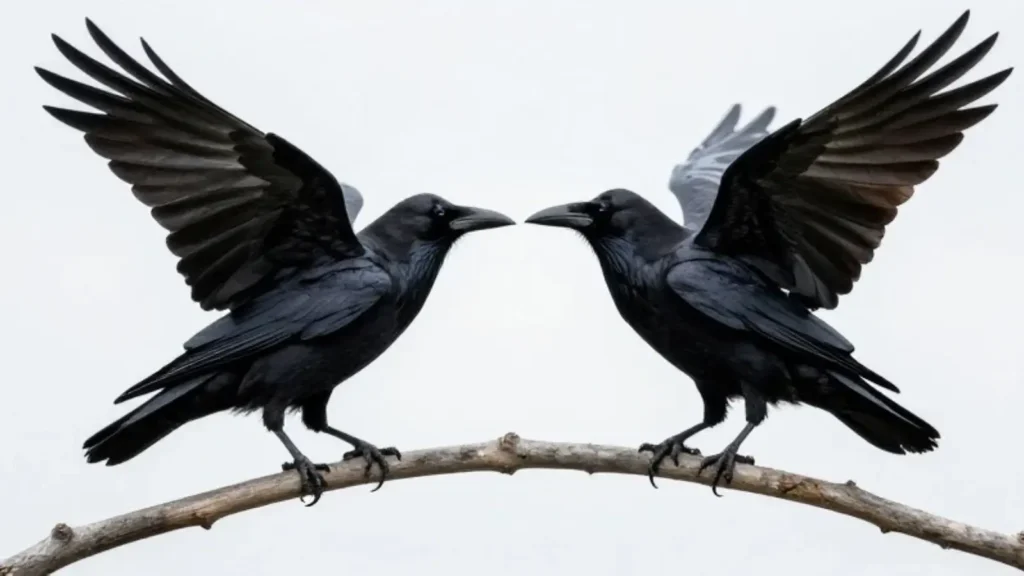
People have admired—and sometimes feared—crows for thousands of years because of their intelligence, unusual behavior, dark appearance, and ability to thrive almost anywhere.
Several natural characteristics contributed to their symbolic status.
| Crow Characteristic | Symbolic Meaning |
| High intelligence | Wisdom |
| Excellent memory | Knowledge |
| Problem-solving ability | Creativity |
| Black feathers | Mystery |
| Loud calls | Communication |
| Adaptability | Survival |
| Living in groups | Community |
| Feeding on carrion | Life and death cycle |
Humans naturally assign symbolic meaning to animals that display extraordinary behavior, and crows consistently rank among the world’s most intelligent birds.
Historical Origins of Crows Symbolism
Direct Answer
Crow symbolism dates back thousands of years and appears across nearly every major civilization.
Ancient people observed that crows often appeared:
- After battles
- Around settlements
- Near forests
- During seasonal changes
- Around agricultural fields
These observations gradually connected crows with:
- Death
- Renewal
- Harvest
- Protection
- Divine messages
- Cosmic balance
Rather than having one universal meaning, the symbolism evolved differently across regions.
Crows Symbolism in Ancient Mythology
Many mythologies portray crows as supernatural messengers.
Norse Mythology
Although ravens receive greater attention through Odin’s companions Huginn and Muninn, crows also represented:
- Observation
- Intelligence
- Memory
- Knowledge gathering
Birds in the crow family became symbols of divine awareness.
Greek Mythology
In Greek tradition, crows were associated with Apollo.
According to myth:
- They carried messages.
- They revealed truths.
- They represented prophecy.
Some legends also describe crows changing from white to black after angering Apollo, creating symbolic links between truth and consequence.
Celtic Traditions
Among Celtic peoples, crows symbolized:
- Battlefields
- Destiny
- Transformation
They were connected with warrior goddesses and fate rather than simple omens of death.
Crows Symbolism Across Different Cultures
Culture Comparison Table
| Culture | Primary Symbolism |
| Native American | Wisdom, guidance, transformation |
| Japanese | Family loyalty, gratitude |
| Chinese | Solar energy, divine connection |
| Celtic | Fate, protection |
| Hindu | Ancestors, remembrance |
| Greek | Prophecy |
| Nordic | Intelligence |
| African traditions | Community, wisdom |
| Modern Western | Mystery, intelligence, change |
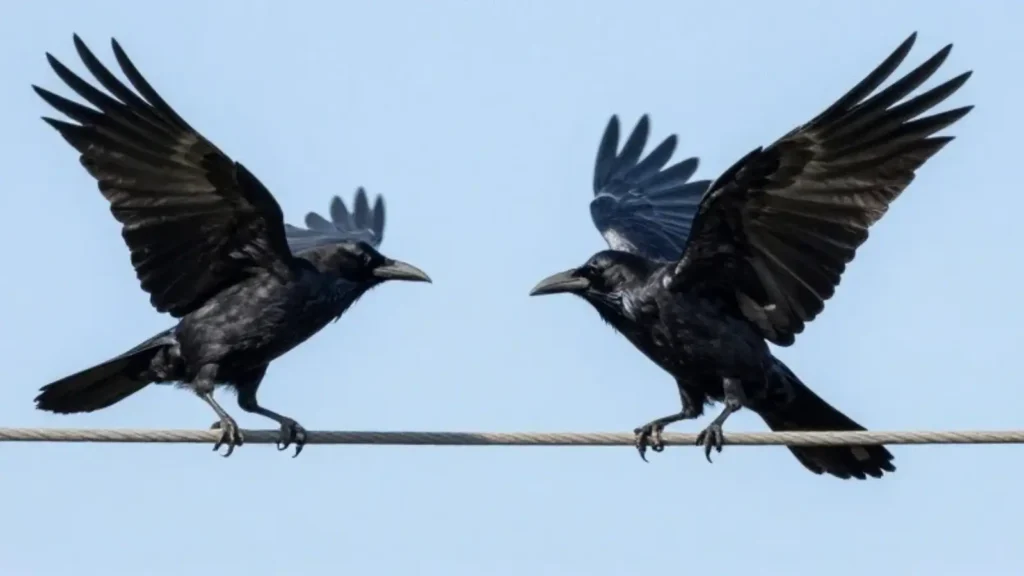
This diversity demonstrates that symbolism depends heavily on cultural context.
Native American Crow Symbolism
Direct Answer
Many Native American traditions respect crows as intelligent spiritual beings.
Depending on the nation, crows may represent:
- Wisdom
- Transformation
- Creation
- Adaptability
- Guidance
Some stories portray the crow as a clever trickster whose actions ultimately teach valuable lessons.
Importantly, Native American beliefs are diverse, and no single interpretation applies to all Indigenous cultures.
Crow Symbolism in Hindu Traditions
In Hindu traditions, crows hold a unique spiritual place.
They are commonly associated with:
- Ancestors
- Respect for family lineage
- Remembrance
- Ritual offerings
During certain ceremonies, feeding crows symbolizes honoring deceased relatives.
This reflects cultural and religious practice rather than scientific evidence.
Crow Symbolism in Japanese Culture
Japan generally views crows more positively than many Western traditions.
Common meanings include:
- Family unity
- Loyalty
- Intelligence
- Protection
The three-legged crow, Yatagarasu, is especially significant in Japanese mythology as a divine guide.
Crow Symbolism in Chinese Tradition
Chinese symbolism often connects crows with:
- The sun
- Vitality
- Cosmic balance
- Guidance
Ancient stories describe a three-legged crow living within the sun, representing celestial power.
Spiritual Meaning of Crows
Direct Answer
Spiritually, crows frequently symbolize awareness, transformation, and personal growth.
Many people interpret crow encounters as reminders to:
- Reflect deeply
- Stay observant
- Accept change
- Trust intuition
- Learn from experience
These interpretations belong to spiritual traditions rather than universally accepted factual evidence.
Psychological Meaning of Crow Symbolism
From a psychological perspective, crows often symbolize the human unconscious.
Their appearance can represent:
- Curiosity
- Hidden emotions
- Intelligence
- Self-awareness
- Adaptability
Psychologists studying symbolism generally explain animal symbols as reflections of human thoughts and cultural associations rather than supernatural messages.
Why Are Crows Associated With Death?
Direct Answer
Crows became linked with death because they often scavenged battlefields and carrion.
Historically people noticed this behavior and connected crows with:
- War
- Loss
- Mortality
- Endings
Modern symbolism increasingly interprets death metaphorically.
Instead of literal death, crows often symbolize:
- Personal transformation
- Ending unhealthy habits
- New beginnings
- Major life transitions
Crows in Literature and Storytelling
Authors frequently use crows to create atmosphere.
Common literary symbolism includes:
- Mystery
- Foreshadowing
- Intelligence
- Truth
- Memory
- Observation
Writers rarely use crows as purely evil creatures. Instead, they often represent complexity and hidden knowledge.
Crows in Art and Visual Communication
Artists value crows because they communicate emotion instantly.
Visual symbolism includes:
- Contrast
- Solitude
- Reflection
- Intelligence
- Nature
- Freedom
Dark feathers create dramatic compositions that emphasize mood without requiring words.
Crows Symbolism in Branding and Design
Modern branding increasingly embraces crow symbolism.
Brands may use crow-inspired imagery to suggest:
- Intelligence
- Innovation
- Adaptability
- Strategy
- Mystery
- Independence
Designers understand that animal symbolism influences emotional perception before consumers consciously evaluate a brand.
Crow Symbolism in Dreams
Direct Answer
Dream interpretations vary greatly.
Many symbolic traditions suggest crow dreams may represent:
- Hidden knowledge
- Personal change
- Important decisions
- Self-reflection
- Awareness
Dream analysis remains subjective and depends heavily on personal experiences, emotions, and cultural beliefs.
Myth vs. Fact
| Myth | Fact |
| Seeing a crow always predicts death. | No scientific evidence supports this belief. |
| Crows bring bad luck. | Many cultures consider them lucky or protective. |
| Crows are unintelligent scavengers. | Scientific research shows they are among the world’s smartest birds. |
| All cultures fear crows. | Many traditions deeply respect them. |
| Crow symbolism has one meaning. | Symbolic meanings differ across cultures and history. |
Did You Know?
- Crows can recognize individual human faces.
- They use tools to solve complex problems.
- Some crows teach younger birds.
- They remember dangerous locations for years.
- They communicate using sophisticated vocalizations.
- Scientists consider them among the most intelligent bird species.
These remarkable abilities likely contributed to centuries of symbolic associations with wisdom and intelligence.
Expert Tip
When interpreting crow symbolism, always consider:
- Cultural background
- Historical period
- Religious tradition
- Personal experience
- Context of the encounter
Symbols rarely have one fixed meaning.
Common Mistakes When Interpreting Crow Symbolism
Many misunderstand crow symbolism because they:
- Assume every crow represents bad luck.
- Ignore cultural differences.
- Confuse crows with ravens.
- Interpret folklore as scientific fact.
- Forget that symbolism evolves over time.
Balanced interpretation requires understanding both cultural tradition and natural behavior.
Practical Applications of Crow Symbolism
Crow symbolism continues influencing modern society.
Examples include:
Education
Teachers use crow stories to explain symbolism and mythology.
Branding
Companies use crow imagery to represent intelligence and innovation.
Literature
Authors employ crows as symbols of mystery and transformation.
Psychology
Therapists may discuss symbolic animals in dream analysis or storytelling exercises.
Art
Painters and photographers use crows to express emotional depth.
Film and Media
Filmmakers frequently include crows to establish atmosphere, suspense, or themes of change.
Key Insights
✔ Crow symbolism is highly contextual.
✔ Intelligence is one of the most universal symbolic meanings.
✔ Cultural traditions strongly influence interpretation.
✔ Modern symbolism increasingly emphasizes transformation rather than fear.
✔ Scientific discoveries about crow intelligence reinforce their symbolic connection to wisdom.
Why Crows Still Matter Today
Even in the digital age, crow symbolism remains remarkably relevant.
People continue using crow imagery in:
- Logos
- Tattoos
- Novels
- Video games
- Films
- Poetry
- Digital art
- Educational materials
- Spiritual practices
- Social media storytelling
Their symbolic flexibility allows them to represent both ancient wisdom and modern innovation.
Conclusion
Crows symbolism is one of the richest and most enduring symbolic traditions in human culture. Across civilizations, these remarkable birds have represented intelligence, adaptability, transformation, mystery, communication, and the complex relationship between endings and new beginnings.
While folklore sometimes associates crows with misfortune or death, many traditions instead honor them as guides, protectors, and messengers of wisdom.
Understanding crow symbolism encourages a more thoughtful appreciation of how humans interpret the natural world.
Whether encountered in mythology, religion, psychology, literature, branding, art, or everyday observation, the crow remains a powerful reminder that symbols are shaped by culture, history, and personal experience.
Rather than relying on a single interpretation, recognizing the diversity of meanings behind crows enriches our understanding of communication, identity, storytelling, and the enduring connection between people and nature.

Lucas Whitmore reveals the hidden messages behind symbols, signs, and traditions through detailed symbolism guides.
