Few creatures have inspired as much symbolic meaning across civilizations as the frog. Living comfortably between water and land, the frog naturally represents transition, adaptability, and transformation.
From ancient mythology and religious traditions to modern storytelling and personal development, frog symbolism continues to capture the imagination of people around the world.
The frog’s remarkable life cycle from egg to tadpole to adult amphibian has made it one of humanity’s most enduring symbols of growth and renewal.
Different cultures interpret frogs in unique ways, associating them with prosperity, fertility, rain, healing, cleansing, wisdom, and even good fortune.
While interpretations vary according to historical and cultural contexts, the underlying message often revolves around positive change and life’s continuous evolution.
Whether encountered in dreams, artwork, folklore, branding, literature, or spiritual practices, understanding frog symbolism offers valuable insight into how humans use nature to communicate complex ideas, emotions, and beliefs.
Featured Snippet: What Does Frog Symbolism Mean?
Frog symbolism primarily represents transformation, renewal, adaptability, fertility, emotional cleansing, and new beginnings.
Because frogs transition between water and land through metamorphosis, many cultures view them as symbols of personal growth, prosperity, resilience, spiritual awakening, and life’s ability to change through continuous evolution.
What Does Frog Symbolism Represent?
Quick Answer
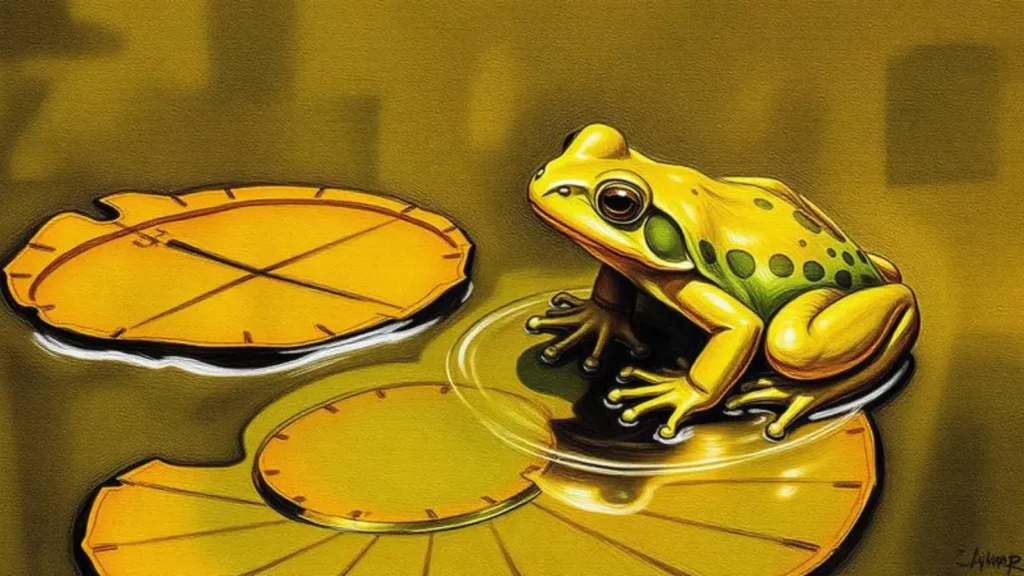
Across history, frogs have symbolized change because they physically transform more dramatically than many other animals. Their connection to water also links them with emotion, purification, intuition, fertility, and abundance.
Some of the most common symbolic meanings include:
- Personal transformation
- New beginnings
- Growth through change
- Adaptability
- Emotional healing
- Prosperity
- Fertility
- Rebirth
- Cleansing
- Luck
- Patience
- Opportunity
Rather than representing a single universal meaning, frogs symbolize life’s constant movement between different stages of existence.
Why Frogs Became Powerful Symbols Throughout History
Short Answer
Their unusual biology made frogs natural metaphors for life, death, rebirth, and transformation.
Humans have always paid attention to frogs because they:
- Emerge after rainfall.
- Live between land and water.
- Undergo complete metamorphosis.
- Produce numerous offspring.
- Thrive in changing environments.
These observable characteristics inspired myths, rituals, and symbolic interpretations long before scientific biology explained amphibian life cycles.
Historical Origins of Frog Symbolism
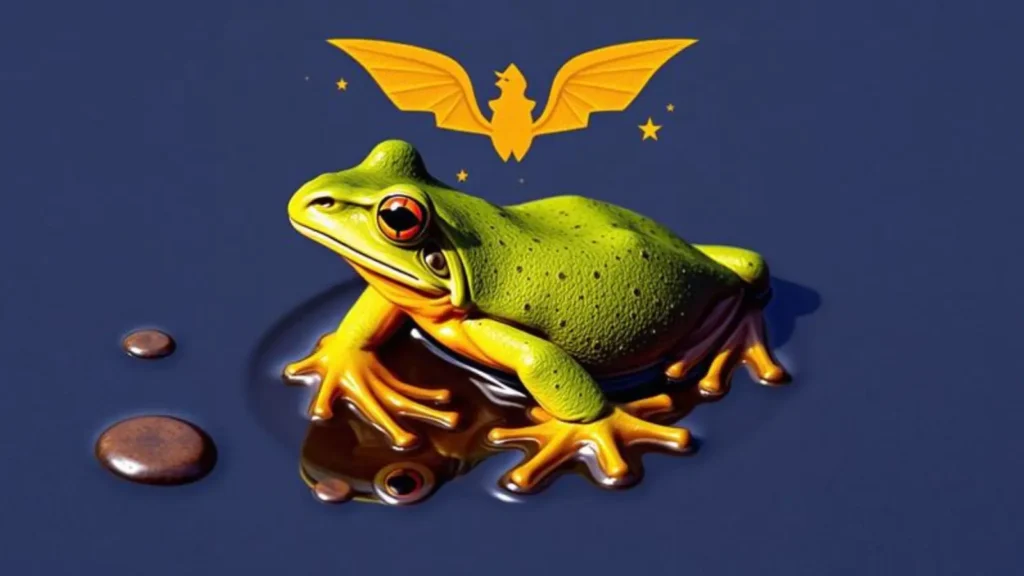
For thousands of years, frogs have appeared in mythology, cave art, sacred ceremonies, and folklore.
Ancient societies often depended on seasonal rainfall for survival. Since frogs became active during rainy seasons, they naturally became symbols of:
- Agricultural abundance
- Seasonal renewal
- Water’s life-giving power
- Fertility
- Nature’s cycles
Over generations, these observations evolved into symbolic traditions that remain influential today.
Frog Symbolism Across Different Cultures
| Culture | Primary Symbolism | Traditional Meaning |
| Ancient Egypt | Fertility | Birth and creation |
| China | Wealth | Prosperity and fortune |
| Japan | Safe journeys | Good luck and return |
| Native American traditions | Rain | Cleansing and renewal |
| Celtic traditions | Healing | Sacred water and wisdom |
| African traditions | Transformation | Rain, fertility, life |
| Mesoamerican cultures | Agriculture | Rain and abundance |
| Modern Western culture | Personal growth | Positive transformation |
Although interpretations differ, transformation remains one of the most universal themes.
Ancient Egyptian Frog Symbolism
In Ancient Egypt, frogs were closely associated with the annual flooding of the Nile River.
As floodwaters receded, thousands of frogs appeared, signaling fertile farmland and renewed agricultural life.
Because of this connection, frogs represented:
- Birth
- Creation
- Fertility
- Abundance
- New life
The frog became closely connected with the natural cycles sustaining Egyptian civilization.
Chinese Frog Symbolism
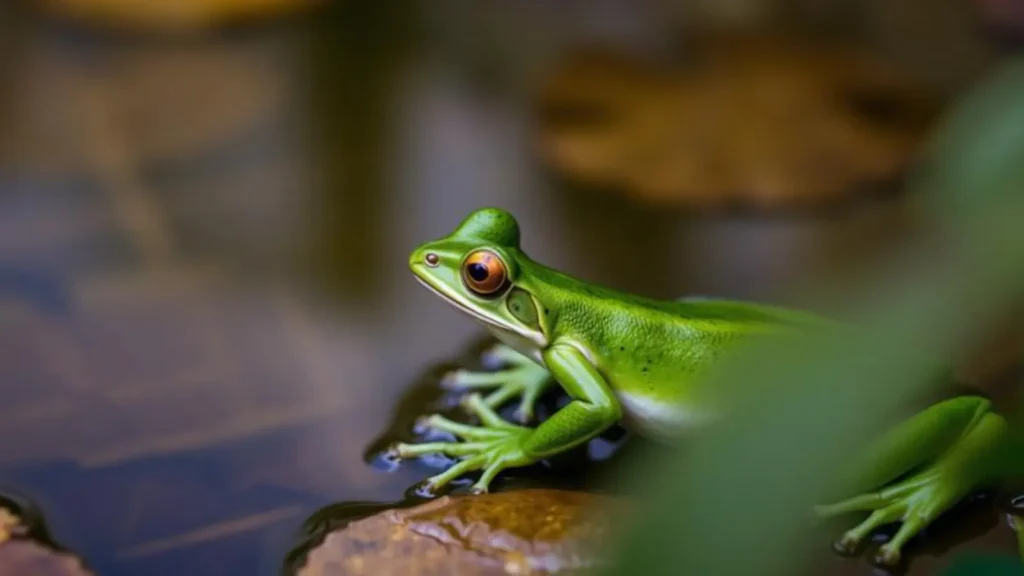
Chinese symbolism often associates frogs with prosperity and wealth.
Particularly famous is the three-legged money frog found in Feng Shui traditions.
Here frogs symbolize:
- Financial opportunity
- Prosperity
- Fortune
- Wealth attraction
- Business success
In traditional symbolism, placing frog imagery near entrances is believed to invite abundance, though these beliefs belong to cultural and spiritual traditions rather than scientific evidence.
Japanese Interpretations
In Japanese culture, frogs are generally considered fortunate animals.
The Japanese word for frog is associated with the idea of “returning.”
This has inspired symbolic meanings involving:
- Safe travel
- Returning home safely
- Lost opportunities returning
- Good fortune
- Protection during journeys
Travelers sometimes carry frog charms for symbolic encouragement and hope.
Native American Perspectives
Many Native American traditions connect frogs with:
- Rain
- Fertility
- Cleansing
- Healing
- Earth’s natural balance
Because frogs thrive near healthy water sources, they often symbolize environmental harmony and respect for nature.
Different tribes maintain distinct traditions, so meanings should never be generalized across all Indigenous cultures.
Celtic Frog Symbolism
Celtic traditions associated frogs with sacred wells and healing waters.
They represented:
- Purification
- Wisdom
- Transformation
- Spiritual cleansing
- Renewal
Water itself held profound symbolic importance, making amphibians natural spiritual messengers.
Frog Symbolism in Mythology
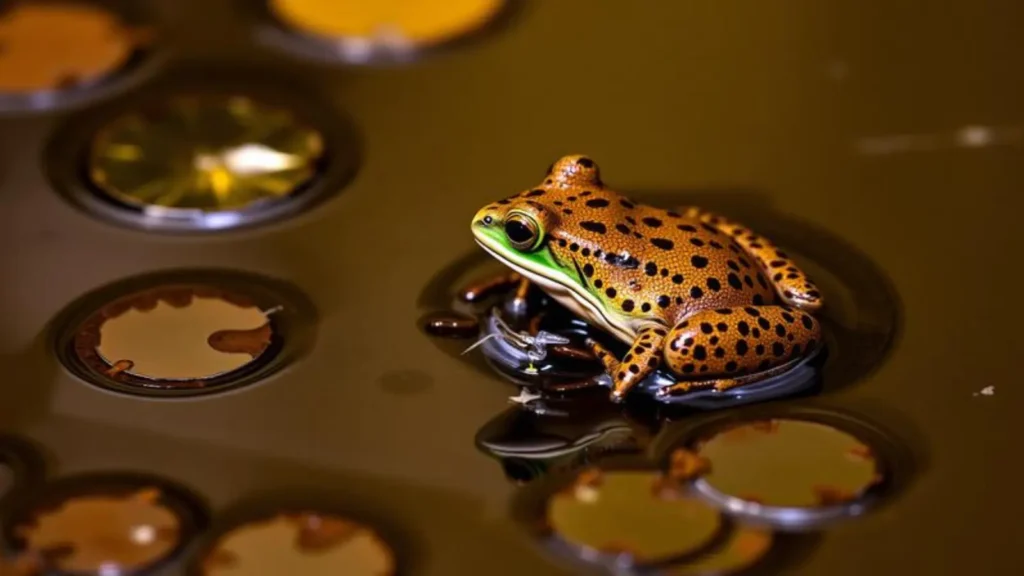
Throughout mythology, frogs appear as magical creatures bridging two worlds.
Common mythological themes include:
- Creation
- Rebirth
- Hidden wisdom
- Magical transformation
- Nature spirits
- Divine messages
Their ability to move between water and land made them ideal symbols of crossing boundaries between physical and spiritual realms.
Spiritual Meaning of Frog Symbolism
Direct Answer
Spiritually, frogs often symbolize personal transformation, emotional renewal, intuition, purification, and spiritual awakening.
Many spiritual traditions interpret frogs as reminders to:
- Release emotional baggage.
- Welcome change.
- Trust life’s transitions.
- Grow through challenges.
- Remain adaptable.
These interpretations are symbolic beliefs rather than scientifically established facts.
Psychological Meaning of Frog Symbolism
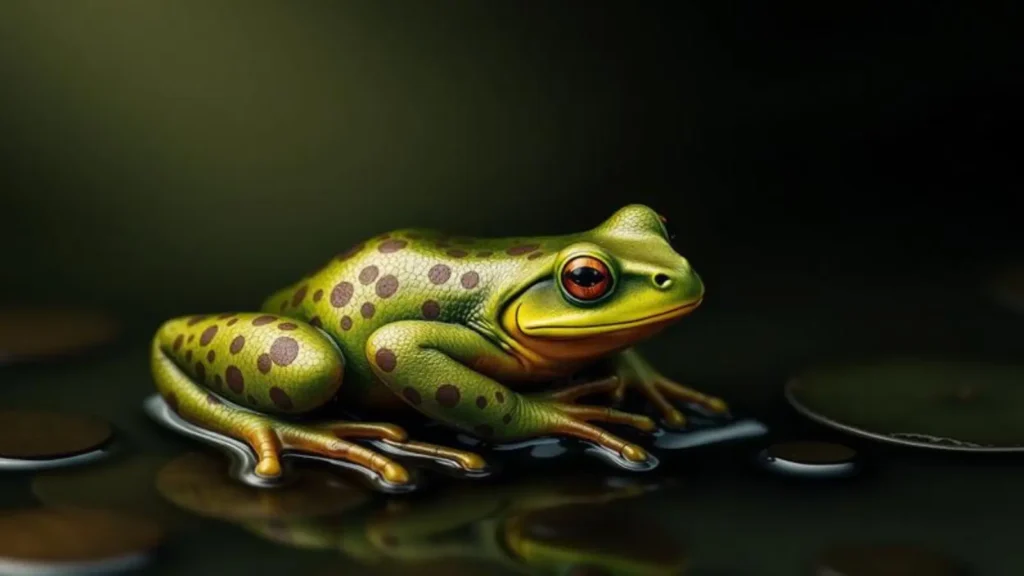
Psychology often studies symbolism as a reflection of human thought rather than supernatural truth.
From a psychological perspective, frogs may represent:
- Personal development
- Emotional resilience
- Adaptability
- Inner growth
- Self-discovery
Their life cycle mirrors many people’s experiences of evolving through life’s different stages.
Frog Symbolism in Dreams
Dream interpretations vary greatly depending on cultural beliefs and individual experiences.
Common symbolic interpretations include:
| Dream Scenario | Possible Symbolic Meaning |
| Seeing a frog | Positive change approaching |
| Jumping frog | Opportunity or progress |
| Green frog | Healing and renewal |
| Many frogs | Emotional overwhelm or abundance |
| Frog in water | Emotional balance |
| Catching a frog | Achieving personal goals |
Dream analysis is interpretive rather than scientifically predictive.
Frog Symbolism in Religion
Different religions interpret frogs differently.
Some traditions emphasize:
- Fertility
- Creation
- Divine power
- Renewal
Others use frogs symbolically within narratives that communicate moral or theological lessons.
Religious symbolism depends entirely on the specific tradition and historical context.
Frog Symbolism in Literature
Authors frequently use frogs as literary symbols because they naturally suggest transformation.
Common literary themes include:
- Identity
- Growth
- Hidden potential
- Redemption
- Innocence
- Change
From fairy tales to fantasy novels, frogs often represent characters who undergo profound personal evolution.
Frog Symbolism in Art
Artists use frogs to communicate ideas visually.
Depending on artistic style, frogs may symbolize:
- Nature
- Renewal
- Environmental awareness
- Fertility
- Humor
- Mystery
- Transformation
Modern illustrators frequently incorporate frogs into eco-conscious artwork emphasizing biodiversity and healthy ecosystems.
Frog Symbolism in Branding and Design
Brands occasionally use frog imagery because it communicates positive emotional associations.
Possible branding messages include:
- Sustainability
- Adaptability
- Innovation
- Fresh thinking
- Environmental responsibility
- Growth
Designers often choose frogs when creating memorable, approachable visual identities connected to nature or transformation.
Semiotics: Why Frog Symbols Work So Well
Semiotics studies how symbols create meaning.
Frogs communicate ideas efficiently because people already associate them with:
- Water
- Nature
- Seasonal renewal
- Transformation
- Survival
- Adaptability
Visual symbols often communicate faster than written language, making frogs effective icons in education, storytelling, marketing, and environmental campaigns.
Did You Know?
- Frogs existed long before humans appeared.
- There are thousands of frog species worldwide.
- Frogs serve as important indicators of ecosystem health.
- Their metamorphosis has inspired symbolic traditions for centuries.
- Many ancient cultures independently connected frogs with rain and fertility.
Expert Tip
When interpreting frog symbolism, always consider context.
A frog appearing in mythology, psychology, dreams, religion, literature, or art may carry different meanings. Avoid assuming every symbolic interpretation applies universally, since symbolism evolves across cultures and historical periods.
Common Mistakes About Frog Symbolism
Mistake 1: Assuming one universal meaning
Different cultures assign different symbolic values.
Mistake 2: Confusing symbolism with science
Symbolic interpretations are cultural beliefs, not scientific evidence.
Mistake 3: Ignoring historical context
Ancient meanings often developed from environmental observations.
Mistake 4: Treating myths as historical facts
Mythology communicates cultural values rather than documented history.
Myth vs. Fact
| Myth | Fact |
| Frogs always symbolize luck. | Luck is only one interpretation among many. |
| Every culture views frogs positively. | Some traditions associate frogs with caution or uncertainty. |
| Dream frogs predict the future. | Dream meanings are interpretive and subjective. |
| Frog symbolism is modern. | It dates back thousands of years. |
| Spiritual meanings are scientifically proven. | Spiritual symbolism reflects beliefs, not empirical science. |
Practical Applications of Frog Symbolism
Understanding frog symbolism can enhance many fields:
Education
Teachers use frogs to explain life cycles and transformation.
Branding
Companies use frog imagery to express innovation and sustainability.
Storytelling
Authors use frogs as symbols of character growth.
Personal Development
Many people view frogs as reminders to embrace change.
Environmental Awareness
Conservation campaigns often feature frogs because they represent healthy ecosystems.
Interior Design
Nature-inspired artwork featuring frogs may communicate renewal and balance.
Frog Symbolism in Modern Digital Culture
Even in today’s digital world, frog imagery remains remarkably influential.
Online communities, animation, gaming, emojis, and digital art frequently use frogs to express:
- Humor
- Relaxation
- Emotional authenticity
- Community identity
- Creativity
Internet culture demonstrates that ancient symbols continue evolving alongside modern communication technologies.
Why Frog Symbolism Still Matters Today
People continue searching for symbols that help explain life’s uncertainties.
Frog symbolism resonates because it reflects universal human experiences:
- Growing through difficulty
- Adapting to change
- Beginning again
- Healing emotionally
- Finding opportunity
- Embracing transformation
Its enduring appeal lies in its flexibility—different people can connect with different aspects of the symbol while sharing a common appreciation for change and resilience.
Key Insights
- Frogs symbolize transformation more consistently than almost any other meaning.
- Water strengthens their association with emotion and renewal.
- Cultural interpretations differ significantly.
- Symbolic meanings evolve over time.
- Modern psychology often interprets frogs as metaphors for personal growth.
- Literature and art continue using frogs as powerful storytelling symbols.
- Understanding symbolism improves cultural literacy and visual communication.
Conclusion
Frog symbolism has endured across centuries because it reflects one of humanity’s most universal experiences: change. From ancient agricultural societies that celebrated frogs as signs of rain and fertility to modern psychologists who view them as metaphors for personal growth, frogs continue to symbolize transformation, resilience, and renewal.
Although meanings vary across cultures, religions, and artistic traditions, the frog consistently reminds us that growth often requires transition.
Its remarkable metamorphosis serves as a powerful metaphor for life’s evolving journey, making frog symbolism relevant not only in mythology and folklore but also in education, branding, literature, design, environmental awareness, and everyday communication.
Understanding frog symbolism encourages deeper appreciation of how humans use nature to express ideas that transcend language, connecting history, culture, psychology, and creativity in meaningful ways.

Lucas Whitmore reveals the hidden messages behind symbols, signs, and traditions through detailed symbolism guides.
