Few novels in modern literature use symbolism as powerfully as Lord of the Flies by Lord of the Flies. Since its publication in 1954, the novel has become one of the most studied works in schools and universities because of its rich symbolic structure and timeless exploration of human behavior.
Understanding Lord of the Flies symbolism is essential because the story is much more than a tale about stranded boys on an island.
Every major object, character, and event carries symbolic meaning that helps readers explore themes such as civilization, savagery, fear, power, morality, leadership, and the darker aspects of human nature.
The novel remains relevant today because its symbols continue to reflect real-world social dynamics, political conflicts, psychological struggles, and ethical dilemmas.
Through symbolism, William Golding transformed a survival story into a profound commentary on humanity itself.
Featured Snippet: What Is Lord of the Flies Symbolism?

Lord of the Flies symbolism refers to the use of symbolic characters, objects, and events in William Golding’s novel to represent deeper ideas about human nature, civilization, power, fear, morality, and societal order.
Symbols such as the conch shell, the beast, the signal fire, and the pig’s head reveal the struggle between civilization and savagery within individuals and communities.
What Does Lord of the Flies Symbolism Mean?
Direct Answer
In Lord of the Flies, symbolism functions as a literary tool that transforms physical objects and characters into representations of abstract concepts. Rather than simply telling readers about human nature, Golding uses symbols to demonstrate how people behave when social structures collapse.
The novel’s symbolism operates on several levels:
- Psychological symbolism
- Political symbolism
- Religious symbolism
- Social symbolism
- Philosophical symbolism
- Anthropological symbolism
Together, these layers create a complex examination of humanity’s capacity for both cooperation and destruction.
Historical Context Behind the Symbolism
Direct Answer
The symbolism in Lord of the Flies was heavily influenced by the aftermath of World War II and growing concerns about human violence.
William Golding served in the Royal Navy during World War II and witnessed the destructive potential of humanity firsthand. The horrors of war challenged the belief that civilization automatically makes people moral and peaceful.
Historical Influences
| Historical Factor | Symbolic Influence |
| World War II | Human capacity for violence |
| Atomic Age | Fear of self-destruction |
| Political instability | Power struggles |
| Colonial history | Social hierarchy |
| Psychological studies | Exploration of human instincts |
The novel reflects a post-war worldview that questioned whether civilization truly suppresses humanity’s darker impulses.
The Conch Shell Symbolism
What Does the Conch Represent?
Direct Answer
The conch shell symbolizes civilization, democracy, law, communication, and organized society.
At the beginning of the novel, the conch establishes order among the boys. Whoever holds it has the right to speak, creating a structured system similar to democratic governance.
Symbolic Meanings of the Conch
- Authority
- Social order
- Respect for rules
- Collective decision-making
- Civilization
- Rational discourse
As the boys descend into savagery, the conch loses its power.
Why the Conch’s Destruction Matters
When the conch shatters alongside Piggy’s death, it symbolizes the complete collapse of civilization and reason.
The destruction signifies that law and order can be fragile when people abandon shared values.
The Lord of the Flies Symbolism

What Does the Pig’s Head Represent?
Direct Answer
The Lord of the Flies—the severed pig’s head mounted on a stick—symbolizes evil, corruption, temptation, and the darkness within human nature.
The name itself translates to “Beelzebub,” a traditional name associated with demonic forces.
Deeper Interpretations
The pig’s head suggests that evil is not an external monster but an internal force residing within individuals.
It symbolizes:
- Human cruelty
- Moral decay
- Inner darkness
- Psychological fear
- Corruption of innocence
When Simon imagines speaking with the Lord of the Flies, the symbolic message becomes clear: the real beast exists inside human beings.
The Beast Symbolism
What Does the Beast Represent?
Direct Answer
The beast symbolizes fear, anxiety, and humanity’s inability to confront its own darker instincts.
Throughout the novel, the boys become obsessed with finding the beast.
Symbolic Layers of the Beast
| Interpretation | Meaning |
| Psychological | Internal fears |
| Social | Collective panic |
| Moral | Human evil |
| Political | Fear used for control |
| Philosophical | Unknown aspects of existence |
The boys search for an external monster but fail to recognize that they themselves are becoming monstrous.
The Signal Fire Symbolism
Why Is the Fire Important?
Direct Answer
The signal fire symbolizes hope, rescue, civilization, and connection to the outside world.
The fire represents the boys’ desire to return to society.
Symbolic Meanings
- Survival
- Progress
- Responsibility
- Human ingenuity
- Hope for rescue
As attention shifts from rescue to hunting, maintaining the fire becomes less important.
This change symbolizes the boys’ growing embrace of savagery over civilization.
Piggy Symbolism
What Does Piggy Represent?
Direct Answer
Piggy symbolizes intelligence, reason, scientific thinking, and rationality.
Although physically weak, Piggy consistently offers practical solutions and logical insights.
Symbolic Associations
- Knowledge
- Critical thinking
- Enlightenment values
- Education
- Rational problem-solving
His tragic fate suggests how easily reason can be ignored when fear and emotion dominate decision-making.
Ralph Symbolism
What Does Ralph Represent?
Direct Answer
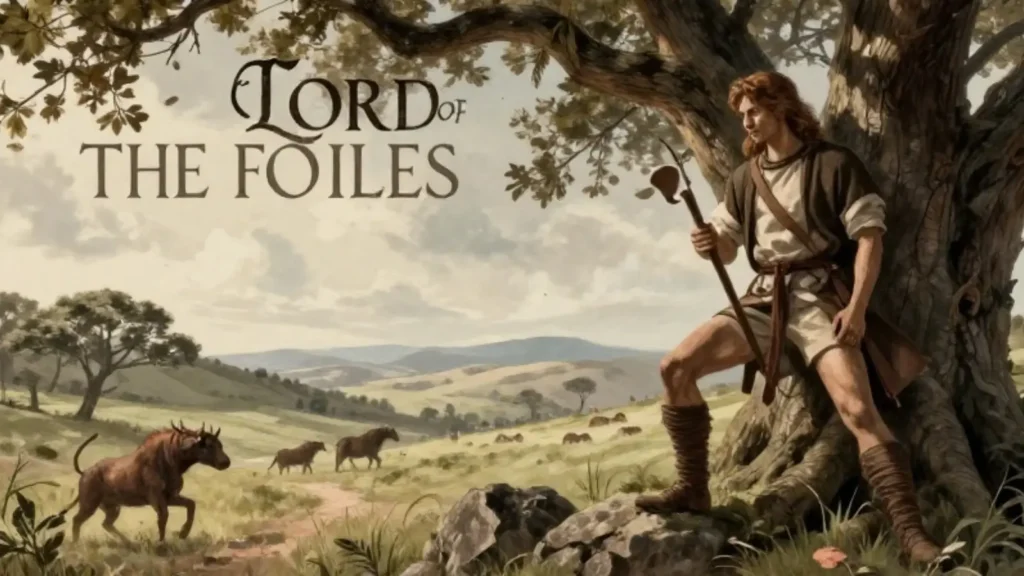
Ralph symbolizes leadership, democracy, responsibility, and civilized governance.
He continually focuses on rescue, cooperation, and maintaining social order.
Ralph’s Symbolic Role
Ralph embodies:
- Ethical leadership
- Community responsibility
- Civic values
- Social cooperation
- Long-term thinking
His struggle reflects the difficulty of preserving civilization under pressure.
Jack Symbolism
What Does Jack Represent?
Direct Answer
Jack symbolizes power, authoritarianism, aggression, and primal instincts.
Unlike Ralph, Jack seeks dominance rather than cooperation.
Symbolic Themes
- Dictatorship
- Violence
- Tribalism
- Power hunger
- Emotional manipulation
Jack’s rise illustrates how fear and charisma can undermine democratic institutions.
Simon Symbolism
What Does Simon Represent?
Direct Answer
Simon symbolizes wisdom, spiritual insight, innocence, and moral truth.
He is the only character who truly understands the nature of the beast.
Religious and Spiritual Symbolism
Many scholars view Simon as a Christ-like figure because he:
- Seeks solitude
- Discovers truth
- Tries to help others
- Is misunderstood
- Dies tragically
His death symbolizes society’s rejection of truth and moral insight.
The Island Symbolism
What Does the Island Represent?
Direct Answer
The island symbolizes a miniature version of human society.
Initially, it appears as a paradise.
Over time, it becomes a setting for conflict, fear, and violence.
Symbolic Meanings
- Human civilization
- Social experimentation
- Isolation
- Human nature revealed
- Moral testing ground
The island functions as a laboratory where Golding examines how people behave without external authority.
The Painted Faces Symbolism
Why Do the Boys Paint Their Faces?
Direct Answer
The painted masks symbolize anonymity, loss of identity, and liberation from social constraints.
When Jack paints his face, he feels transformed.
Symbolic Effects
The masks allow the boys to:
- Escape accountability
- Embrace violence
- Suppress guilt
- Join the group mentality
This symbolism remains highly relevant in discussions of crowd behavior and online anonymity.
Symbolism of the Naval Officer
What Does the Officer Represent?
Direct Answer
The naval officer symbolizes civilization’s return but also exposes its contradictions.
He rescues the boys from their violent chaos.
However, he is also part of a world engaged in warfare.
Symbolic Irony
The officer represents:
- Social order
- Adult authority
- Civilization
Yet his presence reminds readers that adult society is not free from violence either.
Psychological Meaning of Lord of the Flies Symbolism
Direct Answer
Psychologically, the novel explores the conflict between reason and instinct.
Many literary scholars compare the characters to concepts found in psychoanalytic theory.
| Character | Psychological Symbolism |
| Ralph | Rational self-control |
| Jack | Primitive impulses |
| Piggy | Logic and intellect |
| Simon | Moral conscience |
| Beast | Unconscious fears |
The novel suggests that civilization requires constant effort to restrain destructive instincts.
Philosophical Interpretations
What Is Golding Saying About Human Nature?
Direct Answer
Golding challenges the optimistic belief that humans are naturally good.
Instead, the symbolism suggests that society helps contain impulses toward violence and selfishness.
Key Philosophical Questions
- Is evil learned or innate?
- Can civilization survive without rules?
- What happens when authority disappears?
- Are humans naturally cooperative or competitive?
These questions continue to fuel literary and philosophical debates.
Cultural Significance of Lord of the Flies Symbolism
Direct Answer
The novel’s symbolism transcends culture because it addresses universal human concerns.
Readers across different societies recognize themes such as:
- Leadership struggles
- Social order
- Fear
- Group behavior
- Moral responsibility
This universality has helped the novel remain influential for decades.
Did You Know?
📚 The phrase “Lord of the Flies” is derived from “Beelzebub,” a name historically associated with a demonic figure.
📚 The novel has been translated into numerous languages and is studied worldwide because of its symbolic complexity.
📚 Many political scientists, psychologists, educators, and literary critics reference the novel when discussing group dynamics and leadership.
Expert Tip
When analyzing Lord of the Flies, avoid treating symbols as having only one meaning. Strong literary interpretation considers multiple layers—psychological, political, religious, social, and philosophical—simultaneously.
Common Mistakes
Mistake 1
Assuming the beast is a literal monster.
Reality: The beast primarily symbolizes fear and human darkness.
Mistake 2
Viewing Jack as simply a villain.
Reality: He symbolizes impulses that exist within everyone.
Mistake 3
Treating the conch as merely a shell.
Reality: It represents civilization and democratic authority.
Mistake 4
Ignoring historical context.
Reality: Post-war concerns strongly shaped the novel’s symbolism.
Myth vs. Fact
| Myth | Fact |
| The novel is only about children. | It is fundamentally about humanity. |
| The beast is a real creature. | It primarily symbolizes fear and inner darkness. |
| Civilization permanently changes people. | The novel questions this assumption. |
| Symbols have only one meaning. | Most symbols operate on multiple levels. |
Practical Applications of Understanding Lord of the Flies Symbolism
The symbolism remains useful beyond literary studies.
Education
Helps teach critical thinking and interpretation.
Leadership Studies
Provides insights into authority and governance.
Psychology
Illustrates fear, group behavior, and identity.
Media Analysis
Demonstrates how symbols shape narratives.
Branding and Communication
Shows how symbolic imagery influences perception and meaning.
Social Sciences
Offers a framework for understanding collective behavior.
Key Insights
✅ The conch symbolizes civilization and democratic order.
✅ The Lord of the Flies symbolizes evil and inner corruption.
✅ The beast symbolizes fear and humanity’s darker instincts.
✅ The signal fire symbolizes hope and connection to civilization.
✅ Simon represents truth and spiritual insight.
✅ Golding uses symbolism to explore fundamental questions about human nature.
Conclusion
The enduring power of Lord of the Flies symbolism lies in its ability to transform a simple survival narrative into a profound exploration of humanity.
Through symbols such as the conch shell, the beast, the signal fire, Simon, Piggy, Jack, Ralph, and the Lord of the Flies itself, William Golding examines the tension between civilization and savagery, reason and instinct, order and chaos.
The novel continues to resonate because its symbols remain relevant to modern discussions about leadership, morality, fear, identity, social structures, and human behavior.
Whether examined through literary criticism, psychology, philosophy, anthropology, education, or cultural studies, Lord of the Flies demonstrates how symbolism can reveal truths about society and ourselves.
Understanding these symbols enriches our interpretation of literature while offering valuable insights into the forces that shape human actions and collective life.

Amelia Rosewood writes about symbolic meanings, ancient traditions, and the emotional connections between humans and symbols.
