The octopus has fascinated humanity for centuries. Living in the mysterious depths of the ocean, this remarkable creature has inspired myths, legends, artistic masterpieces, spiritual teachings, and modern scientific admiration.
Today, octopus symbolism represents far more than a marine animal it has become a universal symbol of intelligence, adaptability, creativity, mystery, transformation, resilience, and emotional awareness.
Whether appearing in ancient folklore, contemporary branding, literature, tattoos, dreams, or spiritual practices, the octopus carries diverse symbolic meanings shaped by culture, history, and personal interpretation.
Understanding these meanings helps us appreciate not only the animal itself but also the powerful ideas it communicates about human nature.
Featured Snippet: What Does Octopus Symbolism Mean?
Octopus symbolism represents intelligence, adaptability, creativity, mystery, resilience, transformation, flexibility, and emotional depth. Across cultures, the octopus symbolizes problem-solving, hidden wisdom, survival, regeneration, and the ability to navigate life’s complexities with patience, strategy, and resourcefulness. Its meaning varies depending on cultural, historical, and spiritual traditions.
What Is Octopus Symbolism?
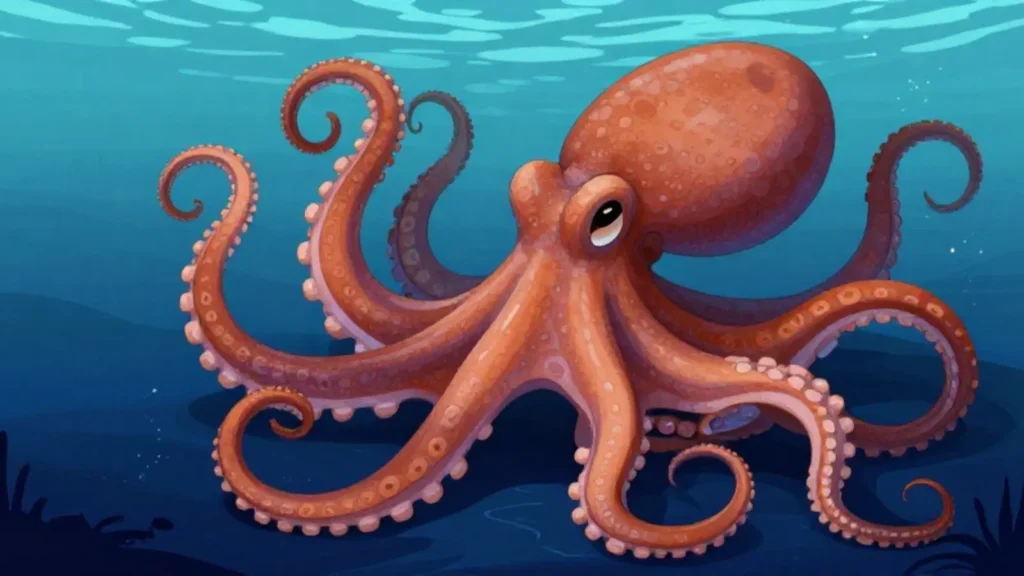
At its core, octopus symbolism reflects the extraordinary characteristics of the animal itself.
Unlike many sea creatures, octopuses display remarkable intelligence, problem-solving abilities, camouflage skills, and physical flexibility. These biological traits naturally evolved into symbolic meanings that humans associate with wisdom, adaptability, and transformation.
Rather than representing one fixed idea, octopus symbolism is layered and contextual. In some traditions, it embodies mystery and hidden knowledge. In others, it symbolizes resilience, strategic thinking, and emotional intelligence.
Its symbolism often combines:
- Intelligence
- Flexibility
- Curiosity
- Creativity
- Survival
- Independence
- Regeneration
- Mystery
- Transformation
- Adaptability
Why the Octopus Became a Powerful Symbol
Direct Answer
The octopus became a powerful symbol because its unique biological abilities—camouflage, regeneration, problem-solving, and flexibility—captured human imagination and inspired meanings related to wisdom, resilience, creativity, and transformation.
Humans naturally assign symbolic meaning to extraordinary animals.
The octopus possesses characteristics rarely seen together:
- Eight independent arms
- Highly developed nervous system
- Excellent memory
- Camouflage abilities
- Escape artistry
- Regenerative limbs
- Curious behavior
- Solitary lifestyle
These unusual qualities made it an enduring symbol across civilizations.
Historical Origins of Octopus Symbolism
The octopus has appeared in human art for thousands of years.
Ancient Mediterranean
One of the earliest artistic depictions comes from the Minoan civilization, where marine life frequently decorated pottery and palace frescoes.
The octopus represented:
- Ocean abundance
- Maritime life
- Natural beauty
- Movement
- Balance between humans and the sea
Its flowing tentacles became artistic motifs that symbolized harmony with nature.
Ancient Greece
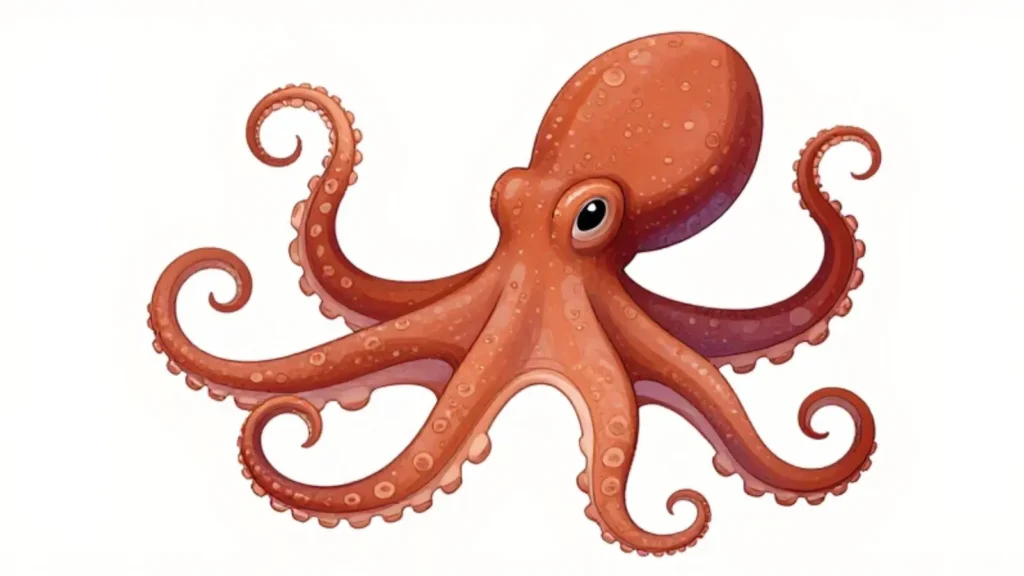
Greek sailors both respected and feared the octopus.
Because it lived in hidden underwater caves and could disappear almost instantly, it symbolized:
- Mystery
- Cleverness
- Survival
- The unknown
Greek observations emphasized its intelligence more than supernatural power.
Polynesian Traditions
Across parts of Polynesia, octopus stories describe wisdom, creation, navigation, and the connection between humans and the ocean.
Its ability to move gracefully through changing environments made it a symbol of adaptability.
Japanese Culture
Japanese folklore and art portray octopuses in various ways.
Depending on context, they may represent:
- Ocean mystery
- Transformation
- Creativity
- Humor
- Nature’s complexity
Traditional woodblock prints often celebrated marine life as expressions of both beauty and unpredictability.
Cultural Meanings of Octopus Symbolism
| Culture | Common Symbolic Meaning | Interpretation |
| Ancient Greece | Intelligence | Clever survival |
| Minoan Civilization | Ocean life | Harmony with nature |
| Polynesian Traditions | Wisdom | Navigation and adaptability |
| Japanese Culture | Transformation | Mystery and creativity |
| Modern Western Culture | Intelligence | Innovation and resilience |
| Contemporary Art | Complexity | Multiple perspectives |
Although interpretations differ, intelligence and adaptability appear repeatedly across cultures.
Psychological Meaning of Octopus Symbolism
Direct Answer
Psychologically, the octopus symbolizes mental flexibility, emotional intelligence, problem-solving, curiosity, and the ability to adapt to changing circumstances.
Modern psychology often examines why certain animals resonate with people.
The octopus reflects several psychological strengths.
Adaptability
Life constantly changes.
The octopus survives by adjusting rather than resisting change.
This makes it a symbol of:
- Emotional flexibility
- Growth
- Learning
- Resilience
Problem-Solving
Scientists have documented impressive problem-solving behaviors in octopuses.
Because of this, people associate them with:
- Strategic thinking
- Innovation
- Curiosity
- Independent learning
Creativity
An octopus rarely approaches challenges in predictable ways.
Symbolically, it reminds us that creativity often comes from exploring multiple solutions rather than following rigid rules.
Emotional Intelligence
The octopus also represents careful observation before action.
Rather than rushing into situations, it symbolizes thoughtful responses and situational awareness.
Spiritual Meaning of Octopus Symbolism
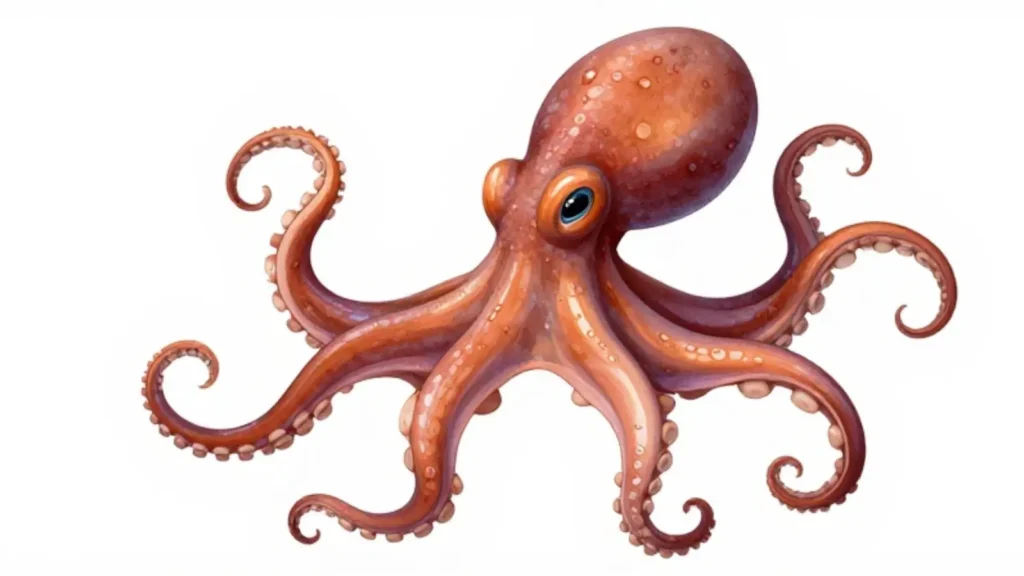
Spiritually, octopus symbolism often represents inner wisdom, transformation, intuition, emotional healing, and navigating uncertainty with confidence.
Different spiritual traditions interpret marine animals differently.
Common symbolic themes include:
Inner Awareness
Living beneath the ocean’s surface connects the octopus with hidden emotions and subconscious understanding.
Transformation
Changing colors and textures symbolizes personal evolution.
Many people interpret this as:
- Personal growth
- Self-discovery
- Emotional healing
- Reinvention
Letting Go
Because octopuses can regenerate lost limbs, they often symbolize recovery after loss.
This meaning encourages resilience rather than perfection.
Religious Interpretations
Unlike some animals, the octopus has limited direct religious symbolism.
However, it occasionally appears in broader discussions about:
- Creation
- Marine life
- Divine diversity
- Natural intelligence
- Stewardship of oceans
Religious interpretations generally arise from local traditions rather than universal doctrine.
Octopus Symbolism in Mythology
Mythology often portrays sea creatures as guardians of mystery.
The octopus sometimes represents:
- Hidden knowledge
- Ocean power
- Chaos
- Protection
- Transformation
It is important to distinguish mythology from biological reality.
Legends emphasize symbolic storytelling rather than factual descriptions.
Octopus Symbolism in Dreams
Dream interpretation is subjective.
There is no universal scientific meaning.
However, symbolic traditions often associate octopus dreams with:
| Dream Scenario | Common Interpretation |
| Calm octopus | Wisdom and patience |
| Swimming octopus | Adapting to change |
| Giant octopus | Feeling overwhelmed |
| Escaping octopus | Freedom and independence |
| Color-changing octopus | Personal transformation |
Dream meanings depend heavily on personal experiences.
Octopus Symbolism in Art
Artists love the octopus because its flowing shape communicates movement and complexity.
It often represents:
- Creative imagination
- Ocean beauty
- Mystery
- Fluidity
- Infinite possibility
Its spiral-like limbs create visual balance while expressing constant motion.
Literary Symbolism of the Octopus
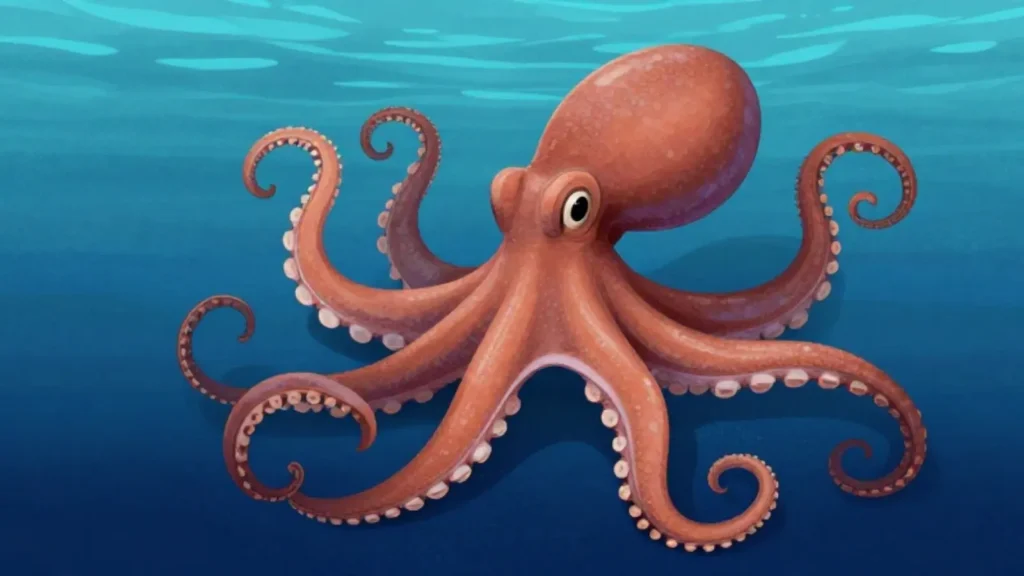
Writers frequently use the octopus as a literary metaphor.
Common symbolic themes include:
Intelligence
Characters compared to octopuses often possess strategic thinking.
Complexity
The animal’s many arms symbolize handling multiple responsibilities.
Hidden Power
Its quiet movements represent influence that operates beneath the surface.
Survival
Stories often use the octopus to illustrate resilience under pressure.
Octopus Symbolism in Branding and Design
Modern branding increasingly adopts octopus imagery.
Brands use it to communicate:
- Innovation
- Flexibility
- Multi-tasking
- Creative thinking
- Adaptability
- Intelligence
Technology companies, educational organizations, and creative agencies often choose octopus-inspired logos because they imply problem-solving rather than aggression.
Color Psychology and Octopus Symbolism
An octopus changes color for communication and camouflage.
From a symbolic perspective, this represents:
| Color Change | Symbolic Association |
| Dark tones | Protection |
| Light colors | Openness |
| Rapid changes | Adaptability |
| Camouflage | Strategic awareness |
These meanings come from symbolic interpretation rather than established scientific psychology.
Octopus Symbolism in Tattoos
Octopus tattoos have become increasingly popular because they carry multiple meanings.
People often choose them to symbolize:
- Personal growth
- Intelligence
- Independence
- Recovery
- Creativity
- Emotional resilience
- Freedom
- Adaptability
Tattoo symbolism remains deeply personal.
The same design may represent different experiences for different individuals.
Did You Know?
- An octopus has three hearts.
- Its blood is blue because it uses copper-based hemocyanin rather than iron-based hemoglobin.
- Each arm contains numerous neurons that support complex movement and sensory processing.
- Many species can regenerate damaged arms.
- Octopuses are widely recognized for remarkable problem-solving abilities.
These biological traits contribute significantly to their symbolic meanings.
Expert Tip
When interpreting octopus symbolism, begin with the animal’s real behaviors before exploring cultural or spiritual meanings.
Grounding symbolic interpretation in observable biology helps distinguish evidence-based understanding from folklore and personal belief.
Common Mistakes
Avoid these misconceptions:
Assuming One Universal Meaning
Symbolism changes across cultures.
Confusing Myth with Science
Legends are valuable cultural stories but are not biological evidence.
Ignoring Context
The same octopus image can symbolize creativity in one setting and mystery in another.
Overgeneralizing Dreams
Dream interpretation is personal rather than scientifically standardized.
Myth vs. Fact
| Myth | Fact |
| The octopus always symbolizes danger. | Many cultures associate it with intelligence and adaptability instead. |
| Every dream about an octopus has the same meaning. | Dream symbolism varies by individual and cultural context. |
| Octopus symbolism is purely modern. | Ancient civilizations used octopus imagery thousands of years ago. |
| Symbolic meanings are scientifically proven. | Symbolism reflects cultural interpretation rather than scientific fact. |
Practical Applications of Octopus Symbolism
Understanding octopus symbolism can be useful in many fields.
Education
Teachers use animal symbolism to introduce critical thinking, mythology, and cultural studies.
Branding
Companies employ octopus imagery to represent innovation, flexibility, and creative problem-solving.
Storytelling
Authors use octopus symbolism to develop themes of mystery, transformation, or resilience.
Art
Artists explore movement, balance, and complexity through octopus-inspired compositions.
Personal Growth
Individuals may adopt octopus symbolism as a reminder to remain adaptable during life’s changes.
Philosophical Perspectives
From a philosophical perspective, the octopus challenges traditional ideas about intelligence.
Its distributed nervous system and remarkable behaviors encourage reflection on:
- Different forms of consciousness
- Adaptation versus control
- Intelligence beyond humans
- The relationship between mind and environment
These discussions continue to influence ethics, biology, and philosophy of mind.
Why Octopus Symbolism Still Matters Today
In today’s rapidly changing world, the octopus symbolizes qualities many people strive to develop.
These include:
- Lifelong learning
- Creative thinking
- Emotional resilience
- Flexibility
- Strategic decision-making
- Curiosity
- Innovation
Its symbolism resonates in education, business, leadership, psychology, environmental awareness, and digital communication because it reflects the value of adapting intelligently rather than resisting change.
Key Insights
- Octopus symbolism centers on intelligence and adaptability.
- Historical meanings evolved from observation of the animal’s behavior.
- Cultural interpretations differ while sharing common themes of resilience and mystery.
- Spiritual symbolism often emphasizes transformation and inner wisdom.
- Modern branding uses octopus imagery to communicate innovation and flexibility.
- Scientific understanding enriches symbolic interpretation without replacing cultural beliefs.
Conclusion
Octopus symbolism remains one of the richest and most versatile forms of animal symbolism. Its remarkable biology has inspired centuries of cultural storytelling, artistic expression, philosophical reflection, and spiritual interpretation.
Across civilizations, the octopus consistently represents intelligence, adaptability, creativity, resilience, mystery, and transformation, although specific meanings vary according to historical context and cultural tradition.
Understanding these symbolic associations encourages deeper appreciation for how humans use animals to communicate complex ideas about identity, survival, learning, and emotional growth.
Whether encountered in mythology, literature, branding, education, design, religion, or personal reflection, the octopus continues to demonstrate how symbolism shapes the way people interpret the natural world and themselves.

Amelia Rosewood writes about symbolic meanings, ancient traditions, and the emotional connections between humans and symbols.
