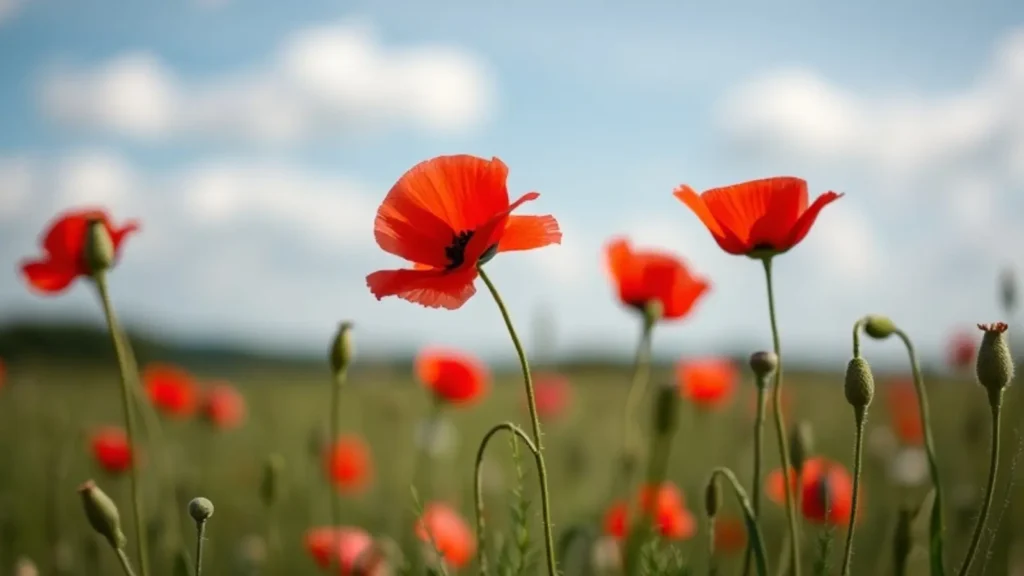
Few flowers carry as much emotional and cultural weight as the poppy. Whether seen blooming across peaceful fields, worn as a remembrance emblem, or appearing in paintings and poetry, the poppy communicates messages that extend far beyond its delicate petals.
Poppy symbolism has evolved over thousands of years, connecting themes of remembrance, sacrifice, sleep, peace, beauty, resilience, hope, and renewal.
The meaning of the poppy changes depending on its color, cultural background, historical context, and personal interpretation. Ancient civilizations viewed it as a symbol of sleep and divine rest, while modern societies often associate red poppies with honoring military sacrifice.
White, yellow, purple, and California poppies each add unique symbolic layers that continue to influence art, literature, spirituality, branding, education, and visual communication today.
Understanding poppy symbolism helps us appreciate how one simple flower can represent both life’s fragility and humanity’s enduring capacity for hope.
Featured Snippet: What Does Poppy Symbolism Mean?
Poppy symbolism represents remembrance, peace, sacrifice, sleep, resilience, hope, and renewal. Across different cultures and historical periods, poppies have symbolized honoring the fallen, spiritual rest, emotional healing, and the beauty of life’s temporary nature. Their meaning varies by color, tradition, and cultural context.
What Is Poppy Symbolism?
Quick Answer
Poppy symbolism refers to the cultural, historical, spiritual, and emotional meanings associated with the poppy flower. While interpretations differ worldwide, the flower commonly represents remembrance, eternal rest, resilience after hardship, peace, dreams, and transformation.
Unlike many flowers with a single dominant meaning, poppies have accumulated diverse symbolic associations over thousands of years.
These meanings arise from:
- Ancient mythology
- Religious traditions
- Historical events
- Natural characteristics
- Artistic representation
- Literary symbolism
- Modern remembrance ceremonies
- Color symbolism
The Origins of Poppy Symbolism
Quick Answer
Poppy symbolism dates back thousands of years to ancient Mediterranean civilizations, where the flower became associated with sleep, dreams, fertility, and divine protection.
Archaeological discoveries reveal poppies appearing in:
- Ancient Egyptian tomb art
- Greek mythology
- Roman religious ceremonies
- Minoan artifacts
- Early medicinal practices
One reason poppies became symbolic is their relationship with sleep. Certain species contain naturally occurring compounds that have long been recognized for their sedative properties. Ancient cultures connected this observable characteristic with peaceful rest, dreams, and the transition between life and death.
As civilizations evolved, the flower accumulated additional meanings instead of replacing earlier ones.
Why Does the Poppy Symbolize Remembrance?
Quick Answer
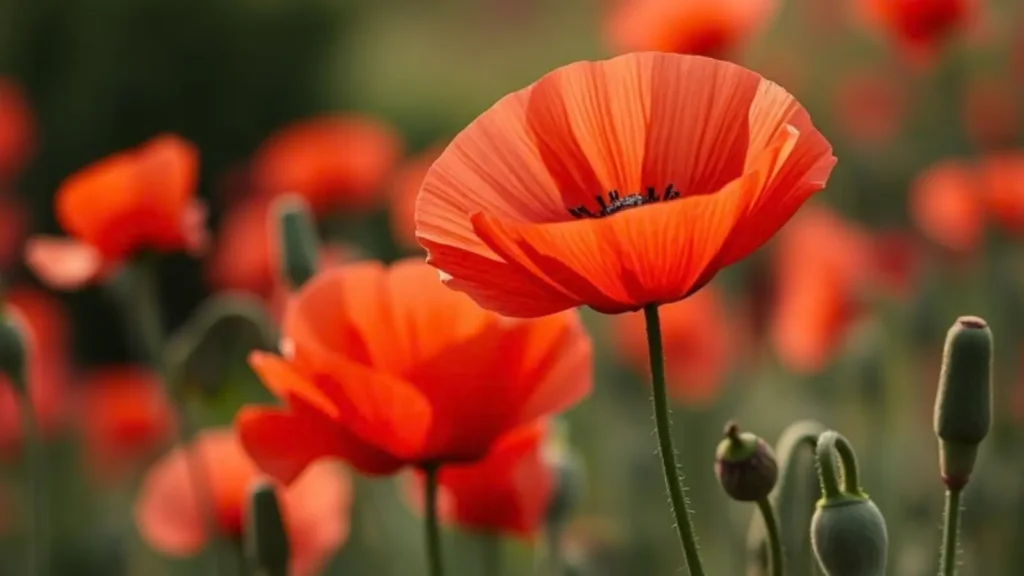
The red poppy became an international symbol of remembrance after World War I because poppies famously bloomed across battlefields disturbed by conflict, inspiring poetry and memorial traditions.
One of the most influential cultural moments came after the publication of In Flanders Fields by John McCrae, which described red poppies growing among soldiers’ graves.
Over time, many countries adopted the red poppy as a visual reminder to:
- Honor military sacrifice
- Remember lives lost in war
- Promote peace
- Support veterans
- Reflect on the human cost of conflict
Today, remembrance poppies remain powerful examples of how natural symbols become woven into national identity and collective memory.
Historical Evolution of Poppy Symbolism
| Historical Period | Symbolic Meaning | Cultural Context |
| Ancient Egypt | Sleep, healing | Burial traditions |
| Ancient Greece | Dreams, fertility | Mythology |
| Roman Empire | Peace, rest | Religious symbolism |
| Medieval Europe | Mortality | Christian reflection |
| World War I | Remembrance | Military sacrifice |
| Modern Era | Peace, resilience, hope | Global cultural symbol |
The symbolism expanded rather than changed completely. Each era added another layer of meaning.
Poppy Symbolism Across Different Cultures
Western Cultures
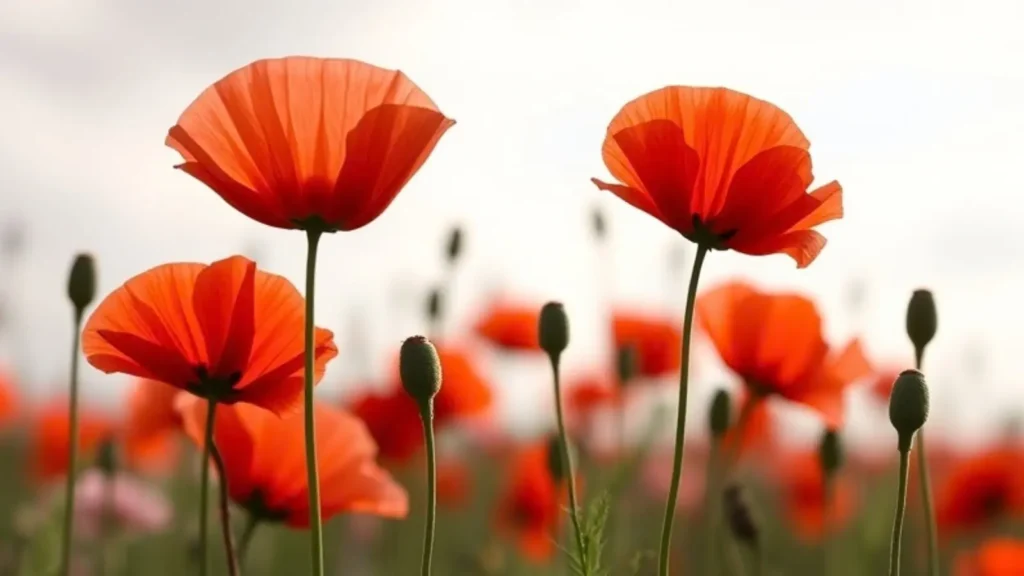
The red poppy most commonly represents:
- Remembrance
- Honor
- Courage
- Sacrifice
- Peace after conflict
Ancient Greek Culture
Greek mythology associated poppies with gods connected to:
- Sleep
- Dreams
- Harvest
- Fertility
The flower represented both rest and life’s natural cycles.
Ancient Egypt
Egyptians often included poppies in ceremonial contexts connected with:
- Eternal life
- Peaceful rest
- Protection after death
East Asian Interpretations
While symbolism varies significantly across East Asia, poppies may represent:
- Beauty
- Impermanence
- Romance
- Reflection
- Emotional depth
Interpretations differ according to local traditions and artistic contexts rather than a single universal meaning.
Indigenous Perspectives
Different Indigenous cultures around the world assign unique meanings to native flowering plants. Because poppies are not universally traditional across Indigenous societies, symbolic interpretations depend on specific regional histories rather than a shared global belief.
The Psychological Meaning of Poppy Symbolism
Quick Answer
Psychologically, poppies often symbolize emotional healing, memory, hope after trauma, and acceptance of life’s temporary nature.
Psychologists studying symbolic communication recognize that flowers often evoke emotional associations shaped by culture and personal experience.
Poppies frequently represent:
- Reflection
- Healing
- Emotional resilience
- Acceptance
- Inner peace
- Quiet strength
Their delicate appearance contrasted with their ability to thrive in disturbed soil reinforces ideas of recovery after hardship.
Expert Tip
Symbols become meaningful through shared cultural understanding rather than universal biological responses. While many people associate poppies with remembrance, individuals may develop deeply personal meanings based on family traditions, memories, or life experiences.
Spiritual Meaning of Poppy Symbolism
Many spiritual traditions interpret flowers as reminders of life’s cycles.
Poppies often symbolize:
- Spiritual peace
- Renewal
- Transformation
- Trust
- Letting go
- Inner reflection
Rather than representing a single religious doctrine, the flower often encourages contemplation of life’s impermanence and the possibility of renewal.
Some contemporary spiritual practices also connect poppies with mindfulness, encouraging people to appreciate the present moment.
Religious Connections of the Poppy
Religious symbolism varies considerably.
In Christianity, flowers often symbolize resurrection, hope, sacrifice, and eternal life. Although the poppy is not among the most prominent biblical flowers, later Christian art sometimes associates it with remembrance and peaceful rest.
In ancient pagan traditions, poppies appeared in rituals connected with fertility, agriculture, and seasonal renewal.
These meanings developed independently across different societies rather than following one universal interpretation.
Color Symbolism of Different Poppies
| Poppy Color | Common Symbolic Meaning |
| Red | Remembrance, sacrifice, courage |
| White | Peace, reconciliation, hope |
| Purple | Honor for animals affected by conflict |
| Yellow | Prosperity, optimism, friendship |
| Orange (California Poppy) | Creativity, vitality, success |
| Pink | Compassion, affection, emotional healing |
Color symbolism often reflects modern cultural conventions and may vary between communities.
Poppy Symbolism in Literature
Authors frequently use poppies to communicate layered emotions without lengthy explanation.
Common literary themes include:
- Memory
- Lost innocence
- Dreams
- Peace
- Beauty
- Mortality
- Renewal
Because readers already recognize many symbolic meanings, writers can create emotional depth with a single floral image.
Poetry especially benefits from poppy symbolism because it naturally combines visual beauty with emotional complexity.
Poppy Symbolism in Art
Throughout history, artists have painted poppies to express:
- Tranquility
- Reflection
- National identity
- Hope
- Nature’s beauty
- Emotional recovery
In landscape painting, fields of poppies often represent abundance and harmony.
In memorial artwork, individual red poppies communicate sacrifice and remembrance with remarkable visual simplicity.
This demonstrates how symbolism strengthens visual communication.
Poppy Symbolism in Dreams
Quick Answer
Dream interpretations are highly personal and are not scientifically established. In many symbolic traditions, dreaming about poppies is associated with peace, healing, reflection, or emotional transition.
Common symbolic interpretations include:
- Recovering from stress
- Letting go of the past
- Seeking emotional balance
- Personal transformation
- Inner calm
Dream symbolism should be understood as cultural or personal interpretation rather than objective prediction.
Did You Know?
A single symbolic flower can hold entirely different meanings depending on historical context. For example, a red poppy may symbolize remembrance in one setting while representing beauty or sleep in another.
Poppy Symbolism in Branding and Design
Designers often choose poppy imagery because it communicates strong emotional messages.
Brands may use poppies to express:
- Compassion
- Authenticity
- Heritage
- Hope
- Community
- Wellness
- Emotional connection
Visual communication experts understand that floral symbolism can influence audience perception without relying on lengthy explanations.
Practical Applications of Poppy Symbolism
Understanding poppy symbolism can improve communication across many fields.
Education
Teachers use floral symbolism when explaining:
- History
- Literature
- Cultural studies
- Art appreciation
Marketing
Brands incorporate symbolic flowers into:
- Logos
- Packaging
- Campaigns
- Seasonal promotions
Literature
Writers enrich stories through symbolic imagery.
Memorial Events
Communities use poppies to create respectful remembrance ceremonies.
Personal Growth
Individuals may use symbolic flowers for:
- Journaling
- Meditation
- Reflection
- Mindfulness
Myth vs. Fact
| Myth | Fact |
| Every culture gives poppies the same meaning. | Symbolic meanings vary widely across cultures and historical periods. |
| Red poppies have always represented military remembrance. | This association became especially prominent after World War I. |
| Dreaming about poppies predicts the future. | Dream symbolism is interpretive rather than scientifically predictive. |
| Flower symbolism is fixed forever. | Meanings evolve as societies change. |
Common Mistakes When Interpreting Poppy Symbolism
- Assuming one meaning applies worldwide.
- Ignoring historical context.
- Confusing botanical facts with symbolic beliefs.
- Treating symbolic traditions as scientific evidence.
- Overlooking color differences.
- Forgetting that personal experiences influence interpretation.
Balanced interpretation requires cultural awareness.
Key Insights
- Poppy symbolism combines ancient traditions with modern meanings.
- Historical events significantly shaped contemporary interpretations.
- Colors influence symbolic messages.
- Symbolism changes across societies.
- Personal experiences add unique emotional significance.
- Visual symbols remain powerful tools for communication.
Why Poppy Symbolism Still Matters Today
Modern society communicates increasingly through images rather than lengthy text.
Symbols help people quickly express:
- Identity
- Memory
- Compassion
- Peace
- Cultural heritage
- Shared values
The poppy remains relevant because it bridges history, emotion, visual communication, education, and collective memory.
Whether appearing in digital media, museums, classrooms, memorials, or artwork, the flower continues helping people communicate complex ideas through a universally recognizable image.
Conclusion
Poppy symbolism has endured because it speaks to experiences shared across generations—memory, resilience, peace, beauty, loss, and renewal. Although its meanings vary by culture, color, and historical context, the flower consistently reminds us that symbols evolve while retaining the emotional power to connect people across time and place.
Understanding poppy symbolism enriches our appreciation of history, literature, art, spirituality, branding, and everyday communication. Rather than offering one fixed interpretation, the poppy invites thoughtful reflection, making it one of the world’s most enduring and meaningful floral symbols.

Isabella Carter explores symbolism in nature, literature, art, and spirituality with engaging and informative research.
