Sharks occupy a fascinating place in the human imagination. They can appear frightening, majestic, intelligent, mysterious, protective, or even sacred depending on the culture and context.
Shark symbolism therefore goes far beyond the familiar image of a dangerous predator. Across maritime traditions, sharks have represented strength, protection, ancestral connection, survival, authority, danger, transformation, and the unknown.
Part of the shark’s symbolic power comes from its physical environment. Sharks inhabit a world humans cannot naturally explore without technology.
The ocean itself has historically represented mystery, depth, danger, fertility, and the boundary between the known and unknown. A shark moving beneath the surface consequently becomes more than an animal: it can function as an image of hidden power.
Modern popular culture has added another layer. Films, television, advertising, sports logos, tattoos, clothing, and digital media frequently use sharks to communicate aggression, confidence, competitiveness, independence, and fearlessness.
Yet this modern interpretation is only one part of a much older and more complicated cultural history.
Featured-Snippet Answer: What does a shark symbolize?
Shark symbolism commonly represents strength, resilience, instinct, courage, danger, independence, protection, and survival. In some Indigenous Pacific traditions, sharks can also represent ancestral guardians or spiritually significant beings. In modern Western culture, they are often associated with aggression, competition, fear, and power, demonstrating how symbolic meaning changes across cultures and historical contexts.
What Does Shark Symbolism Mean?
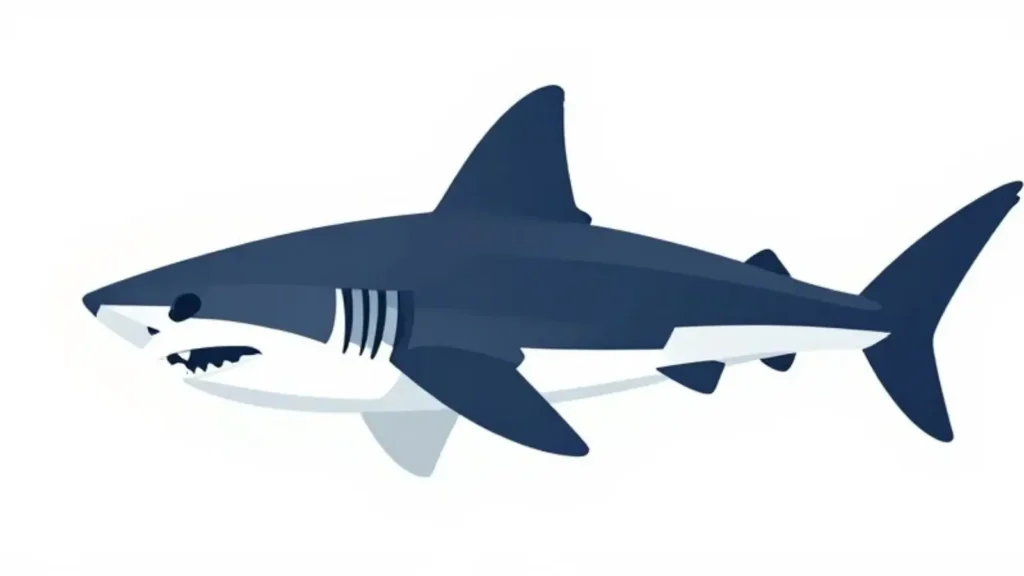
At its broadest level, a shark symbolizes power that operates beneath the surface.
The shark’s streamlined body, powerful movement, predatory abilities, and existence within the largely inaccessible ocean naturally lend themselves to symbolic interpretations involving:
- Strength and physical power
- Survival and adaptability
- Determination and forward movement
- Instinct and intuition
- Fear and danger
- Independence
- Authority and dominance
- Mystery and the unknown
- Protection and guardianship
- Transformation
- Resilience
- Competition and ambition
However, there is no single universal “shark meaning.” Symbolism is created through cultural experience.
A Hawaiian family with a shark-associated ʻaumākua may understand the animal through ancestry and protection. Māori traditions contain stories and sacred guardians associated with sharks and rays. In modern Western entertainment, meanwhile, the shark frequently functions as a visual shorthand for danger.
This contrast is important because symbolism is not simply about what an animal looks like. It is about what humans believe, remember, fear, value, and communicate through that animal.
Shark Symbolism Across Cultures and Traditions
Shark symbolism becomes particularly interesting when different societies are compared.
| Cultural context | Common symbolic associations | Important context |
| Hawaiian traditions | Ancestry, guardianship, protection, spiritual connection | Some sharks can be associated with ʻaumākua, or ancestral guardians |
| Māori traditions | Guardianship, sacred places, food, ancestry, mythology | Sharks appear in creation stories and traditions concerning kaitiaki |
| Wider Polynesian contexts | Power, navigation, protection, danger | Meanings vary between islands and communities |
| Modern Western culture | Fear, aggression, competition, danger | Strongly influenced by popular media |
| Contemporary conservation culture | Ecological importance, resilience, marine biodiversity | Challenges older “monster” imagery |
| Branding and sports | Speed, strength, competitiveness, fearlessness | Meaning is deliberately simplified for visual impact |
These differences demonstrate a fundamental principle of cultural anthropology: the same animal can carry dramatically different meanings depending on the relationship a community has with it.
Hawaiian Shark Symbolism
Hawaiian traditions provide one of the clearest examples of shark symbolism extending beyond fear.
In Hawaiian culture, sharks are known as manō, and some families have traditionally regarded particular sharks as ʻaumākua—ancestral or family guardians that can appear in animal form. The Hawaiʻi Department of Land and Natural Resources documents traditions in which sharks could be understood as ancestral beings associated with guidance, protection, and family relationships.
This means that interpreting a shark simply as an “evil predator” would erase an important cultural dimension.
Shark imagery also had practical and artistic importance. Hawaiian traditions used shark teeth for tools and weapons, while shark skin could be used for drum membranes and other purposes. Shark-tooth motifs appeared in kapa and other cultural objects, with the fierce qualities of the shark sometimes associated with the wearer.
Māori Shark Symbolism
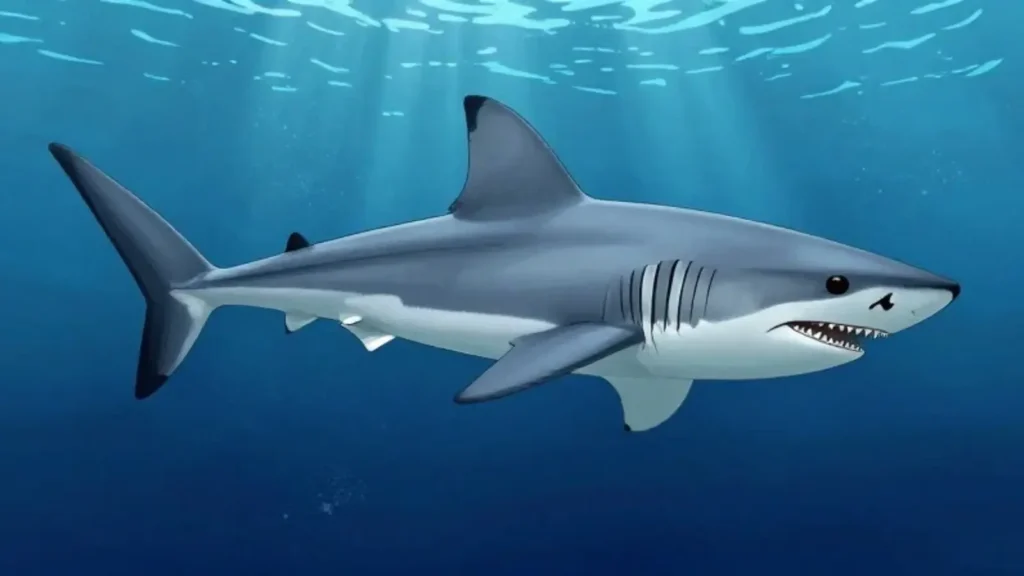
Māori traditions likewise demonstrate that sharks cannot be reduced to a single meaning.
New Zealand’s Department of Conservation notes that sharks were important seasonal foods for Māori communities, while shark teeth were used for jewelry and other objects. Sharks also appear in Māori creation stories and legends, and sharks or rays could take the form of kaitiaki, or guardians, associated with important or sacred places.
This combination of practical, ecological, mythological, and spiritual relationships is revealing. A culturally meaningful animal does not have to be separated into “sacred” versus “ordinary.” It can participate in food systems, craftsmanship, storytelling, environmental knowledge, and spirituality simultaneously.
The Historical Evolution of Shark Symbolism
Shark symbolism developed alongside humanity’s relationship with the sea.
For coastal societies, sharks were not abstract creatures encountered only in stories. They were part of the actual marine environment. People fished, traveled, hunted, traded, and lived near waters inhabited by sharks. This direct relationship could produce respect, caution, reverence, fear, or practical knowledge.
Shark teeth were particularly powerful symbols because they are visually distinctive, durable, and physically sharp. They could become ornaments, tools, weapons, or artistic motifs. In Hawaii, for example, shark teeth were incorporated into traditional objects and weaponry.
Over time, however, symbolic meaning shifted.
In many modern societies, the shark became increasingly associated with the idea of the “killer predator.” The transformation was amplified by newspapers, popular entertainment, advertising, documentaries, and especially cinema.
The Influence of Jaws
The 1975 film Jaws became one of the most influential pieces of modern shark imagery.
The cultural story surrounding sharks had already been shaped by real attacks and sensational reporting. The 1916 New Jersey shark attacks, for example, generated intense public fear and helped establish a lasting cultural association between sharks and terror.
Jaws transformed that fear into a globally recognizable cinematic symbol. The shark became an almost invisible enemy: something beneath the water that could not easily be seen until it attacked.
That symbolism is psychologically powerful because it combines three fears:
- The unknown
- Loss of control
- An unseen threat approaching from below
Modern research and public education have challenged many exaggerated portrayals of sharks. Smithsonian reporting on the legacy of Jaws notes that the film contributed to misconceptions, including the idea that sharks intentionally seek humans as prey.
The result is an important lesson in visual culture: stories can reshape the symbolic meaning of an animal even when the symbolic image does not accurately represent its biology.
Shark Symbolism in Psychology
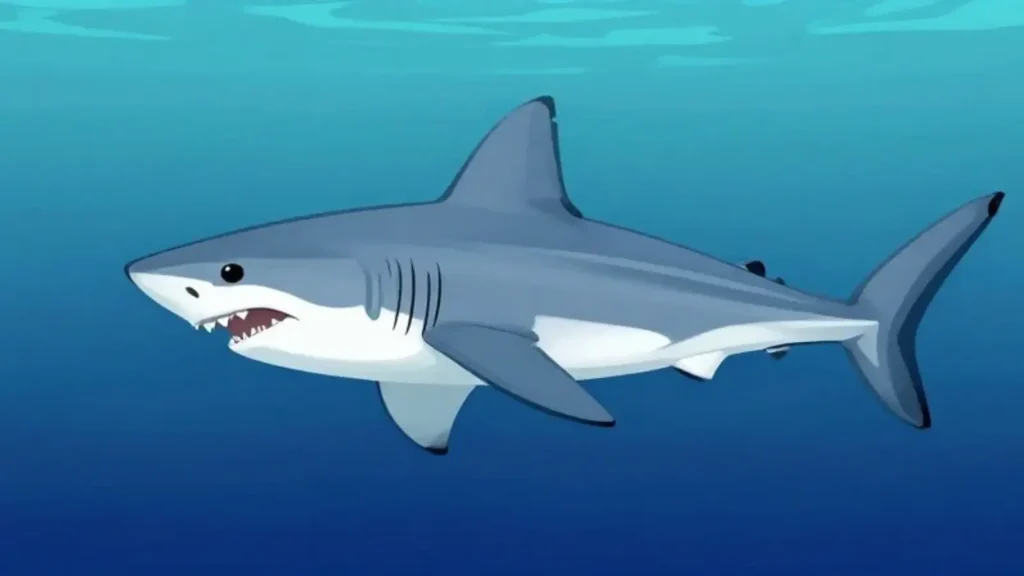
From a psychological perspective, sharks often represent perceived threat, instinct, ambition, and hidden forces.
A shark beneath dark water is an especially potent visual metaphor because viewers cannot see the complete animal. The visible fin or silhouette can therefore imply something much larger and more dangerous.
Shark as a Symbol of Fear
A shark can symbolize a threat that is:
- Difficult to predict
- Difficult to control
- Hidden beneath the surface
- Powerful relative to the individual
- Associated with unfamiliar territory
This makes shark imagery useful in storytelling when a creator wants to externalize anxiety.
Shark as a Symbol of Confidence
The same characteristics can be interpreted positively.
A shark’s continuous movement and efficient physical design can metaphorically suggest:
- Determination
- Momentum
- Focus
- Independence
- Competitive strength
- Refusal to surrender
This explains why shark imagery frequently appears in sports, motivational culture, and business branding.
Expert Tip
When interpreting a shark in a dream, tattoo, artwork, or story, do not begin with a fixed dictionary definition. Ask what the shark is doing, where it appears, how you feel about it, and what it represents in your personal or cultural context.
Spiritual Meaning of Shark Symbolism
In spiritual interpretations, the shark can represent the ability to move through emotionally deep or uncertain environments without losing direction.
Common spiritual interpretations include:
Protection
A shark can symbolize a powerful guardian, especially in traditions where sharks have ancestral or protective associations.
Instinct
Because sharks are commonly imagined as highly instinctive animals, shark symbolism is sometimes connected with trusting one’s internal awareness.
Transformation
The ocean often symbolizes emotional depth and the unconscious. A shark emerging from the water can therefore represent something powerful becoming consciously visible.
Resilience
The shark’s long evolutionary history is frequently used metaphorically to communicate endurance and survival. However, this should be treated as symbolic interpretation rather than a literal spiritual fact.
Important Distinction
Spiritual symbolism is not scientific evidence. A statement such as “sharks spiritually guarantee protection” is a belief or interpretive claim, not an established scientific finding.
Religious and Mythological Connections
There is no single universal religion in which the shark carries one standardized meaning.
Instead, sharks appear within particular mythologies, oral traditions, ancestral systems, and regional belief structures.
Hawaiian traditions are particularly notable because shark-associated ʻaumākua can represent an ongoing relationship between ancestors and living family members. Hawaiian cultural resources document stories in which sharks appear as spiritually meaningful beings rather than merely dangerous animals.
Māori traditions similarly include sharks in creation narratives and guardian relationships.
These traditions should not be blended together into a single generic concept of “Polynesian shark mythology.” Each community has its own language, history, genealogy, sacred concepts, and interpretations.
Common Mistake
Common mistake: Treating every shark-related Indigenous tradition as if it means the same thing.
Better approach: Identify the specific community, language, historical period, and cultural context before assigning symbolic meaning.
Shark Symbolism in Art and Iconography
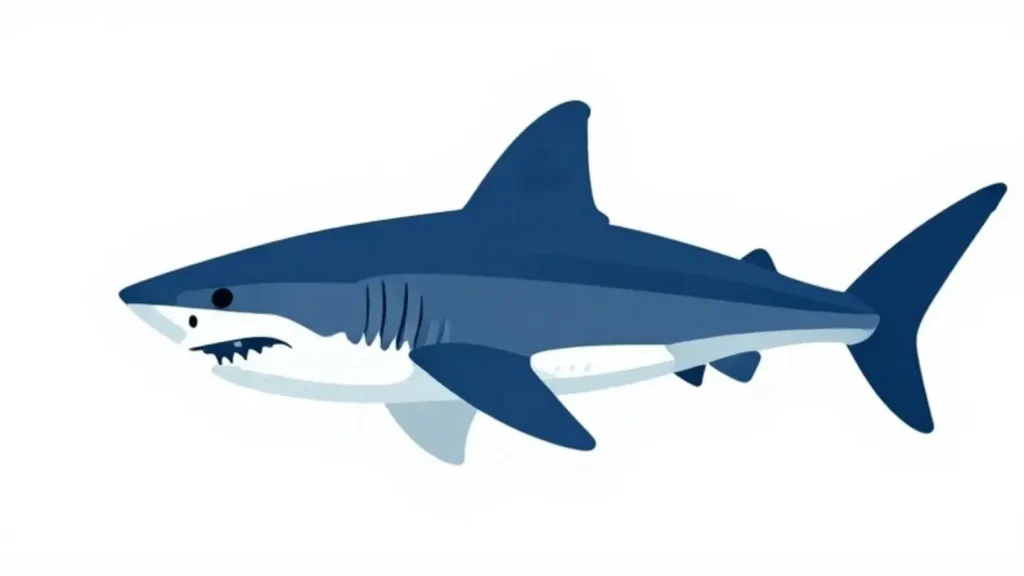
Artists use sharks because their silhouette is instantly recognizable.
A shark can be depicted realistically or reduced to a few visual elements:
- Triangular dorsal fin
- Streamlined body
- Sharp teeth
- Open jaws
- Dark ocean background
- Circular movement
- Tooth patterns
These elements function as iconographic shortcuts.
A realistic shark can communicate natural history or conservation. A shark with exaggerated teeth can communicate horror. A stylized shark with sharp geometric lines can communicate speed and aggression.
This is a basic principle of semiotics: an image becomes meaningful because audiences learn to associate particular visual forms with particular ideas.
Shark Symbolism in Literature and Storytelling
In literature, the shark can serve several narrative functions.
The Shark as the Antagonist
The shark may embody an external threat that forces characters to confront fear.
The Shark as Nature
A shark can represent nature’s independence from human expectations. It does not need to be “evil” to be dangerous.
The Shark as the Unknown
Because much of its environment is invisible to humans, the shark can represent what cannot be understood or controlled.
The Shark as Human Ambition
In contemporary language, “shark” can describe a highly competitive person, especially someone perceived as aggressive or relentless in business or negotiation.
This metaphor demonstrates how animal symbolism can migrate from folklore into everyday vocabulary.
Shark Symbolism in Branding and Design
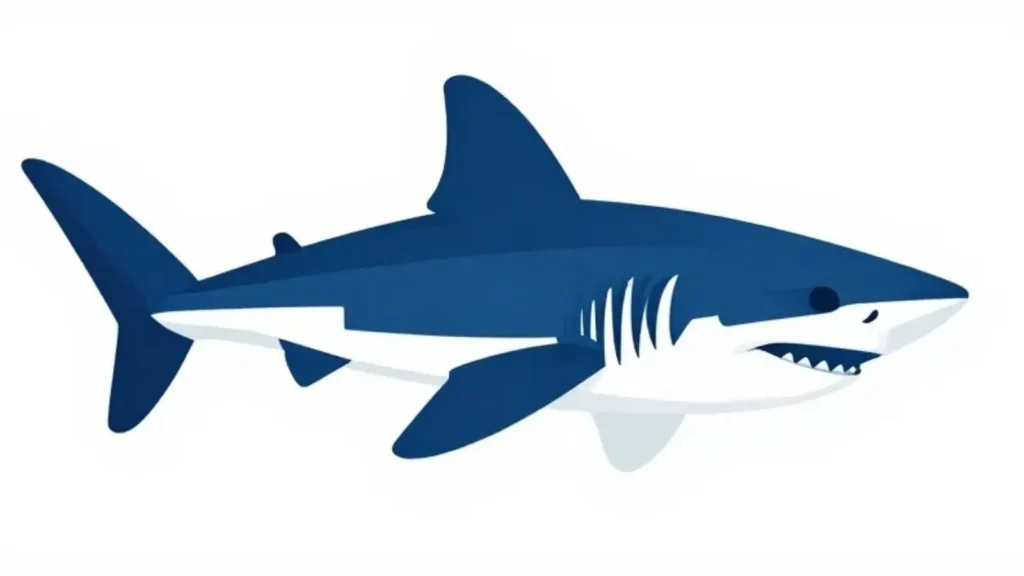
Few animal symbols communicate competitive energy as quickly as a shark.
A shark logo may suggest:
- Speed
- Strength
- Fearlessness
- Precision
- Aggression
- Competition
- Leadership
- Adaptability
That makes shark imagery attractive for sports teams, fitness businesses, gaming brands, outdoor companies, maritime organizations, and performance-oriented products.
But the same symbolism can create problems.
A shark logo with huge teeth, dark colors, and an attacking posture may communicate aggression more strongly than reliability. A simplified shark silhouette can instead communicate movement and confidence without appearing hostile.
Color Psychology and Shark Imagery
Color changes the symbolic message.
| Shark design | Likely visual impression |
| Blue shark | Ocean, trust, calm strength, nature |
| Black shark | Power, mystery, authority |
| Red shark | Aggression, urgency, intensity |
| Silver/gray shark | Technology, precision, realism |
| White shark | Cleanliness, starkness, dramatic contrast |
| Multicolored shark | Youthfulness, entertainment, creativity |
These are design associations rather than universal psychological laws. Audience, culture, typography, composition, and surrounding imagery all influence interpretation.
Shark Symbolism in Tattoos and Personal Expression
Shark tattoos can carry highly personal meanings.
Someone might choose a shark tattoo to represent:
- Survival after adversity
- Courage
- Independence
- Ocean identity
- Family heritage
- Strength
- Fearlessness
- Personal transformation
- Respect for marine life
A shark tooth tattoo can emphasize a different visual idea from a full shark. Teeth focus attention on defense, sharpness, survival, and physical power.
The most meaningful interpretation, however, comes from the person’s own story rather than a universal tattoo dictionary.
Myth vs. Fact: Shark Symbolism
| Myth | Fact |
| Sharks universally symbolize evil | Shark symbolism varies considerably by culture |
| Sharks are always symbols of death | They can also represent protection, ancestry, strength, or ecological importance |
| All Pacific cultures interpret sharks identically | Individual cultures and communities have distinct traditions |
| Jaws created all shark fear | Fear and sensationalism existed long before the film |
| Shark symbolism is scientific fact | Symbolism is cultural, psychological, artistic, or spiritual interpretation |
| A shark logo automatically means aggression | Design style and context determine the message |
The most important fact is that symbolism is interpretive. It should not be presented as though every meaning has been scientifically proven.
Did You Know? Shark Symbolism Has a Double Identity
One of the most interesting features of shark symbolism is its contradiction.
The shark can represent protector and threat at the same time.
Hawaiian cultural traditions provide a particularly strong example: some shark-associated ʻaumākua are understood as ancestral guardians, while sharks themselves can obviously also be powerful marine predators.
This duality is valuable in symbolism because many powerful symbols contain opposites.
The shark can therefore represent:
Fear + courage
Danger + protection
Predation + survival
Mystery + knowledge
Independence + ecological interdependence
That complexity is precisely what makes shark imagery so effective in storytelling and design.
Practical Applications of Shark Symbolism
Understanding shark symbolism can be useful beyond mythology.
For Writers
Use sharks to represent hidden threats, ambition, nature, instinct, or uncontrollable forces.
For Artists
Choose realistic versus exaggerated shark imagery according to the intended emotional response.
For Designers
Use a shark silhouette when you want to communicate movement, strength, or competitive energy.
For Educators
Shark symbolism can provide an engaging way to teach students about mythology, anthropology, ecology, semiotics, and cultural interpretation.
For Marketers
A shark can position a brand as bold and competitive, but excessive aggression may alienate audiences who associate sharks primarily with fear.
For Conservation Communication
Reframing sharks from “monsters” to ecologically important marine predators can help audiences distinguish cultural fear from biological reality.
Why Shark Symbolism Still Matters Today
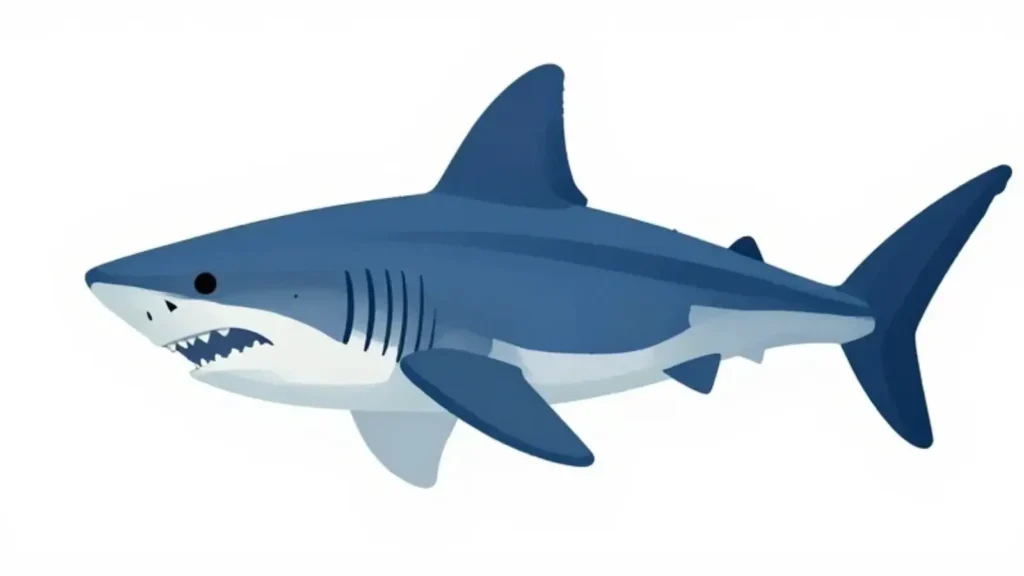
Shark symbolism remains powerful because modern humans continue to use animals as visual and conceptual shorthand.
A shark emoji, tattoo, sports logo, movie poster, children’s illustration, environmental campaign, or corporate graphic can communicate an idea within seconds.
Digital communication has made this even more important. People increasingly encounter symbols before reading detailed explanations. A recognizable image can establish an emotional frame immediately.
At the same time, modern conservation movements challenge the traditional villainous shark image. The continuing cultural conversation surrounding Jaws demonstrates how entertainment can influence public perception for decades.
The contemporary shark therefore exists between two symbolic worlds:
The shark as monster and the shark as living ecosystem participant.
Understanding both helps create more responsible communication.
Key Insights About Shark Symbolism
- Shark symbolism is culturally variable.
- Strength and survival are among its most common modern associations.
- Some Hawaiian traditions connect sharks with ancestral guardianship.
- Māori traditions include sharks within mythology and guardian relationships.
- Western popular culture strongly associates sharks with danger and fear.
- Jaws significantly reinforced the modern shark-as-monster image.
- Shark imagery is highly effective in branding because the silhouette is immediately recognizable.
- A shark can symbolize both threat and protection.
- Spiritual interpretations should be distinguished from scientific evidence.
- Context determines whether shark imagery feels powerful, frightening, protective, mysterious, or competitive.
Frequently Asked Questions About Shark Symbolism
1. What is the main symbolism of a shark?
A shark commonly symbolizes strength, survival, instinct, courage, independence, danger, and power. Its meaning depends heavily on cultural and personal context. In some Pacific traditions, sharks can have ancestral or guardian associations, while contemporary Western media frequently uses sharks as symbols of fear and aggression.
2. What does a shark symbolize spiritually?
Spiritually, sharks may symbolize protection, instinct, resilience, courage, transformation, and movement through uncertainty. Some cultural traditions give sharks much more specific spiritual meanings, including ancestral guardianship. These interpretations are matters of cultural belief and symbolism rather than scientifically established properties of sharks.
3. Why are sharks symbols of power?
Sharks are often associated with power because of their physical strength, predatory role, distinctive teeth, speed, and ability to navigate the ocean. Symbolically, these characteristics translate into ideas such as confidence, dominance, resilience, determination, and competitive ability.
4. What does a shark represent in Hawaiian culture?
In some Hawaiian traditions, sharks can be associated with ʻaumākua, ancestral or family guardians. Hawaiian cultural resources describe relationships in which particular sharks may be understood as spiritually significant relatives or protectors. Shark teeth and shark-derived materials also had important practical and cultural uses.
5. What does a shark symbolize in a tattoo?
A shark tattoo can represent survival, strength, independence, courage, ocean identity, family heritage, resilience, or fearlessness. The meaning depends on the person, species, posture, surrounding imagery, and cultural context. A shark tooth design may emphasize strength or defense more strongly than a complete shark image.
6. Why do sharks symbolize fear in modern culture?
Modern shark fear has been influenced by real encounters, sensational reporting, popular entertainment, and especially films such as Jaws. The 1975 film helped cement the shark as a cultural symbol of an unseen and dangerous predator, although scientists and educators have repeatedly challenged exaggerated perceptions of shark behavior.
Final Takeaways
Shark symbolism is far richer than the familiar image of a frightening predator.
Across different contexts, the shark can represent strength, survival, instinct, independence, danger, protection, ancestry, mystery, courage, competition, and transformation. Hawaiian and Māori traditions demonstrate that sharks can carry profound cultural and spiritual significance, while modern Western entertainment has frequently transformed them into symbols of fear and aggression.
The deeper lesson is that animals do not possess one fixed symbolic meaning. Humans create meaning through relationships, stories, environments, belief systems, artistic conventions, language, and historical experience.
That is why shark symbolism continues to matter in anthropology, mythology, psychology, visual communication, branding, literature, film, education, conservation, fashion, tattoos, digital culture, and everyday language.
The shark’s greatest symbolic strength may ultimately be its duality: it can be both feared and respected, predator and protector, mystery and reality, individual power and part of a much larger ecosystem.

Lucas Whitmore reveals the hidden messages behind symbols, signs, and traditions through detailed symbolism guides.
