Stories have always been more than collections of words. Throughout human history, writers have used objects, colors, places, characters, and actions to communicate ideas that go beyond their literal meanings.
A simple rose can represent love, a journey can represent personal growth, and darkness can suggest fear, uncertainty, or transformation.
This deeper layer of meaning is created through symbolism in literature, one of the most powerful tools writers use to connect imagination with human experience.
Symbolism allows authors to express complex emotions, philosophical ideas, cultural beliefs, and social criticism without directly explaining everything. It invites readers to interpret, question, and discover meaning beneath the surface of a story
Symbolism in literature is the use of objects, characters, settings, colors, or actions to represent deeper meanings beyond their literal purpose.
Writers use symbols to express emotions, themes, beliefs, and complex ideas, allowing readers to explore hidden messages and multiple interpretations within stories, poems, novels, and other literary works.
What Does Symbolism in Literature Mean?

Symbolism in literature refers to the practice of using something concrete to represent something abstract. A symbol may be a physical object, an event, a character, an image, or even a recurring idea that carries a meaning beyond itself.
For example:
| Literary Symbol | Literal Meaning | Symbolic Meaning |
| Dove | A bird | Peace, hope, spirituality |
| Storm | Weather event | Conflict, emotional struggle, change |
| Road | A path | Life journey, choices, destiny |
| Mirror | Reflective surface | Identity, self-discovery, truth |
| Fire | Burning element | Destruction, passion, renewal |
Unlike simple metaphors or comparisons, symbols often develop richer meanings throughout an entire work. Their interpretation depends on context, culture, historical background, and the reader’s own experiences.
Why Is Symbolism Important in Literature?
Symbolism gives literature emotional depth and intellectual complexity. Without symbolism, many stories would communicate only direct information. Symbols allow writers to explore universal human experiences such as love, death, freedom, identity, morality, and hope.
Key Reasons Symbolism Matters
1. It Creates Deeper Meaning
A symbol transforms an ordinary object into something meaningful. A locked door in a novel may represent isolation, hidden secrets, or missed opportunities rather than simply being a physical barrier.
2. It Encourages Reader Interpretation
Symbolism makes readers active participants. Instead of receiving a single message, readers analyze clues, patterns, and connections.
3. It Connects Personal and Universal Experiences
Symbols often represent emotions shared across humanity. Birth, darkness, seasons, journeys, and nature appear frequently because they reflect common human experiences.
4. It Makes Literature Memorable
Symbolic images often remain in readers’ minds long after the story ends because they represent powerful ideas rather than temporary events.
Historical Evolution of Symbolism in Literature

Symbolism has existed since ancient storytelling traditions. Early civilizations used symbolic images in myths, religious texts, oral traditions, and artistic expressions.
Ancient Symbolic Traditions
Ancient cultures frequently used symbols to explain mysteries of existence. Animals, natural elements, and celestial objects often represented spiritual or philosophical ideas.
For example:
- The sun commonly represented life, power, and creation.
- The serpent could symbolize wisdom, transformation, danger, or rebirth depending on cultural context.
- The tree often represented growth, connection, and the relationship between earth and sky.
Myths from civilizations such as Ancient Greece, Egypt, India, and Mesopotamia demonstrate how symbolism helped societies explain human nature and the universe.
Symbolism During the Medieval Period
Medieval literature was strongly influenced by religion and moral teachings. Symbols often carried spiritual meanings.
Common examples include:
- Light representing divine truth
- Darkness representing ignorance or evil
- Gardens representing paradise or purity
- Animals representing human virtues or weaknesses
Writers used symbolism to communicate religious lessons and philosophical ideas.
Symbolism in Modern Literature

During the nineteenth and twentieth centuries, symbolism became a major literary movement. Writers increasingly used indirect expression to explore psychology, dreams, emotions, and social realities.
Modern authors used symbols to discuss:
- Human identity
- Political oppression
- Social inequality
- Psychological conflict
- Existential questions
Symbolism became especially important in poetry, novels, drama, and experimental literature.
Types of Symbolism in Literature
Symbolism appears in many forms depending on the writer’s purpose and creative style.
1. Object Symbolism
Objects often represent ideas beyond their physical purpose.
Examples:
- A broken clock may symbolize lost time or regret.
- A candle may symbolize hope or knowledge.
- A chain may represent oppression or limitation.
2. Color Symbolism
Colors have strong emotional and cultural associations.
| Color | Common Symbolic Meanings |
| White | Purity, innocence, peace |
| Black | Mystery, death, power, mourning |
| Red | Passion, danger, love, violence |
| Green | Nature, growth, renewal |
| Blue | Calmness, spirituality, sadness |
However, color meanings are not universal. Cultural background influences interpretation.
3. Nature Symbolism

Nature is one of the oldest sources of literary symbolism.
Examples:
- Winter may represent loneliness or endings.
- Spring may represent rebirth and new beginnings.
- Rivers may symbolize change and the passage of time.
- Mountains may symbolize challenges or spiritual achievement.
4. Character Symbolism
Characters can represent larger concepts.
A character may symbolize:
- Freedom
- Innocence
- Corruption
- Justice
- Human ambition
Some fictional figures become cultural symbols because their meanings extend beyond their original stories.
5. Setting Symbolism
Locations often communicate emotional or thematic meanings.
Examples:
- A prison may symbolize physical or psychological restriction.
- A forest may represent mystery, danger, or discovery.
- A home may symbolize safety, identity, or belonging.
Cultural Interpretations of Symbolism in Literature
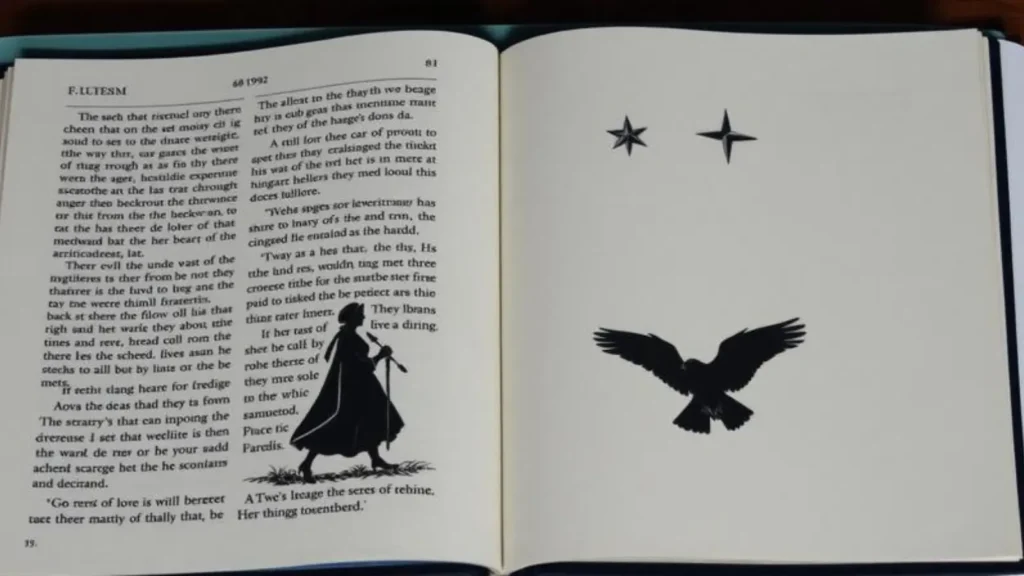
Symbols do not have identical meanings everywhere. A symbol’s interpretation depends on cultural traditions, historical events, religion, and social values.
| Symbol | Western Interpretations | Other Cultural Interpretations |
| Lotus | Beauty, spiritual growth | Enlightenment, purity, rebirth in many Asian traditions |
| Snake | Danger or temptation in some contexts | Wisdom, healing, transformation in other traditions |
| Owl | Wisdom and knowledge | Different meanings depending on folklore and region |
| Black Color | Mourning or mystery in many societies | May represent strength, elegance, or protection elsewhere |
Understanding cultural symbolism helps readers avoid assuming that one interpretation applies universally.
Psychological Meaning of Symbols in Literature
Symbolism is closely connected with human psychology because people naturally use images and associations to understand experiences.
Psychologists and literary scholars have explored how symbols reflect:
- Personal memories
- Emotional responses
- Collective cultural ideas
- Human fears and desires
A recurring symbol in a story may reveal a character’s inner conflict. For example, repeated images of water may represent emotional change, unconscious thoughts, or transformation.
Expert Tip
When analyzing symbolism, do not ask only “What does this symbol mean?” Ask:
“How does this symbol function within the story, and how does it connect to the characters, themes, and historical context?”
Symbolism, Semiotics, and Human Communication
Symbolism connects literature with semiotics, the study of signs and meanings. Humans constantly interpret symbols in everyday life.
Examples include:
- National flags representing identity
- Logos representing brands
- Religious symbols representing beliefs
- Emojis representing emotions in digital communication
Literature uses the same human ability to interpret signs but transforms it into artistic expression.
Symbolism in Religion, Mythology, and Spiritual Traditions

Religious and spiritual traditions have deeply influenced literary symbolism.
Common symbolic themes include:
- Light representing spiritual awakening
- Water representing cleansing and renewal
- Death representing transformation
- Journeys representing personal growth
Many literary works borrow imagery from religious stories, mythology, and folklore to explore questions about morality, purpose, and existence.
Symbolism in Art, Branding, and Modern Culture
Symbolism is not limited to books. It influences modern communication, design, advertising, and branding.
Companies use symbols to communicate identity quickly.
Examples:
- Colors influence brand personality.
- Logos create emotional associations.
- Visual imagery communicates values.
The same principles that make literary symbols powerful also make visual symbols effective in marketing and media.
Practical Applications of Symbolism Today
Education
Teachers use symbolism analysis to develop critical thinking and interpretation skills.
Writing
Authors use symbols to create emotional connections and richer narratives.
Film and Media
Directors use visual symbols to communicate themes without dialogue.
Branding
Businesses use symbolic design elements to create recognition and trust.
Personal Communication
People use symbolic images, gifts, and gestures to express feelings.
Common Mistakes When Understanding Literary Symbols
Mistake 1: Assuming Every Detail Is a Symbol
Not every object in a story has hidden meaning. Sometimes a door is simply a door.
Mistake 2: Ignoring Historical Context
A symbol’s meaning changes depending on the time period and culture.
Mistake 3: Looking for Only One Meaning
Strong symbols often have multiple interpretations.
Mistake 4: Separating Symbols From the Story
Symbols gain meaning through their relationship with characters, themes, and events.
Myth vs. Fact: Symbolism in Literature
| Myth | Fact |
| Every symbol has one fixed meaning | Symbols often have multiple interpretations |
| Writers always intentionally create every symbol | Some meanings may emerge through reader interpretation |
| Symbolism is only used in poetry | Symbolism appears in novels, films, drama, and everyday communication |
| Symbols are always hidden | Many symbols are clearly connected to themes |
Key Insights About Symbolism in Literature
- Symbolism transforms ordinary elements into meaningful ideas.
- Cultural background strongly influences interpretation.
- Symbols connect literature with psychology, history, religion, and art.
- Effective symbolism creates emotional and intellectual engagement.
- Readers understand symbols best by considering context.
Conclusion: The Continuing Power of Symbolism in Literature
Symbolism in literature remains one of the most influential methods of storytelling because it reflects how humans naturally search for meaning.
Through symbols, writers communicate emotions, cultural values, philosophical questions, and complex experiences in ways that reach beyond literal language.
From ancient myths to modern novels, symbols have helped societies explore identity, morality, love, conflict, and transformation.
Their meanings may change across cultures and generations, but their ability to connect human imagination with deeper understanding remains powerful.
Learning how symbolism works allows readers to appreciate literature more fully while also recognizing the symbolic language present in art, communication, branding, religion, and everyday life.

Lucas Whitmore reveals the hidden messages behind symbols, signs, and traditions through detailed symbolism guides.
