
Tulips are among the world’s most beloved flowers, admired for their elegant shape, vibrant colors, and rich symbolic meanings.
Beyond their beauty, tulip symbolism represents love, renewal, hope, prosperity, elegance, forgiveness, and emotional expression.
Across centuries and cultures, tulips have inspired artists, poets, designers, gardeners, and storytellers, becoming powerful symbols that communicate feelings words sometimes cannot express.
Whether appearing in spring gardens, wedding bouquets, paintings, literature, or modern branding, tulips continue to symbolize optimism and fresh beginnings.
Their meanings, however, often change depending on color, cultural traditions, historical context, and personal interpretation.
Featured Snippet: What Does Tulip Symbolism Mean?
Tulip symbolism generally represents perfect love, renewal, hope, prosperity, and new beginnings. Different tulip colors carry unique meanings, such as red for deep love, yellow for happiness, white for forgiveness, and purple for royalty. Across cultures, tulips symbolize beauty, emotional growth, spring, and life’s continual renewal.
Understanding Tulip Symbolism
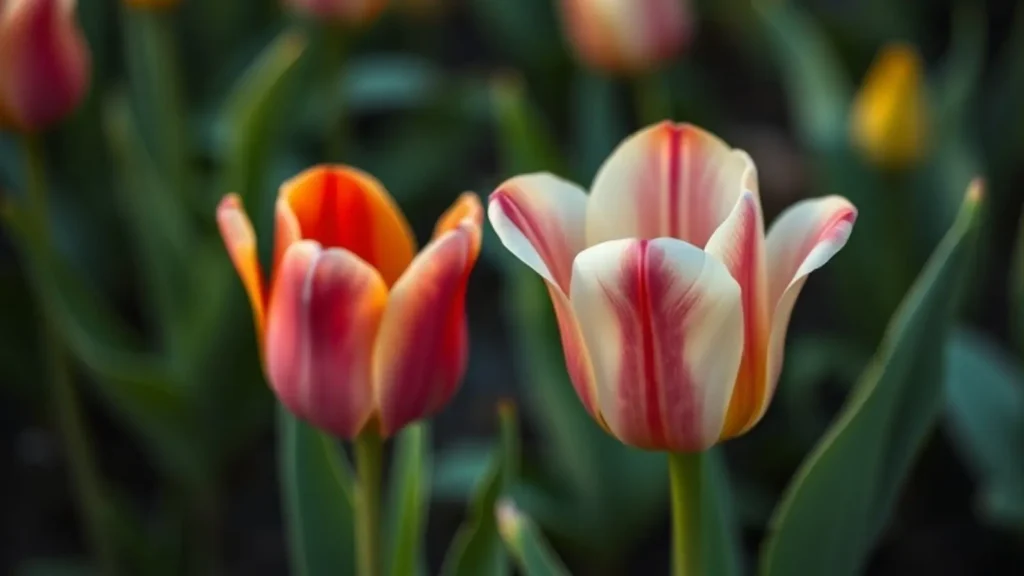
Quick Answer
Tulips symbolize more than attractive flowers. They communicate emotions, values, and cultural beliefs that have evolved over centuries.
At their core, tulips often represent:
- Perfect love
- Renewal and rebirth
- Hope
- Happiness
- Prosperity
- Grace
- Forgiveness
- Beauty
- Elegance
- Positive transformation
Unlike many flowers associated with a single meaning, tulips possess layered symbolism influenced by history, geography, religion, literature, and modern psychology.
The Historical Origins of Tulip Symbolism
Ancient Beginnings
Although many associate tulips with the Netherlands, the flower actually originated across the mountainous regions of Central Asia. Wild tulips grew naturally in areas that today include Kazakhstan, Kyrgyzstan, Uzbekistan, and surrounding regions.
Nomadic cultures admired their resilience and seasonal return, associating them with endurance and nature’s renewal.
Tulips in the Ottoman Empire
Tulips became highly valued during the Ottoman Empire, where they symbolized:
- Paradise
- Divine beauty
- Wealth
- Nobility
- Harmony
- Spiritual perfection
Ottoman gardens featured elaborate tulip displays, while artists incorporated tulip motifs into ceramics, textiles, architecture, manuscripts, and decorative arts.
The flower eventually became an important cultural emblem representing refinement and sophistication.
Tulip Mania in Europe
During the 17th century, tulips reached the Netherlands and sparked the famous “Tulip Mania.”
Rare bulbs became extraordinarily valuable, turning tulips into symbols of:
- Luxury
- Wealth
- Status
- Economic ambition
- Human desire
Although often remembered as an economic bubble, Tulip Mania also strengthened the flower’s association with rarity, prestige, and beauty.
Why Tulips Symbolize Spring and Renewal
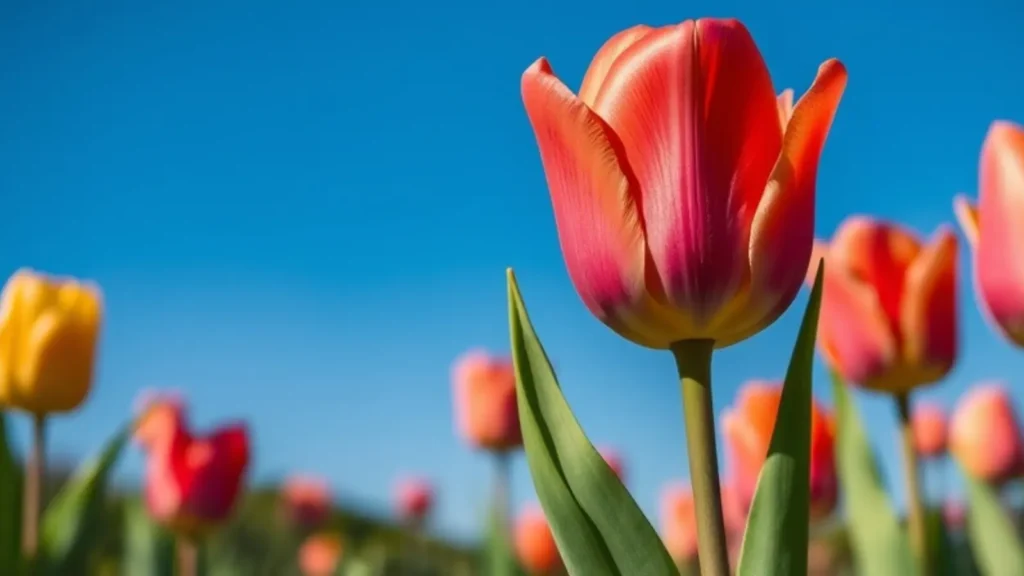
Direct Answer
Tulips bloom after winter, making them universal symbols of renewal, hope, and fresh beginnings.
Their annual emergence reminds people that:
- Difficult seasons eventually pass.
- Growth follows hardship.
- Nature continually renews itself.
- Change creates opportunity.
This natural cycle explains why tulips appear frequently during:
- Easter celebrations
- Spring festivals
- Graduation ceremonies
- New home gifts
- Business openings
- Weddings
Tulip Color Symbolism
| Tulip Color | Primary Symbolism | Common Uses |
| Red | Deep love, passion, romance | Valentine’s Day, anniversaries |
| Pink | Affection, admiration, friendship | Birthdays, appreciation |
| Yellow | Joy, sunshine, optimism | Congratulations, celebrations |
| White | Forgiveness, peace, remembrance | Sympathy, reconciliation |
| Purple | Royalty, dignity, luxury | Formal occasions |
| Orange | Energy, enthusiasm, confidence | Motivation, celebrations |
| Black (deep purple varieties) | Mystery, strength, uniqueness | Artistic symbolism |
| Multicolored | Diversity, individuality, creativity | Decorative arrangements |
Red Tulip Symbolism
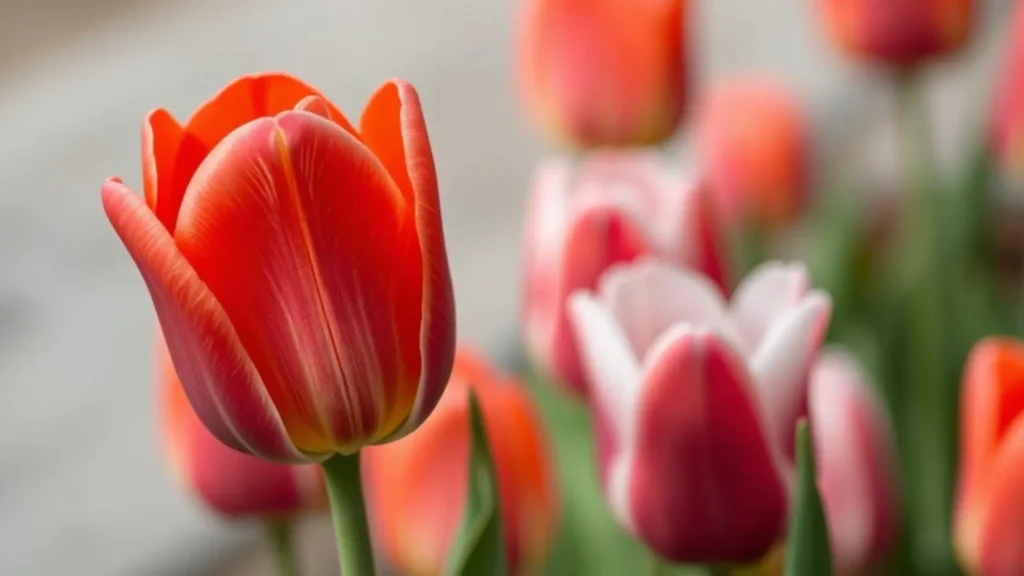
Red tulips traditionally represent perfect love.
Unlike red roses, which often symbolize passionate romance, red tulips frequently express:
- Lasting commitment
- Deep emotional connection
- Honest affection
- Romantic devotion
Many cultures view red tulips as symbols of sincere rather than dramatic love.
Yellow Tulip Symbolism
Yellow tulips once symbolized unrequited love in some European traditions.
Today, however, their meaning has shifted considerably.
Modern interpretations emphasize:
- Happiness
- Optimism
- Friendship
- Positivity
- Encouragement
- Success
Their bright appearance naturally evokes sunshine and cheerful emotions.
White Tulip Symbolism
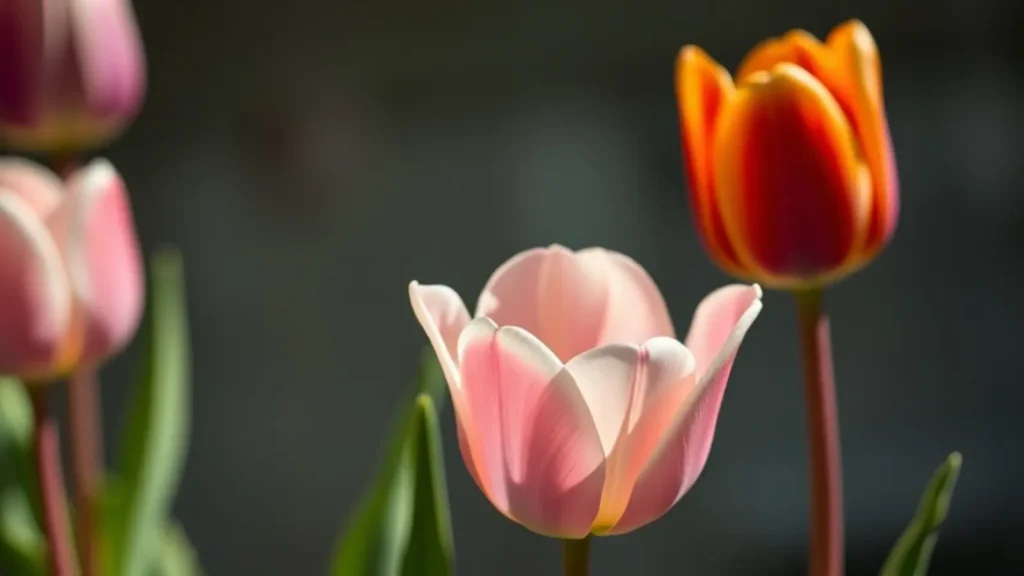
White tulips commonly symbolize:
- Purity
- Forgiveness
- Respect
- Peace
- New beginnings
- Spiritual reflection
They are often chosen for memorial services, apologies, weddings, and moments of reconciliation.
Purple Tulip Symbolism
Purple has long represented nobility and prestige.
Purple tulips symbolize:
- Royal elegance
- Wisdom
- Honor
- Success
- Achievement
- Leadership
They frequently appear in luxury floral arrangements and formal celebrations.
Tulip Symbolism Across Cultures
| Culture | Symbolic Meaning |
| Central Asian | Nature, resilience, renewal |
| Ottoman | Paradise, divine beauty, elegance |
| Dutch | Prosperity, national identity, beauty |
| Persian | Eternal love and devotion |
| Western cultures | Spring, optimism, affection |
| Contemporary global culture | Personal growth and positivity |
Although these meanings overlap, local traditions and historical experiences shape how tulips are interpreted.
Spiritual Meaning of Tulips
Many spiritual traditions view tulips as symbols of inner growth rather than supernatural power.
Common spiritual interpretations include:
Renewal
Like spring itself, tulips represent emotional rebirth.
Hope
Their emergence after winter symbolizes optimism during difficult periods.
Gratitude
Blooming flowers encourage appreciation for life’s temporary beauty.
Balance
Their symmetrical form often represents harmony between nature and humanity.
These interpretations are cultural and symbolic rather than universally accepted religious teachings.
Religious Connections
Tulips hold varying levels of religious significance depending on tradition.
Islamic Art
Within Ottoman Islamic art, tulips became decorative expressions of divine beauty and creation.
Christianity
Although not central religious symbols, tulips often appear during Easter because they bloom during spring, representing resurrection, hope, and renewal.
Secular Symbolism
In many modern societies, tulips function primarily as cultural rather than religious symbols.
Tulips in Literature
Writers frequently use tulips to symbolize:
- Love
- Hope
- Beauty
- Temporary happiness
- Human emotion
- Seasonal transformation
Poets often compare blooming tulips to emotional awakening or personal growth.
Unlike roses, tulips usually represent gentle affection instead of overwhelming passion.
Tulips in Art
Artists appreciate tulips because they combine simplicity with expressive color.
Tulips appear in:
- Renaissance paintings
- Dutch still-life masterpieces
- Botanical illustrations
- Contemporary watercolor art
- Textile patterns
- Interior design
- Ceramics
- Digital illustrations
Their clean silhouette makes them visually recognizable across artistic styles.
Psychological Meaning of Tulips
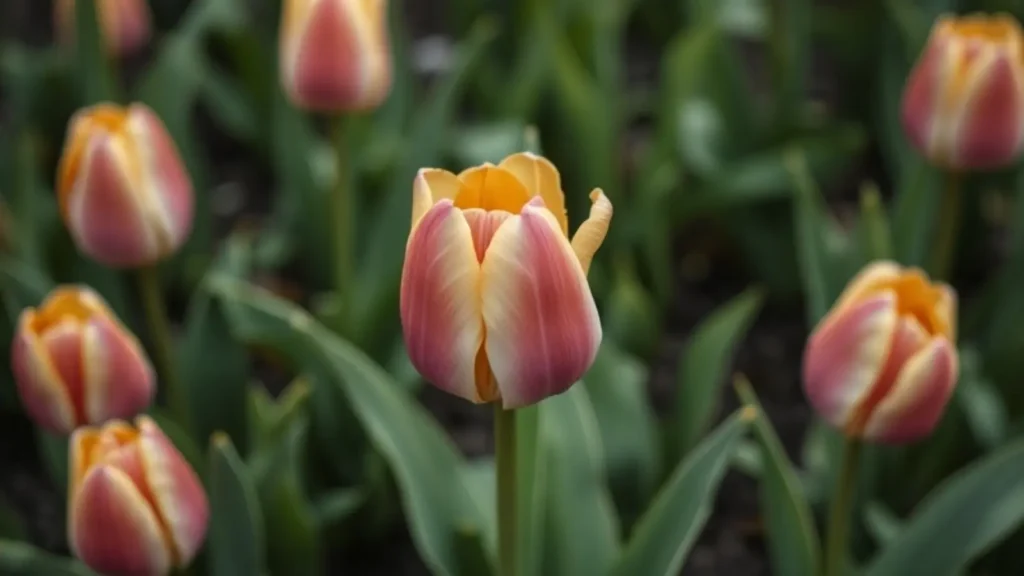
Color psychology and environmental psychology suggest that flowers can influence mood through their appearance, although responses vary among individuals and cultures.
Tulips often evoke feelings of:
- Calmness
- Optimism
- Comfort
- Freshness
- Emotional warmth
- Encouragement
Bright tulip displays are commonly associated with positive emotional experiences because they coincide with spring and increasing daylight.
Tulips in Branding and Design
Many organizations use tulips because they visually communicate:
- Freshness
- Growth
- Natural beauty
- Trust
- Simplicity
- Wellness
- Sustainability
Brands related to gardening, healthcare, hospitality, tourism, and wellness often incorporate floral imagery to create welcoming visual identities.
Tulips in Modern Communication
Today, tulips appear in:
- Greeting cards
- Wedding invitations
- Social media graphics
- Home décor
- Corporate branding
- Educational materials
- Gift packaging
- Event design
Their symbolism allows people to communicate appreciation, encouragement, congratulations, and affection without lengthy explanations.
Did You Know?
🌷 Tulips belong to the lily family.
🌷 There are thousands of registered tulip varieties.
🌷 The Netherlands exports billions of tulip bulbs annually.
🌷 Tulips naturally bloom in spring but can be forced to bloom indoors during winter.
🌷 Different tulip colors developed symbolic meanings over centuries rather than all at once.
Expert Tip
When selecting tulips as gifts, focus on both color symbolism and the recipient’s cultural background. While many meanings are widely recognized, symbolic interpretations can vary based on personal experience, local traditions, and the context in which the flowers are given.
Common Mistakes About Tulip Symbolism
Mistake 1: Assuming all tulips mean romantic love
In reality, many symbolize friendship, gratitude, forgiveness, or hope.
Mistake 2: Believing color meanings are universal
Color symbolism differs across cultures and historical periods.
Mistake 3: Thinking tulips originated in the Netherlands
They originated in Central Asia before becoming famous in Europe.
Mistake 4: Treating symbolism as historical fact
Symbolic meanings evolve over time and are influenced by culture, literature, and social traditions rather than fixed rules.
Myth vs. Fact
| Myth | Fact |
| Tulips only symbolize romance. | They also represent renewal, hope, gratitude, prosperity, and forgiveness. |
| Every culture interprets tulips identically. | Meanings vary across regions and traditions. |
| Tulips originated in Holland. | They originated in Central Asia before spreading worldwide. |
| Every tulip color has one fixed meaning. | Color symbolism changes over time and by cultural context. |
| Tulip symbolism is purely religious. | Most meanings come from cultural, artistic, and historical traditions. |
Practical Applications of Tulip Symbolism
Tulip symbolism remains relevant across many fields.
Education
Teachers use flowers to explain symbolism in literature and art.
Interior Design
Tulip imagery creates welcoming, peaceful environments.
Branding
Companies employ tulips to communicate freshness and elegance.
Weddings
Tulips symbolize enduring love and joyful beginnings.
Mental Well-Being
Seasonal flowers can contribute to uplifting environments and positive emotional associations.
Gift Giving
Choosing tulip colors thoughtfully helps express appreciation, encouragement, sympathy, or celebration.
Tulip Symbolism in Storytelling
Storytellers frequently use tulips to represent:
- Character growth
- Emotional healing
- Hope after hardship
- Reconciliation
- New opportunities
- Beauty in simplicity
Because audiences already associate tulips with spring, they naturally reinforce themes of renewal and transformation.
Philosophical Perspectives on Tulip Symbolism
Philosophically, tulips remind us that beauty is temporary yet meaningful.
Their brief blooming season encourages reflection on:
- Impermanence
- Gratitude
- Personal growth
- Cycles of nature
- Appreciating the present
Many philosophical traditions find value in observing seasonal change as a metaphor for human life.
Key Insights
- Tulips symbolize love, hope, renewal, elegance, and prosperity.
- Their meanings vary according to color and cultural tradition.
- Historical symbolism developed through Central Asian, Persian, Ottoman, and European influences.
- Tulips remain important in art, literature, branding, education, and design.
- Symbolism should always be understood within its cultural and historical context.
Conclusion
Tulip symbolism has evolved across centuries, cultures, and artistic traditions into one of the world’s richest floral languages. From the mountains of Central Asia to Ottoman gardens and Dutch flower fields, tulips have consistently represented beauty, renewal, affection, and hope.
Today, they continue to communicate emotions in ways that transcend language, appearing in celebrations, memorials, literature, visual arts, branding, and everyday gifts.
While interpretations differ across cultures and historical periods, the tulip’s enduring appeal lies in its ability to symbolize fresh beginnings, emotional sincerity, and the optimism that accompanies every new spring.

Amelia Rosewood writes about symbolic meanings, ancient traditions, and the emotional connections between humans and symbols.
