Few animals have inspired human imagination as deeply as the turtle. Found in myths, religious traditions, folklore, literature, and modern design, turtle symbolism represents far more than a slow-moving reptile.
Across continents and centuries, turtles have become enduring symbols of wisdom, patience, resilience, longevity, protection, stability, and the profound connection between humanity and nature.
Whether appearing in Native American creation stories, East Asian legends, Hindu cosmology, African folklore, or contemporary branding, the turtle continues to communicate timeless values that resonate across cultures. Although symbolic interpretations differ according to historical context and belief systems, one theme remains remarkably consistent: the turtle reminds people that lasting success often comes through perseverance rather than speed.
This article explores the rich symbolic meaning of turtles from historical, cultural, psychological, artistic, religious, philosophical, and modern perspectives while distinguishing traditional beliefs from evidence-based interpretations.
Featured Snippet: What Does Turtle Symbolism Mean?
Turtle symbolism generally represents wisdom, longevity, patience, protection, resilience, stability, endurance, and harmony with nature. Across many cultures, turtles symbolize slow but steady progress, emotional balance, grounded living, and life’s enduring journey. Although interpretations vary among traditions, turtles are widely viewed as positive symbols of strength, peace, and lasting prosperity.
What Does Turtle Symbolism Mean?
Quick Answer
Turtle symbolism reflects the ability to remain calm, protected, and persistent despite life’s challenges. The turtle’s shell represents security, while its deliberate movement symbolizes thoughtful decision-making and sustainable progress.
Common symbolic meanings include:
- Wisdom
- Longevity
- Protection
- Patience
- Stability
- Endurance
- Resilience
- Groundedness
- Emotional balance
- Inner peace
- Connection with nature
- Ancient knowledge
Rather than representing slowness as weakness, many traditions interpret the turtle’s pace as intentional, mindful, and effective.
The Origins of Turtle Symbolism
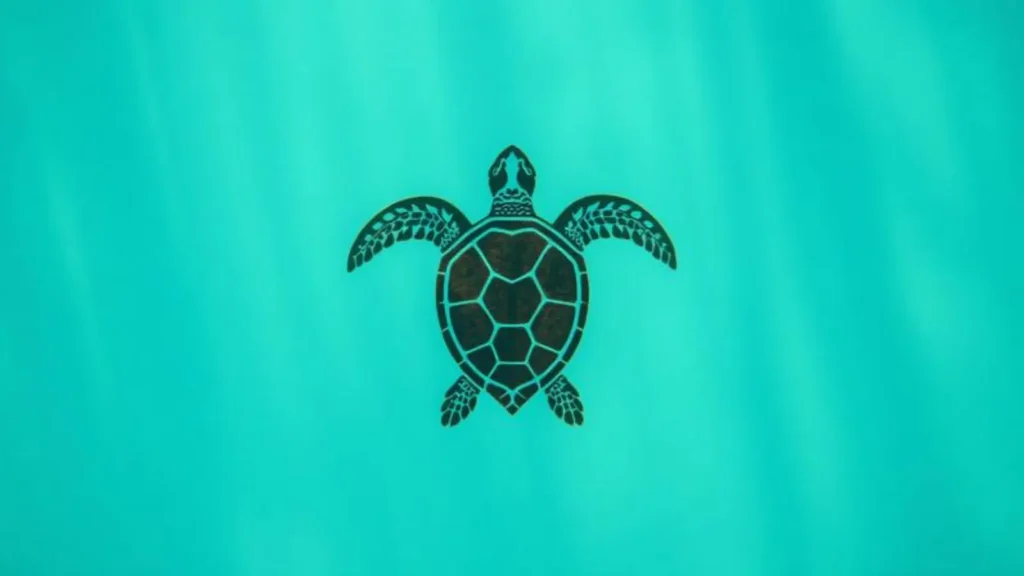
Human fascination with turtles stretches back thousands of years.
Ancient societies observed that turtles:
- Lived remarkably long lives.
- Survived difficult environments.
- Carried protective shells.
- Moved slowly but consistently.
- Appeared calm under pressure.
These characteristics naturally inspired symbolic meanings connected with endurance, survival, and wisdom.
As civilizations developed, turtles became incorporated into:
- Creation myths
- Religious teachings
- Royal symbolism
- Sacred architecture
- Storytelling traditions
- Traditional medicine
- Decorative arts
Because turtles inhabit both land and water, they were also viewed as creatures bridging different worlds—symbolizing balance between the physical and spiritual.
Core Symbolic Meanings of the Turtle
| Symbol | Meaning | Why It Exists |
| Wisdom | Experience and thoughtful decisions | Long lifespan and calm behavior |
| Longevity | Long life | Many turtle species live for decades |
| Protection | Security and safety | Protective shell |
| Patience | Steady progress | Slow movement |
| Stability | Strong foundation | Grounded posture |
| Endurance | Persistence | Ability to survive harsh conditions |
| Resilience | Recovery from challenges | Adaptability |
| Peace | Calmness | Gentle nature |
| Earth Connection | Harmony with nature | Land and water lifestyle |
Turtle Symbolism Across Different Cultures
Native American Traditions
Many Native American traditions regard the turtle as sacred.
Several creation stories describe the Earth resting upon a giant turtle, leading to the well-known concept of Turtle Island, a name used by many Indigenous peoples for North America.
Here the turtle symbolizes:
- Creation
- Mother Earth
- Stability
- Life itself
- Responsibility toward nature
Different Indigenous nations hold distinct beliefs, so interpretations should not be generalized across all communities.
Chinese Symbolism
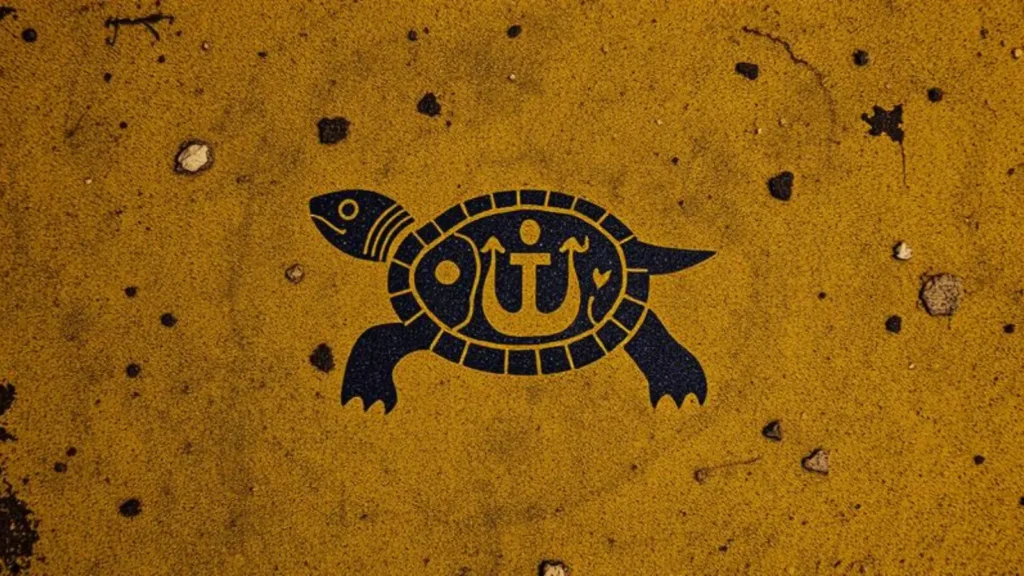
In Chinese tradition, turtles symbolize:
- Longevity
- Wisdom
- Protection
- Cosmic order
- Endurance
The turtle is also associated with one of the Four Sacred Creatures in Chinese cosmology, representing the north and the winter season when depicted alongside a serpent.
Its image frequently appears in:
- Temples
- Imperial architecture
- Feng Shui traditions
- Stone monuments
Japanese Symbolism
Japanese culture often associates turtles with:
- Good fortune
- Long life
- Happiness
- Loyalty
- Divine protection
Folktales frequently portray turtles as wise guides or supernatural beings capable of connecting humans with spiritual realms.
Hindu Symbolism
In Hindu tradition, turtles possess deep religious significance.
One of the most famous examples is Kurma, the turtle incarnation of the deity Vishnu.
Kurma represents:
- Cosmic stability
- Preservation
- Divine support
- Balance
- Protection
The turtle serves as a powerful reminder of sustaining the universe through patience and strength.
African Folklore
Many African folktales portray turtles as intelligent problem-solvers.
Instead of emphasizing physical power, these stories celebrate:
- Cleverness
- Strategic thinking
- Wisdom
- Adaptability
The turtle often succeeds through intelligence rather than force.
Polynesian Symbolism
Across parts of Polynesia, sea turtles symbolize:
- Navigation
- Family
- Protection
- Ocean knowledge
- Safe journeys
Traditional tattoos featuring turtles often represent heritage, guidance, and connection with ancestors.
Turtle Symbolism in Mythology
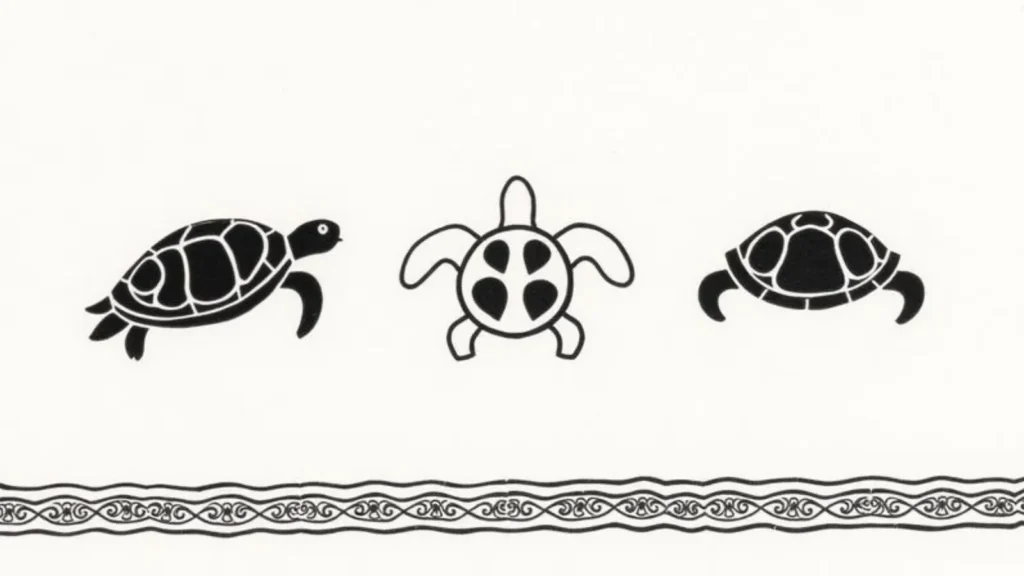
Throughout mythology, turtles appear as cosmic supporters, wise guides, and protectors.
Common mythological themes include:
- Carrying the world
- Supporting creation
- Guiding heroes
- Protecting sacred knowledge
- Representing eternal cycles
These stories emphasize that true strength often appears quietly rather than dramatically.
Spiritual Meaning of Turtle Symbolism
Direct Answer
Spiritually, turtles often symbolize inner peace, patience, grounding, emotional protection, and trust in life’s natural timing.
Many spiritual traditions encourage qualities represented by turtles:
- Remaining calm during uncertainty
- Moving forward consistently
- Protecting personal energy
- Building strong foundations
- Respecting life’s natural rhythm
These interpretations belong primarily to spiritual traditions rather than scientific research.
Psychological Meaning of Turtle Symbolism
Psychologically, people often associate turtles with emotional resilience.
From a symbolic psychology perspective, turtles may represent:
- Healthy personal boundaries
- Emotional security
- Thoughtful decision-making
- Self-control
- Delayed gratification
The protective shell can metaphorically represent healthy emotional boundaries—knowing when to engage and when to withdraw.
Modern psychology recognizes that humans naturally assign symbolic meaning to animals, although individual interpretations vary depending on personal experiences and cultural background.
Turtle Symbolism in Religion
Different religions interpret turtles differently.
| Religion or Tradition | Symbolic Meaning |
| Hinduism | Divine preservation |
| Buddhism | Patience and mindful living |
| Taoism | Longevity and harmony |
| Indigenous Traditions | Earth and creation |
| East Asian Folk Religion | Protection and prosperity |
These meanings are rooted in religious teachings and traditions rather than universal doctrine.
Turtle Symbolism in Art

Artists frequently use turtles to communicate themes of:
- Time
- Endurance
- Nature
- Sustainability
- Peace
In sculpture, painting, textiles, ceramics, and digital illustration, turtles often represent the relationship between humanity and the natural world.
Contemporary environmental artists also use turtles to symbolize ocean conservation and biodiversity.
Turtle Symbolism in Literature
Authors frequently employ turtles as literary symbols representing:
- Wisdom gained over time
- Quiet strength
- Steady progress
- Reflection
- Survival
Unlike aggressive animal symbols, turtles often serve as gentle mentors whose actions demonstrate patience and resilience rather than dominance.
Did You Know?
Many turtle species can live for several decades, and some tortoises have documented lifespans exceeding 100 years. Their exceptional longevity has strongly influenced symbolic associations with wisdom, endurance, and continuity across cultures.
Turtle Symbolism in Dreams
Dream interpretation is highly personal and varies across cultures.
Traditional symbolic interpretations often suggest:
| Dream Scenario | Possible Symbolic Meaning |
| Seeing a turtle | Patience needed |
| Swimming turtle | Emotional balance |
| Turtle shell | Need for protection |
| Baby turtle | New beginnings |
| Injured turtle | Feeling vulnerable |
These are symbolic traditions rather than scientifically validated interpretations.
Turtle Symbolism in Branding and Design
Modern brands frequently use turtle imagery to communicate:
- Reliability
- Sustainability
- Environmental responsibility
- Trust
- Longevity
- Calm confidence
Because turtles evoke positive emotional associations, designers often choose them for organizations connected to:
- Conservation
- Wellness
- Education
- Financial planning
- Eco-friendly products
Expert Tip
When using turtle symbolism in branding, align the imagery with your organization’s values. A turtle works best when communicating reliability, sustainability, patience, or long-term commitment rather than speed or innovation alone.
Turtle Symbolism in Architecture and Visual Communication
Across history, turtle motifs have appeared in:
- Temple foundations
- Garden sculptures
- Public monuments
- Decorative carvings
- Water features
Architecturally, turtles often symbolize:
- Stability
- Strong foundations
- Permanence
- Protection
Designers also use turtle imagery to create feelings of calm and environmental awareness.
Turtle Symbolism and Color Psychology
The symbolic meaning of turtles can shift depending on color.
| Turtle Color | Common Symbolic Association |
| Green | Growth, nature, renewal |
| Blue | Peace, emotional balance |
| White | Purity, wisdom |
| Black | Protection, mystery |
| Gold | Prosperity, longevity |
Color meanings vary across cultures and should always be interpreted within context.
Myth vs. Fact
| Myth | Fact |
| Turtle symbolism has one universal meaning. | Meanings differ across cultures and historical traditions. |
| Every turtle symbolizes luck. | Luck is one interpretation among many. |
| Turtle symbolism is scientific. | Symbolism reflects cultural and psychological interpretation rather than scientific fact. |
| Slow always means weakness. | Many traditions view slow movement as wisdom and intentional action. |
Common Mistakes When Interpreting Turtle Symbolism
Avoid these common misunderstandings:
- Assuming every culture shares identical beliefs.
- Confusing turtles with tortoises, which may carry different symbolic meanings.
- Treating symbolic traditions as historical facts.
- Ignoring cultural context.
- Assuming spiritual interpretations are universally accepted.
Balanced interpretation respects both cultural diversity and historical evidence.
Practical Applications of Turtle Symbolism
Turtle symbolism remains relevant in many modern fields.
Education
Teachers use turtle stories to encourage:
- Patience
- Perseverance
- Long-term learning
Leadership
Leadership coaches sometimes reference turtle symbolism when discussing:
- Consistency
- Strategic thinking
- Emotional stability
Environmental Awareness
Conservation campaigns use turtles to promote:
- Marine protection
- Biodiversity
- Sustainable living
Personal Growth
Individuals often embrace turtle symbolism as a reminder to:
- Slow down thoughtfully.
- Stay grounded.
- Build resilience.
- Focus on lasting progress.
Key Insights
- Turtle symbolism emphasizes endurance over speed.
- Historical meanings developed through centuries of cultural observation.
- Different societies assign different symbolic values.
- Modern branding continues using turtle imagery because of its positive associations.
- Spiritual interpretations should be understood within their cultural traditions.
- Turtle symbolism remains relevant because its core values—wisdom, patience, and resilience—continue to resonate today.
Why Turtle Symbolism Still Matters Today
In an increasingly fast-paced world, turtle symbolism offers a compelling counterbalance. It encourages thoughtful action instead of impulsive decisions, sustainable growth instead of quick gains, and resilience instead of immediate success.
Its enduring appeal lies in its adaptability. Whether viewed through mythology, psychology, religion, environmental conservation, literature, or visual communication, the turtle continues to represent qualities that remain meaningful across generations.
Understanding turtle symbolism also helps people interpret cultural stories, artistic works, brand identities, and historical traditions with greater depth and sensitivity.
Conclusion
Turtle symbolism has endured for centuries because it expresses universal human values through a familiar and remarkable animal.
While meanings vary among cultures, religions, and historical periods, themes such as wisdom, longevity, patience, protection, resilience, and harmony consistently emerge.
From Indigenous creation stories and Hindu cosmology to East Asian philosophy, literature, modern branding, and environmental advocacy, turtles continue to inspire reflection on how people navigate life’s journey.
Appreciating these symbolic traditions enriches our understanding of culture, communication, design, education, spirituality, and storytelling while reminding us that meaningful progress often comes through steady perseverance rather than hast.

Lucas Whitmore reveals the hidden messages behind symbols, signs, and traditions through detailed symbolism guides.
