Few flowers carry as much emotional depth as the delicate blue forget-me-not. Despite its tiny size, this flower has become one of the world’s most recognizable symbols of love, remembrance, loyalty, and enduring human connection.
Across centuries, cultures, literature, and art, forget me not symbolism has represented promises that transcend time, memories that refuse to fade, and relationships that remain meaningful even after distance, loss, or death.
Today, forget-me-nots appear in memorial gardens, wedding bouquets, charitable organizations, remembrance ceremonies, jewelry, tattoos, and digital artwork. Their symbolism continues to evolve while remaining deeply rooted in historical traditions and universal human emotions.
Whether admired for its beauty or chosen for its profound message, the forget-me-not reminds people that memories, affection, and compassion have lasting value.
Featured Snippet: What Does Forget Me Not Symbolism Mean?
Forget me not symbolism represents remembrance, lasting love, loyalty, faithful friendship, hope, and enduring memories. The flower traditionally symbolizes a promise never to forget someone, whether separated by distance, time, or death. Across many cultures, it also represents devotion, resilience, compassion, and the emotional bonds that continue beyond physical presence.
What Is Forget Me Not Symbolism?
Quick Answer
Forget me not symbolism centers on emotional remembrance. Unlike flowers that primarily represent romance or celebration, forget-me-nots remind people that meaningful relationships continue to live through memory, kindness, and shared experiences.
The symbolism commonly includes:
- Everlasting love
- Lasting friendship
- Faithfulness
- Remembrance
- Hope
- Emotional connection
- Memory
- Devotion
- Compassion
- Resilience
Although interpretations vary across cultures, remembrance remains the flower’s universal message.
The Botanical Background of the Forget-Me-Not
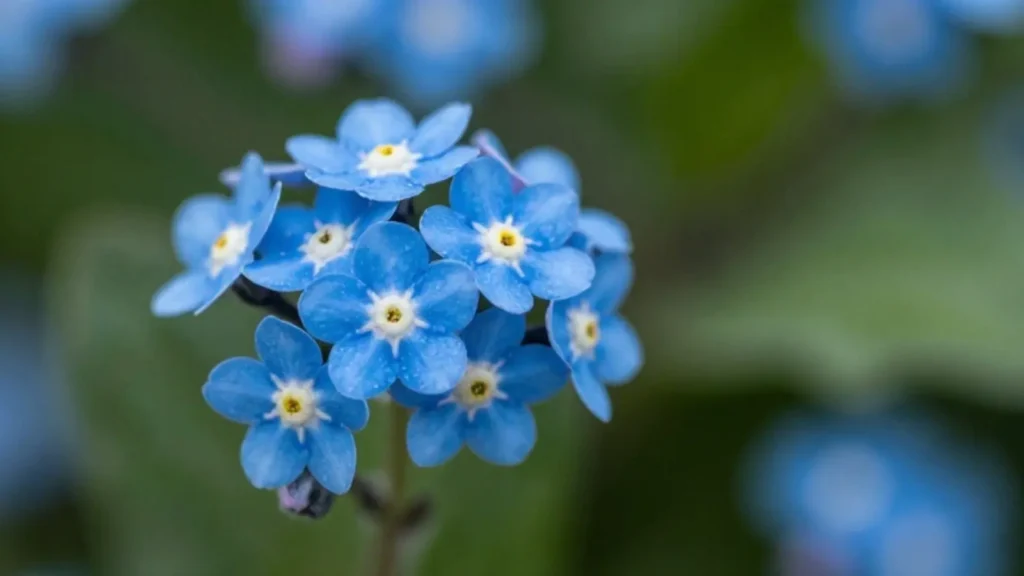
Forget-me-not belongs primarily to the Myosotis genus, containing dozens of species found throughout Europe, Asia, North America, Australia, and New Zealand.
Its characteristics contribute to its symbolism:
| Feature | Symbolic Meaning |
| Small blue flowers | Humility and quiet beauty |
| Five delicate petals | Unity and completeness |
| Bright yellow center | Hope and optimism |
| Spring blooming | Renewal and new beginnings |
| Ability to reseed naturally | Lasting memories |
Its modest appearance reflects an important symbolic lesson: profound meaning does not require grandeur.
Historical Origins of Forget Me Not Symbolism
Medieval European Legend
The most famous explanation comes from medieval Germany.
According to folklore, a knight and his beloved walked beside a river. While gathering tiny blue flowers growing near the water, the knight slipped into the river because of his heavy armor.
As he was swept away, he threw the flowers toward his beloved and cried:
“Forget me not.”
Whether historically accurate or not, this story became one of Europe’s most enduring romantic legends and strongly influenced the flower’s symbolism.
The legend transformed the flower into a symbol of eternal love and remembrance.
Ancient Symbolic Associations
Although the famous legend emerged during medieval times, flowers resembling forget-me-nots were appreciated much earlier for their association with:
- Spring renewal
- Nature’s resilience
- Memory
- Human affection
- Gentle beauty
As societies developed symbolic languages around flowers, forget-me-nots naturally became associated with emotional permanence.
Why Blue Matters in Forget Me Not Symbolism
Color psychology plays an important role in understanding this flower.
Blue is commonly associated with:
- Trust
- Calmness
- Wisdom
- Stability
- Loyalty
- Truth
- Peace
- Reflection
Because forget-me-nots are most often blue, their symbolism combines emotional remembrance with reliability and sincerity.
The result is a flower representing faithful memories rather than temporary emotions.
Cultural Interpretations Around the World
Europe
Throughout Europe, forget-me-nots symbolize:
- Faithful love
- Lifelong friendship
- Memorial remembrance
- Family heritage
- Loyalty
Many memorial ceremonies continue to feature these flowers.
United Kingdom
Forget-me-nots are often planted in remembrance gardens and associated with:
- Lost loved ones
- Veterans
- Family remembrance
- Community memorials
They also symbolize hope during grief.
Germany
Because of the medieval legend, German traditions often connect forget-me-nots with:
- Romantic devotion
- Lifelong promises
- Faithfulness
- Memory
The flower remains culturally significant in literature and folklore.
North America
Modern symbolism frequently emphasizes:
- Alzheimer’s awareness
- Dementia awareness
- Family remembrance
- Community support
- Compassion
Many nonprofit organizations use the flower to encourage awareness about memory-related illnesses.
Japan
Japanese flower symbolism often values subtle beauty and emotional sincerity.
Forget-me-nots may represent:
- Quiet affection
- Emotional honesty
- Gentle memories
- Lasting relationships
These meanings align with broader Japanese appreciation of impermanence and emotional depth.
Cultural Comparison

| Culture | Primary Symbolism |
| Germany | Eternal love |
| United Kingdom | Remembrance |
| Europe | Loyalty and devotion |
| North America | Memory and awareness |
| Japan | Quiet affection |
| Modern Global Culture | Lasting emotional connection |
Spiritual Meaning of Forget Me Not Symbolism
Direct Answer
Spiritually, forget-me-nots symbolize enduring souls, divine remembrance, hope, compassion, and the belief that love continues beyond physical separation.
Many spiritual traditions interpret the flower as representing:
- Eternal connection
- Soul remembrance
- Inner peace
- Healing after loss
- Divine love
- Faith
- Renewal
These meanings are symbolic rather than universal religious teachings.
Religious Connections
Forget-me-nots appear more in cultural Christian traditions than formal doctrine.
Some believers associate them with:
- God’s everlasting love
- Spiritual faithfulness
- Heavenly remembrance
- Hope after death
- Compassion
Other religious traditions may appreciate the flower for its beauty without assigning identical symbolic meanings.
Because symbolism evolves through communities rather than doctrine alone, interpretations differ widely.
Psychological Meaning
From a psychological perspective, symbols help people express emotions that are difficult to communicate directly.
Forget-me-nots often represent:
- Emotional attachment
- Memory preservation
- Identity
- Grief processing
- Hope
- Healing
The flower can become a comforting reminder of meaningful relationships without requiring words.
Modern psychology recognizes that symbolic objects often support remembrance rituals, though the symbolic meaning itself is culturally shaped.
Expert Tip
Symbols become emotionally powerful because people collectively assign meaning to them over generations. The forget-me-not is a strong example of how shared stories transform an ordinary flower into a lasting cultural icon.
Forget Me Not in Literature
Authors frequently use forget-me-nots to symbolize:
- Lost love
- Nostalgia
- Childhood memories
- Family bonds
- Hope
- Emotional resilience
Because readers already associate the flower with remembrance, writers can communicate complex emotions through a simple floral reference.
Its symbolism appears in:
- Poetry
- Historical novels
- Romantic fiction
- Children’s literature
- Personal memoirs
Forget Me Not in Art
Artists often include forget-me-nots to represent:
- Memory
- Innocence
- Fragility
- Eternal affection
- Hope after grief
The flower’s soft blue color makes it visually calming while reinforcing themes of emotional continuity.
Painters, illustrators, textile artists, and botanical artists continue to use forget-me-nots as symbolic elements.
Forget Me Not in Modern Design and Branding
Today, symbolism extends beyond flowers.
Forget-me-not imagery appears in:
- Charity logos
- Memorial organizations
- Jewelry
- Greeting cards
- Wedding invitations
- Tattoo designs
- Funeral arrangements
- Awareness campaigns
Designers appreciate the flower because it communicates warmth without appearing overwhelming.
Practical Applications of Forget Me Not Symbolism
The flower remains meaningful in everyday life.
Common uses include:
- Memorial gifts
- Sympathy bouquets
- Anniversary presents
- Friendship tokens
- Wedding decorations
- Family keepsakes
- Charity fundraising
- Awareness campaigns
- Garden design
- Personalized jewelry
Each application emphasizes emotional continuity.
Forget Me Not Symbolism in Relationships
Forget-me-nots symbolize relationships built on:
- Trust
- Loyalty
- Long-term commitment
- Shared memories
- Emotional support
Unlike flowers associated only with romance, forget-me-nots celebrate many forms of enduring human connection.
They honor:
- Parents
- Children
- Grandparents
- Friends
- Partners
- Teachers
- Mentors
Myth vs. Fact
| Myth | Fact |
| Forget-me-nots only symbolize romantic love. | They also represent friendship, remembrance, loyalty, and hope. |
| The medieval legend is verified history. | It is traditional folklore rather than documented historical fact. |
| Every culture interprets the flower identically. | Symbolic meanings differ across societies and historical contexts. |
| Forget-me-nots have only religious meaning. | Their symbolism is cultural, emotional, literary, and psychological as well. |
Did You Know?
- Forget-me-not flowers are surprisingly small, usually measuring less than one centimeter across.
- The flower naturally reseeds itself, reinforcing themes of continuity and lasting presence.
- Blue is the most recognized color, but some species produce pink or white blossoms before changing shades.
- Forget-me-not symbolism has inspired jewelry, poems, paintings, stamps, and remembrance ceremonies around the world.
Common Mistakes When Interpreting Forget Me Not Symbolism

Assuming Every Blue Flower Has the Same Meaning
Blue flowers often symbolize peace or trust, but forget-me-nots specifically emphasize remembrance.
Confusing Symbolism With Scientific Evidence
The emotional meanings associated with flowers come from cultural traditions rather than biological properties.
Ignoring Cultural Differences
Although remembrance is widespread, interpretations vary according to history, religion, and local customs.
Reducing the Symbol to Romance
Its symbolism extends far beyond romantic love.
Key Insights
- Symbolism evolves through storytelling.
- Emotional associations become stronger over generations.
- Small visual symbols can communicate complex ideas.
- Cultural context shapes symbolic interpretation.
- Shared symbols strengthen collective identity.
Philosophical Perspectives
Philosophers have long explored the relationship between memory and identity.
Forget-me-not symbolism reflects several enduring ideas:
- Human beings seek permanence despite life’s impermanence.
- Memory shapes personal identity.
- Love continues through remembrance.
- Symbols preserve cultural heritage.
- Beauty often lies in simplicity rather than extravagance.
The flower quietly illustrates how ordinary natural objects become extraordinary through shared human meaning.
Why Forget Me Not Symbolism Remains Relevant Today
Modern society communicates through images more than ever before.
Whether in social media graphics, memorial websites, digital illustrations, or branding, visual symbols instantly convey emotional meaning.
Forget-me-nots continue to resonate because they communicate universal experiences:
- Remembering loved ones
- Honoring history
- Celebrating friendship
- Expressing loyalty
- Offering hope
- Preserving identity
Their symbolism remains timeless precisely because memory remains central to the human experience.
Conclusion
Forget me not symbolism has endured for centuries because it speaks to one of humanity’s deepest emotional needs: the desire to remember and be remembered.
While interpretations differ across cultures, traditions, and personal beliefs, the flower consistently represents enduring love, loyal friendship, remembrance, hope, and compassion.
From medieval legends and literary works to memorial gardens, charitable organizations, branding, and contemporary design, the forget-me-not continues to remind us that meaningful relationships transcend time and distance.
Understanding its symbolism enriches our appreciation of cultural traditions, visual communication, storytelling, psychology, and the powerful role symbols play in everyday life.
Rather than being simply a beautiful flower, the forget-me-not has become a universal emblem of memory, connection, and the lasting impact people leave on one another.

Amelia Rosewood writes about symbolic meanings, ancient traditions, and the emotional connections between humans and symbols.
