Few natural phenomena inspire as much wonder as a rainbow. Appearing briefly after rain when sunlight meets water droplets, the rainbow has fascinated humanity for thousands of years.
Across civilizations, it has represented hope, divine communication, transformation, peace, unity, promise, beauty, and the connection between the earthly and the spiritual.
While science explains how rainbows form, symbolism explores why they continue to resonate so deeply with people.
Rainbow symbolism extends far beyond weather. It appears in mythology, religion, psychology, literature, fine art, architecture, branding, education, social movements, and digital culture.
Because symbols evolve alongside societies, the meaning of a rainbow can differ depending on cultural traditions, historical context, and personal experience.
Whether viewed as a sign of new beginnings, diversity, or spiritual guidance, understanding rainbow symbolism provides valuable insight into how humans communicate meaning through color and imagery.
Featured Snippet: What Does Rainbow Symbolism Mean?
Rainbow symbolism represents hope, renewal, unity, transformation, diversity, and the connection between heaven and earth.
Across cultures and religions, rainbows symbolize peace after hardship, divine promises, spiritual awakening, harmony among differences, and the beauty that follows life’s challenges. Their meaning varies according to cultural traditions and historical context.
What Is Rainbow Symbolism?
Quick Answer
Rainbow symbolism refers to the symbolic meanings people attach to rainbows rather than their physical formation. It combines color psychology, mythology, spirituality, cultural traditions, and emotional perception to communicate ideas such as optimism, balance, healing, inclusion, and renewal.
Unlike fixed symbols, rainbow symbolism changes depending on context. A rainbow in religious art may represent divine grace, while in modern branding it may symbolize creativity, positivity, or diversity.
The Historical Origins of Rainbow Symbolism
Humans have admired rainbows since prehistoric times. Ancient civilizations often viewed them as supernatural events because they appeared unexpectedly and disappeared quickly.
Many early societies interpreted rainbows as:
- Messages from the gods
- Bridges between worlds
- Signs of peace
- Symbols of fertility
- Indicators of changing seasons
- Omens requiring interpretation
As civilizations developed, these interpretations became woven into mythology, religious teachings, folklore, and artistic traditions.
Rainbow Symbolism in Ancient Mythology
Greek Mythology
In Greek mythology, the rainbow was associated with Iris, the divine messenger connecting heaven and earth. The rainbow represented communication between humans and the gods.
Symbolic meanings included:
- Divine messages
- Connection
- Transition
- Heavenly authority
Norse Mythology
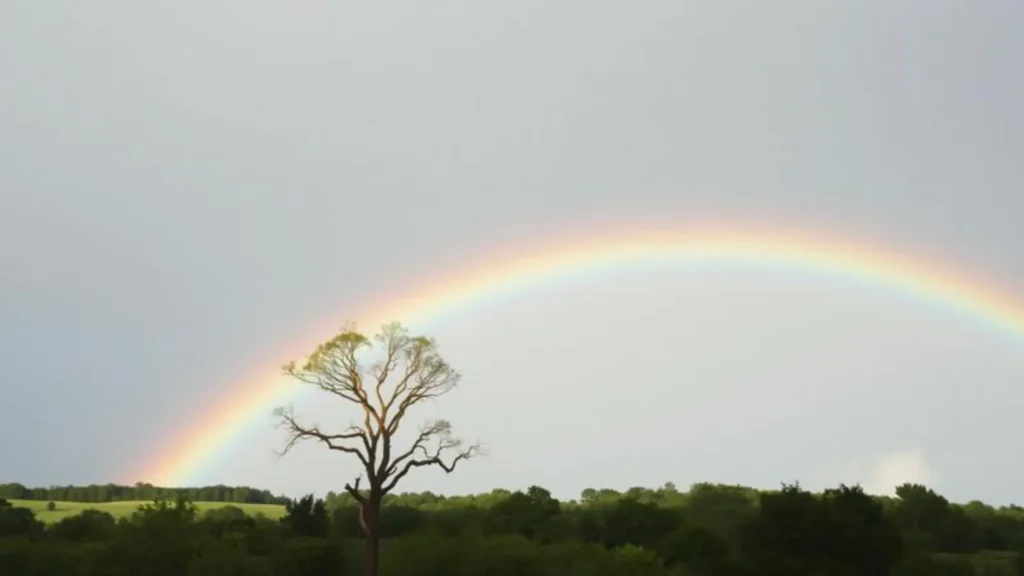
The Norse described Bifröst, the rainbow bridge linking Earth (Midgard) with the realm of the gods (Asgard).
Here, rainbow symbolism emphasized:
- Courage
- Sacred journeys
- Spiritual pathways
- Protection
Indigenous Traditions
Various Indigenous cultures worldwide interpret rainbows differently.
Common symbolic themes include:
- Nature’s harmony
- Balance
- Sacred cycles
- Ancestral guidance
- Respect for natural forces
Interpretations vary significantly among communities and should not be generalized into one universal meaning.
Rainbow Symbolism in Major Religions
Christianity
One of the best-known religious interpretations comes from the biblical story of Noah.
The rainbow symbolizes:
- God’s covenant
- Mercy
- Peace
- Hope
- Promise after destruction
This symbolism remains influential in Christian art and literature.
Hinduism
In Hindu traditions, rainbows are sometimes connected with celestial beauty and divine energy.
Depending on interpretation, they may represent:
- Cosmic order
- Beauty
- Divine creation
- Natural balance
Buddhism
Although not a central symbol everywhere, rainbow imagery may represent:
- Enlightenment
- Impermanence
- Spiritual transformation
- Higher awareness
Some Buddhist traditions also reference the “rainbow body” as an advanced spiritual concept.
The Psychological Meaning of Rainbow Symbolism
Direct Answer
Psychologically, rainbows symbolize optimism because they naturally appear after storms, reinforcing the mental association between hardship and hope.
Human perception connects colorful visual patterns with positive emotional experiences.
Rainbow symbolism commonly evokes:
- Joy
- Relief
- Wonder
- Curiosity
- Emotional healing
- Possibility
Because multiple colors coexist harmoniously, the rainbow often represents emotional integration rather than conflict.
Color Psychology Behind Rainbow Symbolism
Each color contributes to the rainbow’s symbolic meaning.
| Color | Common Symbolism | Psychological Association |
| Red | Energy | Passion, courage |
| Orange | Creativity | Enthusiasm |
| Yellow | Happiness | Optimism |
| Green | Growth | Healing |
| Blue | Trust | Calmness |
| Indigo | Reflection | Wisdom |
| Violet | Spirituality | Imagination |
Together these colors communicate completeness and harmony.
Rainbow Symbolism Across Different Cultures
| Culture | Common Interpretation |
| Greek | Divine messenger |
| Norse | Bridge to the gods |
| Christian | Covenant and hope |
| Some Indigenous traditions | Nature’s balance |
| East Asian traditions | Harmony between heaven and earth |
| Modern global culture | Diversity and inclusion |
These meanings may overlap while remaining culturally distinct.
Rainbow Symbolism in Literature
Authors frequently use rainbows to symbolize:
- New beginnings
- Character transformation
- Hope after tragedy
- Emotional healing
- Dreams
- Reconciliation
Because readers already associate rainbows with optimism, writers can communicate emotional shifts without lengthy explanations.
Rainbow Symbolism in Art
Artists use rainbow imagery to express:
- Emotional contrast
- Human imagination
- Spiritual transcendence
- Nature’s beauty
- Peace
- Celebration
From Renaissance paintings to contemporary installations, rainbows provide both aesthetic appeal and symbolic depth.
Rainbow Symbolism in Storytelling
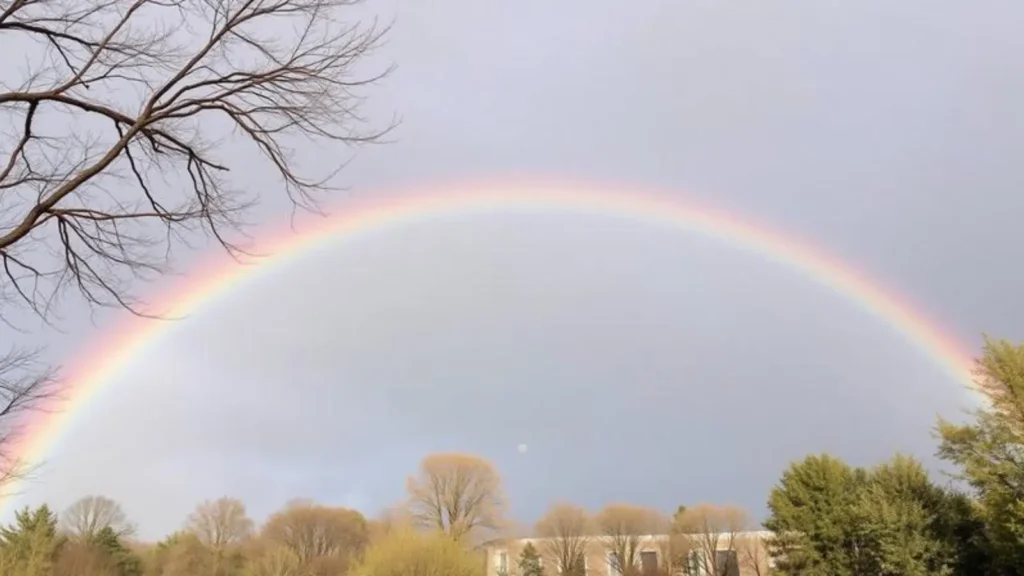
Storytelling often follows a journey through conflict toward resolution.
A rainbow naturally fits this narrative because it appears after storms.
This makes it an effective symbol for:
- Redemption
- Growth
- Forgiveness
- Resilience
- Renewal
Spiritual Meaning of Rainbow Symbolism
Many spiritual traditions interpret rainbows as reminders that transformation often follows difficulty.
Common spiritual interpretations include:
- Personal awakening
- Divine guidance
- Inner peace
- Faith
- Higher consciousness
- Life transitions
These interpretations reflect belief systems rather than universally accepted facts.
Rainbow Symbolism in Dreams
Dream interpretation varies across psychological schools and cultural traditions.
People often associate dream rainbows with:
- Hope
- Opportunity
- Emotional healing
- Personal growth
- Reconciliation
- Positive change
Because dream symbolism is subjective, interpretations should be considered personal rather than definitive.
Rainbow Symbolism in Modern Society
Today the rainbow carries multiple meanings simultaneously.
It may symbolize:
- Hope
- Diversity
- Inclusion
- Equality
- Creativity
- Environmental awareness
- Children’s education
- Positivity
Modern symbolism continues evolving alongside cultural conversations.
Rainbow Symbolism in Branding and Marketing
Brands often choose rainbow-inspired designs because they communicate:
- Innovation
- Optimism
- Creativity
- Inclusiveness
- Energy
- Friendliness
Designers also use gradients and colorful palettes to attract attention and create memorable visual identities.
Successful branding considers cultural context because audiences may interpret rainbow imagery differently.
Rainbow Symbolism in Visual Communication
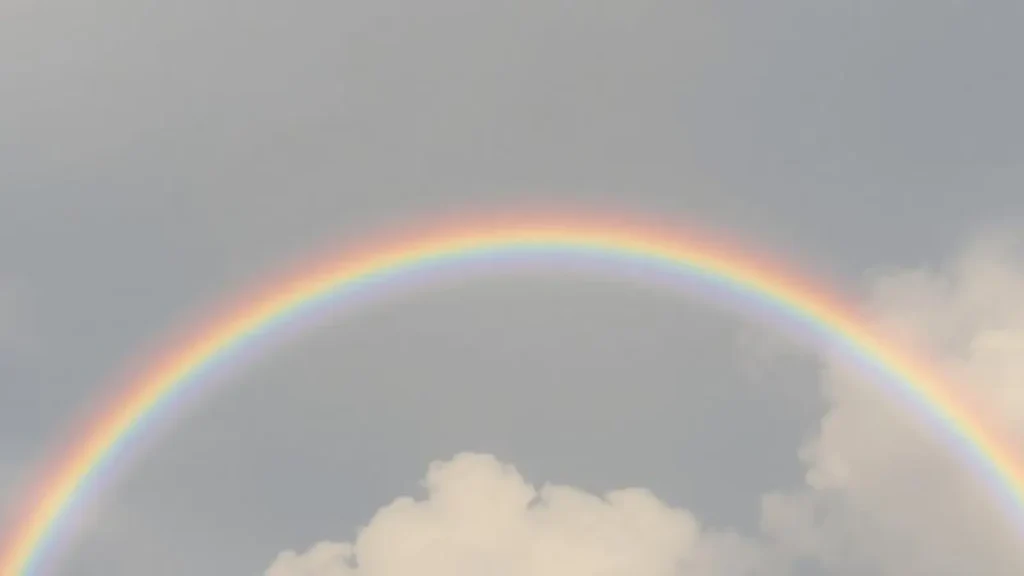
Rainbow imagery works well because it combines:
- Strong visual contrast
- Immediate recognition
- Emotional impact
- Positive associations
- Universal familiarity
Graphic designers frequently use rainbow colors in educational materials, children’s products, creative industries, and awareness campaigns.
Rainbow Symbolism in Education
Teachers use rainbow symbolism to introduce concepts including:
- Diversity
- Weather science
- Color theory
- Cultural studies
- Literature
- Emotional learning
Its familiarity makes complex ideas easier to understand.
Rainbow Symbolism in Architecture and Public Spaces
Public art installations often incorporate rainbow colors to encourage:
- Community engagement
- Celebration
- Cultural expression
- Urban identity
- Creativity
Architects may also use colored glass and lighting to create uplifting environments.
Practical Applications of Rainbow Symbolism
Understanding rainbow symbolism helps professionals in many fields.
Design
Create emotionally engaging visuals.
Branding
Build memorable and positive identities.
Education
Teach cultural and scientific concepts together.
Literature
Develop symbolic storytelling.
Marketing
Communicate optimism and creativity.
Personal Development
Use symbolic reflection during periods of change.
Did You Know?
- Rainbows can appear as full circles from aircraft under the right viewing conditions.
- Double rainbows occur when sunlight reflects twice inside water droplets.
- Every observer sees their own unique rainbow because the viewing angle changes with position.
- Rainbows have inspired myths on every inhabited continent.
Expert Tip
When interpreting rainbow symbolism, always consider the cultural, historical, and personal context. A rainbow’s meaning in a religious painting may differ significantly from its meaning in a contemporary logo, social movement, or children’s illustration. Context shapes symbolism as much as the image itself.
Common Mistakes About Rainbow Symbolism
Mistake 1
Assuming every culture interprets rainbows identically.
Reality: Symbolic meanings differ across traditions.
Mistake 2
Confusing scientific explanation with symbolic meaning.
Reality: Science explains how rainbows form, while symbolism explores the meanings people assign to them.
Mistake 3
Believing symbolism never changes.
Reality: Symbols evolve with society, history, and cultural experience.
Myth vs. Fact
| Myth | Fact |
| Rainbows have one universal meaning. | Meanings vary across cultures and contexts. |
| Symbolism replaces science. | Scientific and symbolic explanations answer different questions. |
| Modern symbolism erased older meanings. | Historical and modern interpretations often coexist. |
| Every rainbow represents spirituality. | Spiritual meanings depend on belief systems and personal interpretation. |
Key Insights
- Rainbow symbolism combines nature, color psychology, mythology, religion, and culture.
- It commonly represents hope, renewal, peace, diversity, and transformation.
- Historical interpretations differ across civilizations.
- Modern meanings continue evolving in media, branding, education, and social communication.
- Context is essential when interpreting any symbol.
Conclusion
Rainbow symbolism remains one of humanity’s most enduring and adaptable symbolic traditions. From ancient myths and sacred texts to contemporary design and public communication, the rainbow has consistently represented ideas that transcend language.
hope after hardship, harmony among differences, transformation through experience, and the enduring beauty of nature.
Its significance lies not in a single fixed meaning but in its remarkable ability to connect scientific wonder with emotional, cultural, artistic, and spiritual expression.
Whether encountered in literature, religious art, architecture, education, branding, or everyday life, the rainbow encourages reflection on resilience, unity, and possibility.
Understanding rainbow symbolism enriches our appreciation of visual communication and reminds us that symbols continue to shape culture, storytelling, identity, education, and human connection in meaningful ways.

Amelia Rosewood writes about symbolic meanings, ancient traditions, and the emotional connections between humans and symbols.
