Few flowers have influenced human culture as profoundly as the rose. Across civilizations, religions, literature, art, and modern branding, rose symbolism has represented love, beauty, sacrifice, mystery, devotion, hope, remembrance, and transformation.
While many people associate roses primarily with romance, their symbolic meanings extend far beyond Valentine’s Day bouquets and wedding celebrations.
From ancient myths to contemporary visual storytelling, roses communicate emotions that words sometimes cannot express. Their colors, fragrance, delicate petals, and protective thorns combine to create one of humanity’s richest symbolic languages.
Understanding rose symbolism not only deepens appreciation for history and culture but also improves our ability to interpret art, literature, rituals, architecture, branding, and everyday communication.
What Does Rose Symbolism Mean? (Featured Snippet Answer)
Rose symbolism refers to the cultural, emotional, spiritual, and historical meanings associated with roses. While commonly representing love and beauty, roses also symbolize passion, purity, sacrifice, remembrance, wisdom, secrecy, hope, and transformation depending on their color, cultural context, historical period, and religious or artistic interpretation.
Understanding Rose Symbolism

Quick Answer
Rose symbolism is the study of how roses communicate ideas, values, emotions, and beliefs through visual symbolism rather than spoken language.
Unlike ordinary flowers, roses have accumulated thousands of years of symbolic meaning through mythology, religion, literature, psychology, and human tradition.
Today, they remain among the world’s most recognizable symbolic plants.
Common symbolic meanings include:
- Love
- Romance
- Beauty
- Passion
- Purity
- Devotion
- Courage
- Honor
- Memory
- Hope
- Spiritual awakening
- Mystery
- Transformation
Historical Origins of Rose Symbolism
Quick Answer
The symbolic use of roses dates back thousands of years, with evidence appearing in ancient Mesopotamia, Egypt, Greece, Rome, Persia, India, and China.
Ancient Greece
Greek mythology closely linked roses with Aphrodite, the goddess of love and beauty.
According to myth:
- White roses grew where Aphrodite walked.
- Red roses appeared after her blood mixed with white petals while mourning Adonis.
Although mythological rather than historical fact, these stories helped establish roses as enduring symbols of romantic love and sacrifice.
Ancient Rome
Romans expanded rose symbolism considerably.
Roses became symbols of:
- Victory
- Luxury
- Celebration
- Political secrecy
The Latin phrase sub rosa (“under the rose”) referred to confidential discussions held beneath rose decorations.
Even today, “under the rose” continues to symbolize secrecy.
Medieval Europe
Christian traditions transformed rose symbolism again.
The rose represented:
- Divine love
- The Virgin Mary’s purity
- Paradise
- Martyrdom
- Heavenly perfection
The famous rose windows in Gothic cathedrals reflected these spiritual meanings through architecture.
Persian Tradition
Persian poetry frequently portrays the rose alongside the nightingale.
In this symbolism:
- The rose represents perfect beauty.
- The nightingale symbolizes the devoted lover.
This imagery strongly influenced Middle Eastern literature.
Why Roses Became Powerful Symbols
Several characteristics naturally encourage symbolic interpretation.
| Characteristic | Symbolic Meaning |
| Beautiful petals | Love and beauty |
| Fragrance | Memory and attraction |
| Thorns | Protection and sacrifice |
| Blooming cycle | Renewal and hope |
| Short lifespan | Impermanence |
| Layered petals | Hidden wisdom |
| Variety of colors | Emotional diversity |
The combination of beauty and pain—soft petals protected by sharp thorns—makes roses especially meaningful.
Rose Symbolism Across Different Cultures
Western Cultures
Common meanings include:
- Romantic love
- Marriage
- Passion
- Friendship
- Remembrance
- Respect
Red roses especially dominate celebrations involving love.
Eastern Cultures
Interpretations often emphasize:
- Balance
- Harmony
- Prosperity
- Inner beauty
- Spiritual growth
Rather than focusing solely on romance, roses may represent personal cultivation.
Islamic Traditions
In Islamic literature and poetry, roses often symbolize:
- Divine beauty
- Paradise
- Spiritual perfection
- Inner purity
Many classical poets used roses as metaphors for divine love rather than earthly romance.
Indian Traditions
Roses frequently symbolize:
- Hospitality
- Devotion
- Celebration
- Respect
- Blessings
Rose petals remain common in religious ceremonies and weddings.
Rose Color Symbolism
Different colors significantly influence symbolic interpretation.
| Rose Color | Primary Meaning | Common Uses |
| Red | Love, passion | Romance |
| White | Purity, peace | Weddings, memorials |
| Pink | Gratitude, admiration | Appreciation |
| Yellow | Friendship, joy | Celebrations |
| Orange | Enthusiasm, energy | Achievement |
| Lavender | Wonder, enchantment | Special occasions |
| Blue (artificial) | Mystery, impossibility | Creativity |
| Black (dyed) | Farewell, endings | Gothic symbolism |
| Green | Renewal, health | Hope |
| Peach | Sincerity | Gratitude |
Context always matters.
A white rose at a wedding differs greatly from a white rose placed at a memorial.
Psychological Meaning of Rose Symbolism
Quick Answer
Psychologically, roses evoke emotional responses because humans naturally associate flowers with care, relationships, beauty, and life events.
Color psychology also strengthens symbolic meaning.
Research in psychology suggests people often associate:
- Red with intensity
- White with purity
- Yellow with happiness
- Pink with compassion
These associations are influenced by both biological perception and cultural learning.
Importantly, symbolism varies across individuals and societies.
Spiritual Symbolism of Roses
Many spiritual traditions interpret roses as symbols of inner awakening.
Common themes include:
Spiritual Growth
Blooming represents personal development.
Divine Love
Many traditions connect roses with unconditional love.
Soul Transformation
Opening petals symbolize expanding awareness.
Unity
The circular arrangement of petals often represents wholeness.
Compassion
The rose reminds people that beauty and vulnerability can coexist.
Religious Symbolism
Christianity
The rose symbolizes:
- Mary
- Heaven
- Grace
- Martyrdom
- Resurrection
The rosary itself derives its name from the concept of a “garland of roses.”
Sufism
Mystical poetry frequently portrays the rose as:
- Divine truth
- Spiritual longing
- Beauty beyond the physical world
Buddhism
Although the lotus is more prominent, roses may symbolize:
- Compassion
- Impermanence
- Loving kindness
depending on cultural context.
Rose Symbolism in Literature
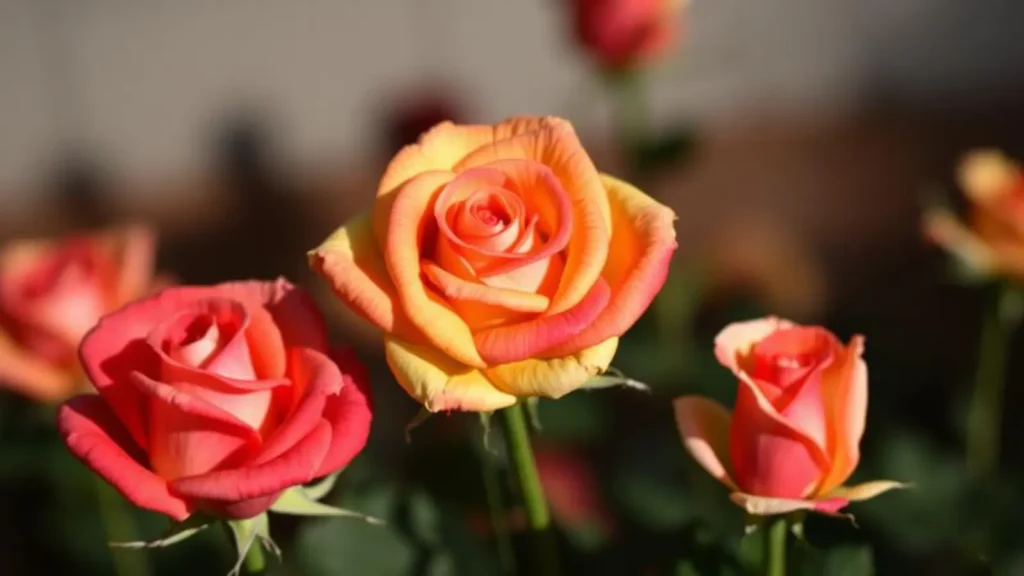
Writers have used roses for centuries because they communicate complex emotions instantly.
Examples include themes of:
- First love
- Lost love
- Mortality
- Hope
- Beauty
- Tragedy
- Redemption
Shakespeare, Romantic poets, Persian poets, and modern novelists all employ rose imagery in unique ways.
Rose Symbolism in Art
Artists use roses to create emotional depth.
Roses commonly symbolize:
- Innocence
- Luxury
- Mortality
- Femininity
- Spiritual devotion
- Political identity
From Renaissance paintings to digital illustration, roses remain visually powerful.
Rose Symbolism in Branding and Marketing
Brands frequently incorporate roses because consumers associate them with:
- Luxury
- Elegance
- Romance
- Natural beauty
- Trust
- Quality
- Emotion
Rose imagery appears across industries such as:
- Cosmetics
- Perfume
- Fashion
- Hospitality
- Weddings
- Luxury goods
Successful branding uses roses not merely for decoration but to evoke emotional connections.
Rose Symbolism in Modern Digital Communication
Even emojis carry symbolic weight.
🌹 commonly represents:
- Romantic affection
- Gratitude
- Respect
- Sympathy
- Celebration
Digital communication continues humanity’s long tradition of symbolic storytelling.
Did You Know?
- The phrase “sub rosa” means “under the rose” and symbolizes secrecy.
- Rose windows in Gothic cathedrals represent divine harmony.
- Different numbers of roses may carry symbolic meanings in gift-giving traditions.
- Roses have appeared in royal emblems, national symbols, and family crests for centuries.
Expert Tip
Never interpret a rose’s symbolism based solely on its color.
Always consider:
- Historical period
- Cultural background
- Religious context
- Artistic style
- Personal intention
Symbolism depends on context more than universal rules.
Common Mistakes
Assuming every rose means romance
Many roses symbolize remembrance, spirituality, or respect.
Ignoring cultural differences
Symbolic meanings vary worldwide.
Overlooking thorns
The combination of beauty and pain is central to rose symbolism.
Treating symbolism as universal fact
Symbolic meanings evolve over time and differ among communities.
Myth vs. Fact
| Myth | Fact |
| Roses always symbolize romantic love. | They also symbolize sacrifice, remembrance, purity, hope, and wisdom. |
| Every culture interprets roses identically. | Meanings differ across traditions. |
| Red roses always represent marriage. | Context determines interpretation. |
| Flower symbolism never changes. | Symbolism evolves through history. |
Practical Applications of Rose Symbolism
Understanding rose symbolism benefits many fields.
Education
Teachers use symbolism to explain literature and history.
Graphic Design
Designers choose rose imagery to communicate emotions visually.
Branding
Companies strengthen emotional identity through symbolic visuals.
Marketing
Campaigns use rose symbolism to build memorable narratives.
Literature
Readers better understand metaphors and character development.
Counseling
Flowers may support discussions about memory, grief, love, and hope.
Cultural Studies
Researchers examine roses as evolving cultural symbols.
Philosophical Perspectives
Philosophers often interpret roses as reminders of life’s paradoxes.
Beauty exists alongside danger.
Joy exists alongside loss.
Growth requires vulnerability.
The rose therefore represents the complexity of the human experience rather than a single emotional state.
Rose Symbolism in Visual Communication
Visual communication relies heavily on instantly recognizable symbols.
Because roses are nearly universally recognized, they efficiently communicate:
- Affection
- Luxury
- Memory
- Elegance
- Celebration
- Honor
This explains their continued popularity in advertising, logos, greeting cards, films, and digital media.
Key Insights
- Rose symbolism has evolved for thousands of years.
- Meanings depend on color, culture, history, and context.
- Roses symbolize far more than romantic love.
- Literature, religion, psychology, branding, and art all use rose symbolism differently.
- Understanding symbolic context improves communication and cultural literacy.
Conclusion
Rose symbolism remains one of the richest and most enduring symbolic traditions in human history. Across cultures and centuries, roses have expressed emotions, beliefs, and values that transcend language.
Whether representing love, sacrifice, remembrance, purity, transformation, or hope, the rose continues to bridge the personal and the universal.
Its enduring appeal lies in its complexity. Soft petals paired with protective thorns reflect life’s balance between beauty and challenge, making the rose a powerful metaphor in literature, religion, art, philosophy, branding, and everyday communication.
Appreciating these layered meanings helps us interpret cultural traditions more thoughtfully and use symbols more effectively in design, education, storytelling, and personal expression.

Nathaniel Brooks analyzes symbols, their origins, cultural importance, and psychological impact across history and modern society.
