Art has always been more than decoration. Across civilizations, artists have used visual elements to communicate ideas that words alone cannot fully express.
Among the most influential artistic movements to embrace this approach is symbolism art, where every object, color, character, landscape, and gesture can represent deeper emotional, philosophical, or spiritual truths.
Unlike realistic art that focuses on depicting the visible world, symbolism art invites viewers to explore the invisible dreams, myths, emotions, spirituality, and the subconscious.
Whether appearing in paintings, literature, architecture, sculpture, fashion, or digital media, symbolic imagery continues to shape how people understand identity, culture, belief, and imagination.
Today, symbolism art remains highly relevant. Modern branding, advertising, film, gaming, illustration, and digital storytelling frequently rely on symbolic language developed centuries ago.
Understanding symbolism art helps viewers appreciate not only historical masterpieces but also contemporary visual communication.
Featured Snippet: What Is Symbolism Art? (40–60 Words)
Symbolism art is an artistic movement and visual language that uses symbols, metaphors, colors, and imagery to express emotions, ideas, spirituality, mythology, and psychological experiences rather than literal reality. Emerging in the late nineteenth century, symbolism art emphasizes imagination, hidden meaning, and personal interpretation over direct representation.
What Is Symbolism Art?
Quick Answer
Symbolism art is a creative approach that communicates abstract ideas through symbolic images instead of realistic representation. Every visual element may carry emotional, spiritual, philosophical, or cultural significance beyond its literal appearance.
Rather than asking, “What is this object?” symbolism asks,
“What does this object represent?”
A rose may symbolize love.
A raven may symbolize mystery.
A broken mirror may symbolize loss or transformation.
A staircase may represent spiritual growth.
The meaning often depends on cultural traditions, historical context, and the artist’s intention.
Origins of Symbolism Art
The Symbolist movement officially emerged during the late nineteenth century, primarily in France and Belgium.
It developed partly as a reaction against:
- Industrialization
- Scientific materialism
- Realism
- Naturalism
- Strict academic painting
Many artists believed reality alone could not explain the complexity of human experience.
Instead, they explored:
- Dreams
- Imagination
- Mysticism
- Religion
- Mythology
- Inner consciousness
- Emotional truth
The movement eventually spread throughout Europe and influenced generations of artists, writers, musicians, and filmmakers.
Historical Evolution of Symbolism Art
| Period | Development | Symbolic Focus |
| Ancient Civilizations | Religious imagery | Gods, animals, nature |
| Medieval Era | Christian iconography | Saints, halos, sacred objects |
| Renaissance | Classical symbolism | Virtue, knowledge, mythology |
| Romanticism | Emotion and imagination | Nature, mystery |
| Symbolist Movement (1880s–1900s) | Inner reality | Dreams, spirituality |
| Modern Art | Personal symbolism | Identity, psychology |
| Digital Age | Multimedia symbolism | Visual storytelling, branding |
The Symbolist movement transformed symbolism from a supporting artistic technique into the central purpose of artistic expression.
Why Symbolism Art Matters Today
Quick Answer
Symbolism art helps people communicate complex ideas, emotions, identities, and beliefs through visual language that transcends spoken words.
Its influence appears in:
- Movies
- Advertising
- Fashion
- Video games
- Graphic design
- Social media
- Architecture
- Corporate branding
- Political communication
- Education
People naturally understand symbols faster than lengthy explanations, making symbolic communication one of humanity’s oldest and most effective storytelling tools.
Core Characteristics of Symbolism Art
Several characteristics distinguish symbolism art from realistic painting.
Emotional Expression
Artists prioritize feelings over physical accuracy.
Mystery
Meanings remain open to interpretation.
Dreamlike Atmospheres
Scenes often resemble visions or dreams.
Mythological References
Greek, Roman, Egyptian, Norse, Celtic, and Eastern myths frequently appear.
Spiritual Exploration
Artists investigate life, death, transcendence, and the soul.
Personal Meaning
Objects may represent the artist’s unique experiences rather than universal truths.
Psychological Meaning of Symbolism Art
Quick Answer
Psychologically, symbolism art reflects unconscious thoughts, emotional experiences, personal identity, archetypes, and inner transformation.
Human beings naturally think symbolically.
For example:
- Light often represents hope.
- Darkness may represent fear or uncertainty.
- Water commonly symbolizes emotion or renewal.
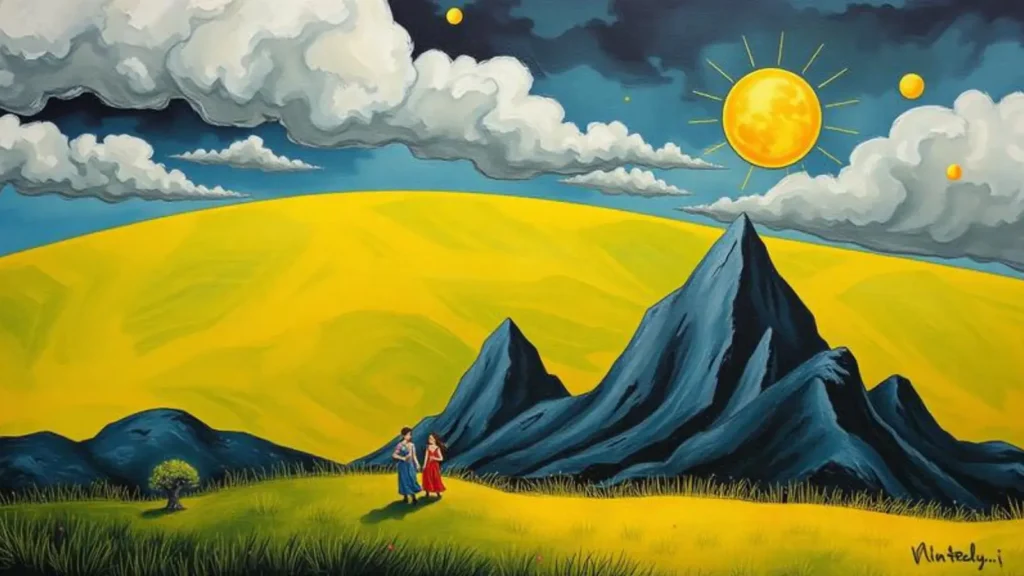
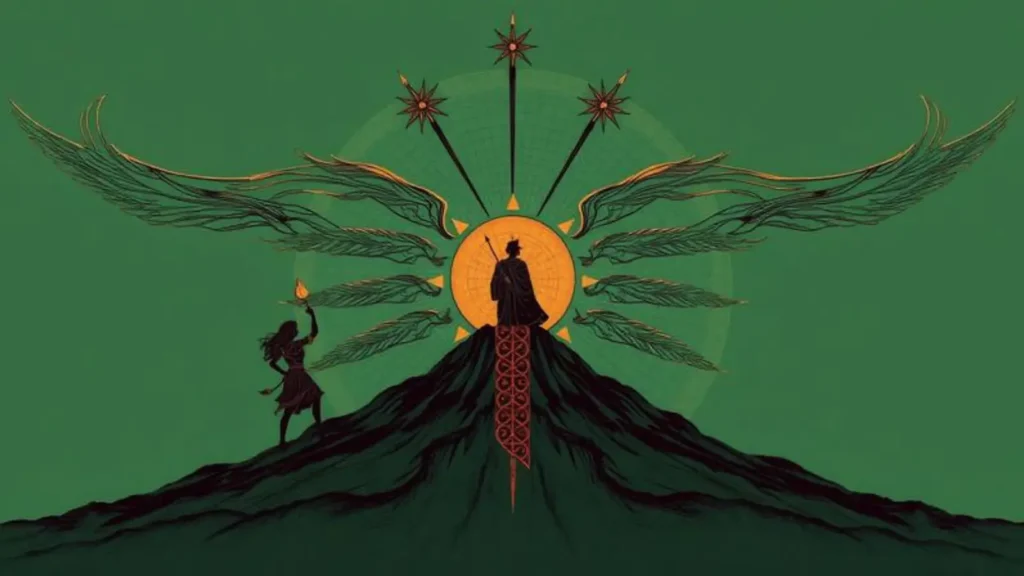
- Mountains frequently represent challenges.
- Birds often symbolize freedom.
Modern psychology recognizes that symbols help individuals process experiences beyond ordinary language.
While interpretations vary, symbolic imagery often resonates because people connect personal experiences with universal visual patterns.
Spiritual Interpretations of Symbolism Art
Across many traditions, symbolic imagery serves as a bridge between visible reality and invisible meaning.
Common spiritual symbols include:
| Symbol | Common Spiritual Meaning |
| Circle | Eternity, unity |
| Tree | Life and growth |
| Flame | Enlightenment |
| Dove | Peace |
| Lotus | Purity and awakening |
| Sun | Divine power |
| Moon | Reflection and intuition |
| Water | Cleansing and renewal |
These meanings differ across religions and cultures, highlighting the importance of historical and cultural context.
Cultural Significance Across the World
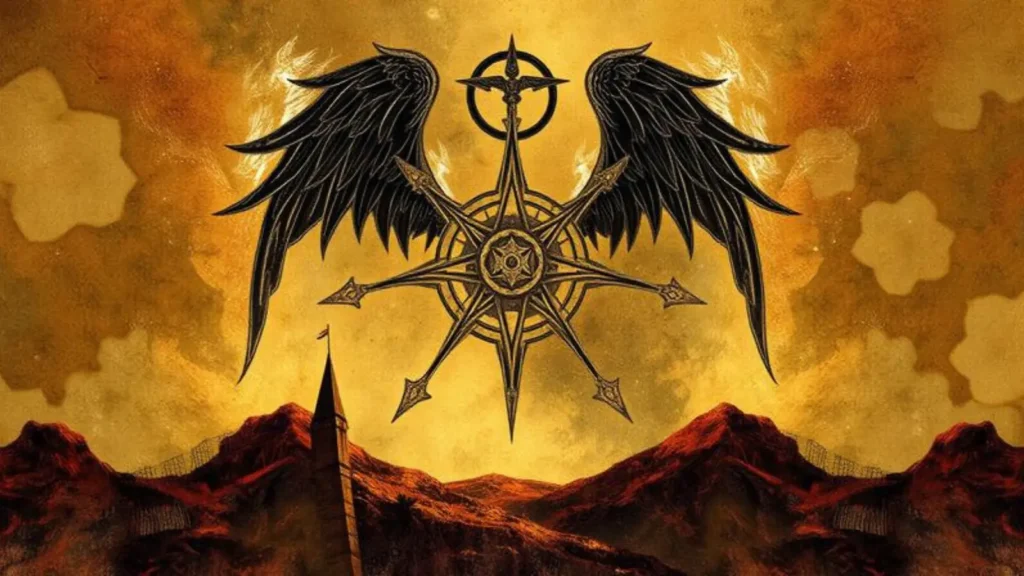
Different societies interpret symbols differently.
| Culture | Common Symbolism |
| Ancient Egypt | Eternal life |
| Greece | Wisdom, mythology |
| China | Harmony, prosperity |
| Japan | Impermanence and beauty |
| India | Spiritual enlightenment |
| Celtic traditions | Nature and interconnectedness |
| Indigenous cultures | Ancestors, animals, land |
| Islamic art | Geometry, unity, divine order |
Understanding cultural differences prevents oversimplification and encourages respectful interpretation.
Color Symbolism in Symbolism Art
Colors communicate emotion before viewers consciously analyze an image.
| Color | Frequently Associated Meaning |
| Red | Passion, sacrifice, strength |
| Blue | Peace, spirituality, wisdom |
| Green | Growth, renewal |
| White | Purity, innocence |
| Black | Mystery, mourning, elegance |
| Gold | Divinity, prosperity |
| Purple | Royalty, imagination |
| Yellow | Hope, energy, intellect |
Color meanings vary across cultures and historical periods.
Did You Know?
Many modern company logos rely on the same symbolic principles used by Symbolist artists. Shapes, colors, and visual metaphors influence consumer perception long before customers consciously evaluate products.
Symbolism Art in Literature
Symbolism extends far beyond painting.
Writers use symbolic imagery to enrich stories.
Examples include:
- Seasons representing stages of life.
- Storms symbolizing emotional conflict.
- Journeys representing personal growth.
- Gardens symbolizing innocence.
- Labyrinths representing confusion.
- Birds representing freedom.
Literary symbolism allows readers to discover multiple layers of meaning within the same narrative.
Symbolism Art in Architecture
Buildings often communicate symbolic messages through design.
Examples include:
- Domes representing heaven.
- Columns symbolizing strength.
- Gates representing transition.
- Spirals representing evolution.
- Sacred geometry representing cosmic harmony.
Religious architecture especially relies on symbolic proportions and spatial relationships.
Symbolism Art in Modern Branding
Today’s brands communicate through symbolism more than words.
Examples include:
- Minimalist logos
- Animal mascots
- Color psychology
- Geometric shapes
- Visual metaphors
Consumers often remember symbolic images faster than written messages.
Successful branding depends on consistent symbolic communication across digital and physical platforms.
Expert Tip
When interpreting symbolism art, avoid assuming there is only one “correct” meaning. Consider:
- Historical context
- Artist’s background
- Cultural traditions
- Religious influences
- Personal interpretation
- Visual relationships within the artwork
Balanced interpretation produces deeper understanding.
Symbolism Art and Mythology
Mythological stories provide artists with a rich symbolic vocabulary.
Recurring symbolic figures include:
- Phoenix—rebirth
- Serpent—wisdom or temptation
- Dragon—power
- Unicorn—purity
- Owl—knowledge
- Lion—courage
- Wolf—instinct
- Butterfly—transformation
Different cultures may assign different meanings to the same creature.
Semiotics and Symbolism Art
Semiotics is the study of signs and symbols.
In symbolism art, meaning develops through relationships between:
- Images
- Colors
- Composition
- Context
- Viewer interpretation
A single image may hold multiple meanings simultaneously depending on historical, cultural, and personal perspectives.
Symbolism Art in Digital Communication
Modern communication increasingly depends upon symbols.
Examples include:
- Emojis
- Icons
- Infographics
- User interface design
- Gaming environments
- Social media reactions
Although digital symbols are simpler than classical paintings, both rely on shared cultural understanding.
Practical Applications of Symbolism Art
Understanding symbolism art benefits many professions.
| Field | Practical Application |
| Education | Teaching visual literacy |
| Marketing | Building memorable brands |
| Psychology | Exploring emotional expression |
| Graphic Design | Communicating ideas efficiently |
| Literature | Enhancing storytelling |
| Film | Visual foreshadowing |
| UX Design | Intuitive interfaces |
| Cultural Studies | Understanding traditions |
| Museums | Art interpretation |
| Advertising | Emotional communication |
Common Mistakes
Many viewers misunderstand symbolism art.
Avoid these common errors:
- Assuming every object has only one meaning.
- Ignoring historical context.
- Overlooking cultural differences.
- Confusing symbolism with realism.
- Treating symbolic interpretations as scientific facts.
- Ignoring the artist’s broader body of work.
Myth vs. Fact
| Myth | Fact |
| Every symbol has one universal meaning. | Symbolic meanings often vary across cultures and time periods. |
| Symbolism art is random. | Most symbolic works are carefully constructed. |
| Only experts understand symbolism. | Anyone can appreciate symbolic imagery with thoughtful observation. |
| Symbolism belongs only to old paintings. | Modern films, games, brands, and digital media use symbolism extensively. |
| Symbolism replaces reality. | Symbolism often complements reality by adding emotional depth. |
Symbolism Art in Contemporary Society
The influence of symbolism extends far beyond museums.
Today it shapes:
- Film production
- Photography
- Fashion
- Interior design
- Product packaging
- Corporate identity
- Political campaigns
- Religious ceremonies
- Museum exhibitions
- Digital illustration
- Artificial intelligence image generation
- Educational materials
As visual communication becomes increasingly global, symbolic literacy grows even more valuable.
Key Insights
- Symbolism art communicates ideas beyond literal representation.
- Symbols evolve across cultures and historical periods.
- Emotional interpretation is central to symbolic art.
- Color psychology strengthens symbolic communication.
- Mythology, religion, philosophy, and anthropology all contribute to symbolic meaning.
- Modern branding and digital communication continue using symbolic principles developed centuries ago.
Conclusion
Symbolism art remains one of humanity’s richest forms of visual communication because it connects emotion, imagination, culture, and meaning in ways literal images often cannot.
From ancient sacred symbols to modern corporate logos, symbolic imagery continues to influence how people understand identity, spirituality, storytelling, education, design, and communication.
Its greatest strength lies in its flexibility. A single image may carry historical, cultural, psychological, philosophical, and personal significance simultaneously. Appreciating symbolism art therefore requires curiosity, cultural awareness, and openness to multiple interpretations rather than searching for one definitive answer.
As visual communication becomes increasingly important in digital media, branding, education, and artificial intelligence, understanding symbolism art offers valuable insight into how humans create, interpret, and share meaning across generations

Lucas Whitmore reveals the hidden messages behind symbols, signs, and traditions through detailed symbolism guides.
