Introduction
Symbols surround us every day, often communicating ideas more powerfully than words alone. From national flags and wedding rings to emojis and corporate logos, symbols shape how we interpret the world.
Understanding what is symbolism helps us recognize how people communicate values, emotions, beliefs, identities, and experiences across cultures and generations.
Symbolism is far more than artistic decoration. It influences literature, religion, education, psychology, architecture, advertising, politics, digital communication, and personal identity.
While symbolic meanings often have deep historical roots, they also evolve with changing societies, making symbolism one of humanity’s most fascinating communication systems.
Whether you’re a student, writer, designer, marketer, educator, or simply curious about how symbols influence everyday life, this guide explores symbolism from historical, cultural, psychological, artistic, and practical perspectives.
Featured Snippet Answer What Is Symbolism?
Symbolism is the use of symbols, images, objects, colors, actions, characters, or ideas to represent deeper meanings beyond their literal definition. It helps communicate emotions, beliefs, values, abstract concepts, and cultural identities across literature, art, religion, psychology, branding, and everyday communication, although meanings often vary between cultures and historical contexts.
Quick Answer
Symbolism is a method of expressing ideas indirectly through symbols. Instead of stating a concept outright, symbolism allows an object, image, color, event, or action to represent something more meaningful.
For example:
- A dove often symbolizes peace.
- A heart commonly symbolizes love.
- A torch frequently symbolizes knowledge or freedom.
- A journey may symbolize personal growth.
The literal object remains the same, but its symbolic meaning creates additional layers of understanding.
How Symbolism Works
At its core, symbolism relies on shared understanding.
People attach meaning to symbols through:
- Cultural traditions
- Religious beliefs
- Historical events
- Personal experiences
- Social conventions
- Artistic interpretation
Unlike ordinary signs that communicate one direct message, symbols often allow multiple interpretations depending on context.
For example, water can symbolize:
- Life
- Purification
- Renewal
- Change
- Danger
- Spiritual rebirth
Its meaning depends entirely on where and how it is used.
Historical Origins of Symbolism
Early Human Civilizations
Humans have used symbols for thousands of years.
Ancient cave paintings contained symbolic animals, hunting scenes, and geometric patterns believed to represent survival, spirituality, or storytelling.
Early civilizations developed symbolic systems through:
- Sacred objects
- Religious rituals
- Royal emblems
- Mythological creatures
- Celestial symbols
These symbols helped preserve traditions before widespread written language.
Ancient Egypt
Egyptian civilization relied heavily on symbolism.
Examples include:
- The Ankh representing life
- The Eye of Horus symbolizing protection
- The scarab representing transformation
- The lotus symbolizing rebirth
Many remain recognizable worldwide today.
Ancient Greece and Rome
Greek mythology introduced symbolic figures representing abstract ideas.
Examples include:
- Owl → wisdom
- Olive branch → peace
- Laurel wreath → victory
- Scales → justice
These meanings continue influencing modern legal systems, education, and art.
Medieval Period

Religious symbolism flourished throughout medieval Europe.
Church architecture, stained glass, paintings, and manuscripts used symbols to teach religious stories to largely illiterate populations.
Common symbolic themes included:
- Light representing divine truth
- Lamb representing innocence
- Vine representing spiritual connection
Modern Symbolism
Today symbolism extends beyond religion and literature into:
- Digital communication
- User interface design
- Brand identity
- Political messaging
- Environmental movements
- Social media
Modern symbols evolve rapidly while maintaining many traditional foundations.
Why Symbolism Matters
Direct Answer
Symbolism matters because it communicates complex ideas quickly, emotionally, and memorably.
Its benefits include:
- Simplifying abstract concepts
- Strengthening storytelling
- Building cultural identity
- Enhancing visual communication
- Creating emotional connections
- Improving memory and recognition
Without symbolism, much of human communication would become less expressive.
Symbolism Across Different Cultures

Symbolic meanings often differ around the world.
| Symbol | Western Interpretations | Eastern Interpretations | Other Cultural Perspectives |
| White | Purity, weddings | Mourning in some cultures | Peace in many traditions |
| Red | Love, passion, danger | Prosperity, celebration | Courage and sacrifice |
| Owl | Wisdom | Bad omen in some traditions | Knowledge or mystery |
| Dragon | Danger or power | Fortune and protection | Strength and authority |
| Lotus | Spiritual growth | Enlightenment | Purity and resilience |
Understanding these differences prevents misunderstandings in global communication.
Psychological Meaning of Symbolism
How Does Symbolism Affect Human Thinking?
Humans naturally think in patterns.
Symbols help the brain:
- Recognize information faster
- Remember concepts longer
- Trigger emotional responses
- Build personal associations
- Simplify complex information
Psychologists recognize that symbolic thinking develops early in childhood and remains essential throughout life.
For example:
A graduation cap represents years of education, achievement, and future opportunities rather than simply being a piece of clothing.
Symbolism in Religion
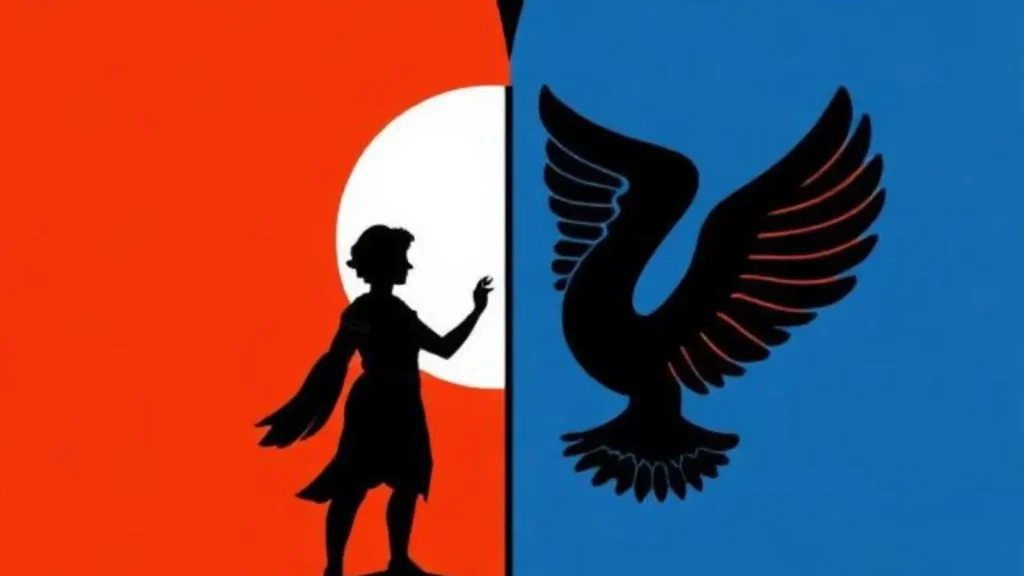
Nearly every religion uses symbolism.
Examples include:
- Light representing hope
- Water representing purification
- Fire representing transformation
- Trees representing life
- Mountains representing spiritual elevation
Religious symbolism often connects visible objects with invisible spiritual beliefs.
Interpretations vary across faith traditions, so symbols should always be understood within their specific religious context.
Symbolism in Literature
Why Do Writers Use Symbolism?
Authors use symbolism to add depth without lengthy explanations.
Examples include:
- Seasons reflecting emotional change
- Storms representing conflict
- Birds symbolizing freedom
- Roads symbolizing life’s journey
- Gardens symbolizing renewal
Readers often discover new symbolic meanings with each reading, making literature richer and more engaging.
Symbolism in Art

Artists frequently communicate ideas through visual symbolism.
Common artistic symbols include:
- Broken chains → freedom
- Clocks → time
- Mirrors → identity
- Butterflies → transformation
- Trees → growth
Art invites viewers to interpret symbolism based on cultural knowledge, historical context, and personal experience.
Symbolism in Color Psychology
Colors often carry symbolic meaning.
| Color | Common Symbolism |
| Blue | Trust, stability, calm |
| Green | Nature, growth, health |
| Yellow | Optimism, energy, caution |
| Black | Power, mystery, elegance |
| White | Purity, simplicity, peace |
| Purple | Royalty, creativity, spirituality |
| Orange | Enthusiasm, warmth, innovation |
However, color symbolism differs across cultures and industries.
Symbolism in Branding
Businesses use symbolism strategically.
Examples include:
- Shields suggesting protection
- Mountains suggesting strength
- Circles suggesting unity
- Leaves suggesting sustainability
- Birds suggesting freedom
Effective branding creates symbols customers remember long after seeing advertisements.
Companies carefully choose colors, typography, shapes, and logos because each carries symbolic meaning.
Symbolism in Architecture
Buildings communicate values through symbolic design.
Examples include:
- Domes representing heaven
- Columns symbolizing stability
- Arches representing transition
- Towers expressing ambition
- Open spaces encouraging community
Many famous monuments intentionally use symbolism to communicate national identity or shared history.
Symbolism in Modern Digital Communication
Digital culture has introduced entirely new symbolic systems.
Examples include:
- Emojis expressing emotion
- Notification icons conveying urgency
- Profile pictures representing identity
- Verification badges representing authenticity
- Hashtags symbolizing movements
These visual symbols allow people to communicate rapidly across languages.
Did You Know?
Modern internet users interpret hundreds of visual symbols every day—from app icons and emojis to navigation buttons—often without consciously thinking about them. This demonstrates how deeply symbolism has become embedded in everyday digital life.
Semiotics and Symbolism
Semiotics is the study of signs and symbols.
It explores:
- How symbols create meaning
- Why interpretations differ
- Cultural influences
- Communication systems
- Visual language
Semiotics helps explain why identical symbols may carry different meanings depending on context.
Symbolism in Mythology
Myths rely heavily on symbolism.
Recurring symbolic themes include:
- Heroes representing courage
- Dragons representing chaos
- Phoenixes representing renewal
- Labyrinths representing life’s challenges
- Rivers representing transformation
These symbolic patterns appear across civilizations despite geographic separation.
Symbolism and Human Identity
People use symbolism to express identity through:
- Clothing
- Jewelry
- Tattoos
- Flags
- Family crests
- Religious symbols
- Professional uniforms
Symbols communicate belonging, beliefs, achievements, and values.
Practical Applications of Symbolism
Understanding symbolism has practical value in many professions.
| Field | Practical Application |
| Education | Teaching abstract concepts |
| Marketing | Building memorable brands |
| Literature | Creating deeper narratives |
| Psychology | Exploring personal meaning |
| Design | Improving user experience |
| Architecture | Communicating cultural identity |
| Film | Visual storytelling |
| Politics | National identity and messaging |
Expert Tip
Always interpret symbols within their cultural and historical context. Assuming that a symbol has one universal meaning can lead to misunderstandings, especially in multicultural communication, global marketing, or historical analysis.
Common Mistakes About Symbolism
1. Assuming Every Symbol Has One Meaning
Many symbols have multiple interpretations.
2. Ignoring Cultural Differences
Symbolic meanings often change between societies.
3. Confusing Signs with Symbols
A traffic stop sign communicates one direct instruction.
A white dove communicates broader cultural meaning.
4. Overanalyzing Everything
Not every object is intentionally symbolic.
Context matters.
Myth vs. Fact
| Myth | Fact |
| Every symbol means the same worldwide. | Meanings often vary culturally. |
| Symbolism exists only in literature. | It appears in nearly every aspect of society. |
| Symbols never change. | Symbolic meanings evolve over time. |
| Only artists use symbolism. | Designers, educators, marketers, architects, and psychologists use symbolism too. |
Key Insights
- Symbolism communicates ideas beyond literal meaning.
- Culture strongly shapes symbolic interpretation.
- Historical context influences symbolism.
- Psychology explains why symbols create emotional responses.
- Modern technology continues creating new symbolic systems.
- Understanding symbolism improves communication across disciplines.
Why Symbolism Remains Important Today
Modern society produces enormous amounts of information every second.
Symbols help people:
- Process information quickly
- Build emotional connections
- Remember messages
- Express identity
- Communicate across language barriers
From global brands to educational diagrams and smartphone interfaces, symbolism continues shaping human interaction.
Artificial intelligence, visual search, augmented reality, and digital media are also increasing the importance of symbolic communication in the twenty-first century.
Conclusion
Understanding what is symbolism provides valuable insight into how humans communicate beyond literal language. Throughout history, symbolism has helped people express beliefs, preserve traditions, inspire creativity, and communicate complex ideas through visual and conceptual representations.
Its meanings are shaped by history, culture, psychology, religion, art, and personal experience, making symbolism both universal and deeply contextual.
Today, symbolism remains essential across literature, branding, education, architecture, design, digital communication, media, and everyday life.
By recognizing that symbols may carry different meanings depending on cultural and historical contexts, we become more thoughtful communicators and more informed interpreters of the world around us.

Isabella Carter explores symbolism in nature, literature, art, and spirituality with engaging and informative research.
